

Look closely into the eyes of a cat, a goat, or a hawk, and you’ll notice something oddly mesmerizing. Their pupils are nothing like ours. Some are vertical slits, some are wide horizontal bars, and others are perfectly round like tiny black moons. It’s one of those things most people never think twice about, yet the answer reveals something genuinely fascinating about how animals survive in the wild.
The shape of an animal’s pupil isn’t random or cosmetic. It’s a deeply functional design carved by millions of years of evolution. Each shape tells a story about where an animal fits in the food chain, what time of day it hunts, and how it sees the world around it. Let’s dive in.
It All Comes Down to Light Control
Here’s the thing most people don’t realize: the pupil’s primary job is to control how much light enters the eye. Round pupils do this reasonably well, but they’re somewhat limited in how wide or narrow they can get. A slit-shaped pupil, on the other hand, can close down to an incredibly thin line while still opening up wide in the dark. That’s a dramatic range of control.
Think of it like a camera lens. A round aperture is decent, but a slit can go from almost fully shut to wide open in a fraction of a second, giving the animal extraordinary flexibility. Animals that are active in both bright daylight and low-light conditions, like cats, benefit enormously from this kind of rapid adjustment. It’s honestly one of nature’s most elegant engineering solutions.
Vertical Slits Belong to Ambush Predators
Cats, foxes, and certain snakes have vertical slit pupils, and there’s a really compelling reason for that. Research suggests this pupil shape is particularly common among predators that hunt by ambush rather than by chasing prey over long distances. The vertical slit helps these animals judge distance with impressive precision, which matters enormously when you’re about to pounce.
Vertical pupils also create a kind of “astigmatism effect” that sharpens the perception of horizontal lines on the ground, like blades of grass or uneven terrain. For a crouching predator waiting to spring, that kind of detail is genuinely life or death. There’s something almost poetic about the idea that a cat’s haunting stare is actually a high-precision targeting system.
Horizontal Pupils Give Prey Animals a Panoramic Advantage
Goats, horses, deer, and many other prey animals have horizontal, bar-shaped pupils that look almost alien up close. The purpose here is entirely different from the slit-shaped design of predators. Horizontal pupils dramatically widen the animal’s field of view along the horizon, allowing them to scan for threats across a broad, flat landscape without turning their heads.
What’s especially remarkable is that scientists have found that as these animals lower their heads to graze, their eyes actually rotate in the socket to keep that horizontal pupil aligned with the ground. That’s not a small detail. That’s a real-time optical adjustment happening automatically, keeping the panoramic view intact no matter what position the animal is in. Honestly, that blew my mind when I first read about it.
Round Pupils and What They Say About a Species
Round pupils like those found in humans, dogs, and many birds are often associated with animals that are active primarily during the day. A circular pupil doesn’t offer the same extreme range of adjustment as a slit, but it provides excellent depth perception and detailed central vision, which suits daytime activity well. For primates especially, sharp central focus was critical for tasks like identifying ripe fruit or reading social expressions.
There’s a commonly held idea that round pupils are somehow the “default” or least specialized shape, but I think that undersells them. Round pupils paired with forward-facing eyes give predators like humans and owls some of the best binocular depth perception in the animal kingdom. They’re specialized in their own way, just optimized for a different set of priorities.
The Curious Case of the Octopus and W-Shaped Pupils
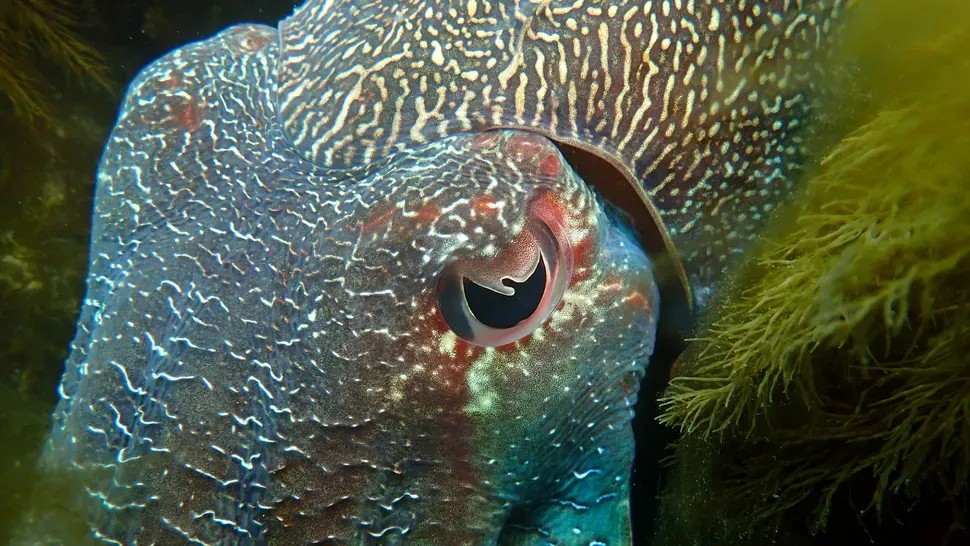
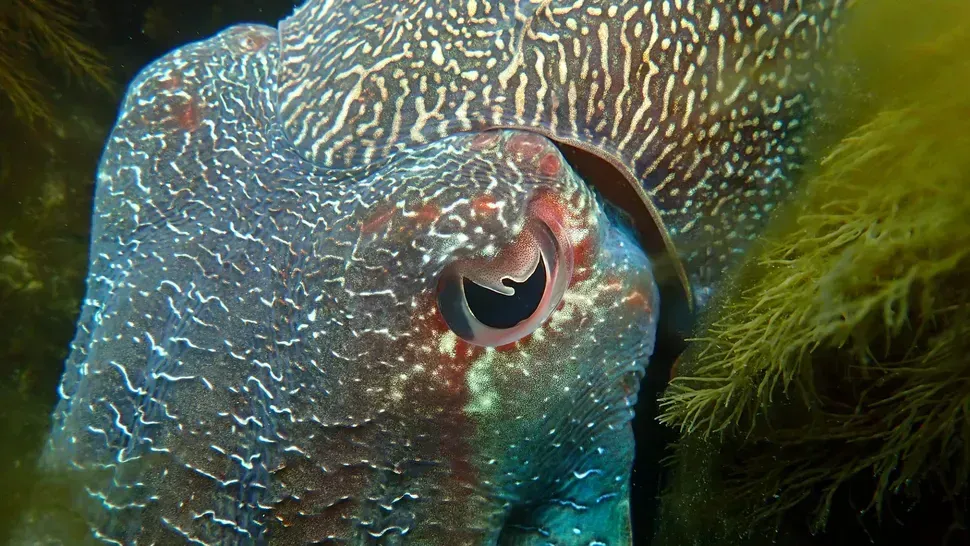
If you thought goat eyes were strange, wait until you look into the eyes of a cuttlefish or an octopus. These animals have W-shaped or crescent-shaped pupils that look almost like something out of science fiction. The fascinating part is that despite being colorblind, these creatures may use their unusually shaped pupils to detect color through a process called chromatic aberration.
The idea works like this: different wavelengths of light focus at slightly different depths inside the eye. By using an oddly shaped pupil, the animal can shift focus subtly to distinguish between wavelengths, effectively compensating for the lack of color-sensitive cone cells. It’s a wildly creative workaround, and it suggests that pupil shape can serve purposes far beyond simple light control. Evolution really doesn’t stop surprising us.
Size and Lifestyle Drive These Evolutionary Choices
One of the most interesting patterns researchers have identified is the relationship between an animal’s size, its ecological role, and its pupil shape. Ambush predators that are relatively small and low to the ground overwhelmingly tend to have vertical slit pupils. Larger pursuit predators, like lions and wolves, tend to have round pupils instead, possibly because they rely more on stamina and speed than on split-second pouncing accuracy.
This size-based pattern is striking because it suggests pupil shape isn’t just about predator versus prey. It’s about the specific strategy each animal uses to survive. A fox and a lion are both predators, but their hunting styles are so different that their eyes evolved along completely separate paths. The pupil, in a sense, is a window into the animal’s entire survival strategy.
What Human Eyes Reveal About Our Own Past
Our round pupils and forward-facing eyes tell a story about where humans came from as a species. Early primates needed sharp, detailed, binocular vision to navigate trees, judge distances between branches, and identify food. Round pupils served that lifestyle perfectly, and we’ve carried that design forward across millions of years of evolution.
There’s something quietly humbling about realizing that the way you see the world right now, the way light enters your eyes at this very moment, was shaped by ancestors swinging through forest canopies long before cities or language existed. Our pupils aren’t just anatomy. They’re a record of survival. Every animal’s eye, when you really look at it, holds the compressed history of an entire lineage written in the shape of a tiny black opening.
A Final Thought on Seeing the World Differently
The diversity of pupil shapes across the animal kingdom is one of those topics that starts as a quirky curiosity and ends as a profound reflection on the creativity of evolution. What looks like a design choice is actually a survival story. Every slit, every horizontal bar, every W-shaped curve is a solution to a specific problem that a specific animal faced over millions of years.
Next time you lock eyes with a cat or catch a goat staring blankly at you across a fence, take a second look at those pupils. You’re not just seeing a weird eye shape. You’re seeing evolution at work, a living record of how that animal carved out its place in the world. So, what do you think, does knowing this change the way you’ll look at animals from now on? Drop your thoughts in the comments below.

- Urban Coyotes Show Remarkable Adaptability, Learning to Thrive in City Environments - July 22, 2026
- Beavers Are Nature’s Engineers, Creating Vital Habitats for Other Wildlife Species - July 21, 2026
- The Recovery of the California Condor Offers Hope for Other Critically Endangered Birds - July 21, 2026