


There is something deeply unsettling about the ocean turning on you. Not through a storm, not through navigation error, but through a living, breathing creature that decided you were the threat. Herman Melville’s “Moby Dick” has long been treated as a work of gothic imagination, a fever dream dressed up as maritime adventure. Most people assume the ship-ramming whale was pure fiction.
It wasn’t. Researchers have been piecing together the historical and behavioral puzzle behind one of literature’s most famous monsters, and what they’ve found is both fascinating and a little humbling. The line between myth and reality is much thinner than we thought. Let’s dive in.
A Whale That Inspired a Novel – and Actually Existed
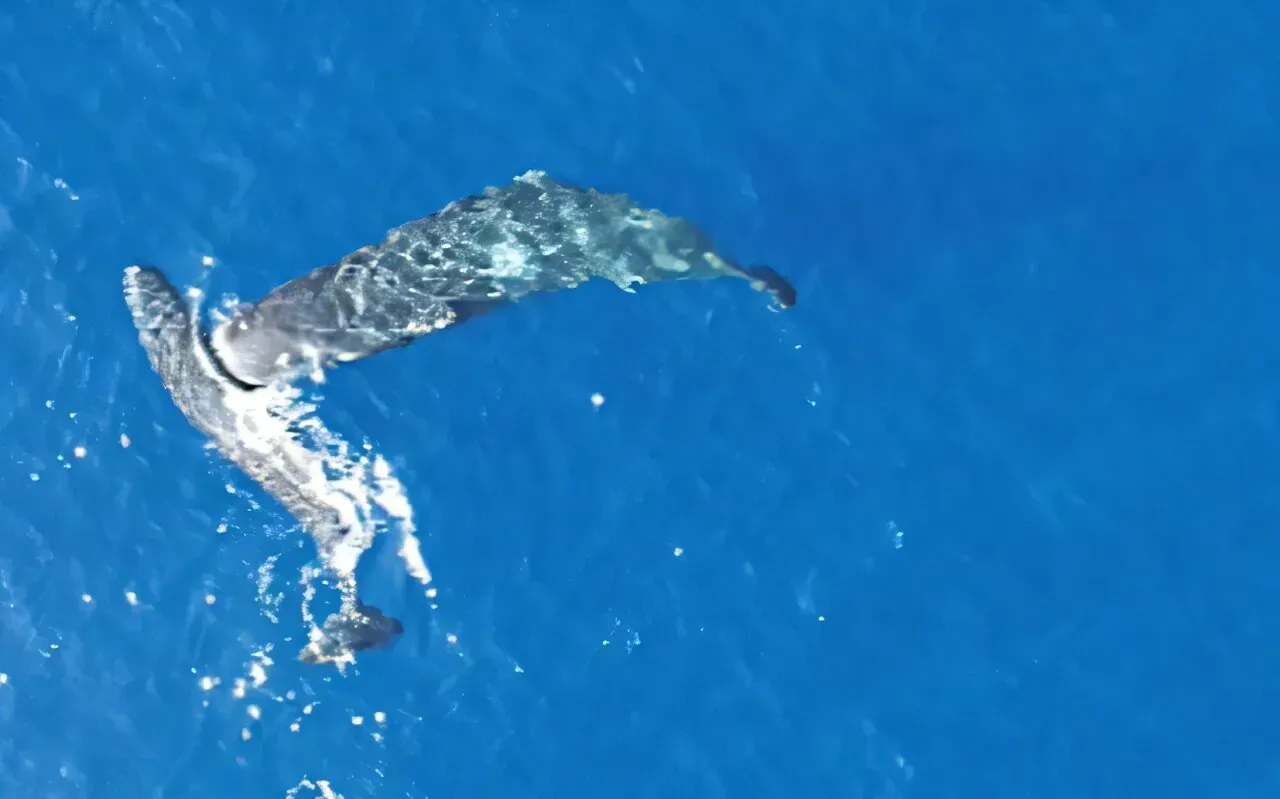
Here’s the thing most people don’t realize: Melville didn’t conjure the idea of a vengeful sperm whale from nothing. He drew heavily from the real-life sinking of the whaling ship Essex in 1820, when a sperm whale repeatedly rammed the vessel until it went down in the Pacific Ocean. That event alone would have been enough to shake any writer’s imagination loose from its moorings.
The Essex was struck not once but twice by a large bull sperm whale, which reportedly turned and charged the ship deliberately. The crew was left adrift for over three months in open water, surviving one of the most harrowing ordeals in maritime history. The story was documented, published, and eventually became the skeleton upon which Melville built his masterpiece.
Sperm Whales Are Not the Gentle Giants We Picture
We tend to think of whales as peaceful, almost ethereal beings gliding through deep blue water. Honestly, that image is not entirely wrong, but it is dangerously incomplete. Sperm whales are the largest toothed predators on Earth, capable of diving deeper than almost any other air-breathing animal and producing the loudest biological sounds ever recorded.
Adult male sperm whales can grow to over eighteen meters in length and weigh as much as a loaded semi-truck fleet. Their heads alone account for roughly a third of their body length, and that enormous melon-shaped forehead, the spermaceti organ, is essentially a biological battering ram. It is dense, oil-filled, and structurally reinforced in ways that make scientists genuinely curious about whether ramming behavior might be more intentional than accidental.
Why Would a Whale Attack a Ship?
This is the question researchers keep circling back to, and the answer is more layered than a simple “threat response.” Sperm whales are highly intelligent, socially complex animals that communicate through patterns of clicks called codas. They live in tight family units, and males especially develop strong territorial instincts as they mature.
When 19th-century whalers began hunting them aggressively, the whales may have learned to associate large wooden vessels with danger. Some scientists believe that male sperm whales, in particular, can become agitated when they sense their group is under threat, or when acoustic disturbances from ships interfere with their echolocation. It’s hard to say for sure, but the behavioral evidence across multiple documented incidents suggests this wasn’t random aggression. Something was triggering it.
The Ship Ramming Events Were More Common Than History Admits
The Essex is the most famous case, but it was far from the only one. The Ann Alexander, another whaling ship, was sunk by a sperm whale in 1851, the very same year Moby Dick was published. That timing is almost too strange to believe. Historical records from the 19th century are scattered with accounts of whales charging vessels, though many were never widely reported.
Researchers examining old maritime logs have found references to aggressive encounters that were quietly buried or dismissed as sailor exaggeration. The whaling industry had every reason to downplay these incidents, since publicizing them would have scared off crew and investors alike. What emerges from the historical record is a pattern, not a series of isolated flukes.
The Science Behind the Spermaceti Organ
The spermaceti organ is one of the more remarkable structures in the animal kingdom. It runs almost the entire length of the sperm whale’s forehead and is filled with a waxy, oil-like substance that was historically prized by whalers for use in lamps and industrial lubricants. That is actually why ships were hunting these animals in the first place.
What science has revealed more recently is that this organ plays a central role in sound production and echolocation. The dense, structured tissue is capable of focusing and amplifying acoustic energy in extraordinary ways. Some researchers have speculated that a large male, under stress or in an aggressive state, could theoretically use focused acoustic energy as a kind of biological weapon, though that remains a theory rather than a confirmed behavior. Still, the structural capacity of that forehead to absorb and deliver impact is undeniable.
What Modern Research Says About Whale Behavior and Aggression
Modern cetacean research has moved well beyond the old assumption that whales are simply passive filter feeders or deep-sea wanderers. Studies using acoustic tagging, underwater drones, and long-term population tracking have revealed that sperm whales exhibit complex social learning. Behaviors, including potentially defensive or aggressive ones, can be passed through generations.
This cultural transmission angle is significant. If one whale in a social group learned to associate ships with harm, that behavior could theoretically spread to others. Think of it like a community-wide memory, not unlike how human cultures pass down warnings about dangerous places or situations. The implications for understanding the Essex incident and others are profound. We may not be dealing with individual aberrant behavior at all, but something closer to collective learned response.
Moby Dick’s Legacy and What It Tells Us About Nature
Melville’s novel endures not because it is a straightforward adventure story, but because it captures something true about the relationship between humans and the natural world. The obsessive hunt, the idea that nature might fight back, the humbling vastness of the ocean as an adversary. None of that was invented. It was observed, lived, and feared.
What current research adds to this picture is a kind of scientific respect. Sperm whales are not monsters. They are ancient, intelligent animals that were being systematically slaughtered, and at least some of them appear to have responded in the only way available to them. That reframes the entire mythology of Moby Dick from a story about man versus beast into something closer to a story about consequences.
Conclusion: When the Ocean Pushes Back
The story of Moby Dick was never really about a whale. It was about what happens when something immense and complex refuses to be conquered quietly. Researchers connecting the dots between sperm whale biology, historical ship sinkings, and modern behavioral science have essentially confirmed what Melville sensed intuitively: these animals are capable of far more than we gave them credit for.
There is something worth sitting with in that realization. The 19th century whalers who feared the deep were not being superstitious. They were being accurate. In a world where we still debate how much intelligence and agency we should assign to non-human animals, the sperm whale’s documented history offers a pointed and surprisingly relevant answer. What do you think: does knowing the science behind it change how you see the novel, or does the mystery still feel more powerful than the explanation? Tell us in the comments.

- Urban Coyotes Show Remarkable Adaptability, Learning to Thrive in City Environments - July 22, 2026
- Beavers Are Nature’s Engineers, Creating Vital Habitats for Other Wildlife Species - July 21, 2026
- The Recovery of the California Condor Offers Hope for Other Critically Endangered Birds - July 21, 2026