

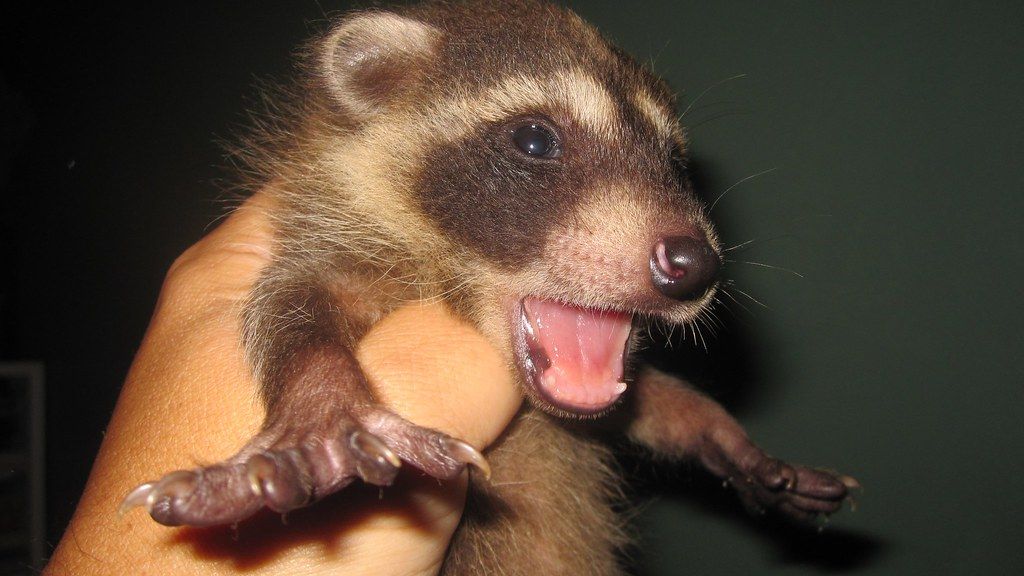
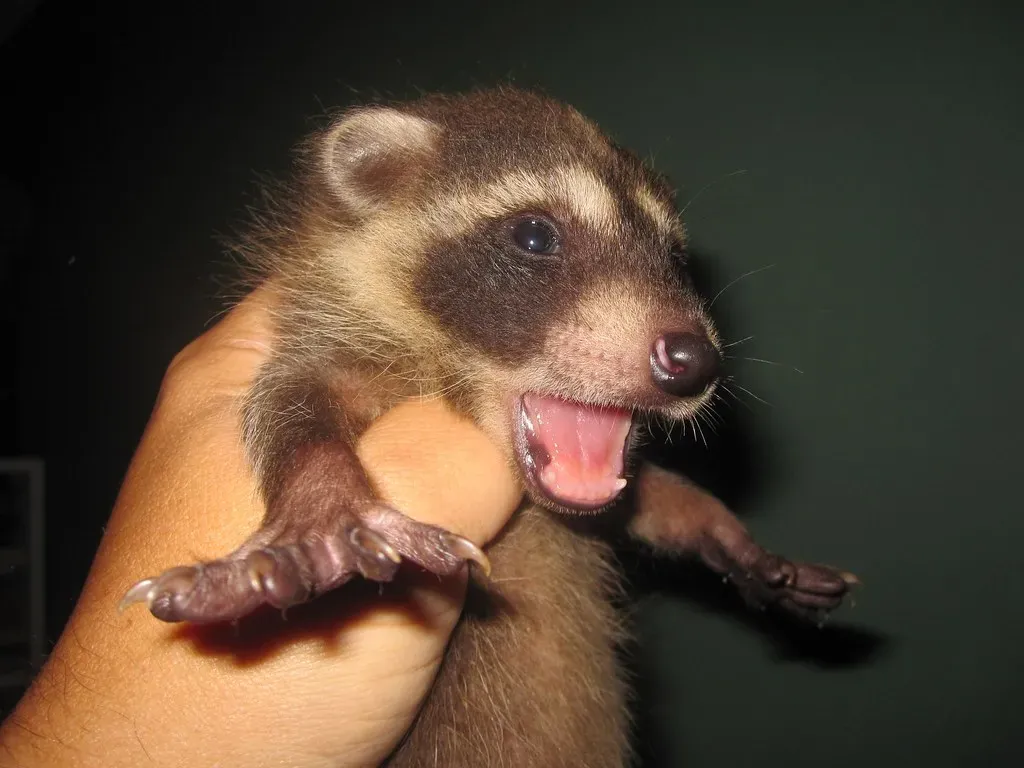
A fragile raccoon kit, dubbed impossibly tiny by her rescuers, has defied the odds at a wildlife rehabilitation center. Orphaned and far below average newborn weight of two to seven ounces, she arrived barely clinging to life. Caretakers like Sarah at the Gordon Wildlife Rehabilitation Center poured everything into her survival. Their story, unfolding today, spotlights the high-stakes world of urban wildlife rescue where thousands of raccoon orphans flood facilities each year.
What started as a nerve-racking battle against hypothermia and starvation evolved into a heartwarming partnership. This tiny female’s journey reveals the delicate art of rehab, where strategic decisions can mean life or wild freedom. Here’s how one bold move changed everything for her.
The Desperate Arrival of a Fragile Orphan
Rescuers first encountered the minuscule raccoon kit after she was orphaned, her body a shadow of what a healthy newborn should be. Typically four to six inches long with eyes sealed shut, this one weighed just a fraction of her peers, demanding immediate intervention to combat risks like hypothermia. Sarah and her team at the center knew the stakes were immense, as orphaned raccoon survival rates often dip below 50 percent without expert care. They jumped into action with round-the-clock monitoring, mimicking maternal warmth in every handling. Urban pressures, from vehicle strikes to habitat loss, funnel thousands of such cases into rehab centers nationwide annually. This kit’s plight underscored the growing tide of city-dwelling raccoon rescues.
Nerve-Racking Nights of Constant Vigil
Sarah openly described the early days as profoundly anxiety-inducing, with every feeding session a high-wire act. Specialized formulas and gentle techniques filled the void left by her absent mother, as the team watched for the slightest signs of vigor. Baby raccoons require precise care to build strength, especially when malnutrition has stunted growth from the start. Over time, the kit’s frame began to fill out, her energy flickering to life amid the exhaustion. This phase highlighted why professionals handle such rescues, steering clear of well-meaning but risky DIY efforts. Patience blended with science turned desperation into hope.
A Daring Pairing Ignites Instant Friendship
The pivotal moment arrived when caretakers introduced the tiny raccoon to a larger female, twice her size and weight, in a calculated risk to spur socialization. Despite the mismatch, the pair clicked immediately, the bigger one stepping into a protective role with natural grace. They huddled together for sleep, groomed meticulously, and tumbled in play, instincts bridging their physical divide. Such pairings boost appetite and confidence, accelerating development in ways solo care cannot match. Observers marveled at how this mirrored wild family dynamics, prepping them for the real world. The bond proved rehab wisdom at work.
Playful Antics Fuel Rapid Transformation
Daily romps revealed the duo’s unbreakable spirit, as the little one fearlessly scaled her companion’s back and nipped at ears with fierce joy. The larger raccoon played with measured gentleness, keeping tussles safe amid their size gap. Weeks brought dramatic change, the tiny kit bulking up toward juvenile sturdiness while mastering enclosure challenges. Peer interactions like these drive physical gains and behavioral skills in young mammals, hitting milestones ahead of schedule. Foraging simulations and climbing drills rounded out their routine, thrilling the team with progress. Nature’s adaptability shone through every wrestle.
Release Looms with Hard-Earned Readiness
As maturity set in, training shifted to independence, from problem-solving for food to group hunts under watchful eyes. Sarah captured the bittersweet edge, noting the emotional pull of impending freedom.
“Just wait until they’re released,”
she shared, blending excitement with reluctance. The center’s soft-release program eases them into the wild gradually, boasting success rates over 70 percent in managed cases. Rehab spans four to five months typically, arming kits like these for survival. Their story feeds vital data on raccoon outcomes.
Final Thought
This raccoon duo’s saga reminds us how human intervention can restore wild potential amid urban sprawl. Tailored strategies like peer pairing offer blueprints for future rescues, urging more support for rehab efforts. What surprises you most about their bond? Share in the comments.
Source: Original YouTube Video

- Urban Coyotes Show Remarkable Adaptability, Learning to Thrive in City Environments - July 22, 2026
- Beavers Are Nature’s Engineers, Creating Vital Habitats for Other Wildlife Species - July 21, 2026
- The Recovery of the California Condor Offers Hope for Other Critically Endangered Birds - July 21, 2026