

Every single living thing on this planet, from the bacteria coating a deep-sea vent to the houseplant wilting on your windowsill to you reading this right now, shares a common ancestor. That’s not a metaphor or a philosophical idea. It’s biology. And it’s one of the most mind-bending facts in all of science.
The mystery, though, isn’t whether this ancestor existed. Scientists are pretty confident it did. The real puzzle is figuring out when it lived, and the answers keep shifting in ways that surprise even the researchers chasing them. Let’s dive in.
Meet LUCA: The Last Universal Common Ancestor
Here’s the thing most people don’t realize: scientists have a name for this original ancestor of all life. They call it LUCA, which stands for Last Universal Common Ancestor. LUCA wasn’t the first living thing ever, but it was the last organism from which every single life form on Earth today is descended.
Think of it like the trunk of a tree. Everything branching off, bacteria, fungi, animals, plants, all of it traces back to that one trunk. LUCA wasn’t necessarily simple either. Research suggests it may have been a surprisingly complex organism, equipped with sophisticated molecular machinery. That alone flips the common assumption that early life was just primitive and basic.
How Scientists Even Figure This Out
Honestly, it sounds like an impossible task. How do you find evidence of a single organism that lived billions of years ago, left no bones, and existed before complex body parts even evolved? The answer lies in genetics. By comparing the DNA and proteins shared across wildly different life forms today, scientists can work backward, like reversing a family tree, to infer what traits LUCA must have had.
This method, sometimes called phylogenomics, has become dramatically more powerful in recent years. With access to massive genomic databases and increasingly sophisticated computational tools, researchers can now identify hundreds of genes that appear in virtually every living lineage. Those shared genes are essentially molecular fossils, whispers from deep time that tell us something real about who LUCA was.
The Age Question Is Trickier Than It Looks
So when did LUCA actually live? This is where things get genuinely complicated, and where scientists still disagree. Estimates have ranged from roughly 3.5 billion years ago to over 4 billion years ago. That gap of several hundred million years isn’t a small rounding error. It’s an enormous stretch of time, longer than the entire existence of complex animal life.
Part of the problem is that the further back you go, the fossil record gets thinner and harder to interpret. Some of the oldest proposed microbial fossils are still debated in the scientific community. Pinning LUCA to a specific date requires agreeing on which molecular clocks are most reliable and which ancient rock formations actually contain evidence of early life, and those debates are far from settled.
What LUCA Might Have Actually Been Like
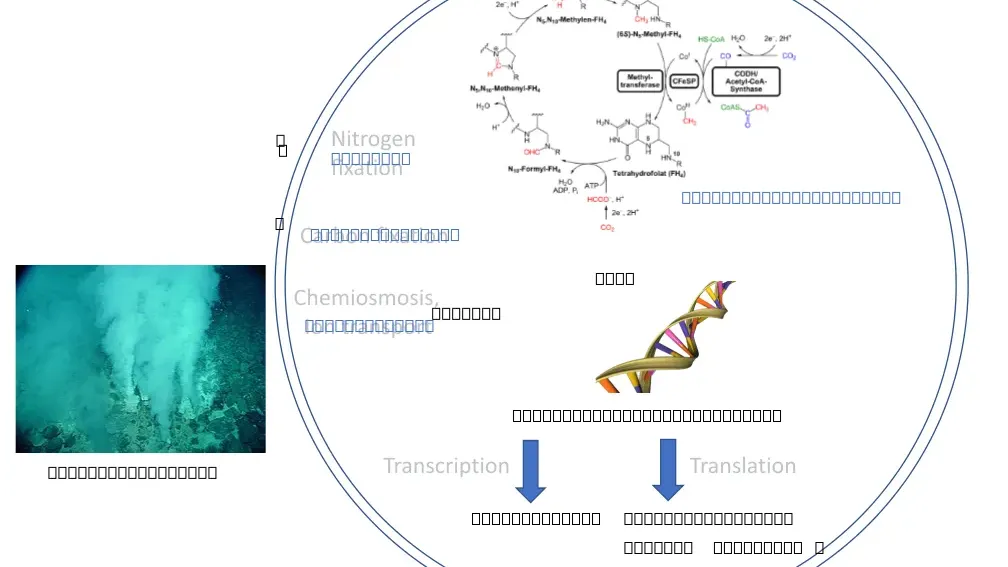
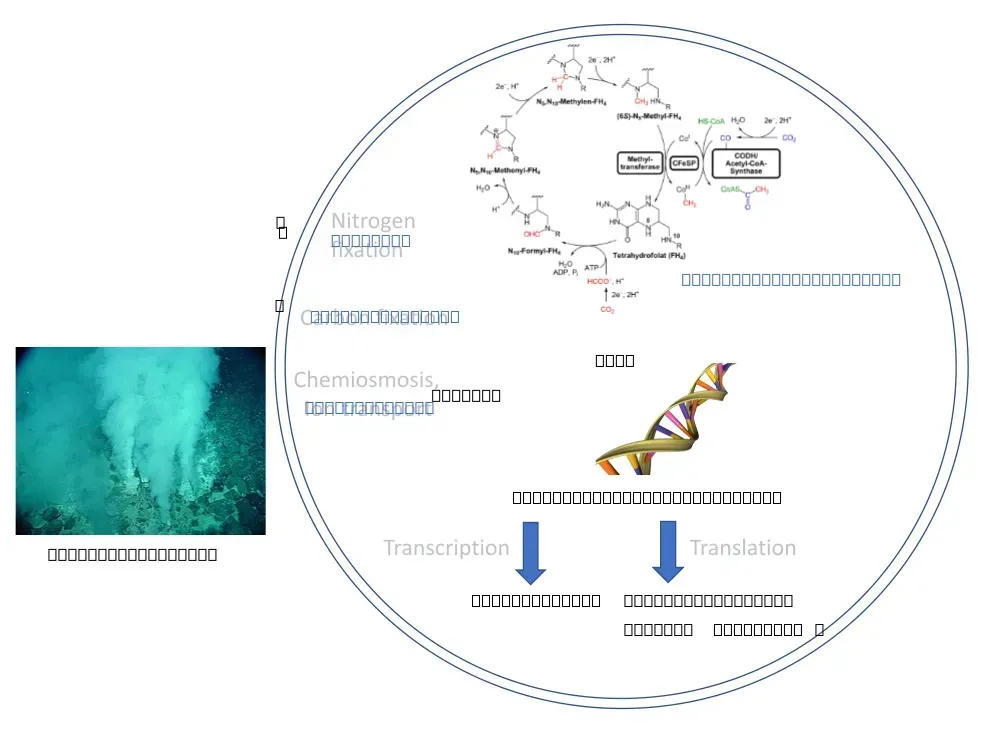
Recent research has painted a surprisingly detailed portrait of LUCA. Some analyses suggest it may have lived in a hydrothermal vent environment, feeding on hydrogen and carbon dioxide in a hot, chemically rich setting. It likely had a fairly complex set of metabolic tools already in place. That challenges the older image of LUCA as some ultra-primitive blob barely holding itself together.
What’s genuinely surprising is that LUCA may have already had a kind of immune defense system, a rudimentary version of what we now see in modern microbes. Some scientists argue it also had genes for repairing DNA damage, suggesting it lived in a world where radiation or chemical stress was a real threat. I find it almost poetic that even the very first common ancestor of all life was already fighting to survive.
The Role of Horizontal Gene Transfer
One reason dating LUCA is so difficult comes down to a phenomenon called horizontal gene transfer. Unlike in animals, where genes are passed neatly from parent to offspring, early microorganisms swapped genes with each other constantly, almost like passing notes in class. This means the early tree of life looked less like a clean branching tree and more like a tangled web.
This genetic messiness makes it harder to trace a single line of descent back to LUCA with confidence. Some genes that look ancient might have jumped between lineages multiple times. It’s a reminder that evolution in its earliest stages was far messier and more chaotic than the tidy diagrams in textbooks suggest.
New Tools Are Changing the Estimates
Over the past few years, advances in computational biology and the explosion of available genomic data have started to sharpen the picture. Scientists are now able to analyze thousands of genomes simultaneously and use more refined statistical models to estimate when lineages diverged. Some newer studies push LUCA’s existence closer to 4.2 billion years ago, which would place it very early in Earth’s history, potentially not long after the planet itself cooled enough to support liquid water.
That timing is startling. It implies life may have emerged and reached the complexity of LUCA remarkably quickly in geological terms. Roughly about a third of Earth’s total age may have passed before the planet was even habitable, yet life seemingly didn’t waste much time getting started. If that’s accurate, it has real implications for how we think about the possibility of life on other planets.
Why It Matters Beyond Just Curiosity
Understanding LUCA isn’t just an academic exercise. It touches on some of the deepest questions humans ask. Where did we come from? Are we alone in the universe? If life arose so quickly on Earth and shares such a universal common foundation, it raises the genuine possibility that life elsewhere might follow similar patterns.
There’s also a practical side. Studying LUCA helps scientists understand which biological processes are truly fundamental, conserved across billions of years of evolution. Those ancient, highly stable biological systems are often the ones most useful for medical research, drug development, and bioengineering. The oldest biology on Earth might, in a strange twist, help us solve some of the newest problems we face.
Conclusion: The Oldest Question Has No Easy Answer Yet
LUCA is one of those subjects that the more you learn about it, the more humbling it becomes. We share a single common ancestor with every mushroom, every whale, every bacterium, and every tree. That’s not just a scientific fact. It’s almost a philosophical statement about the unity of life itself.
The science is moving fast, tools are improving, and researchers are genuinely closing in on better answers. Still, there’s something I find oddly comforting about the fact that this question remains open. Life’s origins are enormous enough to keep some mystery intact. What do you think: does knowing you share an ancestor with every living thing on Earth change how you see the world around you? Drop your thoughts in the comments.

- Urban Coyotes Show Remarkable Adaptability, Learning to Thrive in City Environments - July 22, 2026
- Beavers Are Nature’s Engineers, Creating Vital Habitats for Other Wildlife Species - July 21, 2026
- The Recovery of the California Condor Offers Hope for Other Critically Endangered Birds - July 21, 2026