
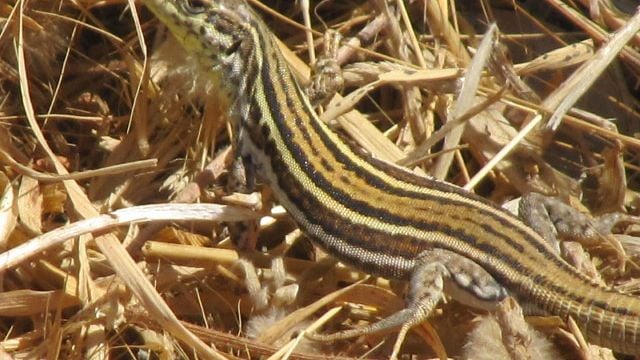
You’re out for a hike, minding your own business, and something long and slithery darts across the path. Your heart skips a beat. Snake? Well, maybe not. The US is home to a surprising number of reptiles that have absolutely nothing to do with the snake family, yet look convincingly enough like one to send even seasoned outdoor enthusiasts scrambling backward.
Here’s the thing: nature loves to repeat a good design. Lizards have independently evolved elongate bodies without limbs or with greatly reduced limbs at least twenty-five times via convergent evolution, which means the snake-shaped body plan is basically nature’s “best seller.” The result? Plenty of creatures that make your brain scream “snake” when they are something else entirely. Let’s dive in.
The Eastern Glass Lizard – The Southeast’s Master Impersonator
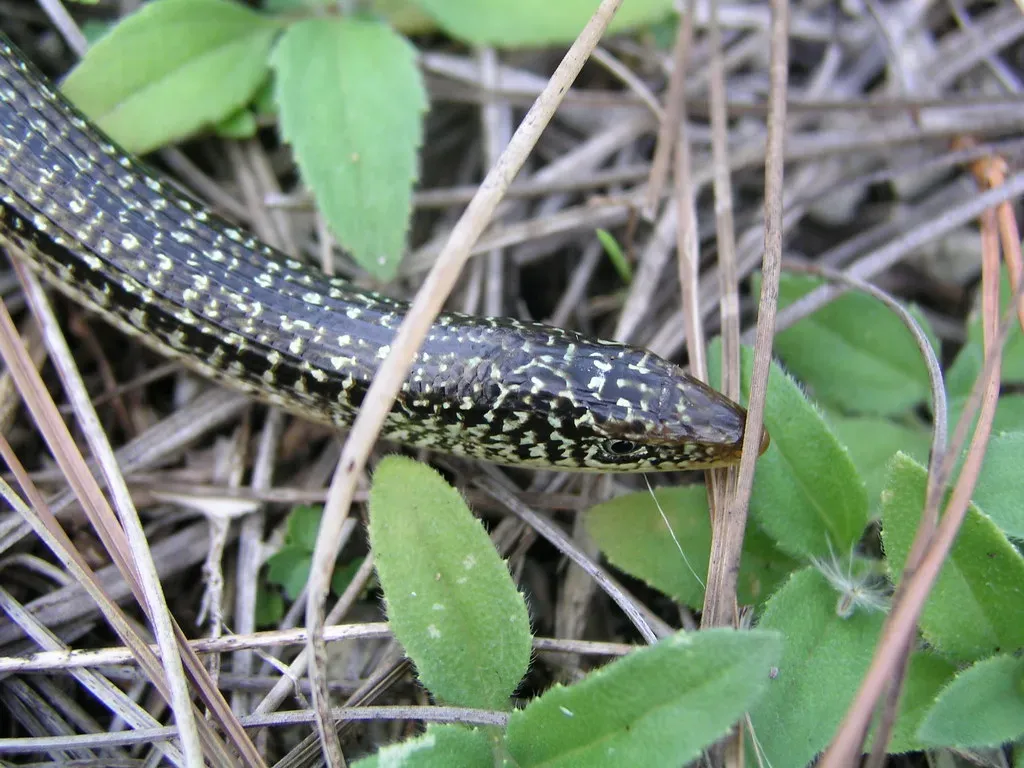
If there is one reptile on this list that truly commits to the snake costume, it’s the Eastern Glass Lizard. The Eastern glass lizard is a species of legless lizard in the family Anguidae and the longest and heaviest species of glass lizards in the genus Ophisaurus, endemic to the Southeastern United States. Honestly, if you passed this thing on a trail in Georgia, you’d be forgiven for assuming it was a snake. Almost everyone does.
These lizards can reach lengths up to 3 feet, and about two-thirds of that length is made up of their long, fragile tail. That tail is also the source of one of nature’s sneakiest tricks. They have the ability of tail autotomy, meaning their tail breaks off upon restraint, and their tail fragment will continue to writhe for several minutes after detachment to distract the predator and allow them to escape.
Eastern glass lizards are commonly mistaken as a species of snake because they lack limbs. Unlike snakes, they have moveable eyelids, external ear openings located behind their eyes, and inflexible jaws. So the next time you’re in South Carolina and something glassy and greenish shoots through the grass, take a second look. It may just be earning its name in real time.
The Slender Glass Lizard – Prairie Ghost of the Midwest
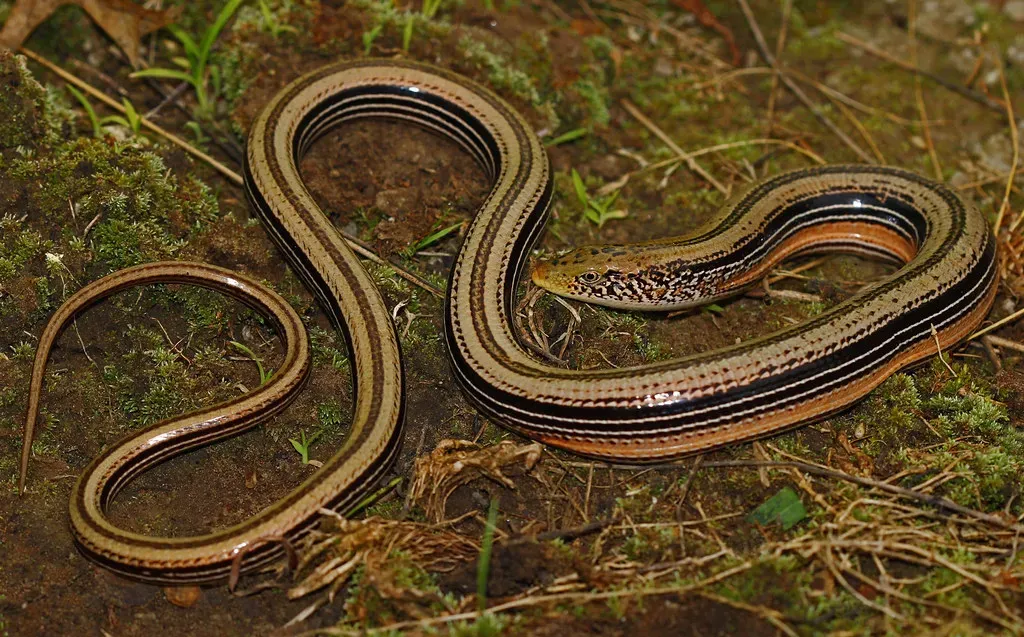
Meet the leggiest-looking non-snake in the American Midwest. The slender glass lizard is a legless lizard in the glass lizard subfamily, and the species is endemic to the United States. It turns up in places you would not exactly expect a snake lookalike, like old farm fields in Illinois and open woodlands along the Missouri River.
This species gets its name from its particularly long and thin body, making it one of the most snake-like glass lizards around. It is distributed all over southeastern and central North America, with territories that stretch from the coastal plain into east Texas to as far north as Illinois.
Being legless, the western slender glass lizard is most likely to be confused with snakes, such as the lined snake, red-bellied snake, and gartersnakes, which can also be tan or brownish and have lengthwise stripes. The giveaways, if you can slow down enough to look, are movable eyelids, an ear opening on either side of the head, and a lateral groove running down the entire length of the body. Snakes have none of these characteristics.
The California Legless Lizard – West Coast’s Underground Wanderer
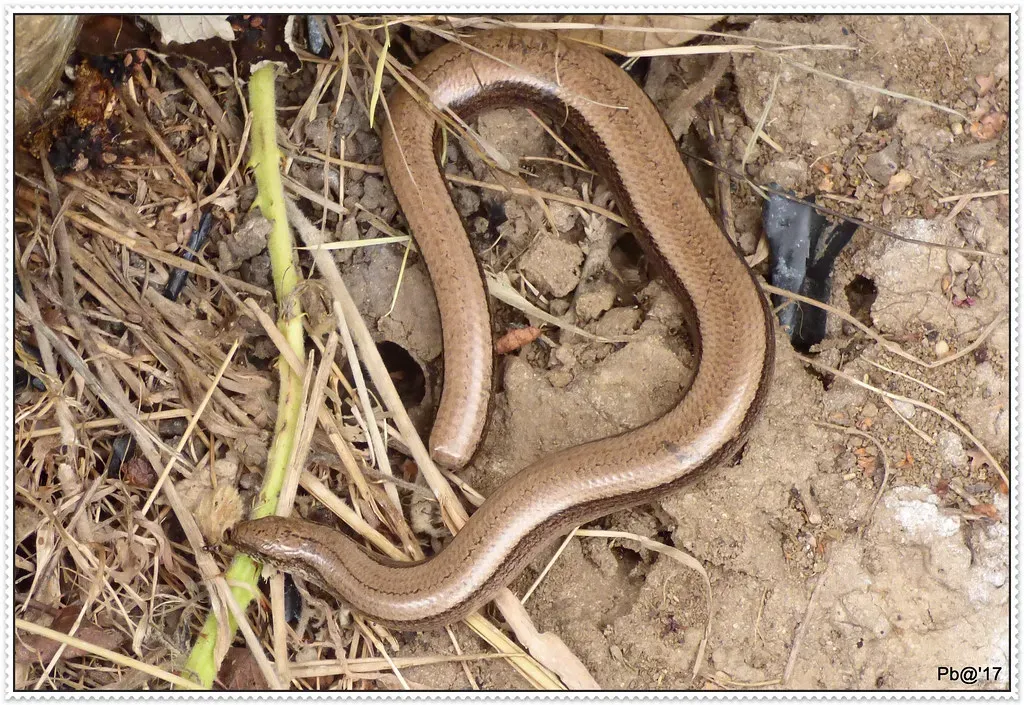
Out West, there’s a slender creature that has been fooling California hikers and beachgoers for decades. Anniella pulchra, the California legless lizard, is a limbless, burrowing lizard often mistaken for a snake, measuring around 7 inches from snout to vent. Small, secretive, and surprisingly beautiful up close, this little reptile spends most of its life underground.
It has a shovel-shaped snout, smooth shiny scales and a blunt tail. It varies in color from metallic silver, beige, dark brown to black, and it typically has a dark line along its back and several thin stripes between scale rows along its sides. Think of it as the silver-scaled minimalist of the lizard world.
Two significant characteristics distinguish the California legless lizard from a snake: it has moveable eyelids, which snakes do not have at all, and the California legless lizard can purposely detach the end of its tail to trick predators, a skill your average snake does not possess. The main threat facing California legless lizards is human habitat disturbance, with harmful activities including the destruction of natural habitat for agriculture, housing developments, sand mining, golf courses, and off-road vehicle activities.
The Florida Worm Lizard – The Underground Oddity Nobody Knows About
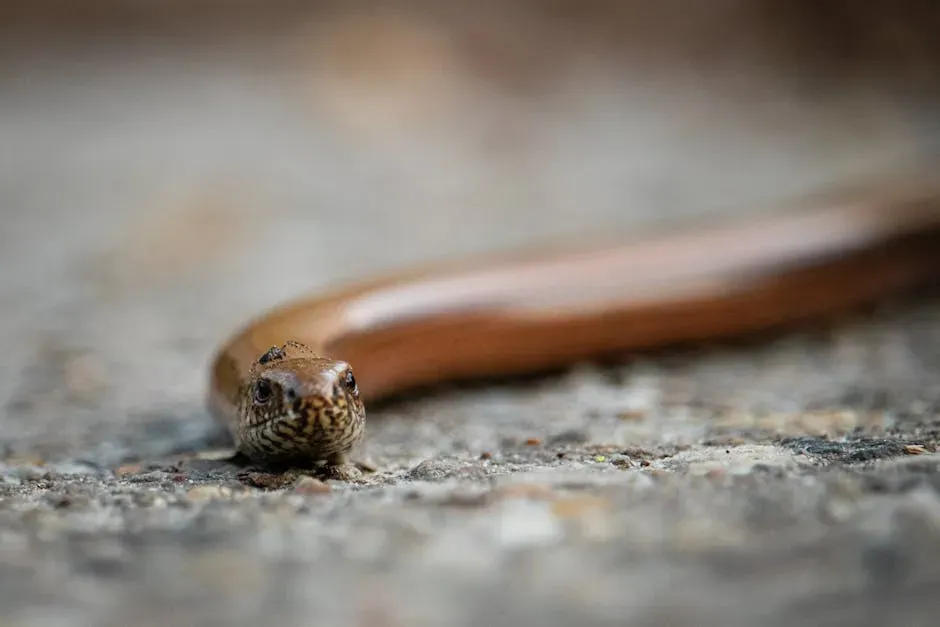
Here’s one that surprises even people who consider themselves reptile enthusiasts. There is only one species of wormlizard in Florida, the Florida Wormlizard. Wormlizards are neither snakes nor true lizards, but belong to their own unique group, the amphisbaenids. That’s right, it’s not even a lizard. It exists in its own strange biological category entirely.
As their name suggests, wormlizards look much like large, pink earthworms; unlike earthworms, they have scales arranged in segment-like rings around their bodies. They are much larger than earthworms, ranging in size from 7 to 11 inches long, and may be misidentified as odd-looking snakes.
Florida Wormlizards spend their entire lives underground in habitats with sandy soils, and have no eyes or external ear openings. They may be forced aboveground by heavy rains, and are sometimes seen on paved surfaces in suburban neighborhoods after storms. So if you live in central Florida and find something pink and ringed wriggling across your driveway after a thunderstorm, don’t panic. It’s completely harmless and just as confused as you are.
The Five-Lined Skink – The One With the Shocking Blue Tail
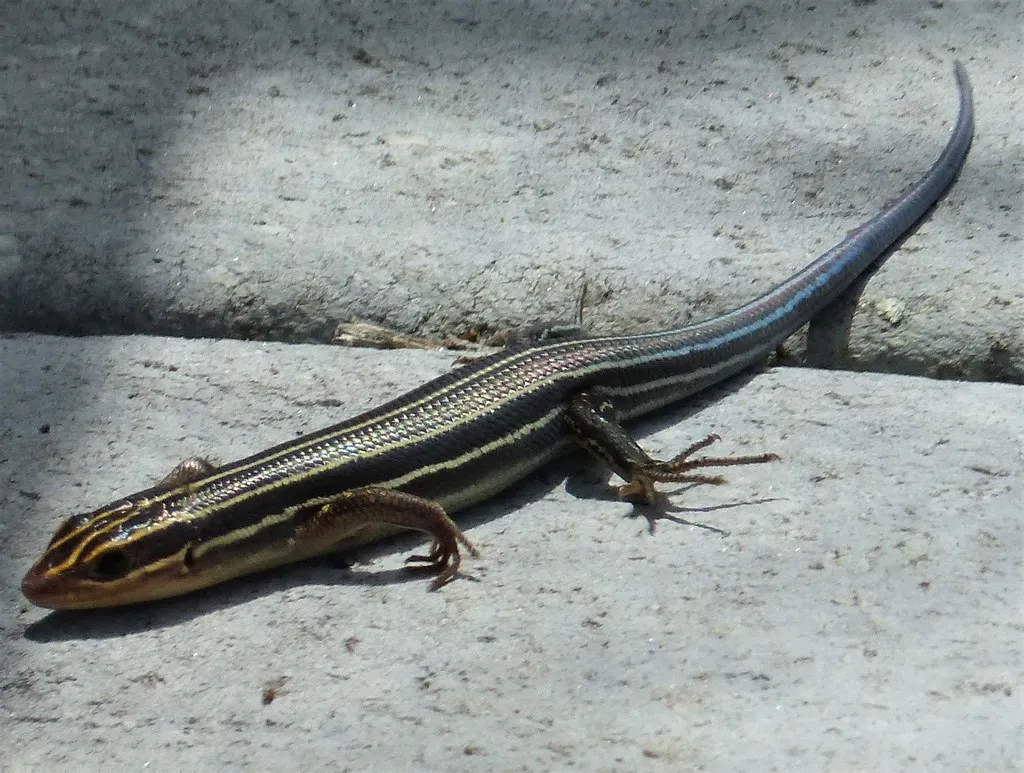
I think the five-lined skink deserves far more attention in these conversations, because its juveniles, with those striking electric-blue tails, cause genuine panic on a regular basis. Skinks, in general, are longer and skinnier than most lizards. Perhaps a thousand years from now, the western three-toed skink will be called the western legless skink. They still have two tiny appendages near the front of their bodies, but they seem to be non-functioning. Skinks are a kind of lizard, but they typically have shorter legs than lizards and skinnier bodies.
When a young five-lined skink bolts through dry leaf litter, all you catch is a flash of iridescent blue and a long, slim body moving fast. Many people mistake that movement entirely for a small snake. The skink’s body is sleek, smooth-scaled, and surprisingly elongated compared to most lizards people are used to seeing.
What really gives them away, if you’re quick enough, is the presence of four short but visible legs close to the body. Some species, like the western three-toed skink, are in the process of losing their limbs as we speak and sport ridiculously tiny nubs with toes. Evolution happening in slow motion, right before our eyes.
The Six-Lined Racerunner – Speed Demon of the Open Plains
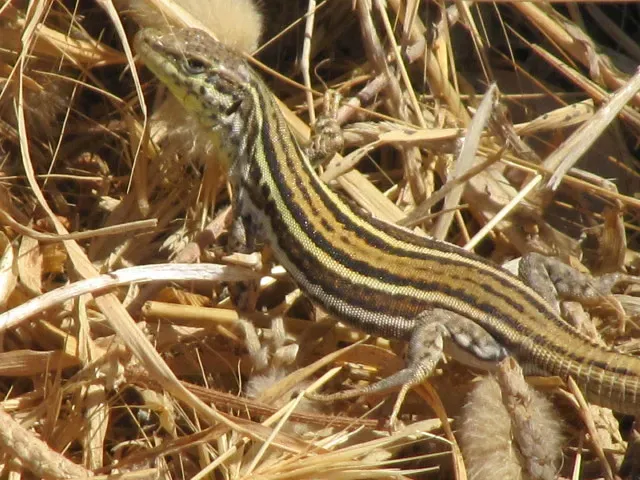
Let’s be real, most people don’t get a good look at the six-lined racerunner at all. It moves too fast. They are wary, energetic, and fast moving, with speeds up to 18 mph, darting for cover if approached. That speed, combined with a long thin body and striped patterning, absolutely creates snake-like panic in the casual observer.
The six-lined racerunner is typically dark green, brown, or black in color, with six yellow or green-yellow stripes that extend down the body from head to tail. Between the stripes are dark-colored fields ranging from dark brown to black and pale-colored fields near ventral scales on each side. When it darts across a dirt road in Texas or Oklahoma, the combination of its coloring and fluid movement is almost indistinguishable from a small garter snake to the untrained eye.
Due to its extensive range, the six-lined racerunner is found in a wide variety of habitats, including grasslands, woodlands, open floodplains, or rocky outcroppings. Unlike a snake, however, it has well-developed visible limbs and those tell-tale six stripes. Six-lined racerunners have evolved long tails, which make them extremely fast to escape predators, and this species can lose its tail as a last-ditch effort to survive.
The Western Alligator Lizard – The Menacing-Looking Harmless Giant
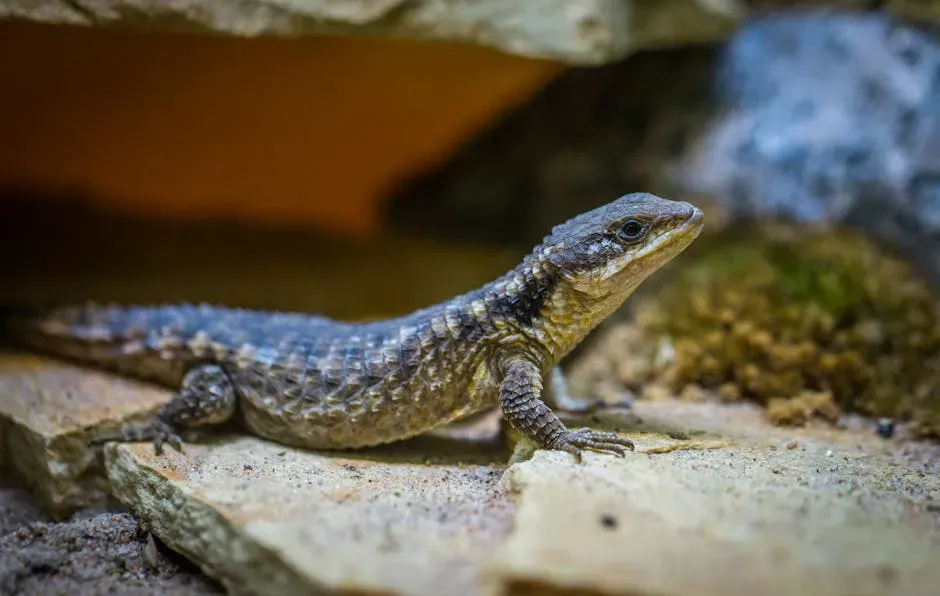
The Western Alligator Lizard is one of those reptiles that looks genuinely intimidating at first glance, and it’s got the movement to match. Four genera, with a total of 14 species, occur in the United States, including Elgaria, the western alligator lizards, with four species. Found throughout the western US, from Oregon down through California and into Baja California, these lizards have a distinctly serpentine way of moving, especially in tall grass.
Their bodies are long, somewhat flattened, and they often carry their legs close to their sides as they move, which makes the impression of a snake even stronger from a distance. Add in their rough, scaled appearance and slightly aggressive posture when cornered, and you’ve got a reptile that routinely gets misidentified and, sadly, sometimes killed because of it.
A number of species are long, slender, and legless, causing them to be easily confused with snakes. There are other species that have a reduced number of toes or only two limbs; there also are some species that are more typical lizards with four normal limbs. The alligator lizard has all four limbs, but they’re so abbreviated compared to its long body that in motion, it barely looks like it needs them at all. It’s one of nature’s most convincing optical illusions.
The Mimic Glass Lizard – The Copycat Nobody Talks About
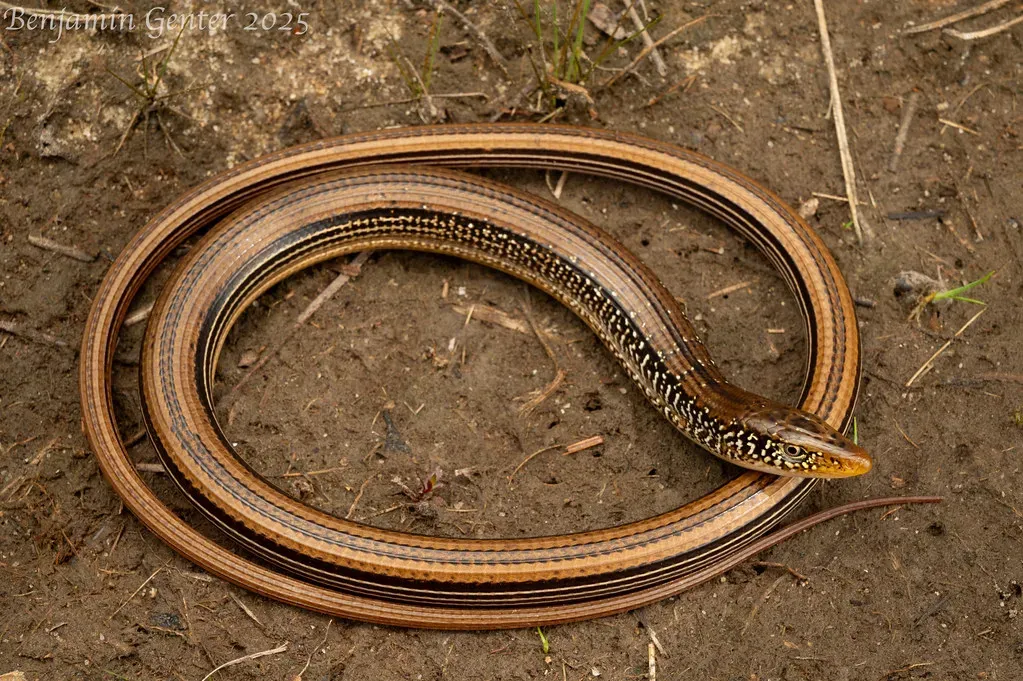
Saving one of the most fascinating for last. The Southeast is actually home to four species of legless glass lizards: slender, Eastern, mimic, and island. The mimic glass lizard is arguably the least known of the four, yet its name alone tells the whole story. It mimics. That’s literally its calling card in the natural world.
These lizards occupy a variety of habitats, including wet meadows, deserts, grasslands, and pine flatwoods, and hunt insects, spiders, bird eggs, other reptiles, and amphibians. They’re not particularly fussy about where they live, which is part of why encounters with them happen so frequently across the southeastern US.
Closer inspection reveals some giveaways that this is no snake: a legless lizard has two clear holes for ears, a nicety snakes don’t enjoy, and the lizard might blink, which snakes can’t do, and there’s a distinctive groove running along the lower side of the body, which snakes don’t have. Glass lizards take their name from the fact that they can break. Like other lizards, their tails, where they store their fat reserves, can pop off and wiggle around as a decoy when they’re under threat. It’s a survival strategy so effective it borders on theatrical.
Conclusion: Look Twice Before You Leap
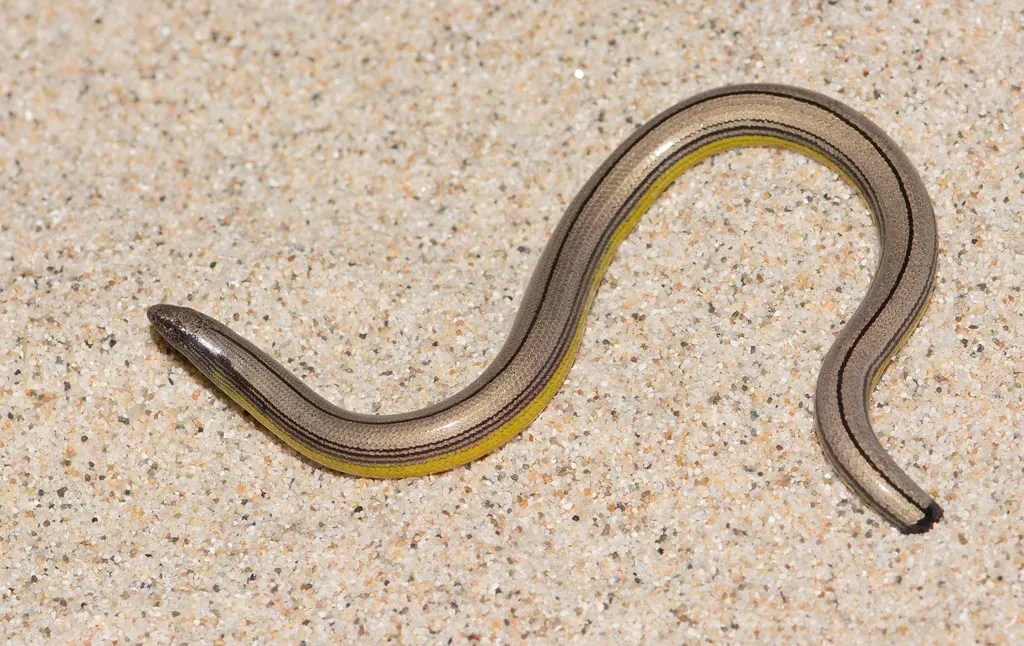
Nature is a masterclass in creative repetition. The snake body plan has proven so successful that dozens of completely unrelated reptiles have independently evolved their way toward it, some losing legs entirely, others simply elongating their bodies to a point where legs become almost irrelevant.
Because it gets asked so often about snakes, it is worth noting that none of the identified legless lizards are venomous. That alone should encourage people to pause before reacting with fear. Most of these creatures are completely harmless, ecologically valuable, and honestly, kind of spectacular once you know what you’re actually looking at.
The next time something long and slithery crosses your path, take a breath. Look for the ears, the eyelids, the tail that might break off in your hand. What you’re looking at might not be a snake at all. It might just be one of America’s most underappreciated reptiles doing its very best impression. Did you expect there to be so many? Share your thoughts in the comments below.

- 10 Remarkable Facts About the African Cheetah: The Lightning of the Grasslands - July 29, 2026
- 10 Most Heroic Horses in History - July 29, 2026
- Why You Should Never Play Dead When Attacked by a Black Bear - July 29, 2026