

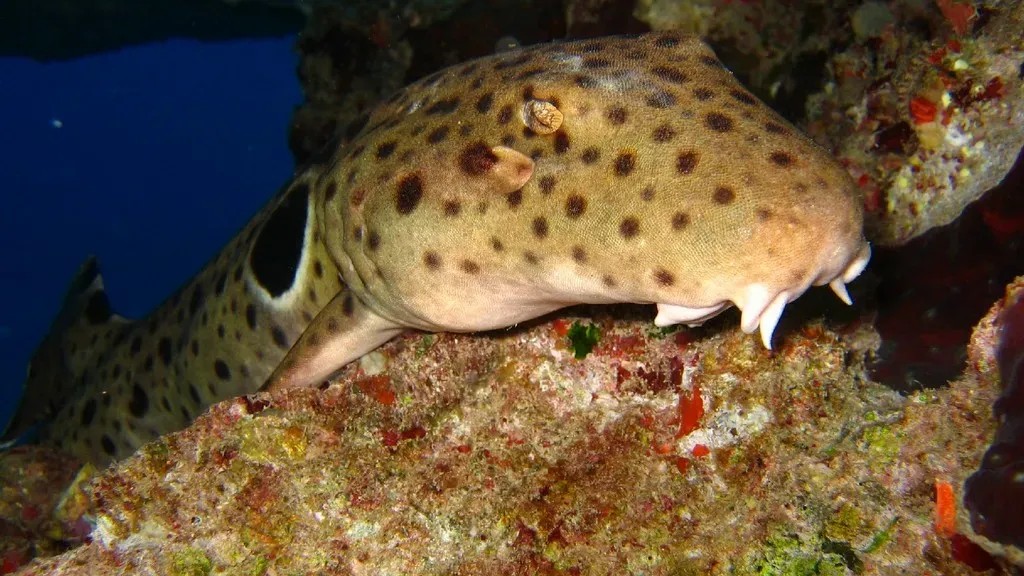
There are creatures on this planet that consistently remind us how little we actually understand about life. The ocean is full of them. Yet every so often, a discovery surfaces that genuinely stops scientists in their tracks, something so unexpected that it reshapes what we thought was possible in the animal kingdom.
Walking sharks, those strange, reef-crawling little predators already famous for “walking” along the ocean floor on their fins, have just handed researchers another jaw-dropping surprise. It turns out reproduction in these animals is far more complex and baffling than anyone anticipated. Let’s dive in.
Meet the Shark That Walks on Land (Sort Of)
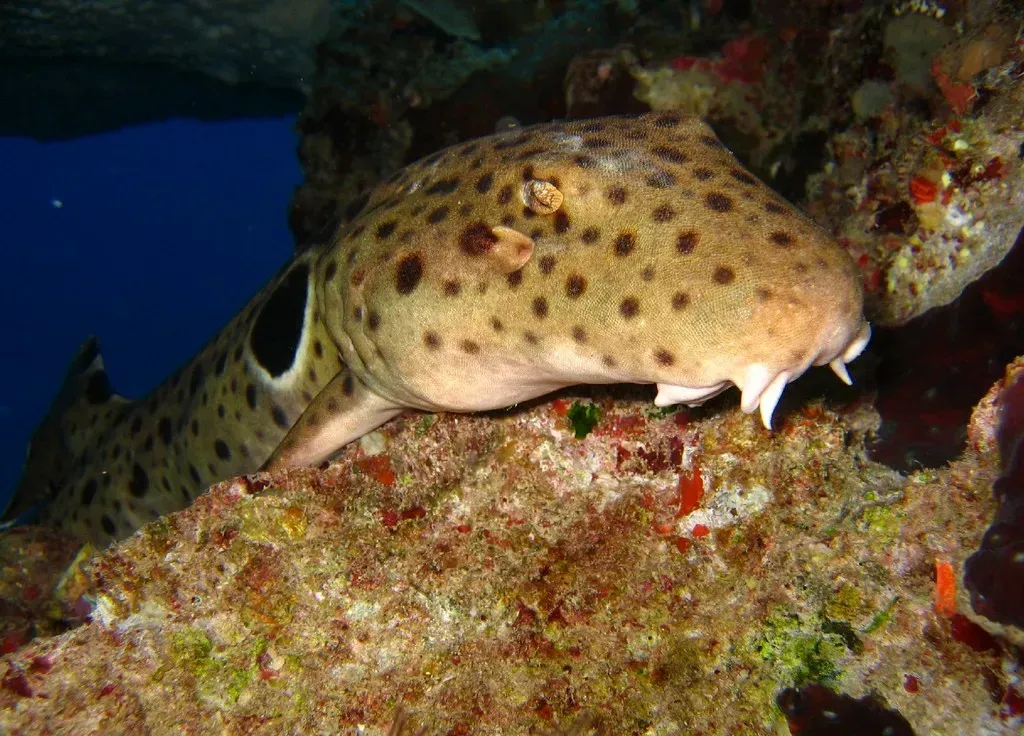
Let’s be real, when most people hear “shark,” they picture a towering apex predator slicing through open water. Walking sharks are something else entirely. These small, shallow-water species, found primarily around northern Australia and Papua New Guinea, use their pectoral and pelvic fins to waddle across coral reefs and even briefly onto exposed tidal flats. It’s equal parts adorable and deeply weird.
There are nine known species of walking sharks, all belonging to the genus Hemiscyllium. They’re relatively small, usually under a meter long, and they feed on small fish and invertebrates hiding among the coral. What makes them scientifically valuable isn’t just their unusual locomotion. It’s their evolutionary youth. Walking sharks are among the most recently evolved sharks on Earth, which makes every new discovery about them feel like reading a chapter of evolution in real time.
Female Sharks Reproducing Without Males
Here’s the thing that genuinely shocked researchers. Female walking sharks in human care have been documented reproducing without any male involvement whatsoever. This phenomenon is called parthenogenesis, a form of asexual reproduction where an egg develops into an offspring without fertilization. It sounds like science fiction, but it’s very real.
What makes this particularly stunning is the context. Parthenogenesis has been documented in other shark species before, in zebra sharks, sawfish, and a handful of others. Still, observing it in walking sharks adds significant weight to the theory that this ability may be far more widespread across cartilaginous fish than scientists previously believed. Honestly, every time we think we’ve mapped the boundaries of animal reproduction, nature quietly moves the boundary post.
How Parthenogenesis Actually Works in Sharks
Without getting too deep into the biology, here’s a simplified version. In sexual reproduction, a sperm cell fertilizes an egg, combining genetic material from two parents. In parthenogenesis, the egg essentially fertilizes itself, often using a polar body, a cell byproduct created during egg development, to supply the missing genetic contribution. The result is an offspring with reduced genetic diversity compared to sexually produced young.
Think of it like making a photocopy of a photocopy. The image is there, it’s recognizable, but something subtle is lost in the duplication. For walking sharks specifically, this reproductive strategy appears to emerge particularly when females are isolated from males, essentially a biological backup plan. It’s a survival mechanism baked into the genetics, and it raises fascinating questions about how these animals evolved in isolated reef environments over thousands of years.
What This Means for Genetic Diversity
This is where things get a little complicated, and worth paying attention to. Parthenogenetic offspring carry less genetic variation than sexually produced young. In stable, thriving wild populations, that’s not necessarily catastrophic. Nature has ways of balancing things out. The concern rises when populations are already under stress, which, given the state of coral reef ecosystems in 2026, is a very real scenario.
Reduced genetic diversity can make a population more vulnerable to disease, environmental shifts, and other pressures. It’s similar to planting a garden with only one variety of seed. If a blight hits that variety specifically, your entire garden is compromised. Scientists are now examining whether parthenogenesis in walking sharks reflects environmental stress responses or whether it’s simply a routine reproductive option these animals have always had available to them. The answer to that question matters enormously for conservation planning.
The Role of Captivity in the Discovery
It’s worth noting that this discovery emerged largely from observations of walking sharks in aquarium settings, where the absence of males makes any pregnancy immediately noteworthy. Aquariums, for all the debate around keeping marine animals in captivity, do serve as genuinely useful scientific observation environments. You can monitor reproduction in ways that are nearly impossible in open water.
When female walking sharks in isolated tanks began producing eggs that hatched, researchers had to rule out stored sperm, a known phenomenon in sharks where females can retain viable sperm for extended periods after mating. After careful investigation, parthenogenesis was confirmed. It’s a reminder that captive animal studies, when conducted responsibly, can generate insights that ripple outward into our understanding of entire species groups in the wild.
Walking Sharks and the Bigger Evolutionary Picture
Walking sharks are evolutionary newcomers by geological standards, having diverged into distinct species relatively recently. Their unique method of locomotion likely evolved as they adapted to shallow, oxygen-poor reef environments where swimming constantly would be energetically costly. The fact that they’ve also retained or developed a facultative form of asexual reproduction suggests these animals are remarkably adaptable at a genetic level.
I think what’s most compelling here is what walking sharks tell us about resilience. They’ve carved out an ecological niche by doing things differently, walking instead of swimming, reproducing asexually when necessary, thriving in environments that challenge most other sharks. There’s something almost poetic about a creature that refuses to be constrained by the conventional rules of its own class. Scientists studying their rapid speciation alongside their flexible reproduction are starting to see walking sharks as a kind of living laboratory for understanding vertebrate adaptability under pressure.
What Happens Next for Walking Shark Research
Researchers are now keen to understand how frequently parthenogenesis occurs in wild walking shark populations and whether the offspring produced this way survive long-term and contribute meaningfully to population numbers. It’s a genuinely difficult thing to study in the field, since these animals inhabit shallow, complex reef environments that don’t lend themselves easily to continuous monitoring.
Genetic sampling is likely to play a major role going forward. By analyzing the DNA of wild walking shark populations, scientists can potentially identify parthenogenetic individuals and estimate how common this reproductive pathway actually is. The conservation implications are significant, particularly as reef habitats continue to face pressure from warming oceans and human activity. Understanding every tool in a species’ survival toolkit is crucial when you’re trying to protect it.
A Closing Thought on Nature’s Resourcefulness
Walking sharks were already remarkable before this discovery. They walk. They thrive in shallow, hostile reef environments. They’ve evolved into nine distinct species in a geologically short timeframe. Now we know they can reproduce without a partner when circumstances demand it. At this point, honestly, I wouldn’t be surprised if one of them figured out how to file taxes.
There’s a deeper lesson here though, one that goes beyond the biology. Nature is endlessly resourceful in ways that consistently outpace human prediction. Every time we draft a definitive rulebook for how animals “should” behave or reproduce, something like a cloning walking shark shows up and quietly tears out a page. The question worth sitting with is this: how many other species out there carry hidden reproductive strategies we haven’t discovered yet? What do you think? Drop your thoughts in the comments below.

- Urban Coyotes Show Remarkable Adaptability, Learning to Thrive in City Environments - July 22, 2026
- Beavers Are Nature’s Engineers, Creating Vital Habitats for Other Wildlife Species - July 21, 2026
- The Recovery of the California Condor Offers Hope for Other Critically Endangered Birds - July 21, 2026