

There’s something almost poetic about the idea that every time you sweat, cry, or feel your heart pump blood through your veins, you’re carrying a tiny echo of the ancient ocean inside you. It sounds like something from a philosophy class, but it turns out science has been quietly building a case for it. A remarkable new study is reshaping what we thought we knew about the evolutionary leap from sea to land, and the findings are genuinely jaw-dropping.
The research digs into one of biology’s most enduring mysteries: how did ocean-dwelling creatures manage to survive, reproduce, and eventually thrive in a completely alien environment? The answers are more surprising, and more personal, than most people would expect. Let’s dive in.
The Great Exodus From the Sea
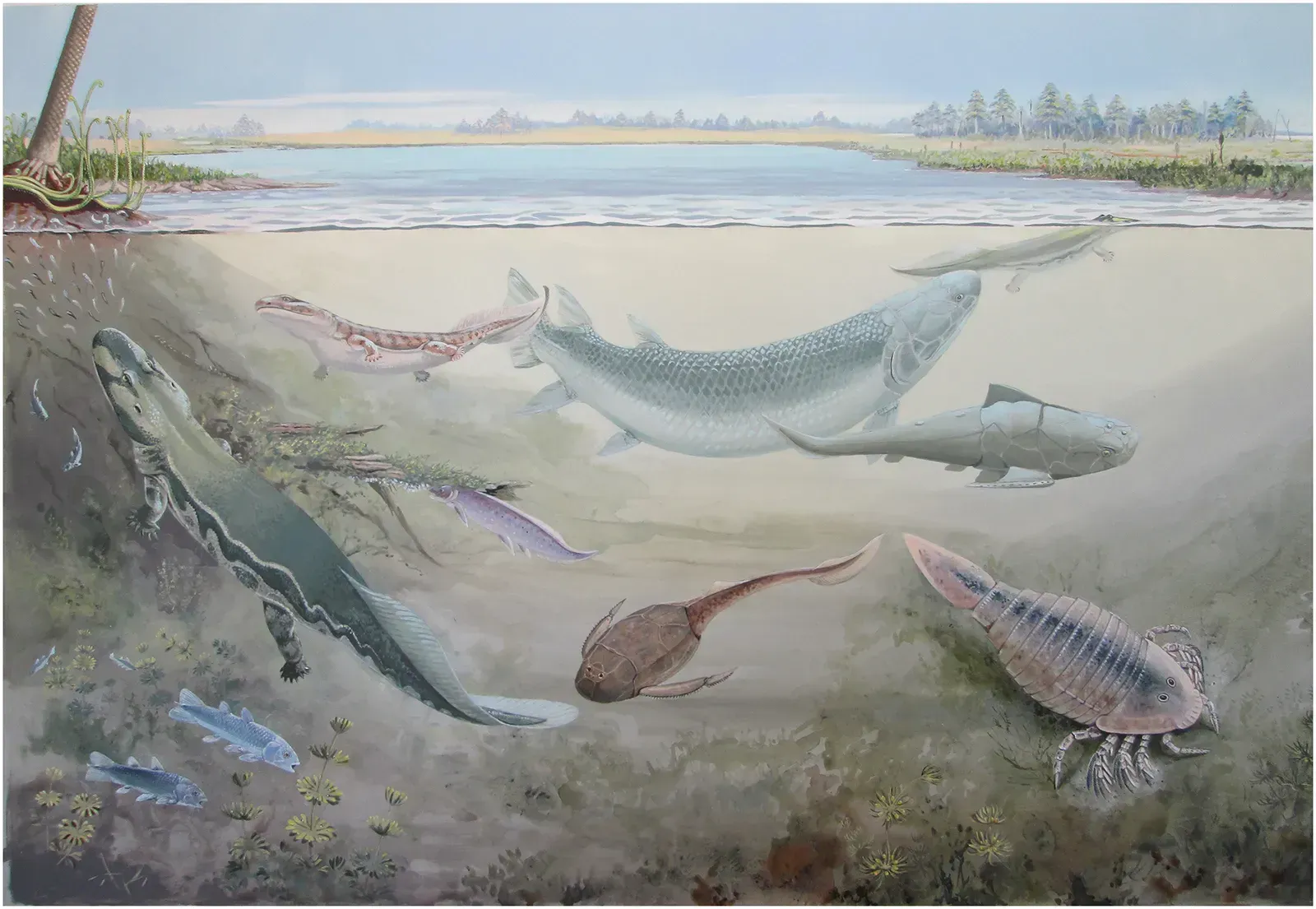
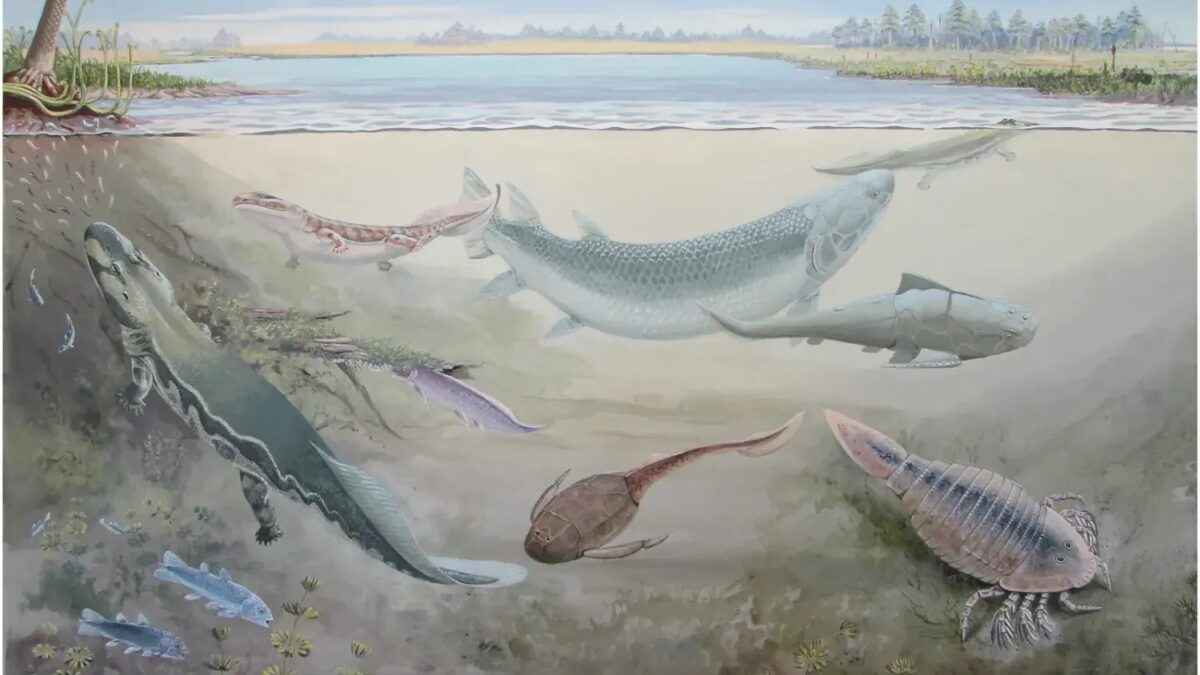
Roughly 375 million years ago, the ancestors of all land vertebrates made one of the most consequential journeys in the history of life on Earth. They crawled, flopped, or waddled their way from shallow coastal waters onto dry land. It wasn’t a single dramatic moment, more like an agonizingly slow experiment that played out across millions of generations.
Here’s the thing, that transition was physiologically brutal. Moving from a salt-water environment to open air means dealing with dehydration, gravity pressing down on your body without the buoyancy of water, and the challenge of breathing in a completely new way. The fact that any creature managed it at all is honestly astonishing.
Scientists have long assumed that early land animals simply “adapted” over time, which is technically true but glosses over the extraordinary molecular and cellular gymnastics happening beneath the surface. The new research zeroes in on exactly how those biological systems reorganized themselves, and the picture it paints is far more elegant than previously understood.
The Ocean Never Really Left
One of the most striking revelations in this research is that early land vertebrates didn’t just leave the ocean behind. They brought critical parts of it with them. The ionic composition of blood and internal bodily fluids in vertebrates, including humans, bears a remarkable resemblance to ancient seawater. It’s not a coincidence.
Think of it like packing a suitcase. When these creatures moved onto land, they essentially sealed a version of the ocean inside their bodies, maintaining the chemical balance their cells had evolved to depend on. The body became its own self-contained aquatic environment. That’s a level of biological ingenuity that still boggles the mind.
This concept helps explain why so many of our bodily processes, from kidney function to nerve signal transmission, depend on precise salt and mineral balances. We’re not just descendants of ocean creatures. In a very real cellular sense, we’re still living in the ocean.
Unraveling the Genetic Blueprint of the Transition
The researchers behind this study used sophisticated genomic analysis to trace the evolutionary changes that made land life possible. By comparing the genomes of modern fish, amphibians, reptiles, and mammals, they mapped the genetic shifts that occurred during the water-to-land transition with unprecedented precision.
What they found was that certain gene families expanded dramatically right around the time vertebrates began colonizing land. Genes responsible for water retention, skin impermeability, and limb development all show clear signatures of rapid evolutionary pressure during this period. It’s like watching a biological response kit get assembled in real time, millions of years after the fact.
Honestly, I find the genomic angle the most compelling part of this whole story. Genes don’t lie, and the patterns buried in DNA act like a molecular fossil record. This approach is revealing details that physical fossils simply cannot tell us.
The Role of Kidneys and Salt in Survival
One of the unsung heroes of the water-to-land transition is the kidney. In fish, maintaining salt balance in a marine environment is a constant challenge, but water is always available. On land, the problem flips entirely. Suddenly, conserving water and managing salt concentrations became a life-or-death matter.
The study highlights how kidney architecture evolved rapidly and significantly during the transition period. Early land vertebrates developed increasingly sophisticated nephron structures, the tiny filtering units inside the kidney, that could concentrate urine and minimize water loss far more effectively than their aquatic predecessors could manage.
This is one of those evolutionary stories where a single organ ends up carrying the weight of an entire survival strategy. Without the kidney’s remarkable ability to adapt, the entire story of land vertebrates, including us, might have ended before it began.
Skin: The Underrated Evolutionary Marvel
Most people think of skin as fairly boring. It keeps things in and keeps things out. That’s about as deep as most of us go. But during the water-to-land transition, the evolution of skin was arguably just as critical as the development of limbs or lungs.
Aquatic animals lose and absorb water freely through permeable skin. On land, that’s a fatal flaw. The research reveals that genetic changes enabling the development of a far less permeable skin barrier occurred in tight coordination with other physiological shifts. It wasn’t random mutation, it was a cascade of changes that all needed to align for survival to be possible.
There’s also an immune dimension to this that researchers are increasingly paying attention to. Skin on land had to become not just a physical barrier but also a frontline defense against airborne bacteria and environmental pathogens that simply didn’t exist as threats in the ocean. The complexity of that evolutionary leap, in just one organ, is staggering.
What Amphibians Reveal About Our Own Bodies
Modern amphibians, frogs, salamanders, and their relatives, occupy a uniquely revealing position in this story. They still straddle two worlds in a very literal sense. Their biology preserves ancestral traits that land-locked mammals like us have long since modified or discarded.
By studying amphibian physiology and comparing it against fully terrestrial animals, researchers have been able to identify which adaptations were foundational and which came later as evolutionary refinements. The data suggests that the earliest land vertebrates were far more physiologically flexible than previously thought, capable of tolerating wider ranges of salt concentration and hydration than today’s specialists.
It’s a bit humbling, honestly, to think that a frog sitting on a lily pad is living evidence of one of the greatest biological revolutions in Earth’s history. We tend to see amphibians as simple or primitive. In reality, they’re exquisitely complex survivors of an almost incomprehensible evolutionary challenge.
Why This Discovery Matters Far Beyond Ancient History
At first glance, this might seem like fascinating but purely historical science. Ancient fish crawled onto land. We evolved. Cool story. Move on. Except the implications of this research stretch deeply into modern medicine, climate science, and our understanding of how life responds to environmental stress.
Understanding how organisms rewired their biology in response to a radically changing environment has direct relevance to questions we’re facing right now in 2026. How might species adapt, or fail to adapt, as climate change alters habitats at a pace evolution may not be able to match? The water-to-land transition is, in some ways, a deep-time stress test with lessons for today.
There’s also a medical angle that shouldn’t be overlooked. Many of the genetic systems that evolved during the water-to-land transition are the same systems involved in modern human diseases. Kidney disease, dehydration disorders, and even certain skin conditions trace their roots to the very biological machinery that once allowed our ancestors to leave the sea. Studying these ancient systems could open new doors for treatment and understanding.
Conclusion: We Are All, Still, a Little Bit Ocean
It’s rare that a scientific study genuinely shifts the way you see yourself, but I think this one has the potential to do exactly that. The next time you feel thirsty, notice your skin, or think about how your body regulates itself, you’re witnessing the legacy of an evolutionary journey that began nearly 400 million years ago.
The ocean didn’t just shape our ancestors. It shaped us, cell by cell, gene by gene, in ways we’re only now beginning to fully appreciate. The fact that researchers can look at modern genomes and trace these ancient decisions with such precision feels nothing short of extraordinary.
What strikes me most is how this research reminds us that life doesn’t overcome challenges by leaving the past behind. It carries what it needs from the past and finds a way to make it work somewhere entirely new. There’s something deeply inspiring in that, and perhaps a little instruction for our own moment in history too.
What does it change for you, knowing the ocean is still, in a sense, inside you?

- Urban Coyotes Show Remarkable Adaptability, Learning to Thrive in City Environments - July 22, 2026
- Beavers Are Nature’s Engineers, Creating Vital Habitats for Other Wildlife Species - July 21, 2026
- The Recovery of the California Condor Offers Hope for Other Critically Endangered Birds - July 21, 2026