

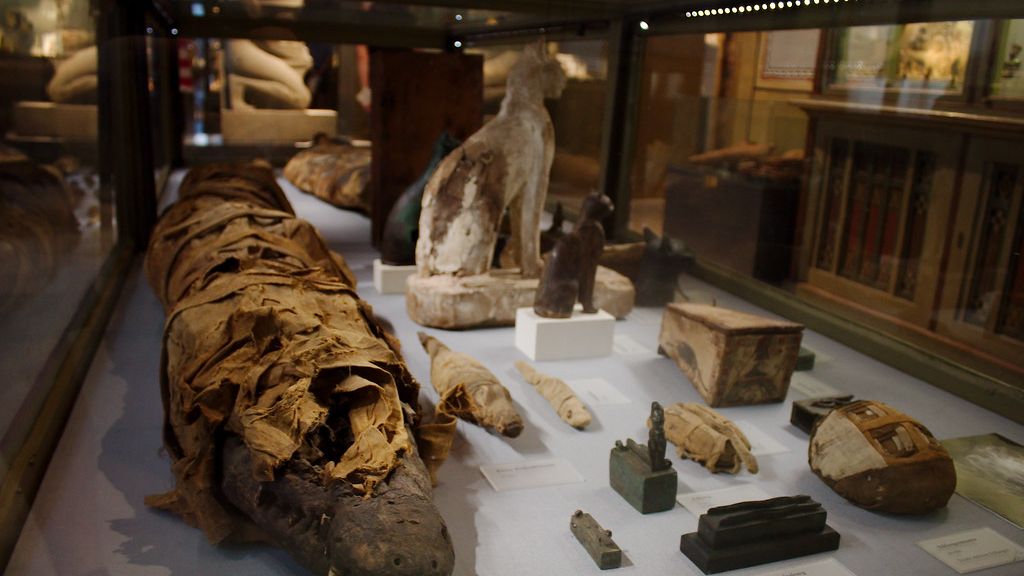
Few things stop archaeologists in their tracks quite like a mummified crocodile staring back at them from a tomb. It sounds like the opening scene of an adventure film, honestly. Yet that’s exactly what researchers encountered when excavating a site tied to ancient Egyptian burial practices, and the details are far stranger and more fascinating than anyone expected.
What makes this particular find so compelling isn’t just the creature itself. It’s the story behind why it was there, how it was preserved, and what it reveals about a civilization that still manages to surprise us thousands of years later. Let’s dive in.
A Crocodile in a Tomb: The Discovery That Raised Eyebrows
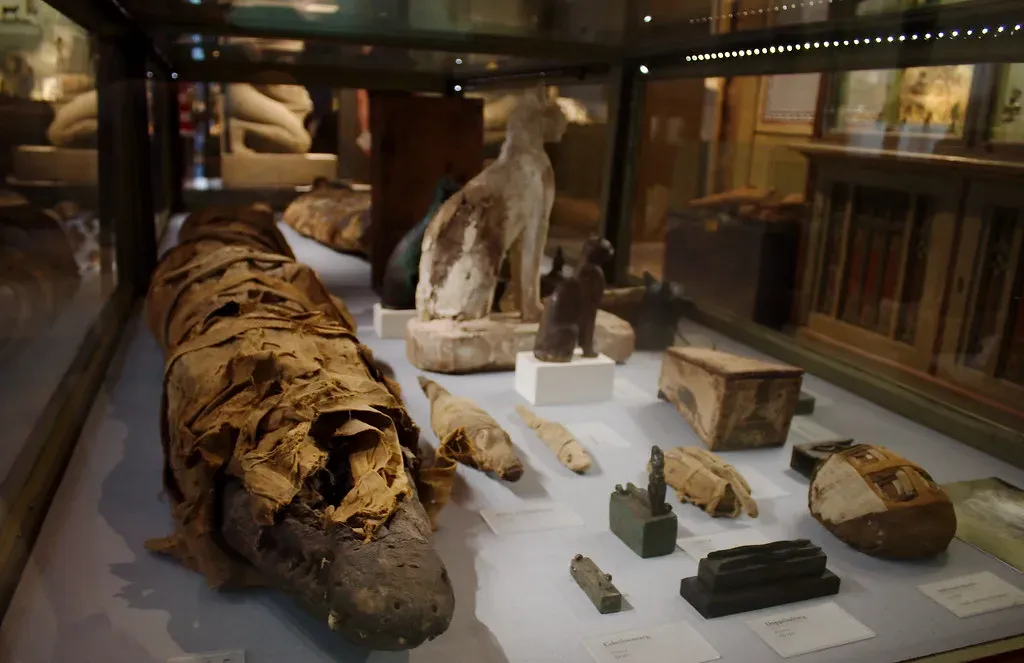
Here’s the thing about ancient Egypt – you think you’ve seen it all, and then a mummified crocodile shows up somewhere it really shouldn’t be. Researchers uncovered the specimen during excavations connected to Egyptian burial sites, finding a remarkably preserved crocodile mummy that immediately sparked questions about religious ritual and animal veneration in the ancient world. This wasn’t some tiny lizard tucked in a corner. This was a full, intentional burial of a sacred animal.
The crocodile was found in a condition that suggested deliberate, careful mummification. Someone took real time and effort to preserve this animal, which tells us it wasn’t some accidental burial or casual disposal. The ancient Egyptians didn’t do things halfway when it came to their gods, and this crocodile was clearly part of something much larger than a simple animal death.
Sobek and the Sacred Status of Crocodiles in Ancient Egypt
To understand why anyone would go to the trouble of mummifying a crocodile, you need to understand Sobek. He was the crocodile-headed god of the Nile, associated with power, fertility, and the unpredictable force of water. The ancient Egyptians both feared and worshipped crocodiles, which is a pretty wild combination when you think about it. These animals weren’t just dangerous wildlife – they were living symbols of divine presence.
Crocodiles were kept in sacred temple pools in certain regions, particularly in the Faiyum area, where the cult of Sobek was especially strong. When these animals died, they weren’t just thrown away. They were honored, wrapped, and preserved with the same seriousness applied to human royalty. The discovery of this mummified specimen fits neatly into that tradition, though the specific context of where it was found adds new layers to the conversation.
The Mummification Process: How Do You Even Wrap a Crocodile?
Let’s be real – mummifying a human is already an extraordinarily complex process. Doing it to a crocodile is something else entirely. The scaly, armored exterior of a crocodile presents unique preservation challenges that ancient Egyptian embalmers apparently figured out with remarkable skill. Researchers examining the specimen noted the quality of the preservation, pointing to techniques that reflect serious knowledge of animal anatomy and decay.
The wrappings and method used offer clues about the time period and the specific practitioners involved. Ancient embalmers developed different approaches for different animals, from cats and ibises to dogs and snakes. Crocodiles required particular attention to their thick skin and dense bodies, making each successfully mummified specimen something of a technical achievement. Honestly, the craftsmanship alone deserves a kind of grudging respect.
What the Find Reveals About Egyptian Religious Practices
Animal mummies aren’t rare in Egypt – millions were created over centuries as religious offerings. But each new discovery contributes to a more detailed picture of how, when, and why Egyptians conducted these rituals. This particular crocodile mummy helps researchers understand regional variations in animal worship and the extent to which different communities engaged with specific deity cults.
The context of the burial matters enormously here. Where an animal mummy is found, how it’s positioned, and what surrounds it can all point to the intent behind the burial. Was this a votive offering, meant to carry a prayer to Sobek? Was it a beloved temple animal given an honorable burial? The answers aren’t always straightforward, but each specimen narrows the possibilities. It’s a bit like archaeology as forensic detective work, piecing together motivation from physical evidence thousands of years old.
The Role of Modern Science in Unlocking Ancient Mysteries
Decades ago, studying a mummy meant physically unwrapping it, often destroying the very thing you were trying to understand. Today, CT scanning, X-ray imaging, and advanced chemical analysis allow researchers to examine mummies in extraordinary detail without touching a single wrapping. The mummified crocodile discovery benefits enormously from these modern tools, which can reveal internal structure, age at death, cause of death, and even what the animal ate.
I think this is where the real magic happens. Science and archaeology working together can turn a seemingly simple artifact into a window onto an entire world. Researchers can now determine whether an animal was raised in captivity or caught in the wild, whether it showed signs of disease, and whether specific plants or resins were used in its preservation. For a civilization that left no instruction manual, these scientific clues are as close as we get to hearing ancient voices speak directly to us.
Egypt’s Ongoing Excavation Boom and What Comes Next
Egypt has seen a remarkable surge in significant archaeological discoveries over the past decade or so. New scanning technologies, better-funded excavation projects, and collaboration between Egyptian authorities and international research teams have dramatically increased the pace of discovery. The mummified crocodile is just one piece of a much larger puzzle being assembled right now across dozens of active dig sites.
There’s a sense among researchers that the best discoveries may still be ahead. Vast portions of Egypt’s archaeological landscape remain unexcavated or only partially explored. Hidden tombs, buried temples, and sealed chambers continue to surface with surprising regularity. Each new find like this crocodile mummy reminds us that one of history’s greatest civilizations still holds secrets it hasn’t given up yet, and that’s genuinely thrilling.
Why This Discovery Matters Beyond the Headlines
It’s easy to treat stories like this as curiosity pieces, a mummified crocodile as a kind of exotic novelty. However, the deeper significance runs through almost every field of study connected to the ancient world. Historians, biologists, religious scholars, and anthropologists all have something to gain from carefully studying finds like this one. Understanding how ancient cultures related to animals tells us something profound about human psychology and spirituality across time.
The relationship between humans and animals in ancient Egypt was layered, complex, and deeply ritualized in ways that feel simultaneously alien and oddly familiar. People built entire systems of meaning around creatures they feared, revered, and ultimately chose to honor in death. This mummified crocodile is more than a relic. It’s a statement about belief, power, and the very human need to find the divine in the natural world.
Conclusion: The Ancient World Still Has Plenty to Say
Every so often, archaeology delivers something that genuinely reframes our understanding of who the ancient Egyptians were and how they moved through the world. A mummified crocodile, preserved with care and intention thousands of years ago, does exactly that. It’s a reminder that ancient Egypt was not a monolithic, simple culture, but a deeply sophisticated civilization with regional variations, evolving beliefs, and remarkable technical skill.
The more we discover, the more we realize how much we still don’t know. That’s not discouraging – it’s exciting. The ancient world is not some closed book. It’s an ongoing conversation, and every excavation season adds new pages. What do you think it means that a civilization powerful enough to build the pyramids still found time to honor a crocodile with the dignity of a careful burial? Tell us in the comments.

- Urban Coyotes Show Remarkable Adaptability, Learning to Thrive in City Environments - July 22, 2026
- Beavers Are Nature’s Engineers, Creating Vital Habitats for Other Wildlife Species - July 21, 2026
- The Recovery of the California Condor Offers Hope for Other Critically Endangered Birds - July 21, 2026