
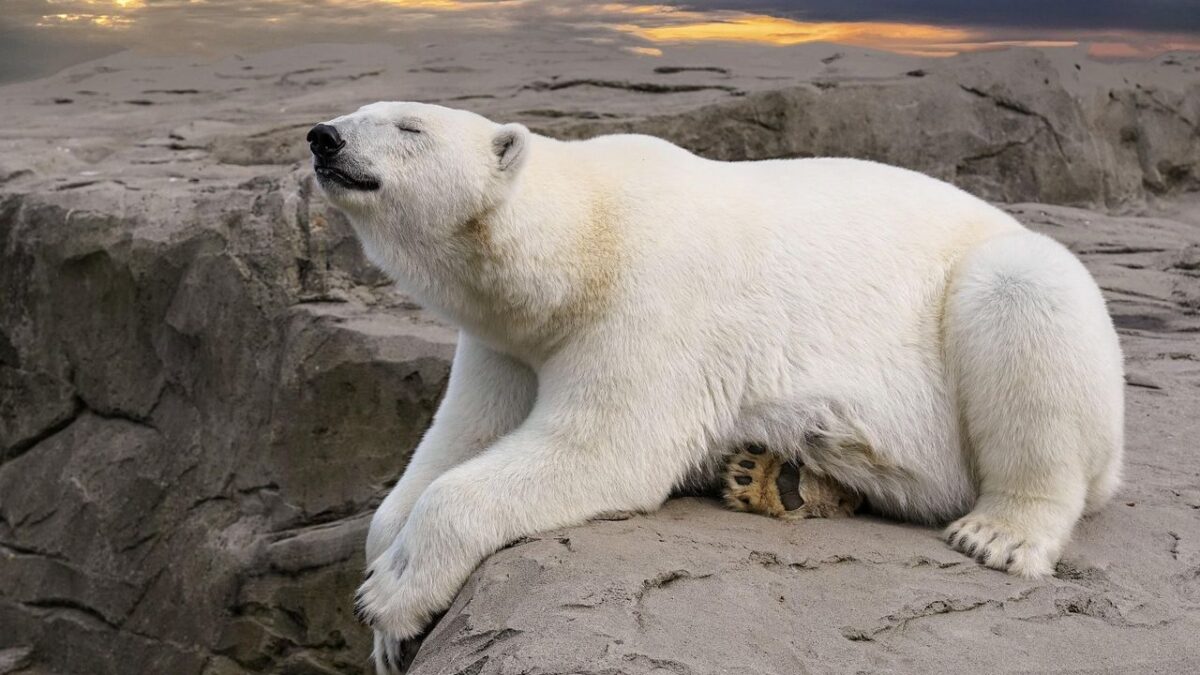
Picture a landscape where the wind cuts like a blade, temperatures nosedive past minus forty degrees, and the ground beneath your feet can crack open and swallow you whole. For most living creatures, that is a death sentence. Yet one animal walks across that frozen expanse like it owns the place. The polar bear is not just surviving the Arctic – it is entirely built for it, in ways that still genuinely astonish scientists today.
From its invisible insulation system to a metabolism that defies normal biology, the polar bear is a masterclass in evolutionary engineering. There is far more going on beneath that iconic white coat than most people ever imagine. So let’s dive in.
An Evolutionary Transformation That Happened Faster Than You’d Think
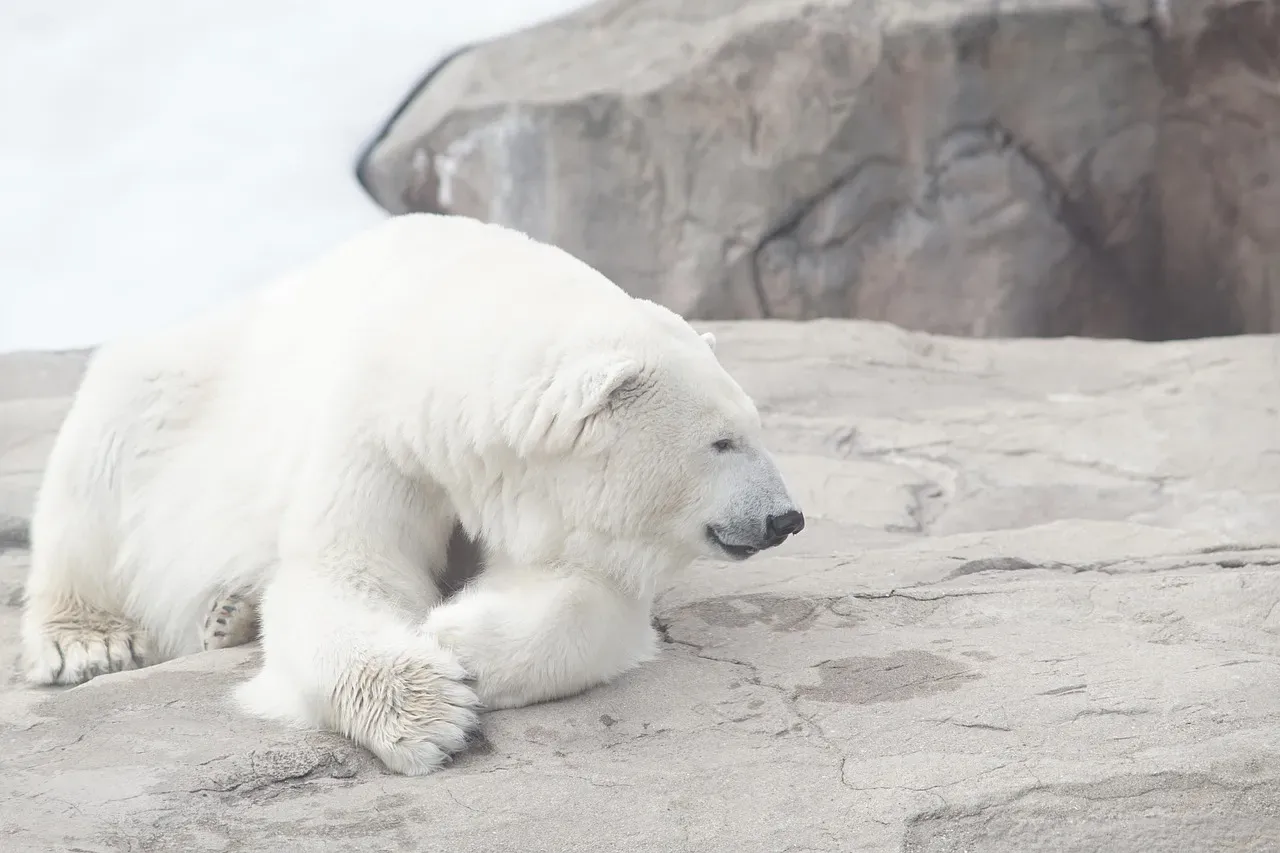
Here is something that should genuinely surprise you: the polar bear is not some ancient, slowly-evolved relic of the Ice Age. Since their relatively recent divergence from their closest living relative, brown bears, less than 500,000 years ago, the species has evolved an array of novel traits suited to its Arctic lifestyle. In evolutionary terms, that is breathtakingly fast – roughly the blink of an eye.
This is a very short time period in evolutionary terms and required major physiological changes to allow polar bears to survive on a very high fat seal-blubber diet, switching from the mainly vegetarian diet of the brown bear.
Genes controlling body fat, fatty acid metabolism, heart function, and fur pigmentation may have all played significant roles in the adaptation of polar bears to the Arctic marine environment. Think of it like a software update that rewrote almost the entire operating system in record time.
Because of their fat-rich diet, polar bears have high levels of LDL cholesterol, which in humans represents a significant health risk. However, because of their genetics, polar bears do not have fatty deposits in their arteries despite their fat-rich diets. Honestly, that alone is extraordinary – a heart condition that would kill a human is simply a non-issue for a polar bear.
The Fur Coat That Is Not Actually White
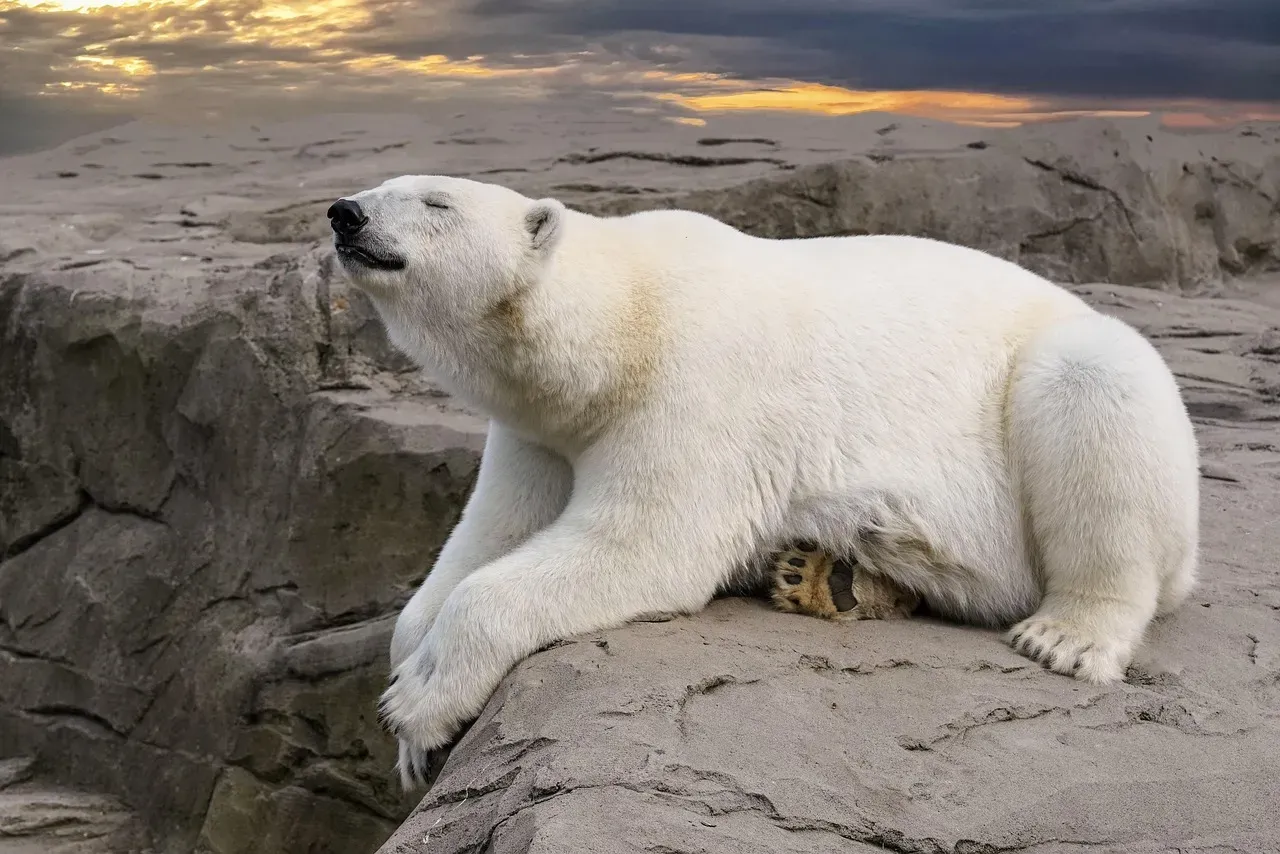
Let’s be real – most people picture a polar bear and see a big, fluffy, white animal. The truth is far more fascinating. Surprisingly, their fur is not actually white. It just looks that way. Each hair shaft is pigment-free and transparent with a hollow core that scatters and reflects visible light.
The guard hairs appear white, but are actually made up of a light-scattering translucent cylinder surrounding a chambered core. This sophisticated structure not only absorbs heat from the environment but also prevents the heat that radiates from the bear’s body from easily escaping into the air around it.
Polar bear fur is essentially a natural fiber optic, conducting sunlight down to the bears’ skin, which absorbs the light, heating the bear. The skin underneath that “white” coat is jet black – perfectly designed to absorb every available photon of Arctic sunlight.
There is another detail that science only recently confirmed. Polar bear fur exhibits low ice adhesion strengths comparable to fluorocarbon-coated fibers, with the low ice adhesion a consequence of the fur sebum, or hair grease. The findings set polar bears apart from other cold weather animals, such as penguins, whose anti-icing properties come from their feather structure. In other words, their oily fur works like a built-in de-icing system. Remarkable.
Blubber, Body Size, and the Physics of Staying Warm
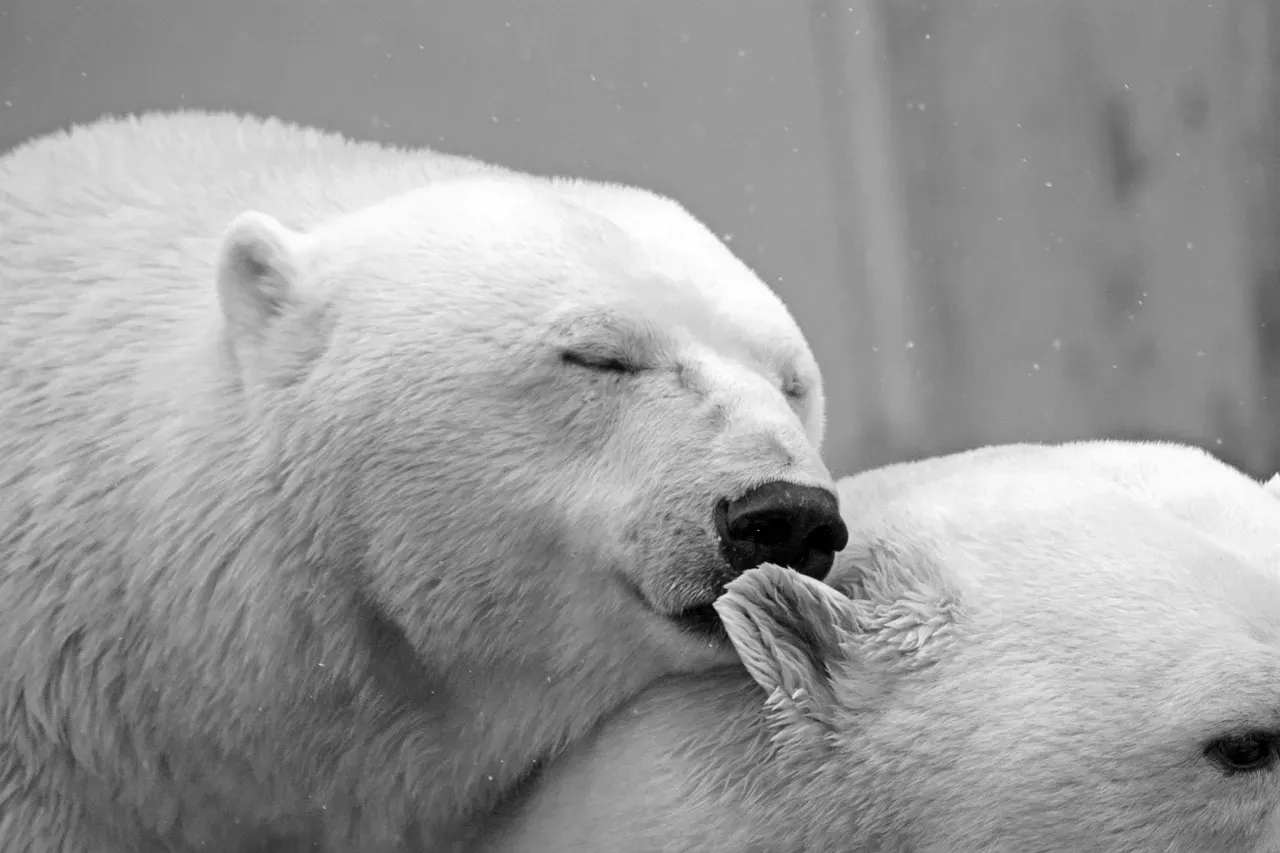
The fur is only half the equation. Beneath that extraordinary coat lies a physical insulation system that engineers honestly dream about replicating. They are incredibly well insulated with a layer of blubber that can be up to 10 centimeters thick covered with another 15 centimeters of fur. Polar bears lose so little heat to their environment that they are almost invisible to thermal imaging cameras.
The fur keeps them so warm that adult males can quickly overheat when they run. Think about that for a second. The biggest threat for a polar bear sprinting across the ice is not the minus forty degree cold – it is overheating. That is how astonishingly effective their insulation really is.
In the water, polar bears rely more on their fat than their fur to keep out the cold, as wet fur is a poor insulator. Their blubber essentially takes over when swimming, functioning like a biological wetsuit. The blubber also serves as an energy reserve during periods when food is scarce, underscoring the vital role of fat storage in their survival strategy.
Polar bear ears are small and round, and their tails short and compact, to prevent heat loss and conserve the most warmth possible. Even the small details count. Every square centimeter of the polar bear’s body has been shaped by millions of years of brutal Arctic weather.
Paws, Claws, and the Art of Hunting on Ice
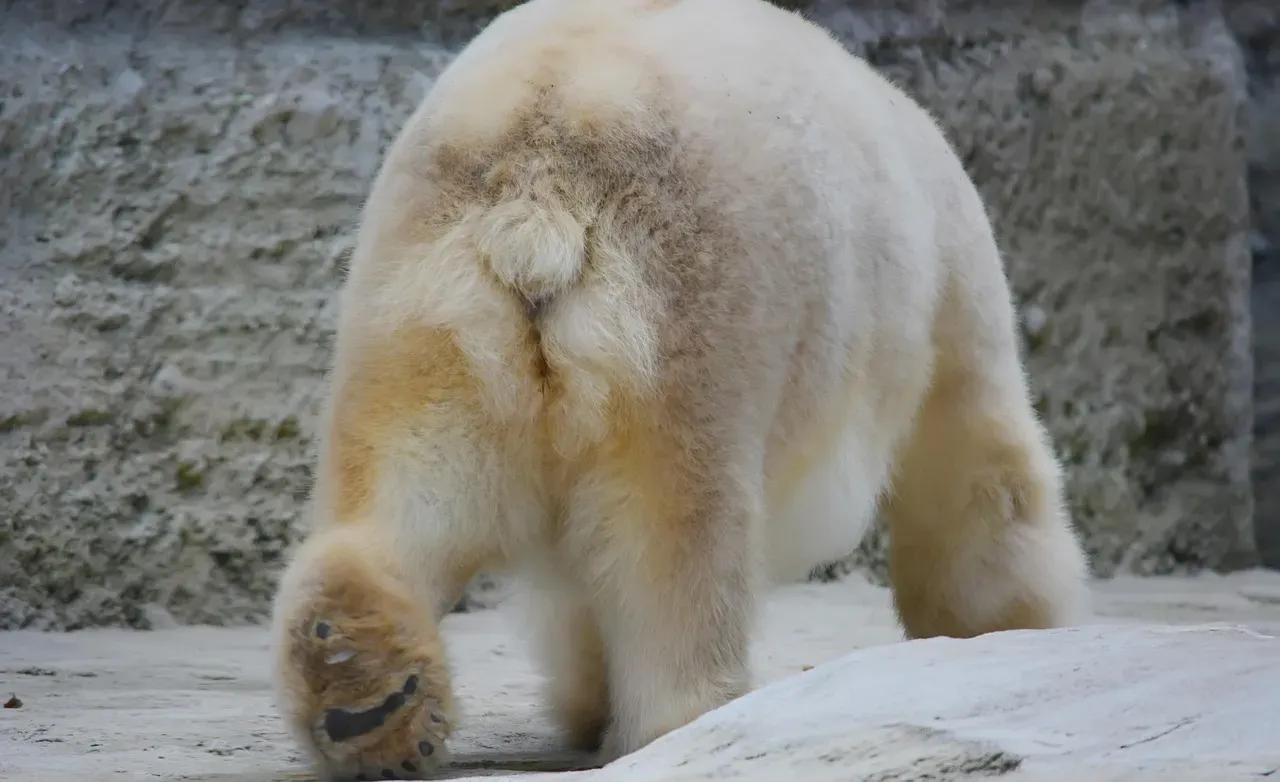
A polar bear’s body does not just keep it warm – it turns the hostile Arctic environment into a functional hunting ground. Polar bear paws are ideal for getting around in the Arctic. They are huge – as big as dinner plates – and measure up to 30 centimeters across. This helps the bears walk on thin ice without falling through.
Black footpads on the bottom of each paw are covered by small, soft bumps known as papillae. Papillae grip the ice and help to keep the bears from slipping. It is a bit like having natural crampons built right into your feet. The forepaws act like large paddles and their hind paws serve as rudders when swimming – the same feet that grip the ice become efficient swimming tools in the water.
When it comes to actual hunting, polar bears display patience that is almost hard to believe. The most common hunting method is still-hunting, where a bear uses its acute sense of smell to locate a seal’s breathing hole in the ice. The bear waits patiently until a seal surfaces for air, then pounces, pulling the seal onto the ice.
A polar bear’s stomach can hold the food equivalent of roughly fifteen to twenty percent of its own bodyweight, and its digestive system absorbs approximately eighty-four percent of the protein and ninety-seven percent of the fat it consumes. That near-total extraction of fat from every meal is yet another biological superpower specific to this species.
Denning, Motherhood, and Survival Against the Odds
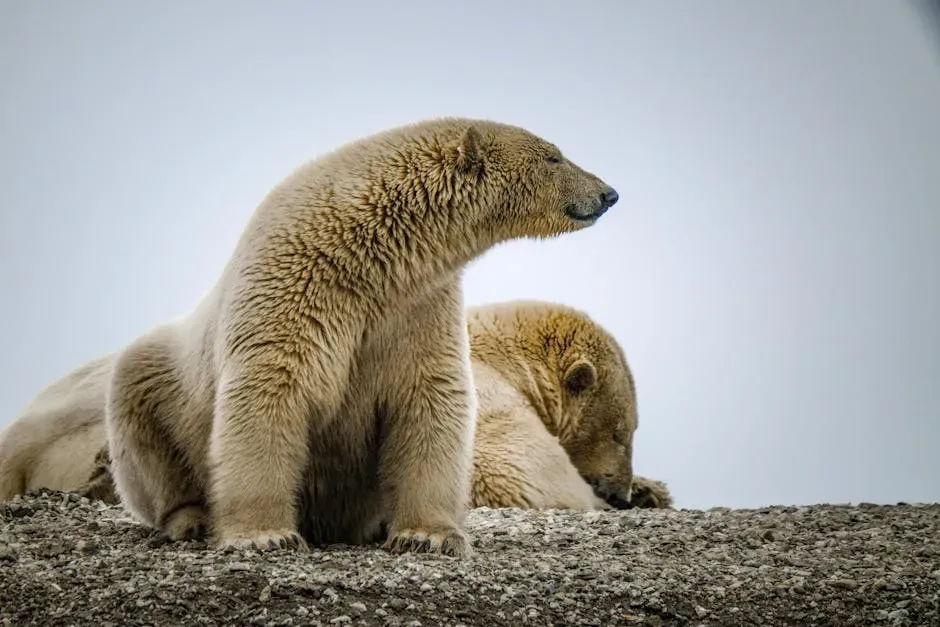
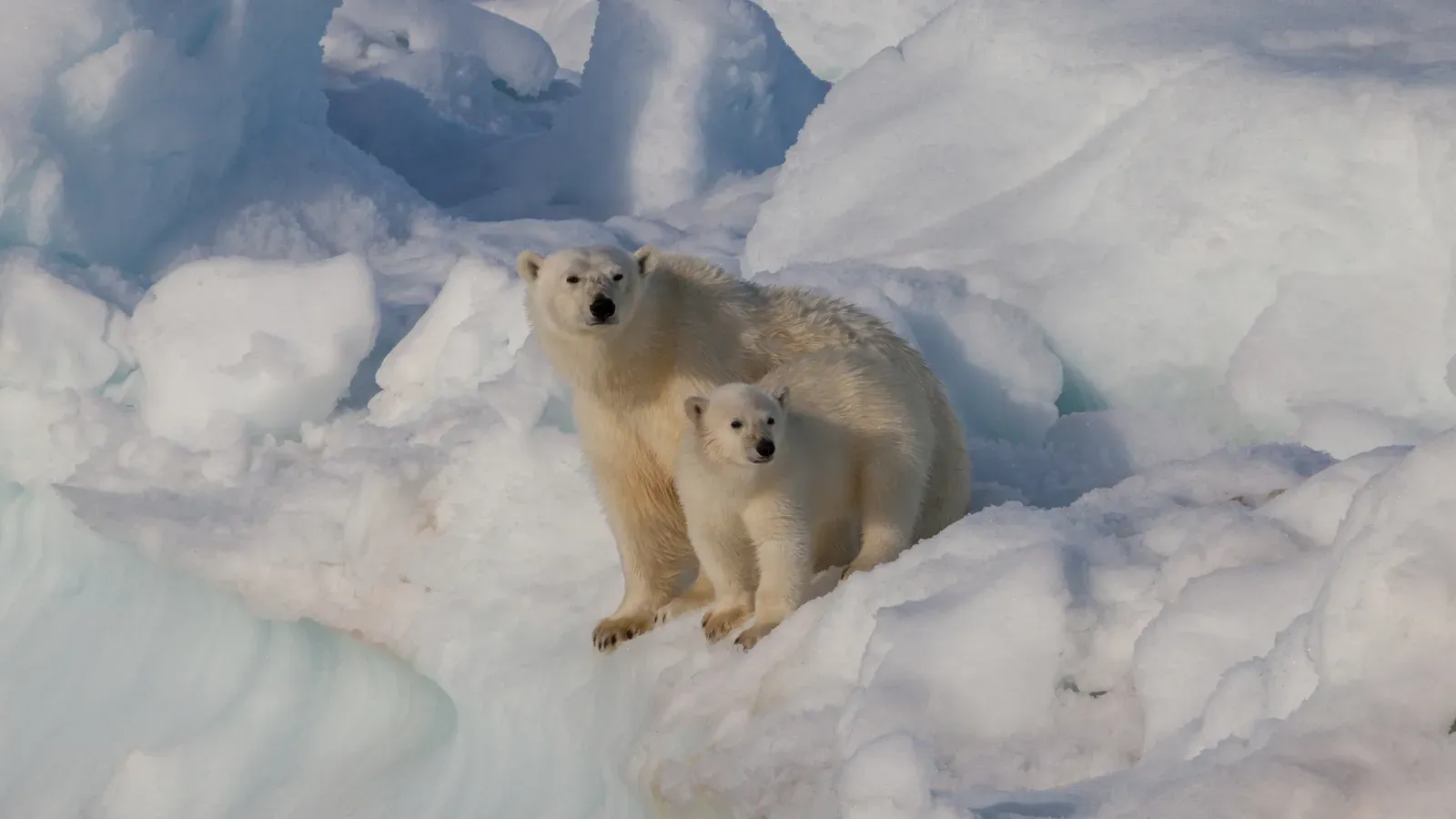
Perhaps the most emotionally striking adaptation of the polar bear is what happens every winter when pregnant females disappear into the snow. The mother enters a state similar to walking hibernation, fasting completely for the entire denning period, which can last for several months. She relies entirely on her fat reserves to produce rich milk, approximately thirty-one to thirty-six percent fat, allowing the cubs to grow rapidly.
When the family emerges in March or April, the mother is thin, having lost nearly forty-four percent of her pre-denning body mass. That level of physical sacrifice is staggering. It is hard not to feel something hearing that.
For nearly three years, mothers devote themselves entirely to raising and protecting their young, teaching essential survival skills through demonstration and guided practice. Young bears learn by observing their mother’s techniques for hunting on sea ice, swimming, and navigating the Arctic environment.
Mating occurs on the sea ice between April and June, but the fertilized egg undergoes delayed implantation, embedding only in the fall if the female has sufficient fat reserves. Even reproduction has been fine-tuned by evolution – a mother’s body will simply delay pregnancy until conditions are right. It is hard to say for sure there is a more elegant biological safety mechanism anywhere in the animal kingdom.
A Species at a Crossroads
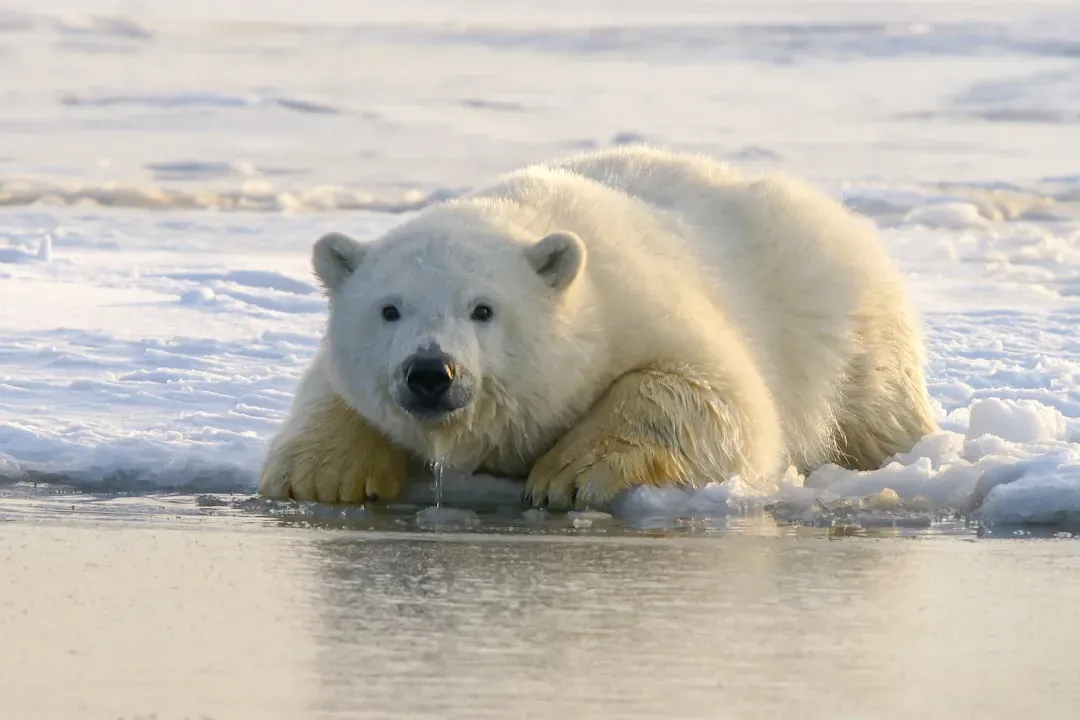
All of these extraordinary adaptations evolved for one very specific world – the frozen Arctic. While polar bears have survived previous warm periods in Earth’s history, the current rate of warming and sea ice loss is occurring too rapidly for meaningful evolutionary adaptation.
Polar bears acquire the majority of their energy resources during a brief period in the late spring and early summer when seals are giving birth and weaning their pups. Climate warming is increasing the duration that some areas of the Arctic are ice free, which in turn forces polar bears in these regions to move to land.
Perhaps most concerning is the emergence of hybrid zones, where polar bears are increasingly encountering grizzly bears in southern portions of their range. This unprecedented overlap in territories has led to documented cases of hybridization, potentially threatening the genetic distinctiveness of both species.
The polar bear is classified as Vulnerable on the International Union for Conservation of Nature (IUCN) Red List of Threatened Species. This status reflects the primary threat: the loss of its sea ice habitat caused by global climate change. The same ruthless efficiency that makes the polar bear the ultimate Arctic survivor also makes it uniquely vulnerable when the Arctic itself begins to change.
Conclusion
The polar bear is one of the most compelling stories evolution has ever told. Every part of its body, every behavioral instinct, every metabolic trick has been forged through hundreds of thousands of years of relentless Arctic pressure. It is not just an animal that tolerates the cold – it is an animal that was literally redesigned, from the DNA up, to master it.
What makes the polar bear’s story so emotionally loaded is this tension between absolute perfection and fragility. A species so brilliantly adapted to one world may find itself adrift in a rapidly changing one.
The polar bear does not need us to be in awe of it – but maybe that awe is exactly what drives us to protect it. When you look at a polar bear, you are not just seeing an animal. You are seeing evolution’s finest cold-weather masterpiece. The real question is: will we give it the world it was built for?

- 6 Things Never to Do When A Shark Approaches You - August 3, 2026
- 8 Astounding Animal Migrations That Defy All Scientific Explanation - August 3, 2026
- Top 10 Animals and Wildlife in Ontario - August 3, 2026