

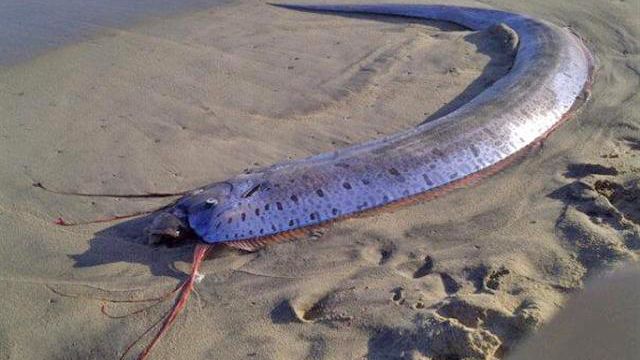
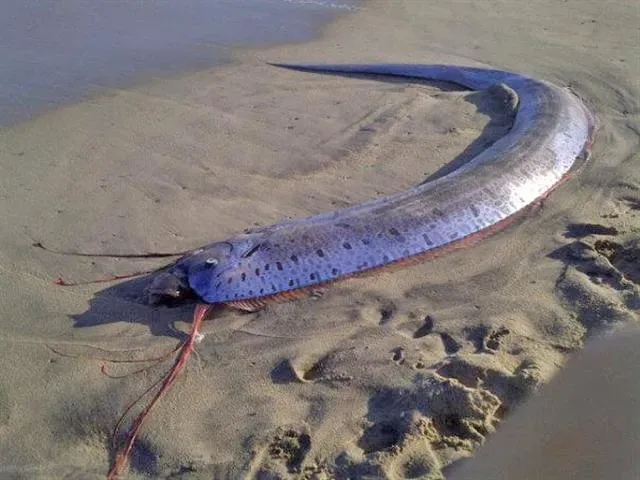
In the shimmering depths of the Sea of Cortez, marine biologist Kristen Anderson experienced a once-in-a-lifetime moment that has captivated ocean enthusiasts worldwide. On March 28, while boating off La Ventana, Mexico, she encountered a majestic oarfish stretching four meters long, more than double her own height. This serpentine deep-sea dweller, rarely glimpsed by humans, glided serenely nearby, its iridescent scales catching the faint light.
Nicknamed the “doomsday fish” in ancient folklore, the creature’s appearance stirs age-old tales of impending disaster. Yet Anderson’s close brush offers a modern glimpse into its enigmatic world, challenging myths with scientific intrigue. Here’s the thing: such sightings are skyrocketing amid changing ocean dynamics.
A Rare Rendezvous in the Sea of Cortez
Kristen Anderson, a seasoned expert in pelagic species, was conducting surveys when the oarfish emerged from the mesopelagic gloom. The fish, scientifically Regalecus glesne, dwarfed her as it maneuvered with graceful undulations just inches away. Its calm presence during the encounter left Anderson awestruck, describing the scene as surreal.
This happened at depths typically beyond recreational dives, highlighting the oarfish’s elusive nature. The metallic silver body shimmered ethereally, a testament to adaptations for life in near-total darkness. What makes this particularly noteworthy is the healthy state of the specimen, unlike many stranded examples reported recently.
Footage from the dive has exploded online, drawing millions of views and reigniting debates over these deep-sea marvels. Anderson’s precise observations, including length estimates over 20 feet in some reports, provide fresh data for researchers. Let’s be real – moments like this bridge the gap between legend and lab work.
The Persistent Myth of the Doomsday Fish
Japanese legends have long branded oarfish as harbingers of earthquakes and tsunamis, with strandings often preceding seismic events. Coastal communities worldwide share similar stories, fueling superstition for centuries. Recent incidents in Japan, Mexico, and California have only amplified the buzz.
Scientists, however, attribute surfacings to natural causes like injuries, spawning, or environmental shifts rather than prophecy. No solid evidence links them to disasters, despite tantalizing coincidences. Anderson’s healthy encounter adds a compelling counterpoint to the doom narrative.
Popular culture amplifies the lore through films and social media, blending awe with apprehension. This viral moment underscores how folklore endures even in our data-driven age. Skeptics point out that increased reporting simply reveals more about these wanderers.
Oarfish Secrets: Anatomy and Hidden Habitat
These ribbon-like giants claim the title of longest bony fish, capable of reaching 36 feet. Their gelatinous skin and elongated red dorsal fin enable oar-like propulsion through the water column. Tubular mouths filter plankton and tiny crustaceans from the dim mesopelagic zone, 200 to 1,000 meters down.
Anderson noted deliberate, evasive maneuvers during her swim, revealing predator-avoidance tactics. Bioluminescent prey and buoyancy aids keep them ghostly and unseen. Climate shifts might be pushing them shallower more often.
Such proximity yields behavioral insights impossible from dead specimens. Their silver hue, from guanine crystals, acts like built-in camouflage in the abyss. This dive peels back layers of mystery on these oceanic phantoms.
Surface Triggers and Conservation Concerns
Biologists cite currents, injuries from sharks, or breeding cycles for upward migrations. Warming oceans and pollution indirectly threaten their plankton-based diet. Anderson champions expanded marine protections and citizen science reporting.
The IUCN lists them as data deficient, urging non-invasive tracking tech. Bycatch and plastics pose growing risks despite their remote home. Global sightings, from Indonesia to Australia, signal a need for vigilance.
Her advocacy positions this event as a call to action. Patterns emerge amid 2026’s uptick in observations along the Pacific. Sustainable curiosity could unlock their evolutionary story.
Final Thought
Anderson’s swim-along transforms a mythical monster into a vulnerable wonder, reminding us the ocean holds endless secrets. As deep-sea explorations advance, expect more revelations that debunk doomsaying. What deep-sea encounter would leave you speechless? Share in the comments.
Source: Original YouTube Video

- Urban Coyotes Show Remarkable Adaptability, Learning to Thrive in City Environments - July 22, 2026
- Beavers Are Nature’s Engineers, Creating Vital Habitats for Other Wildlife Species - July 21, 2026
- The Recovery of the California Condor Offers Hope for Other Critically Endangered Birds - July 21, 2026