

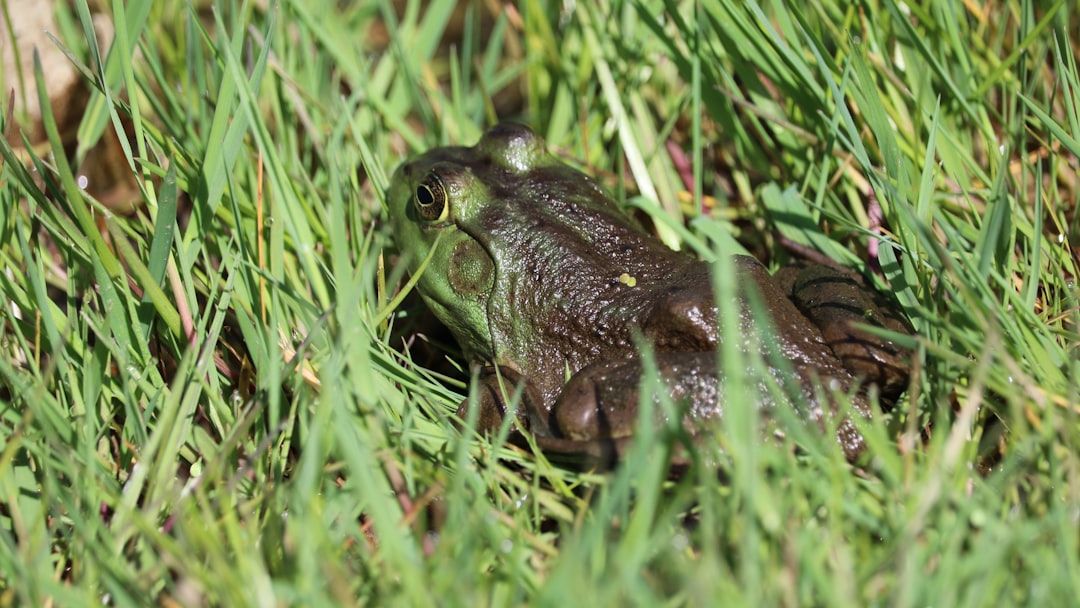
Something extraordinary is happening in the shadows of one of history’s most catastrophic nuclear disasters. Decades after the 1986 Chernobyl explosion, the wildlife living inside the Exclusion Zone isn’t just surviving – it’s visibly changing. In ways that are honestly kind of astonishing.
Scientists have been quietly documenting a biological transformation among the frogs near Chernobyl, and the findings point to something far bigger than a quirky nature story. This is about evolution, adaptation, and what radiation really does to living creatures over time. Let’s dive in.
The Frogs That Changed Color in a Nuclear Wasteland
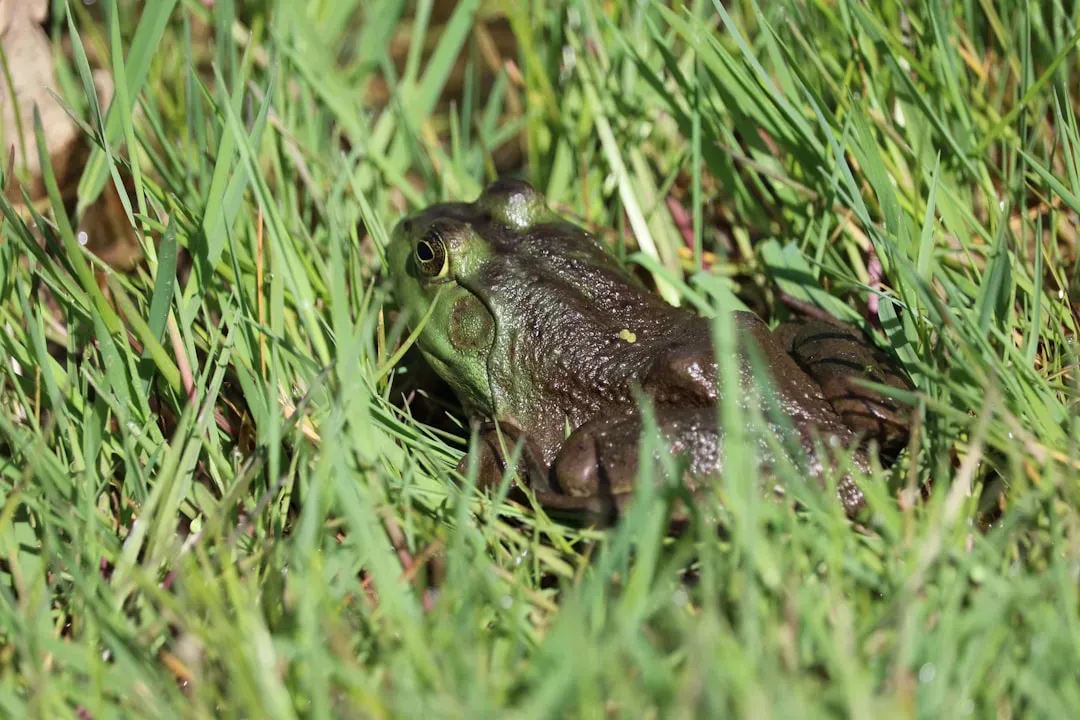
Here’s the thing most people don’t know: the Eastern tree frogs native to the Chernobyl region are normally bright green. That’s their natural coloration, and it’s been that way forever. So when researchers started noticing unusually dark, almost black frogs living inside the Exclusion Zone, it raised some serious eyebrows in the scientific community.
The discoloration comes down to melanin, the same pigment responsible for skin and hair color in humans. Frogs with higher concentrations of melanin appear significantly darker, sometimes a deep olive or near-black shade. Researchers studying the Chernobyl frogs found that populations living closest to the most contaminated areas tended to be the darkest, which is not a coincidence.
Why Melanin Became a Survival Superpower
Melanin isn’t just about color – it’s a biological shield. The pigment has long been known to absorb and neutralize harmful radiation, which makes it incredibly useful in an environment saturated with radioactive particles. Think of it like built-in sunscreen, except instead of blocking UV rays, it’s helping these frogs buffer ionizing radiation at a cellular level.
What’s remarkable is how quickly this shift appears to have happened. Evolutionary change typically takes thousands of generations. The Chernobyl disaster occurred in 1986, meaning these frogs have had roughly four decades – not millennia – to develop a darker phenotype. It suggests that intense environmental pressure can push natural selection far faster than textbook biology usually implies.
The Science Behind the Discovery
The research that brought this to wider attention was led by a team of scientists including Germán Orizaola, a biologist at the University of Oviedo in Spain, who has spent years studying wildlife inside the Chernobyl Exclusion Zone. The team collected frogs from multiple locations, some heavily contaminated and some relatively clean, comparing their coloration systematically.
Their findings, published in the journal Evolutionary Applications, showed a clear pattern: the darker the frog, the more likely it was to have originated from a high-radiation zone. Frogs captured from cleaner areas outside the exclusion zone remained much closer to their original bright green. The data strongly supported the hypothesis that darker, melanin-rich individuals had a survival advantage in radioactive conditions, and that advantage was being passed down through generations.
What This Tells Us About Human Biology
Now here’s where it gets really interesting – and perhaps a little personal. Melanin works similarly in human skin. People with naturally higher levels of melanin have long been known to have lower rates of certain radiation-induced skin cancers, particularly in populations living at high altitudes or in regions with intense solar radiation. The Chernobyl frogs essentially provided an unexpected field experiment that reinforces what dermatologists have suspected for years.
It’s hard to say for sure exactly how directly these frog findings translate to human health models, but scientists believe they offer a compelling case study in radiation resistance. If melanin can provide measurable protection in amphibians under extreme nuclear contamination, it adds weight to the idea that this pigment plays a more critical protective role in humans than we sometimes give it credit for.
The Exclusion Zone as an Accidental Laboratory
I think the most fascinating thing about Chernobyl’s legacy is that it inadvertently created one of the most unusual natural experiments in scientific history. The roughly 2,600 square kilometer Exclusion Zone, largely off-limits to humans since 1986, has become a living laboratory where evolution plays out in real time without significant human interference.
Researchers have documented wolves, lynx, horses, eagles and dozens of other species thriving inside the zone in unexpected numbers. The frogs are just the latest chapter in a story that keeps rewriting our assumptions about wildlife resilience. Let’s be real: nature is tougher and more adaptable than we typically give it credit for, and Chernobyl is proving that in the most dramatic way possible.
Radiation and Evolution: A Complicated Relationship
It would be tempting to frame this as a feel-good story about nature bouncing back, but the reality is more complicated. Radiation causes serious genetic damage, and many animals inside the Exclusion Zone do show elevated mutation rates, tumors, and reproductive issues. The frogs that survived and adapted represent the successful outcomes of a brutal biological filter, not a painless transformation.
Think of it this way: if you threw a thousand seeds into a fire, the ones that sprouted wouldn’t mean fire is good for plants. It would just mean those particular seeds had properties that gave them a chance. The darker Chernobyl frogs are the seeds that sprouted. The countless others that didn’t adapt simply didn’t survive to be studied.
What Comes Next for Chernobyl Research
Scientists are still working to determine whether the color change in the frogs is purely phenotypic, meaning a physical expression triggered by environmental stress, or whether it reflects actual genetic mutation passed reliably to offspring. That distinction matters enormously for understanding how lasting these adaptations truly are. Current research is leaning toward a genuine heritable shift, though more generational data is needed.
The broader implications reach into medicine, radiation biology, and even space exploration research, where protecting humans from cosmic radiation is a major unsolved problem. Melanin as a biological defense mechanism is now gaining fresh scientific attention, partly because of what a population of small green frogs in a contaminated Ukrainian forest quietly revealed. Sometimes the biggest discoveries come from the most unexpected places.
What do you think – does this change how you see the long-term legacy of Chernobyl? Drop your thoughts in the comments below.

- Urban Coyotes Show Remarkable Adaptability, Learning to Thrive in City Environments - July 22, 2026
- Beavers Are Nature’s Engineers, Creating Vital Habitats for Other Wildlife Species - July 21, 2026
- The Recovery of the California Condor Offers Hope for Other Critically Endangered Birds - July 21, 2026