

There are moments in science that make you stop and think, “Wait, that can’t be real.” This is one of those moments. A small fish from Africa has been caught doing something so unexpected, so borderline absurd, that it’s reshaping how researchers think about animal movement and evolution.
You might assume that climbing is the exclusive territory of geckos, primates, or the occasional determined house cat. Turns out, fish didn’t get that memo. What researchers discovered recently is the kind of story that belongs in a nature documentary narrated with breathless disbelief. Let’s dive in.
A Fish That Climbs – No, Seriously
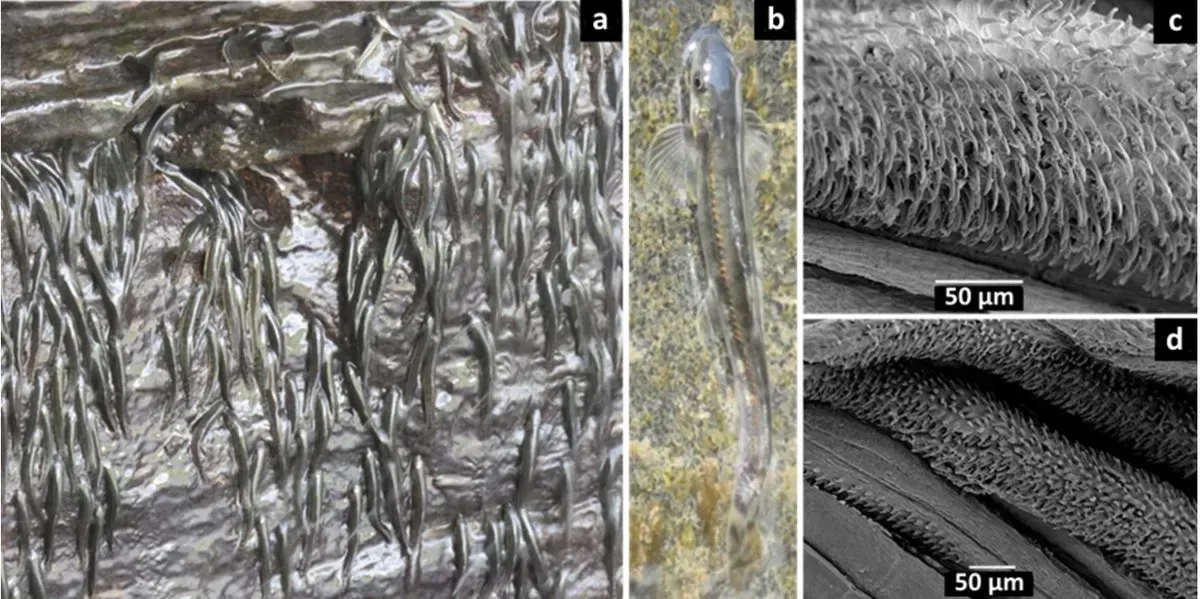
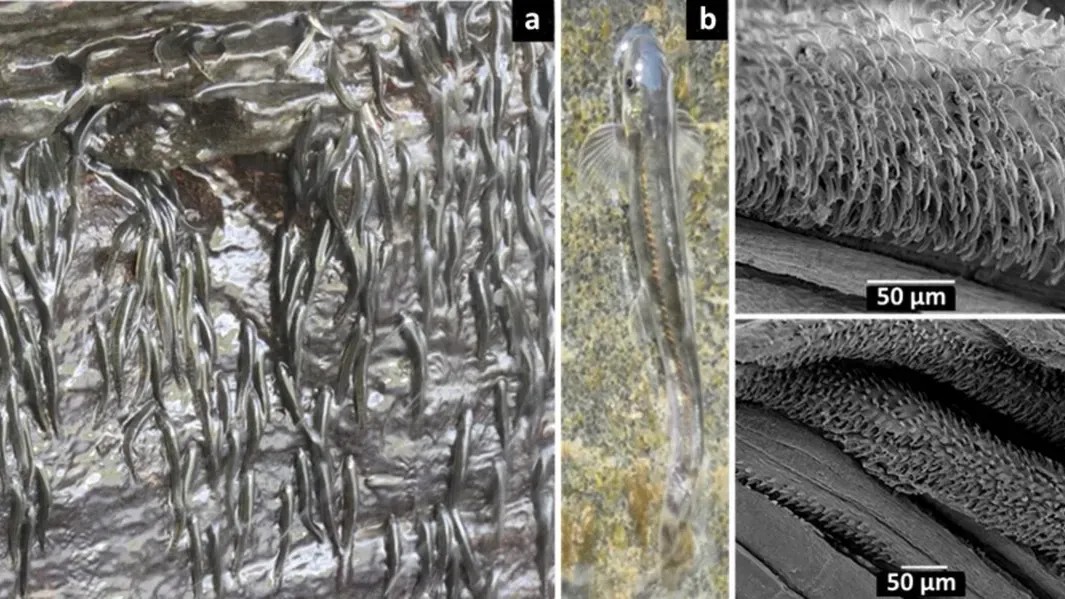
Here’s the thing: when scientists say a fish “climbs,” they usually mean it wiggles upstream or manages some modest vertical nudge. What researchers documented in this case is something far more deliberate and, honestly, astonishing. A tiny African fish species was filmed and studied actively scaling vertical surfaces, essentially defying the gravitational limitations that most people assume apply universally to aquatic creatures.
The fish in question belongs to a group that has largely flown under the radar for decades. Small, unassuming, and easy to overlook, it had been hiding an extraordinary physical ability in plain sight. The discovery was published in April 2026 and quickly sent ripples through the biology community.
What makes this especially remarkable is that the fish isn’t using any tool or external aid. It uses its own body mechanics, coordinating muscle groups in a way that researchers hadn’t previously documented in this species. Think of it like discovering that a creature you assumed could only walk had quietly been doing parkour this whole time.
Where This Was Discovered and Why It Matters
The research centers on fish found in African freshwater environments, regions that are biologically rich but not always the first destinations for intensive zoological fieldwork. Scientists studying these habitats were not specifically hunting for climbers. The discovery came almost as a byproduct of broader ecological observation, which honestly makes it even more exciting.
Location matters here because the climbing behavior appears to be an adaptation tied to the specific environmental pressures these fish face. Waterfalls, rocky terrain, and seasonally shifting water levels create conditions where a fish that can move vertically gains a massive survival advantage. It’s like having a cheat code in a particularly brutal video game level.
How the Fish Actually Does It
The mechanics of how this fish climbs are where things get really interesting for biologists. The fish uses a combination of its mouth and pelvic fins to grip surfaces and inch upward in a coordinated, almost caterpillar-like motion. This isn’t random flailing. It’s structured, repeatable locomotion that follows a predictable biomechanical pattern.
Researchers were able to analyze the movement in detail, identifying the sequence of muscle contractions that allow the fish to maintain contact with a vertical surface without sliding back down. The grip is surprisingly strong relative to the fish’s tiny body size. It’s a reminder that evolution doesn’t need much raw material to engineer something brilliant.
What’s particularly striking is that this climbing mechanism appears to have evolved independently, meaning it wasn’t inherited from some ancient climbing ancestor shared with other known climbing fish like the famous hillstream loaches. That kind of convergent evolution, where two unrelated lineages arrive at the same solution, is one of the most electrifying concepts in all of biology.
The Science Behind the Surprise
The study documenting this behavior used high-speed video analysis and careful laboratory replication to confirm that what was observed in the field was genuine and repeatable. Science requires skepticism, and the researchers applied exactly that before drawing conclusions. They ruled out accidental or incidental surface contact and confirmed intentional, sustained climbing behavior.
What the data shows is that the fish can navigate vertical rock faces with a level of control that demands a rethinking of how we categorize locomotor abilities across fish species broadly. The findings were detailed enough to suggest that similar abilities might be quietly present in other small fish species that simply haven’t been studied closely enough yet. That’s a genuinely unsettling thought in the best possible way.
What This Tells Us About Evolution
Let’s be real: evolution has a long history of producing solutions that seem wildly improbable until you understand the pressures that shaped them. The climbing ability of this African fish fits neatly into that tradition. When survival demands it, biological systems find a way, even if that way looks absurd from the outside.
The convergent evolution angle is especially worth dwelling on. It suggests that vertical climbing isn’t some freak accident but rather a reliable evolutionary destination when aquatic animals face certain environmental challenges. Researchers are now asking whether other unstudied species in similar habitats might harbor comparable hidden abilities.
I think the deeper lesson here is about the limits of assumption. For a long time, this fish existed in plain sight without anyone looking closely enough to notice what it could do. How many other species are out there quietly breaking the rules we think we understand?
Why Small Species Keep Surprising Scientists
There’s a pattern worth acknowledging here. Again and again, it’s the small, seemingly unremarkable creatures that deliver the most shocking biological revelations. Tiny fish, obscure insects, miniature frogs – they keep upending the assumptions of much larger scientific frameworks. Honestly, at this point, the scientific community should probably just assume that any unstudied small species is hiding something extraordinary.
The attention and research resources in biology have historically skewed toward charismatic megafauna. Lions, elephants, dolphins. Meanwhile, small freshwater fish in African river systems were quietly doing things that challenge established biomechanical models. It’s a compelling argument for broader, more inclusive ecological surveillance.
This particular discovery is also a reminder that fieldwork still matters enormously in an era increasingly dominated by remote sensing and genetic analysis. A researcher physically present near an African waterfall, paying close attention, made this possible. That human element of curiosity and patient observation is irreplaceable.
What Comes Next for This Research
Following the April 2026 publication, researchers are expected to expand their investigation into related species within the same African freshwater ecosystems. The goal is to understand whether climbing behavior is an isolated trait in this one species or part of a broader, underappreciated capability distributed across a wider taxonomic group. The implications either way are significant.
There is also growing interest in the biomechanical principles involved. Engineers and roboticists have long drawn inspiration from animal movement, and a fish that can reliably scale vertical wet surfaces using only its body offers genuinely novel mechanical insights. Underwater robotics, in particular, could benefit from understanding how this locomotion is structured and maintained.
The story of this tiny climbing fish is far from over. If anything, the April 2026 findings feel more like an opening chapter than a conclusion. Science has a way of answering one question and immediately generating ten more, and this discovery is doing exactly that.
A Small Fish With a Very Big Implication
What this discovery ultimately points toward is something both humbling and thrilling. The natural world is still full of behaviors and abilities we haven’t documented, haven’t imagined, and haven’t prepared for. A tiny fish scaling a waterfall wall isn’t just a cool fact. It’s evidence that our catalog of what life can do remains radically incomplete.
Honestly, I find that more exciting than almost anything else in science right now. The idea that something this surprising was living quietly in an African stream, doing its thing, completely indifferent to our categories and assumptions, is both ridiculous and wonderful. Evolution doesn’t check in with biology textbooks before doing its work.
So the next time someone tells you fish can’t climb, you know exactly what to say. What other impossible things do you think are quietly happening out there in the world, completely unnoticed? Tell us what you think in the comments.

- Urban Coyotes Show Remarkable Adaptability, Learning to Thrive in City Environments - July 22, 2026
- Beavers Are Nature’s Engineers, Creating Vital Habitats for Other Wildlife Species - July 21, 2026
- The Recovery of the California Condor Offers Hope for Other Critically Endangered Birds - July 21, 2026