

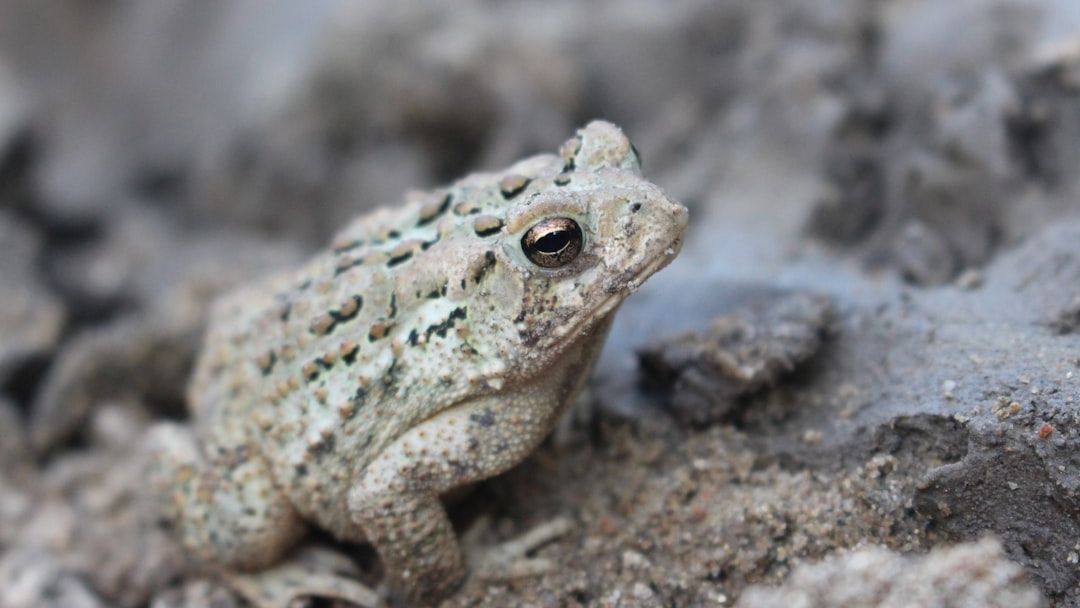
Something remarkable is hiding inside a small, unremarkable frog sitting on a rock in sub-Saharan Africa. It isn’t its color, its call, or even its size. It’s memory. Not conscious memory, of course, but something written far deeper – into the very fabric of its biology, its behavior, and its genes.
Scientists are now suggesting that certain African frog species carry physiological and behavioral adaptations that trace all the way back to the last Ice Age, a period that ended roughly eleven thousand years ago. The idea that modern animals could still be “running software” written by a climate that no longer exists is, honestly, one of the most mind-bending things I’ve come across recently. Let’s dive in.
The Discovery That Started It All
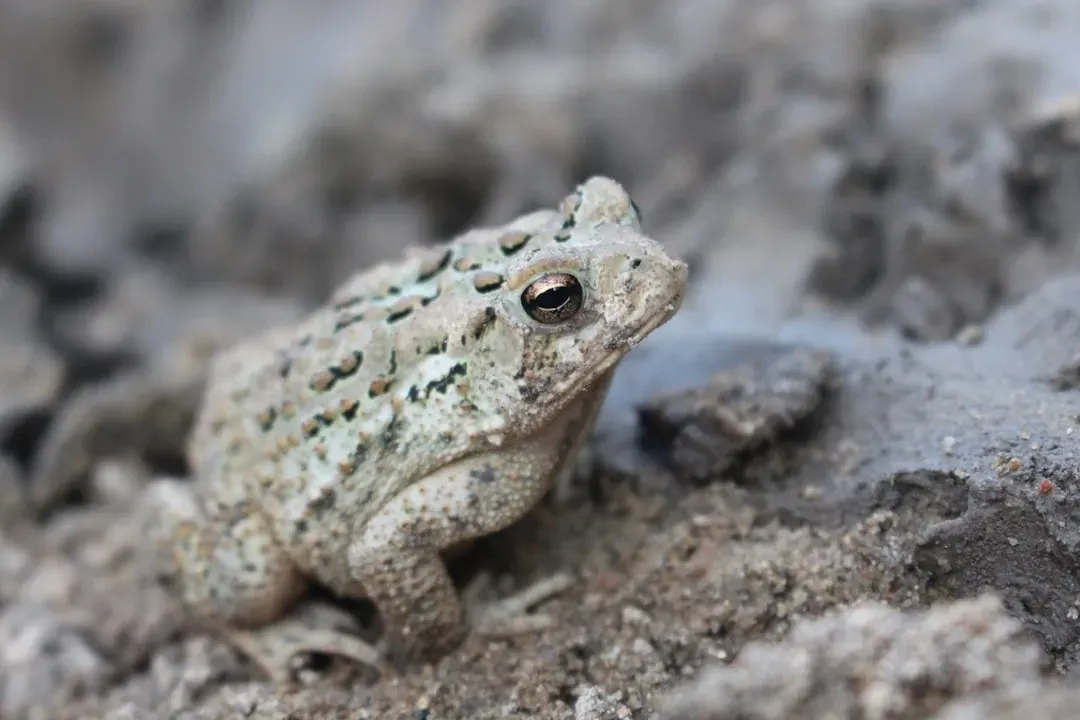
Researchers studying African frog populations have uncovered something that even seasoned biologists found surprising. These frogs appear to retain cold-climate adaptations despite living in warm, tropical environments today. It’s a bit like finding a person who still owns snow boots and a fur coat while living in Miami – except in this case, the “coat” is built into their DNA.
The findings suggest that evolution doesn’t always move at the speed we assume. Traits shaped by an Ice Age climate can linger for thousands of years, long after the selective pressure that created them has vanished. That’s a serious rethink of how we model species adaptability.
What Exactly Are These “Ice Age Adaptations”?
Here’s the thing – when scientists talk about Ice Age adaptations in these frogs, they’re not describing some dramatic ability to freeze solid and thaw back out. The adaptations are subtler than that. They involve things like metabolic rates, moisture tolerance thresholds, and physiological responses to temperature drops that are surprisingly robust for animals living in warm climates.
Some of these frogs show a measurably stronger response to cold stress compared to related species that evolved in consistently warm regions. Their cells, essentially, still “remember” how to handle cold. Think of it like a factory that was built during wartime and still has reinforced walls, even though nobody is shooting at it anymore.
Africa During the Ice Age: Not What You’d Expect
Most people picture the Ice Age as a purely Northern Hemisphere event – woolly mammoths in Siberia, glaciers crawling over Europe. Africa, in the popular imagination, just kept being hot. That picture is wrong. During peak glacial periods, large parts of Africa experienced significantly cooler and drier conditions, especially at higher elevations and in southern regions.
This climatic shift dramatically reshaped habitats. Forests contracted. Grasslands expanded. Water sources shifted. For frogs, which are extraordinarily sensitive to temperature and moisture, this was a survival gauntlet. The species that made it through were the ones that could handle conditions far harsher than what they face today.
The Science Behind Biological Memory
Biological memory of past climates is a concept that’s gaining serious traction in evolutionary biology. It refers to the persistence of adaptive traits beyond the environmental conditions that originally selected for them. Scientists sometimes call this “evolutionary lag,” and it turns out it can last far longer than anyone previously thought comfortable to admit.
For these African frogs, the lag appears to span thousands of years. Researchers use a combination of genetic analysis, physiological testing, and climate modeling to piece this together. It’s painstaking work, cross-referencing ancient climate data with living animals’ biology, but the picture that emerges is genuinely fascinating. Honestly, it makes you wonder what other species out there are still running on ancient programming without anyone noticing.
Why Frogs Are Uniquely Useful for This Kind of Research
Frogs are, without exaggeration, some of the most scientifically valuable animals on the planet for climate research. Their permeable skin makes them hypersensitive to environmental changes, essentially turning them into living barometers. When something shifts in the climate, frogs feel it first and feel it hardest.
This sensitivity also means their adaptations are highly specific and measurable. Unlike a mammal that can regulate its body temperature internally, a frog’s biology is nakedly exposed to whatever the environment is doing. That transparency makes them ideal subjects for studying how past climates leave biological echoes in present-day animals. If you want to read the climate history of a landscape, sometimes the best book is a frog.
What This Means for Conservation and Climate Change Today
The implications of this research extend well beyond academic curiosity. If African frogs still carry Ice Age adaptations, it raises a critical question: how will they respond to the rapid warming happening right now? These animals may be biologically “pre-tuned” for conditions that are increasingly out of step with their current reality.
It’s a double-edged situation. On one hand, their historical resilience suggests a certain toughness. On the other, rapid climate change is moving faster than evolutionary lag can compensate for. Roughly a third of all amphibian species globally are already considered threatened, and understanding the mismatch between inherited biology and current climate is increasingly urgent for conservation planning. This research could directly inform how scientists prioritize which populations most need protection.
The Bigger Picture: Evolution Moves Slower Than We Think
Let’s be real – this study challenges a comfortable assumption we often carry about evolution: that it’s efficient, that it cleans up after itself, that animals are always well-matched to their current environment. These frogs prove that’s not always true. Evolution is messy. It leaves things behind. It works on deep time, not human time.
The African frogs haven’t forgotten the Ice Age because forgetting takes time, and eleven thousand years apparently isn’t enough. There’s something almost poetic about that. A tiny amphibian, sitting on a sun-warmed rock in central Africa, carrying inside it the physiological echo of a frozen world that ended before human civilization truly began.
Conclusion: The Past Lives On in Unexpected Places
This research is a reminder that the natural world holds stories we haven’t fully read yet. The biology of a living animal is not just a snapshot of today. It’s an archive. A compressed, imperfect, but genuinely informative record of everything that species has survived.
I think the most powerful takeaway here is humility. We look at an animal and assume we understand its present. But its present is layered over a past that stretches back further than we tend to account for. These African frogs aren’t just surviving in today’s climate. They’re survivors of a climate that no longer exists, and that distinction matters enormously for how we think about the future.
What does it say about resilience when the traits that saved a species thousands of years ago are still quietly present, waiting? That question, I think, is worth sitting with.

- Urban Coyotes Show Remarkable Adaptability, Learning to Thrive in City Environments - July 22, 2026
- Beavers Are Nature’s Engineers, Creating Vital Habitats for Other Wildlife Species - July 21, 2026
- The Recovery of the California Condor Offers Hope for Other Critically Endangered Birds - July 21, 2026