


There are birds that impress with speed, birds that dazzle with color, and then there’s the kakapo. This round, mossy-green, flightless parrot from New Zealand is built like a feathered bowling ball and moves through life at its own unhurried pace. It’s the heaviest parrot in the world, and honestly, it looks like nature had a good laugh when designing it.
Yet behind that comically rotund exterior lies one of conservation’s most inspiring comeback stories. The kakapo has been teetering on the edge of extinction for decades, and every breeding season is a high-stakes event watched closely by scientists and wildlife lovers alike. What happened in 2025 was something nobody quite expected. Let’s dive in.
A Species That Nearly Vanished Entirely
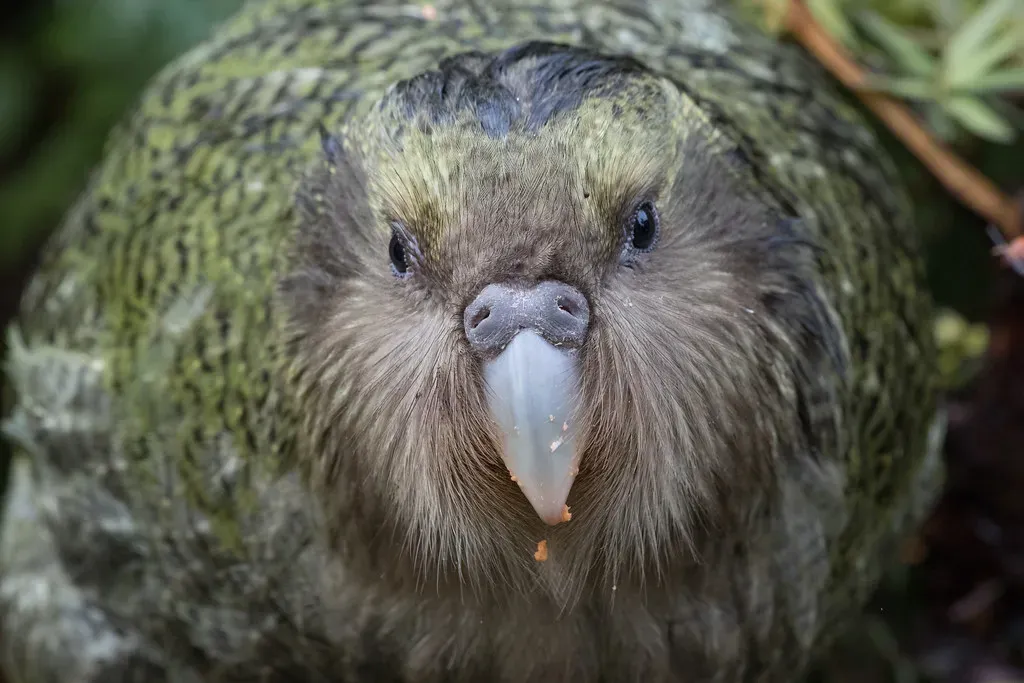
Let’s be real, the kakapo has had a rough few centuries. By the late 1990s, only around 50 individuals were left on the planet, pushed to the brink by introduced predators like rats, stoats, and cats, as well as widespread habitat destruction across New Zealand’s islands. It was a desperate situation that demanded extraordinary intervention.
Conservation teams began relocating all surviving kakapo to predator-free islands, a move that proved to be the turning point the species desperately needed. Since then, careful management, genetic monitoring, and supplementary feeding programs have slowly nudged the population upward. The recovery has been painstaking, slow, and at times heartbreaking. Still, the kakapo has refused to disappear.
Why Breeding Seasons Are Such a Rare Event
Here’s the thing about kakapo reproduction: it doesn’t happen every year. Kakapo only breed when rimu trees produce an unusually large crop of fruit, a phenomenon tied to specific climate conditions that might only occur every two to four years. This is called mast fruiting, and the kakapo evolved to synchronize their reproduction with this natural feast.
When rimu fruit is abundant, the birds get the nutrition they need to sustain the enormous energy demands of breeding. When it doesn’t happen, the birds simply don’t bother. It’s an oddly sensible arrangement in theory, but it also means conservationists have to make the absolute most of every single breeding window that opens up.
The 2025 Season by the Numbers
The 2025 breeding season has been described as record-breaking, and that’s not an exaggeration. According to the New Zealand Department of Conservation, 94 chicks were hatched during the season, the highest number ever recorded in the species’ documented history. To put that in perspective, the entire global kakapo population before this breeding season sat at around 247 individuals.
Adding nearly 94 new birds is a staggering leap forward. It’s the kind of result that makes wildlife biologists genuinely emotional, and honestly, who could blame them. Roughly about a third of the current population was essentially born in a single season. That’s an almost surreal statistic for a species that came so close to total extinction.
The Tiny Offshore Islands Doing the Heavy Lifting
All kakapo in New Zealand now live on a handful of predator-free offshore islands, including Codfish Island (also known as Whenua Hou), Anchor Island in Fiordland, and Little Barrier Island. These remote sanctuaries are carefully managed, with strict biosecurity measures in place to ensure no predators sneak back in. Think of them as fortified luxury resorts for birds that once nearly ceased to exist.
Rangers and volunteers monitor the birds intensively during breeding seasons, using a network of radio transmitters, nest cameras, and feeding stations. Each individual kakapo actually has a name and a dedicated monitoring profile. It’s a level of personalized conservation care that’s almost unheard of in wildlife management, and it clearly makes a difference.
Supplementary Feeding Changed Everything
One of the game-changers in kakapo conservation has been the use of supplementary feeding to boost the birds’ condition before and during breeding. By providing additional food at specially designed feeding stations, the conservation teams are able to give birds the nutritional edge they need to reproduce successfully even when natural food sources are slightly less abundant.
The research and refinement of this feeding strategy over the years has paid off enormously. It helps female kakapo produce more eggs and gives them the energy to incubate properly. It also means that males, who spend the breeding season calling out from hilltop “leks” in an effort to attract females, can sustain that effort for longer. Every small adjustment in the management program compounds over time into meaningful results.
Challenges That Still Loom Over the Recovery
It’s hard to say for sure what the long-term trajectory looks like, but scientists remain cautious despite the record season. Genetic diversity is still a concern, since the entire population descends from a small number of survivors, making the species potentially vulnerable to disease or environmental shifts. Conservation managers actively work to ensure that a wide range of genetic lines contribute to each breeding season.
Climate change also adds a layer of uncertainty. Rimu mast fruiting events are tied to weather patterns, and shifting climatic conditions could disrupt the timing or frequency of these crucial food surges. There’s also the ever-present challenge of maintaining biosecurity on the islands indefinitely. One accidental introduction of a predator could undo years of progress almost overnight.
What This Record Season Means for the Future
Reaching a population of over 340 kakapo, once those 94 chicks survive to adulthood, would represent a genuinely historic milestone. Conservationists have long held 150 individuals as a critical psychological and biological threshold, so surpassing 340 would feel like entering entirely new territory for the species. It does not mean the kakapo is safe, but it means the odds have shifted.
I think what this story really shows is that dedicated, sustained conservation effort actually works when it’s given the resources and commitment it needs. The kakapo didn’t bounce back through luck. It bounced back because people showed up every single day on remote islands, in difficult conditions, and refused to let it vanish. That’s worth celebrating loudly. The kakapo’s 2025 season isn’t just a win for one peculiar, loveable bird. It’s a reminder of what’s possible when the world decides a species deserves to stay.
The population will now be closely monitored as the new chicks develop, with the next breeding season likely dependent on the next significant rimu mast event in the years ahead.

- Urban Coyotes Show Remarkable Adaptability, Learning to Thrive in City Environments - July 22, 2026
- Beavers Are Nature’s Engineers, Creating Vital Habitats for Other Wildlife Species - July 21, 2026
- The Recovery of the California Condor Offers Hope for Other Critically Endangered Birds - July 21, 2026