

Every autumn, something almost unbelievable happens in the skies above us. Billions of birds lift off from their breeding grounds and vanish into the horizon, embarking on journeys so vast, so physically demanding, that scientists are still struggling to fully understand them. We’re talking about migrations that span entire oceans, cross polar ice caps, and defy every expectation we have about what small, feathered creatures can possibly endure.
Every year, billions of birds take to the skies, embarking on journeys that cover thousands of miles as they migrate to escape cold winters, find food, or breed in ideal conditions. Some of these birds weigh less than a handful of coins. Some fly for days without stopping. Some cross whole oceans without a single rest. Honestly, if you told a non-bird-person what these animals are capable of, they probably wouldn’t believe you. So let’s dive in, because the facts are genuinely jaw-dropping.
1. Arctic Tern: The World’s Greatest Traveler
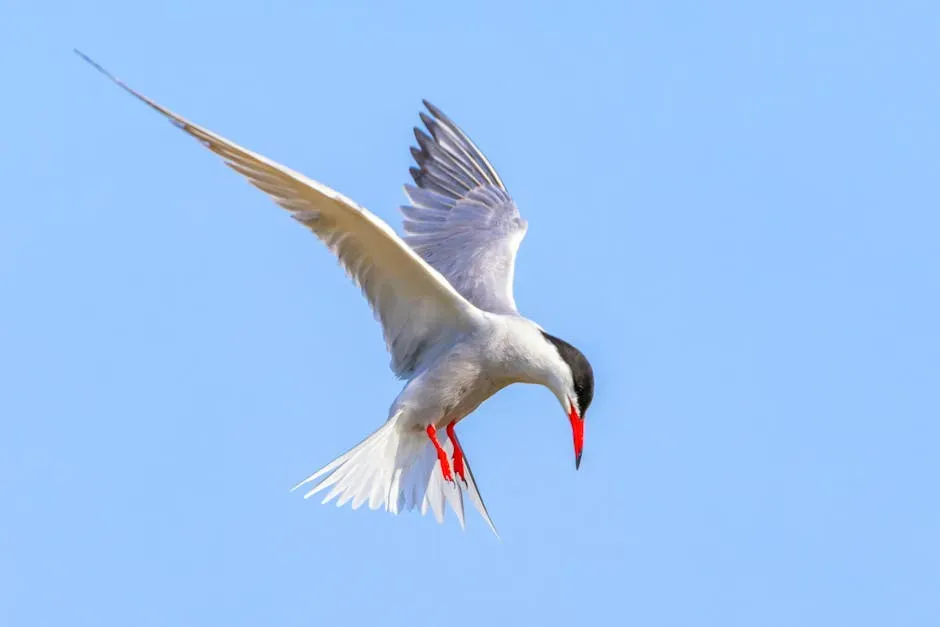
The Arctic Tern holds the record for the longest migration in the animal kingdom. These sleek white seabirds breed in the Arctic and fly all the way to Antarctica for the southern summer, a round trip of over 44,000 miles each year. Let that number sink in for a moment.
The long journey ensures that this bird sees two summers per year and more daylight than any other creature on the planet. Think of it as the ultimate frequent flyer, chasing sunlight from one pole to the other. Year after year. Without fail.
In a 2015 to 2017 study of Arctic terns on the Farne Islands, one individual with a geolocator tag covered a staggering 96,000 km in just 10 months, setting a new global migration record by traveling not just across the Atlantic but across the Indian Ocean and deep into the South Pacific. From ringing recoveries, it is known that Arctic terns can reach an age of more than 30 years. The total distance flown in a tern’s life may exceed 2.4 million km, which is equivalent to three return journeys to the moon. A mind-blowing achievement by a bird with a body mass of little over 100 grams.
Arctic terns can sleep and eat, all while gliding. Their bodies are so perfectly engineered for flight that nothing, not even rest, requires them to stop.
2. Bar-Tailed Godwit: The Nonstop Endurance Champion
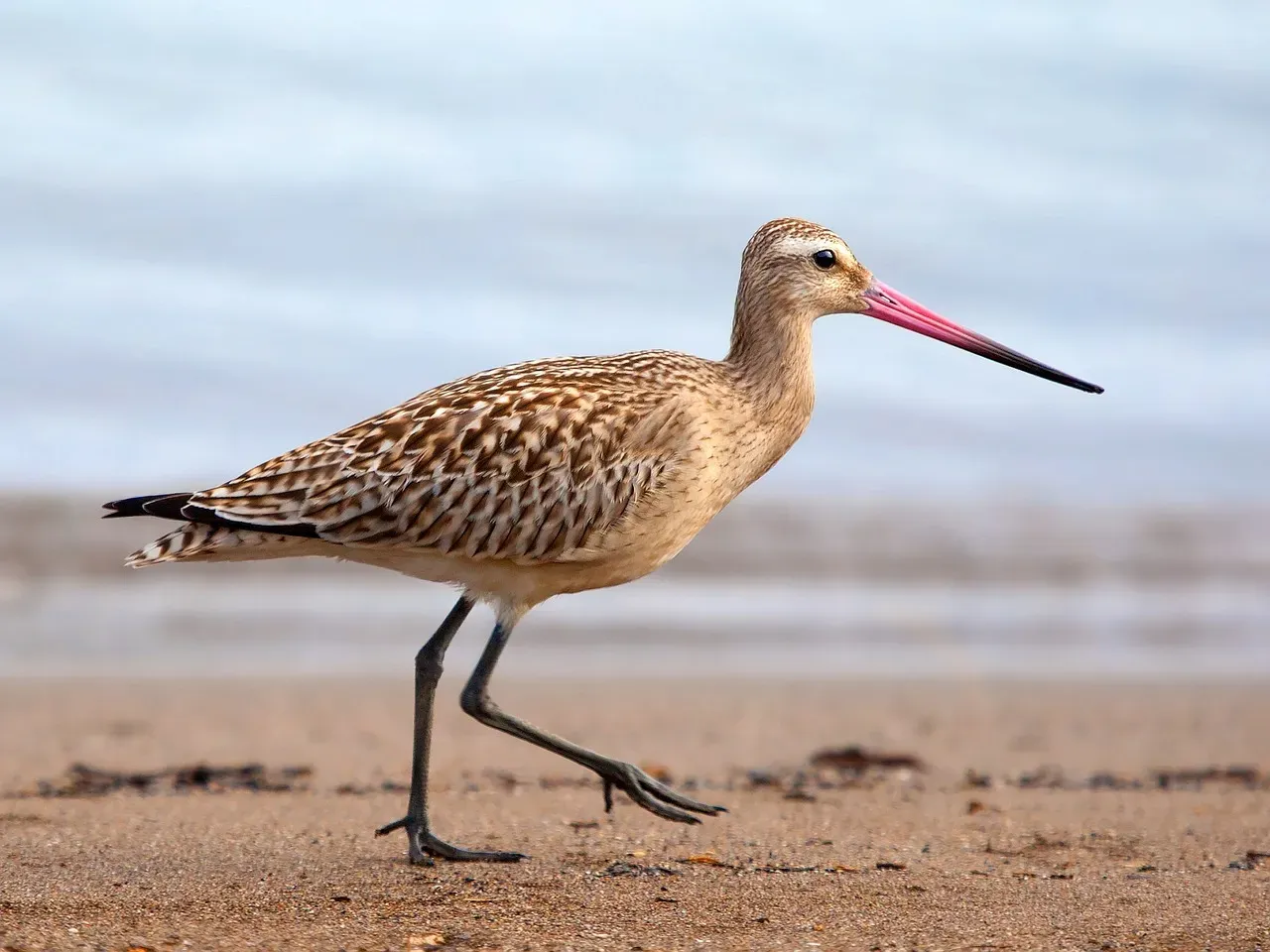
The migration of the subspecies Limosa lapponica baueri across the Pacific Ocean from Alaska to New Zealand is the longest known non-stop flight of any bird, and also the longest journey without pausing to feed by any animal. That is not a small claim.
The bar-tailed godwit can fly for nearly 7,000 miles without stopping, making it the bird with the longest recorded non-stop flight. During the eight-day journey, the bird doesn’t stop for food or rest, demonstrating jaw-dropping endurance.
How does it fuel itself? Simple, in a brutal kind of way. To prepare for this marathon flight, Bar-tailed Godwits eat extra food to nearly double their body weight in fat. This fat acts as fuel for their nonstop trip, which can last up to nine days without rest, food, or water.
During migration, this bird’s body undergoes changes, including shrinking internal organs to reduce weight and boost flight efficiency. That’s right. It literally shrinks its own organs to fly faster. Nature is wild.
3. Sooty Shearwater: The Pacific’s Figure-Eight Flier

Here’s one that doesn’t get nearly enough attention. The Sooty Shearwater is a seabird with one of the longest migration routes on the planet. Each year, these birds travel up to 64,000 km (40,000 miles). They nest in places like New Zealand and Chile, then fly north to feeding grounds that stretch all the way to Alaska and Japan.
Their migration follows a unique figure-eight pattern, allowing them to take advantage of rich food sources across both the Southern and Northern Hemispheres. Imagine drawing an invisible figure-eight across the entire Pacific Ocean. That’s their annual commute.
Their ability to cover such vast distances is aided by dynamic soaring, a technique that allows them to exploit the wind gradients over the ocean. They don’t power through the air so much as they ride it, surfing invisible waves of wind energy with an almost elegant efficiency.
4. Blackpoll Warbler: A Tiny Bird With Enormous Nerve

I think this one is perhaps the most astonishing story of all, purely because of the scale mismatch. Weighing less than a ballpoint pen, the Blackpoll Warbler pulls off one of the most astonishing migrations in the bird world.
The blackpoll warbler makes what may be the longest overwater migration of any land bird, flying non-stop across more than 2,000 kilometres of the Atlantic Ocean on the way to its wintering grounds in South America. That’s not a seabird built for ocean crossings. That’s a tiny forest songbird launching itself over open water with no backup plan.
Nome’s blackpolls spent nearly a month feeding and fattening until they doubled their body weight. Once fueled up for the flight, the long-haul travelers waited for a night with a tailwind, then launched out over the open Atlantic on a nonstop flight to the northern shores of South America. The blackpolls’ transoceanic flights took up to three days of continuous flapping with no food, water or rest before landfall.
For warblers who summer in Alaska, this makes a round trip journey of up to 12,000 miles, the longest migration of any North American songbird. A tiny bird. Twelve thousand miles. Unbelievable.
5. Ruby-Throated Hummingbird: The Miniature Marathon Runner

Most people don’t associate hummingbirds with epic journeys. They’re the delicate little jewels hovering at backyard feeders. Yet once a year, they do something borderline insane. It’s hard to believe that a bird weighing just a few grams can cross the Gulf of Mexico in one breathtaking leap. Yet, each year, the Ruby-throated Hummingbird does just that, flying nonstop for up to 18 hours over open water from the southern United States to Central America.
Despite their size, they are incredibly strong flyers, beating their wings up to 50 times per second. That kind of wing speed burns through energy at a staggering rate, which is why preparation matters so much.
To fuel this demanding migration, they consume large quantities of nectar, nearly doubling their body weight before departure. The hummingbird’s whole strategy is essentially: eat everything, get fat, then sprint across an ocean. It sounds reckless. It works.
6. Common Swift: The Bird That Never Lands

The Common Swift is among the most acrobatic fliers in the bird world and spends almost its entire life airborne. That is not an exaggeration. Once it takes flight for migration, it can stay airborne for up to ten months without landing. Swifts travel from Europe all the way to Central and Southern Africa, soaring at dizzying heights and even sleeping on the wing.
Scientists have tracked these birds as they glide, feed, and rest, all while in flight. The concept of “rest” for a Common Swift involves sleeping in the air, one eye open, brain half-switched off, still moving. It’s like sleeping on a treadmill at thirty miles per hour.
Some species, like swifts and frigatebirds, can rest one half of their brain at a time while flying, allowing them to travel nonstop for days or even weeks. Their feet, in fact, are so underdeveloped that if a Swift lands on flat ground, it struggles to take off again. The sky is simply where they live.
7. Northern Wheatear: The Tiny Songbird That Crosses the Arctic
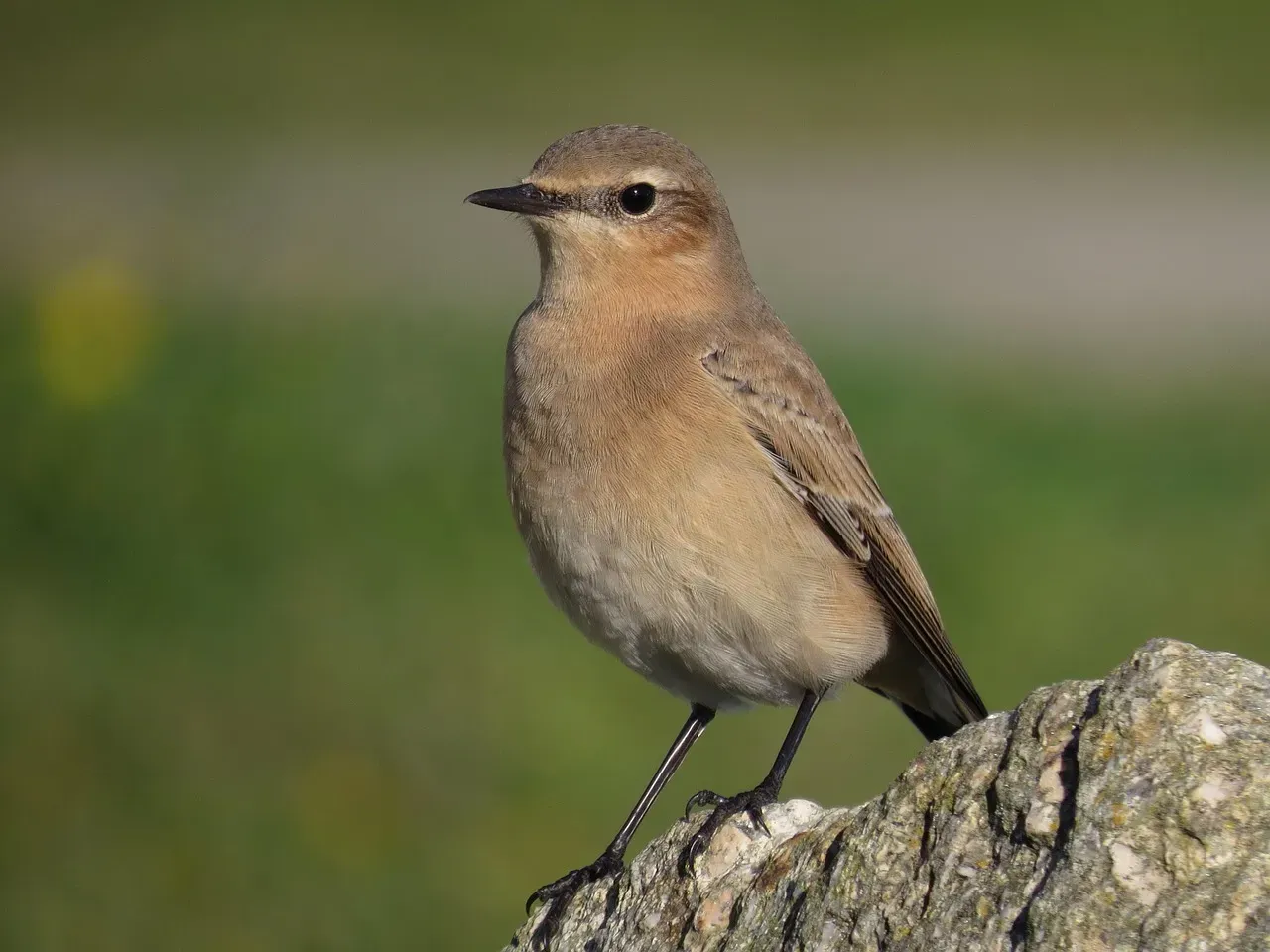
The Northern Wheatear is a small songbird that makes one of the longest migrations for a bird its size, traveling from Alaska and Canada to sub-Saharan Africa. Some individuals cover over 9,000 miles during this migration.
What makes their route particularly remarkable is not just the distance but the direction. Birds breeding in Alaska and the Canadian Arctic travel across the Bering Strait, through Asia, and into Africa. They go west, essentially crossing the entire Eurasian continent, rather than heading straight south like most North American birds.
Over the course of their migration, northern wheatears travel over varied landscapes such as grasslands, mountains, deserts, and tundra. Northern Wheatears can find their way using the stars and the Earth’s magnetic field. For a bird you could cup in both hands, covering 9,000 miles across every type of terrain imaginable is nothing short of extraordinary.
8. Red Knot: Racing Against the Clock at Delaware Bay

The Red Knot may be small, but its migration is monumental. This robin-sized shorebird travels from the Arctic tundra to the southern tip of South America, a journey of over 15,000 kilometers one way.
Here’s the thing that makes the Red Knot’s migration genuinely special. What’s truly extraordinary is that Red Knots time their migration with ecological precision. When they arrive on the shores of Delaware Bay in the United States, it coincides perfectly with the spawning of horseshoe crabs. The birds gorge on the nutrient-rich eggs, fueling their next leg toward the Arctic.
It’s a beautifully timed relay, millions of years in the making. Sadly, the Red Knot’s journey is under threat from climate change and habitat loss. As horseshoe crab populations decline, so too does this elegant bird’s ability to complete its migration. The whole system depends on perfect timing, and right now, that timing is being disrupted.
9. Swainson’s Hawk: The Thermal-Surfing Raptor
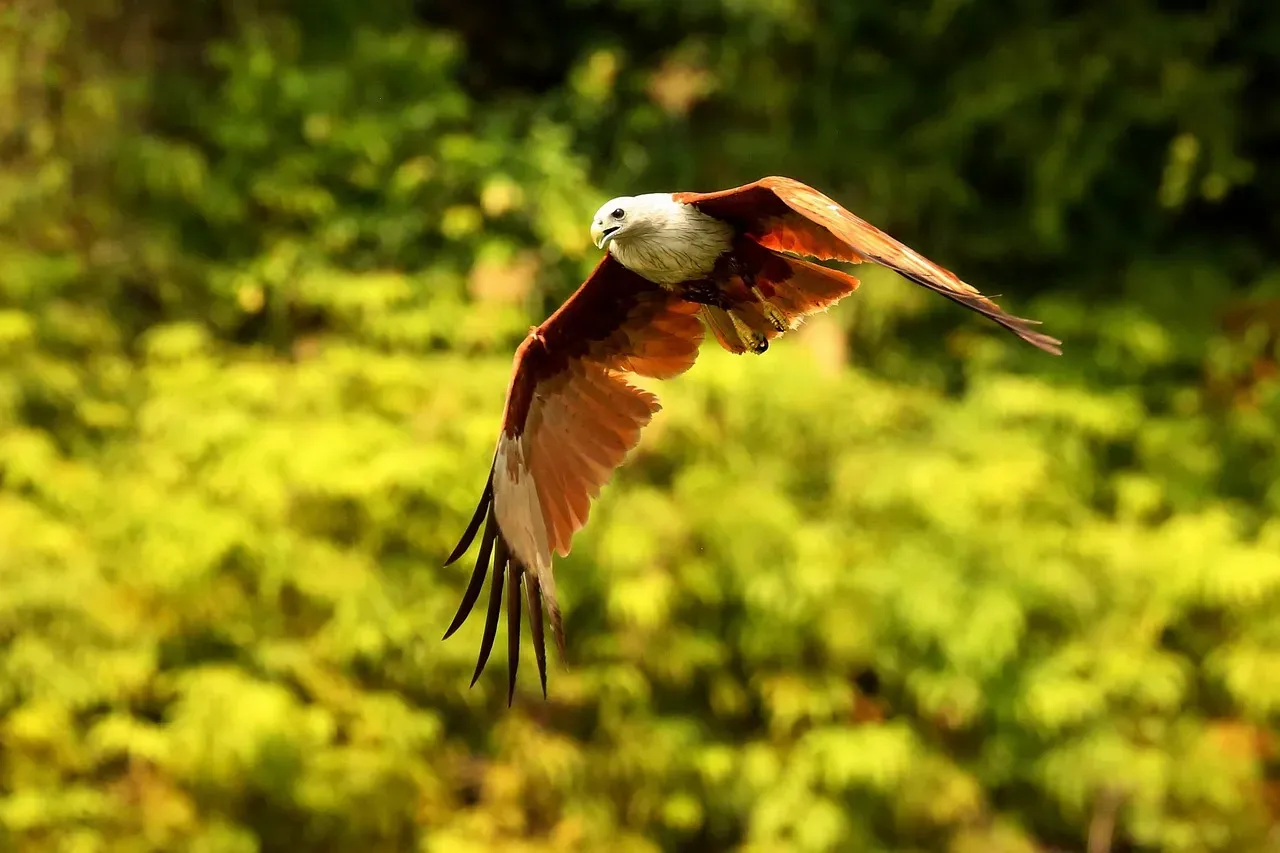
Nearly the entire population of Swainson’s hawks migrates between breeding grounds in western North America and overwintering grounds in South America. During their journey, these hawks travel roughly 12,427 miles round trip, making them one of the world’s longest-distance migratory raptors.
What sets the Swainson’s Hawk apart is not just where it goes, but how it gets there. Once they are in flight, the flocks use winds from the north and thermals to help them save energy while flying. Thermals are columns of air that rise right from the surface of warm patches of land. Birds use these thermals to gain height without flapping their wings as the column of air rises. As it cools, the birds glide down to another thermal and repeat the process. This pattern of following thermals allows the birds to use very little effort and energy.
They form flocks numbering in the tens of thousands, often mixing with Turkey Vultures, Broad-winged Hawks, and Mississippi Kites to create a virtual river of migrating birds. Imagine looking up and seeing a sky literally darkened by tens of thousands of hawks riding invisible columns of air. It’s a spectacle that dedicated birders travel across continents to witness.
10. Short-Tailed Shearwater: Australia’s Ocean Wanderer

The short-tailed shearwater travels up to 27,000 miles over the course of a year. Also known as the yolla or moonbird, the short-tailed shearwater is a migratory seabird from the Southern Hemisphere.
Short-tailed shearwaters spend their summers in the waters around Australia and Tasmania. For the winter, they migrate to the Northern Hemisphere, specifically to the Aleutian Islands and eastern Russia. That’s essentially from one end of the Pacific to the other, twice a year, every year, without pause.
To this day, they remain a popular commercially harvested bird and sometimes go by the name “muttonbird” in Australia. It is honestly hard to square that fact with the sheer distances this bird covers. It crosses the Pacific Ocean regularly, and yet remains a culturally embedded part of Australian coastal life. A remarkable and slightly humbling contradiction.
11. Osprey: The Faithful Wanderer That Always Comes Home
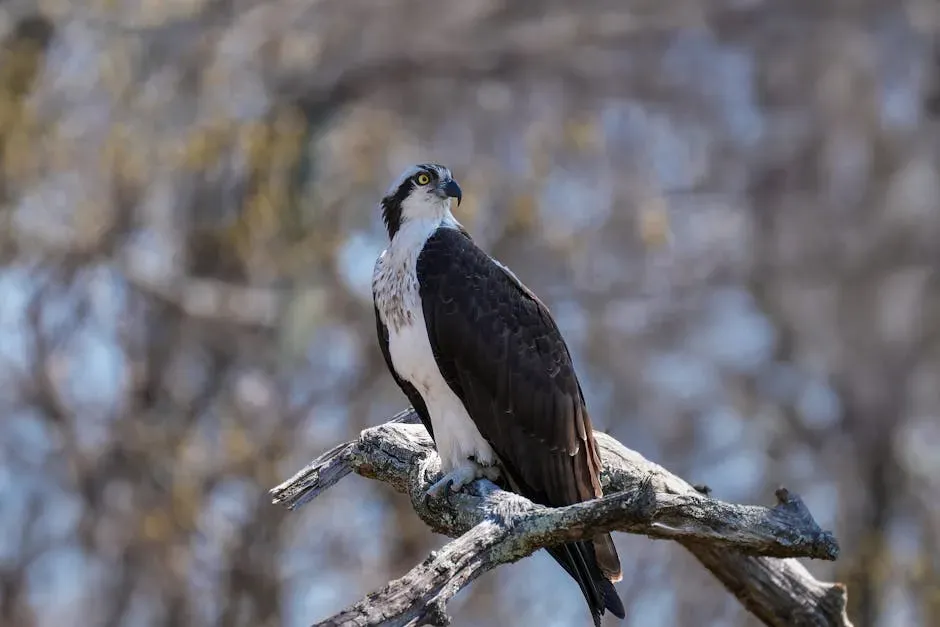
This fish-eating raptor migrates from North America to Central and South America, with some individuals traveling over 5,000 miles each season. Ospreys are unique in their ability to adapt to coastal and inland habitats as they follow waterways on their migratory paths.
What makes the Osprey’s migration story so emotionally resonant is its loyalty. Ospreys are monogamous and often return to the same nest with the same partner year after year. After flying thousands of miles south for winter, they return to the exact same nest, on the exact same tree, where they raised their family the previous year. It’s a bit like coming home after a solo round-the-world trip to find your house exactly as you left it.
Scientists can now accurately track these travels thanks to the use of tiny geolocator backpacks that transmit birds’ locations. This information sheds new light on migration, while helping to pinpoint locations in need of conservation. In many ways, the Osprey has become a symbol for how deeply individual birds can imprint on a home, no matter how far they roam.
Conclusion: Nature’s Most Extraordinary Journeys

These eleven birds are not outliers. They represent something fundamental about the natural world: the stubborn, relentless drive to survive and thrive, no matter what the cost. Migration is not just a seasonal routine. It’s a matter of survival. Birds migrate primarily to find food, suitable weather, and safe breeding grounds.
One of nature’s greatest mysteries is how birds manage to travel thousands of miles with such accuracy. Scientists have discovered that they use a combination of celestial, magnetic, visual, and sensory cues to find their way. Some appear to literally see the Earth’s magnetic field as a visual overlay, like a built-in compass fused with their very perception of the world.
It’s hard not to feel a certain smallness when you consider what these creatures accomplish. A tiny warbler weighing less than a pen, crossing the Atlantic alone in the dark. An Arctic Tern living its entire life between two polar summers, never knowing winter. A godwit shrinking its own organs to fly faster, crossing the Pacific without a single rest. These aren’t just migration stories. They’re survival stories. They’re endurance stories. They’re, honestly, some of the most inspiring things happening on this planet right now.
The next time you see a bird on a telephone wire, it might be worth wondering: just how far has that small creature actually traveled to be sitting right there?

- 10 Incredible Facts About Raccoons That Make Them Backyard Geniuses - August 11, 2026
- 12 Shocking Facts About Dolphins That Will Make You See Them Differently - August 11, 2026
- Why Near-Death Experiences Often Follow Similar Patterns Across Cultures - August 11, 2026