

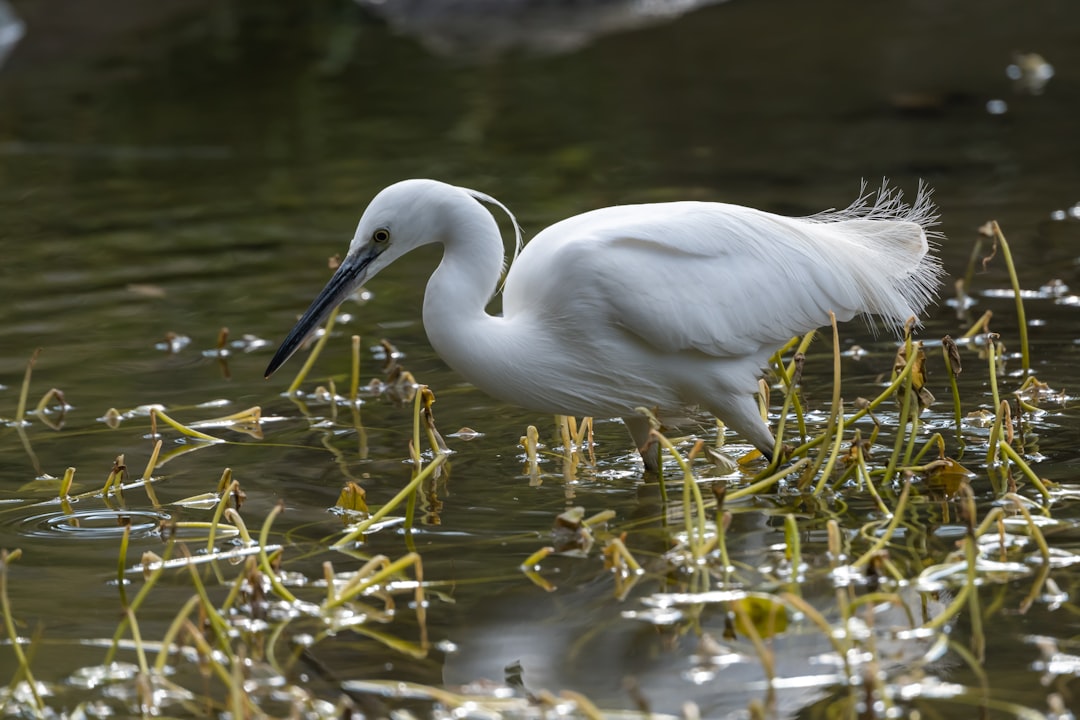
Collaborative Efforts Fuel Park Revival (Image Credits: Unsplash)
St. Louis – Forest Park, one of the largest urban parks in the United States, stands as a testament to successful conservation in a bustling cityscape. Recent research revealed that targeted habitat restoration efforts have significantly boosted bird diversity, especially among native species.[1][2] Partnerships between local organizations and scientists turned degraded areas into vibrant ecosystems, offering hope for other metropolitan green spaces. The findings underscore the value of long-term stewardship amid urban pressures.
Collaborative Efforts Fuel Park Revival
Forest Park Forever spearheaded habitat restoration over the past few decades, replanting native vegetation and reconstructing waterways. These initiatives created diverse environments, from woodlands to wetlands, spanning 194 acres designated as a nature reserve. The nonprofit worked closely with the City of St. Louis to maintain and enhance the park’s natural features.
Scientists from the Saint Louis Zoo’s Institute for Conservation Medicine joined forces with Washington University in St. Louis and other institutions. They monitored wildlife through projects like the St. Louis Box Turtle Project, launched around 2012, which evolved into the Forest Park Living Lab. This precursor effort tracked environmental health improvements over 14 years.[1]
Such partnerships pooled resources and expertise. Volunteers and experts planted thousands of native trees and plants in recent years, bolstering resilience against urban challenges.
Research Tracks Tangible Gains in Biodiversity
A new study in the journal Ecological Applications quantified the restoration’s impact through bird surveys.[3] Researchers compared data from 1997 and 2007-2012 with fresh observations from 2023 and 2024. Point-count methods involved stations at dawn, where teams recorded birds by sight and sound for five to ten minutes each.
| Survey Period | Purpose |
|---|---|
| 1997, 2007-2012 | Baseline data |
| 2023-2024 | Post-restoration assessment |
Ecologist Stella Uiterwaal, now at the Smithsonian, led the analysis as a postdoctoral scholar with Washington University’s Living Earth Collaborative. Her team, including Sharon Deem and Jamie Palmer from the Saint Louis Zoo, Stephen Blake from Saint Louis University, and Anthony Dell, built statistical models to measure changes. The results showed clear increases in overall bird diversity, driven primarily by native species.[2]
Water and Variety Prove Pivotal
Access to open water emerged as a critical driver. Ponds and creeks attracted diverse bird groups, enhancing biodiversity. “If there’s open water, you can get different groups of birds and that will in and of itself increase biodiversity,” Uiterwaal noted.
A mix of habitat types – from prairies to savannas – further supported varied species. Restoration prioritized heterogeneity, reducing reliance on non-native birds. Spatial differences across restored sites amplified these effects more than temporal shifts.
- Reconstructed ponds and streams
- Native woodlands and prairies
- Wetlands and riparian zones
- Old-growth forest preservation
- Diverse understory plantings
Sharon Deem, director of the Saint Louis Zoo Institute for Conservation Medicine, highlighted the progress: “The restoration work being conducted by Forest Park Forever has been key to revitalizing St. Louis’ largest urban park.”[1]
Resilience Tested by Nature’s Fury
The park endured a devastating tornado in May 2025, which felled trees and damaged infrastructure. Yet the study, completed before the event, affirmed the ecosystem’s robustness. Authors expressed confidence in ongoing recovery, citing prior gains.
Post-storm efforts ramped up tree plantings, with hundreds added in single days. These actions built on restoration momentum, aiming to restore the canopy over years.
Implications for Urban Green Spaces
The research offers a blueprint for cities nationwide. Amid declining native birds due to habitat loss elsewhere, urban parks like Forest Park emerge as vital refuges. Investments yield benefits for wildlife and human well-being, promoting mental and physical health.
Deem emphasized the one-health approach: “We see that when linking environmental health, through park restoration, we support biodiversity while also improving human mental and physical health through healthy urban green spaces – a one-health win for humans, animals and the environment.”
Key Takeaways
- Habitat restoration increased native bird diversity in Forest Park.
- Open water and habitat variety were essential success factors.
- Urban parks can counter broader biodiversity declines.
Forest Park’s story proves that dedicated restoration transforms urban landscapes into biodiversity hotspots. As cities face growing environmental pressures, such models inspire action. What steps can your community take to support local green spaces? Share your thoughts in the comments.

- Urban Coyotes Show Remarkable Adaptability, Learning to Thrive in City Environments - July 22, 2026
- Beavers Are Nature’s Engineers, Creating Vital Habitats for Other Wildlife Species - July 21, 2026
- The Recovery of the California Condor Offers Hope for Other Critically Endangered Birds - July 21, 2026