

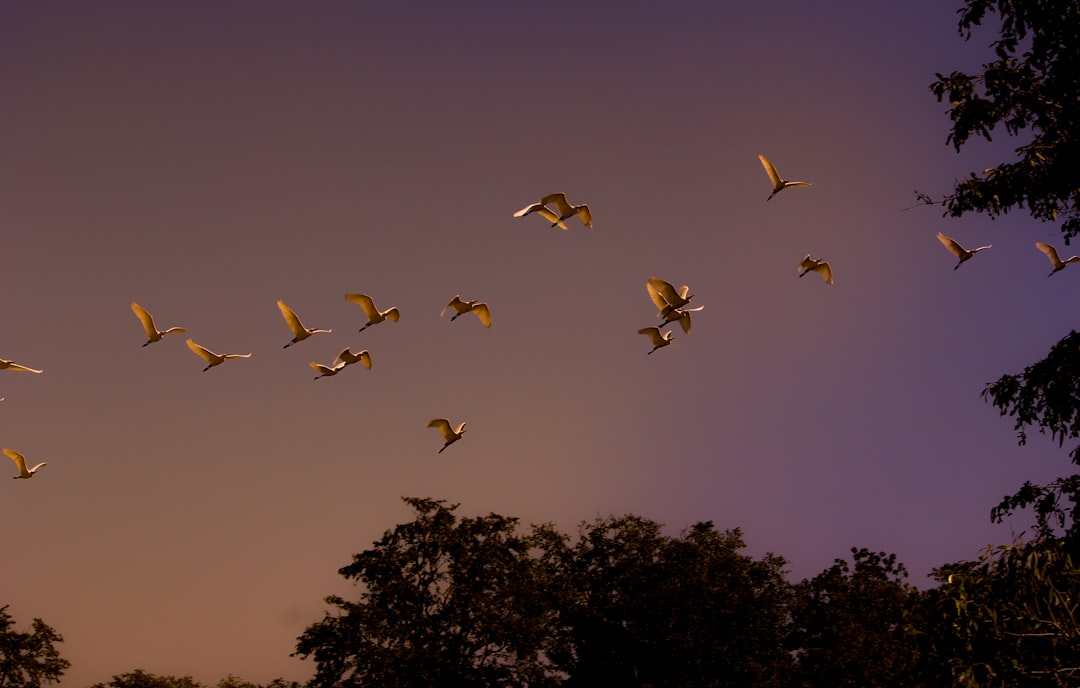
Washington state – Millions of migratory birds now traverse the state under cover of darkness each night. These travelers follow the Pacific Flyway northward to their breeding grounds during the early stages of spring migration. Experts track their progress through weather radar, revealing a steady stream that will intensify in coming weeks.[1][2]
The Allure of Nighttime Travel
Around 70 percent of migratory birds, including most songbirds and shorebirds, prefer flying after sunset. This strategy helps them evade daytime predators while conserving energy for long journeys. Cooler night air also reduces the physical strain of flight.[1]
These nocturnal flights turn Washington’s skies into invisible highways. Songbirds like warblers and vireos join shorebirds such as dunlins and western sandpipers in the aerial parade. Central Washington’s wetlands and coastal mudflats serve as vital refueling stops along the route.[3]
Navigating the Pacific Flyway
The Pacific Flyway stretches from Alaska to Patagonia, channeling millions of birds along North America’s western edge. Washington occupies a pivotal position, offering diverse habitats from Puget Sound estuaries to the Columbia Basin. Spring brings waves of these migrants heading to Arctic breeding areas or high-elevation nests.[1]
Shorebirds pass quickly through in late April and early May, fattening up at sites like Grays Harbor and Nisqually National Wildlife Refuge. Sandhill cranes arrived earlier, peaking in early April near Othello. This flyway supports over 300 species, underscoring the state’s ecological importance.[3]
Radar Reveals the Scale
Tools like BirdCast from the Cornell Lab use weather radar to monitor these movements in real time. Recent data showed about 156,000 birds fully crossing Washington in a single night earlier this week, with roughly 500,000 aloft at peak moments. Not every bird completes the transit overnight, so in-flight totals exceed crossings.[1][2]
Spring migration ramps up now through mid-May, when U.S.-wide peaks can exceed 1 billion birds per night. Washington’s dashboard recently logged 28,700 crossings from April 14 to 15, with a high of 496,000 in flight.[4] Live maps help birders and conservationists anticipate heavy traffic.
Facing Modern Hazards
Bright urban lights pose the top threat to these nighttime voyagers worldwide. Artificial glow confuses birds navigating by stars, drawing them toward buildings and raising collision risks. Window strikes claim millions annually during migration seasons.[1]
Initiatives like Lights Out, Washington urge simple changes. Residents can dim outdoor fixtures, opt for warm-toned bulbs, and shut off unneeded lights from dusk to dawn. These steps during peak periods save lives and ease the birds’ arduous trek.
- Turn off non-essential exterior lights.
- Use motion sensors or timers.
- Choose shielded, downward-directed fixtures.
- Apply decals or screens to windows.
- Support dark-sky advocacy in communities.
Key Takeaways
- Spring migration peaks in mid-May, with millions using Washington’s skies nightly.
- 70% of songbirds and shorebirds fly at night to dodge predators.
- Light pollution drives deadly disorientation; dimming lights aids survival.
As these resilient migrants push toward northern horizons, Washington’s role as a flyway guardian grows ever clearer. Small actions today ensure future generations witness this awe-inspiring phenomenon. What steps will you take to protect the skies? Share in the comments.

- Urban Coyotes Show Remarkable Adaptability, Learning to Thrive in City Environments - July 22, 2026
- Beavers Are Nature’s Engineers, Creating Vital Habitats for Other Wildlife Species - July 21, 2026
- The Recovery of the California Condor Offers Hope for Other Critically Endangered Birds - July 21, 2026