

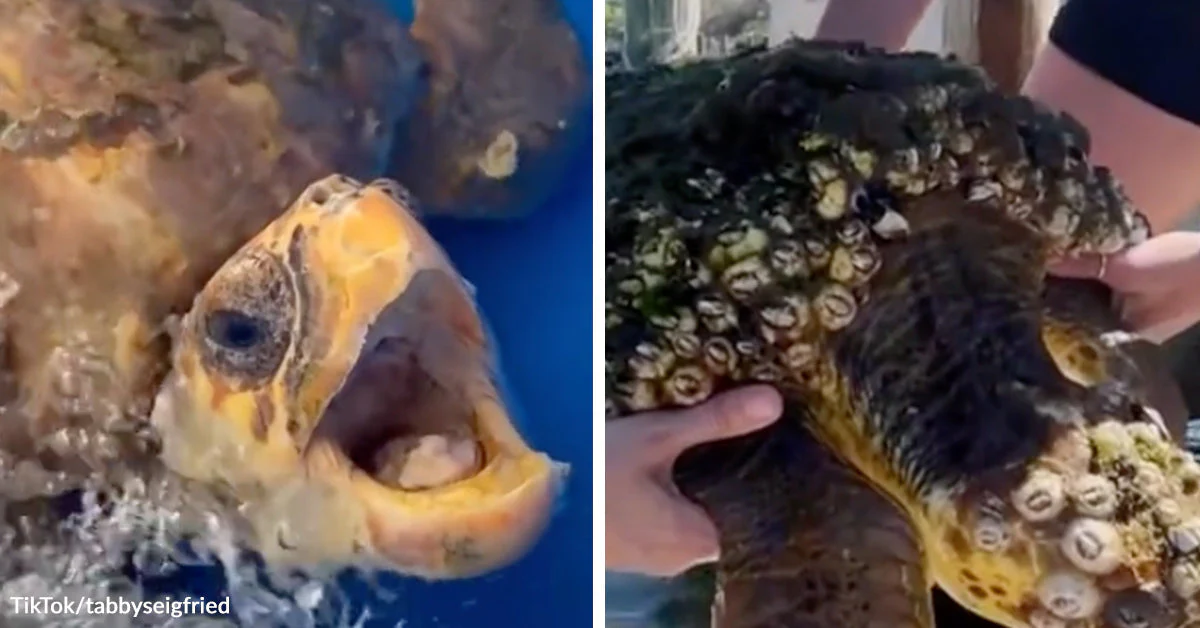
A boater patrolling the Gulf of Mexico off Florida encountered a heartbreaking scene: a loggerhead sea turtle barely keeping her head above water, her shell completely obscured by barnacles and algae.[1][2] The creature, later named Syrena, appeared weak and disoriented, prompting an immediate call to local rescuers. What began as a routine outing turned into the start of an extraordinary 92-day rehabilitation effort that restored her to full health.
A Critical Find Sparks Swift Action
Tabitha Siegfried, a seasoned marine biologist and rescuer, received the urgent alert from the boater. She assembled a team of volunteers and rushed to the site. Upon reaching Syrena, Siegfried noted the turtle’s extreme lethargy; she made no effort to flee, a clear sign of her dire state.[1] The team gently lifted the encrusted animal onto their boat and transported her to Siegfried’s Florida-based rescue facility.
Initial assessments revealed severe emaciation and a shell compromised by the heavy barnacle load. The overgrowth not only added burdensome weight but also indicated a deeper health crisis. Rescuers prioritized stabilization to prevent further decline, marking the beginning of a long recovery battle.
Debilitated Turtle Syndrome: A Mysterious Threat
Professionals diagnosed Syrena with debilitated turtle syndrome, or DTS, a condition that leaves sea turtles severely weakened and prone to extreme biofouling.[1] While the exact cause remains unknown, symptoms include profound weight loss, shell deformities, and an unnatural accumulation of barnacles that healthy turtles typically shed.
Siegfried highlighted the grim outlook, estimating that only about 25 percent of DTS cases she had handled resulted in survival. The syndrome often stems from prolonged malnutrition or illness, making early intervention crucial. For Syrena, the heavy encrustation exacerbated her struggles, hindering movement and feeding in the wild.[3]
The Meticulous 92-Day Rehabilitation
Treatment commenced with essential supportive care. Staff administered fluids to combat dehydration, along with vitamin B and C injections to bolster her immune system. Antibiotics targeted potential infections lurking beneath the surface.
Feeding presented a challenge due to her emaciated condition. Rescuers introduced a gradual diet, starting with easily digestible options to spark appetite. As days passed, they monitored her intake closely, adjusting portions to promote steady weight gain. A pivotal step involved painstaking barnacle removal, performed only after she gained enough strength to tolerate the procedure without stress.
- Day 1–10: Hydration and basic stabilization.
- Week 2–4: Introduction of soft foods and initial strength-building exercises.
- Month 2: Systematic cleaning of shell to reduce drag and reveal healing shell tissue.
- Ongoing: Daily health checks and swimming trials in controlled pools.
From Fragility to Vitality: Key Milestones
Progress emerged gradually but unmistakably. Syrena began accepting food willingly, a turning point that fueled her energy reserves. Her body weight increased noticeably, transforming her skeletal frame into a healthier profile.
Barnacle scraping sessions brought visible relief; with each removal, she moved more fluidly in her tank. Volunteers observed heightened alertness and attempts to dive, signals of returning vigor. By the 92-day mark, her shell gleamed clean, free of the smothering growth that had once defined her plight.[1]
These developments underscored the value of patience in wildlife rehabilitation. Siegfried’s team celebrated each small victory, from first voluntary swims to robust flipper movements.
Release Day: A Powerful Homecoming
Deemed fully recovered, Syrena returned to the Gulf of Mexico shoreline. Siegfried and her volunteers escorted her to the beach, where she powered down to the surf with purpose. She launched into the waves with evident strength and determination, vanishing into her natural habitat.
The successful release affirmed the facility’s expertise and the turtle’s innate resilience. Stories like Syrena’s inspire ongoing conservation efforts for loggerhead populations facing environmental pressures.
Key Takeaways
- DTS survival hinges on rapid intervention and comprehensive care, with barnacle removal playing a restorative role.
- Only 25 percent of treated cases succeed, emphasizing the need for specialized facilities.
- Individual stories like Syrena’s highlight how human dedication can tip the scales for endangered species.
Syrena’s journey from a barnacle-shrouded shadow to a thriving ocean dweller serves as a beacon of hope amid rising threats to marine life. It reminds us that targeted rescues can yield profound impacts. What do you think about these wildlife success stories? Tell us in the comments.

- Urban Coyotes Show Remarkable Adaptability, Learning to Thrive in City Environments - July 22, 2026
- Beavers Are Nature’s Engineers, Creating Vital Habitats for Other Wildlife Species - July 21, 2026
- The Recovery of the California Condor Offers Hope for Other Critically Endangered Birds - July 21, 2026