

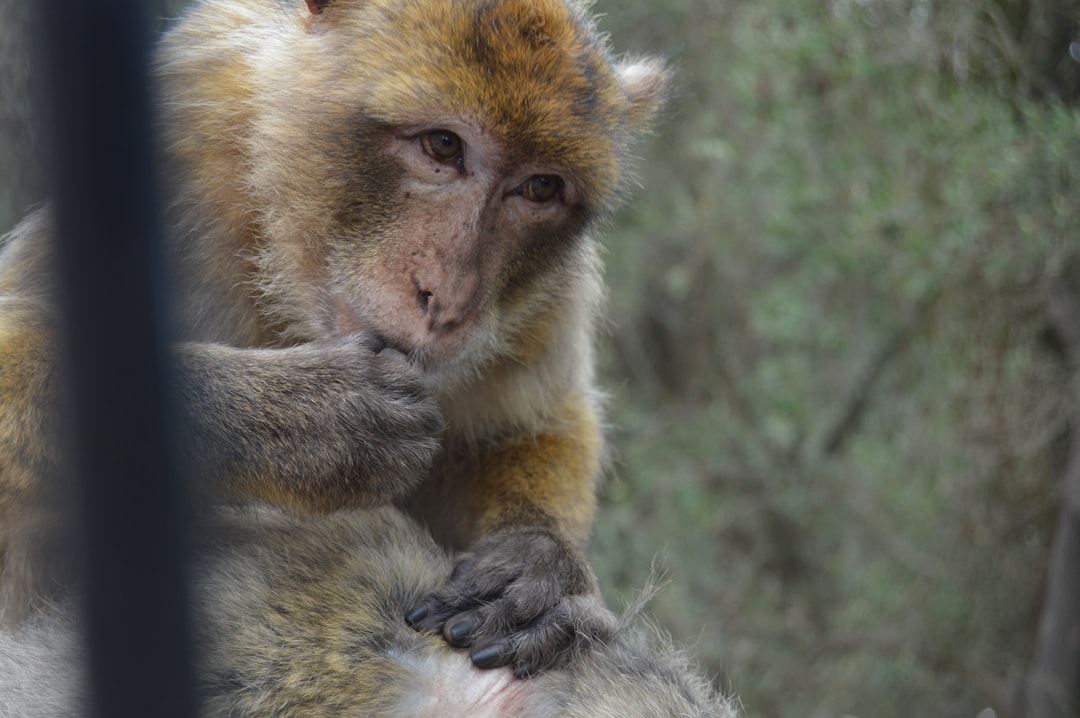
Gibraltar – Barbary macaques on the Rock of Gibraltar have begun eating soil to counteract the ill effects of snacks discarded by tourists. Researchers tracked this behavior, termed geophagy, across troops inhabiting the territory’s rugged terrain. The practice highlights how human proximity shapes primate habits in unexpected ways.[1]
Geophagy Spikes in High-Tourist Hotspots
Observations revealed that soil-eating events averaged 12 per week among the population, a rate on par with patterns seen in chimpanzees and lemurs. Troops in upper Rock areas, where visitors flock, accounted for 72% of these incidents. Monkeys there faced constant access to treats like chocolate, chips, and ice cream, making up nearly 19% of their observed diet.
Geophagy proved more common during peak holiday seasons and dropped by 31% in winter, when tourist numbers fell. One isolated group showed no such behavior at all, underscoring the link to human contact. In experimental tests, primates preferred specific soils, with 83% opting for red clay known as terra rossa.[1]
The Junk Food Dilemma for Primates
These European-only free-ranging monkeys traditionally foraged on herbs, leaves, seeds, and insects. Local authorities supplemented their diet with fruits and vegetables at feeding stations. Yet tourists ignored bans and offered high-calorie items, leading macaques in busy zones to consume such food 2.5 times more often than others.
“Foods brought by tourists and eaten by Gibraltar’s macaques are extremely rich in calories, sugar, salt and dairy,” noted Dr. Sylvain Lemoine, a biological anthropologist at the University of Cambridge and founder of the Gibraltar Macaques Project. “This is completely unlike the foods typically consumed by the species.” The excess fat, sugar, and dairy triggered gastric issues, including nausea and diarrhea, especially given post-weaning lactose intolerance in non-human primates.[1]
Soil as a Natural Buffer
Scientists proposed that soil serves multiple protective roles in digestion. It forms a barrier in the gut to block harmful compound absorption and soothes irritation from low-fiber, high-energy foods. Additionally, the clay supplies beneficial bacteria to restore microbiome balance disrupted by junk snacks.
“We think the macaques started eating soil to buffer their digestive system against the high energy, low fiber nature of these snacks and junk foods, which have been shown to cause gastric upsets in some primates,” Lemoine explained. Instances often followed bread or ice cream consumption, and no uptick occurred during pregnancy or lactation, ruling out simple nutrient needs. This adaptation lets the monkeys indulge in calorie-rich treats without severe consequences.[1]
Preferences varied by troop, with one group favoring tar-mixed soil from road potholes. About 30% of events involved multiple animals at shared sites, and 89% happened with onlookers present.
Social Transmission and Emerging Traditions
The behavior spread socially, suggesting the birth of “local traditions” akin to tool use in other primates. Troops developed distinct soil choices, influenced entirely by human landscapes. “The emergence of this behavior in macaques is both a functional and cultural one, like nutcracking in chimps, except it is driven entirely by proximity to humans,” Lemoine stated.
With around 230 macaques in eight groups, Gibraltar offers a unique human-primate interface. Historical ties trace back to Moorish times, with British reinforcements during World War II. These factors create a natural lab for studying adaptation.[1]
Researchers detailed their work in Scientific Reports, based on broad monitoring and preference trials across the Rock.Phys.org covered the study led by J. Frater and colleagues.
Broader Lessons from the Rock
Geophagy demonstrates wildlife resilience amid anthropogenic change, but it also signals dietary shifts with potential long-term health risks. The findings, from the University of Cambridge’s Gibraltar Macaques Project, illuminate how urban edges foster novel behaviors. “Gibraltar’s macaques are deeply entwined with human history, offering a striking example of a human-primate interface,” Lemoine added.
Key Takeaways
- Soil-eating counters junk food’s digestive harms by acting as a gut barrier and microbiome aid.
- Tourist snacks comprise 18.8% of macaque diet in contact zones, driving 12 weekly geophagy events.
- Social learning creates troop-specific traditions, marking a human-induced primate culture.
As human expansion continues, such adaptations remind us of shared evolutionary pulls toward energy-dense foods. What do you think about these clever monkeys? Share your thoughts in the comments.

- Urban Coyotes Show Remarkable Adaptability, Learning to Thrive in City Environments - July 22, 2026
- Beavers Are Nature’s Engineers, Creating Vital Habitats for Other Wildlife Species - July 21, 2026
- The Recovery of the California Condor Offers Hope for Other Critically Endangered Birds - July 21, 2026