

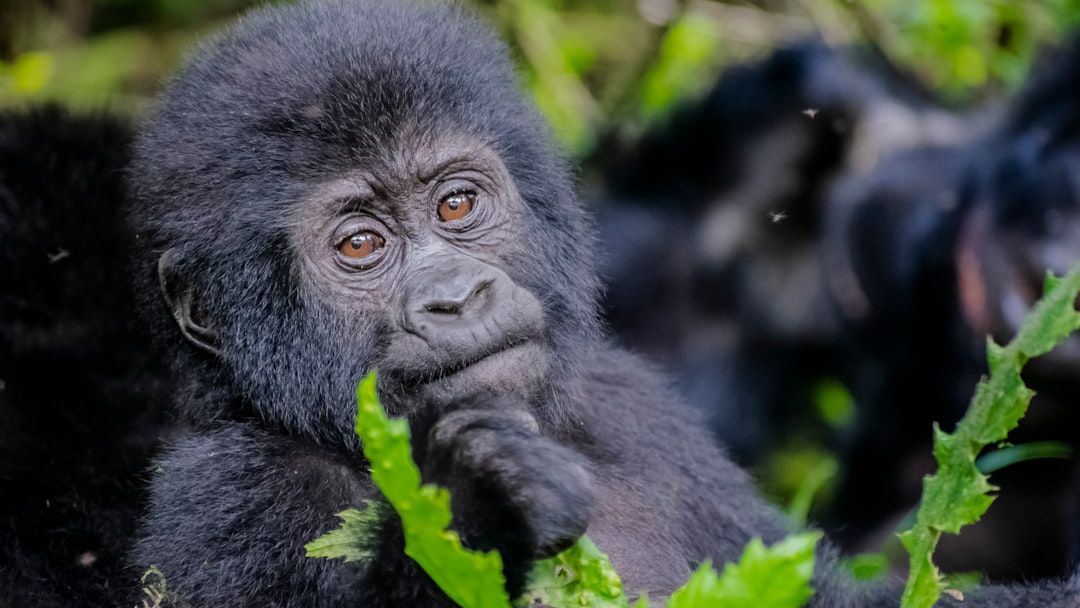
Researchers have long grappled with fragmented data in studies of great ape intelligence, where small participant groups limited broader conclusions about cognitive evolution. The release of EVApeCognition changes that equation. This comprehensive open-access dataset, drawn from experiments conducted over 18 years at Germany’s Wolfgang Köhler Primate Research Center, compiles 262 experimental records from 150 publications involving 81 great apes.[1][2] By standardizing and sharing this material, scientists now possess a powerful tool to explore patterns in primate thinking that echo the roots of human smarts.
Overcoming Decades of Data Constraints
The field of comparative cognition faced persistent hurdles. Individual studies typically featured few apes, often just a handful, focusing on narrow questions like tool use or social inference. Such constraints made it difficult to detect developmental trajectories, individual variations, or long-term trends.[3]
EVApeCognition emerged from a five-year effort to consolidate these scattered efforts. Teams contacted original authors, harmonized diverse data formats, and conducted rigorous reviews. The result captures work from 2004 to 2021, with 78 of the 81 apes contributing to multiple experiments – a rarity that enables longitudinal analysis.[4] This scale addresses a core weakness: prior research lacked the volume for robust meta-analyses.
Dr. Alejandro Sánchez-Amaro, a lecturer at the University of Stirling who led the project, highlighted the novelty. “Compiling an open-access dataset involving over 80 different great apes participating in over 150 studies over an extended period of time is quite unique in comparative psychology,” he stated.[1]
Unmatched Scope in Primate Studies
The dataset’s breadth stands out. It encompasses cognition across domains such as problem-solving, memory, social learning, and behavioral flexibility. Great apes – chimpanzees, bonobos, gorillas, and orangutans – served as subjects, sharing about 99% of their DNA with humans and diverging from our lineage around six million years ago.[4]
Hosted on GitHub and Zenodo, the resource invites global scrutiny. Educators can draw from it for courses in psychology and biology, while researchers pursue questions unanswerable before, like how cognitive skills mature over years or differ between individuals. The center, run jointly by the Max Planck Institute for Evolutionary Anthropology (MPI-EVA) and Leipzig Zoo, marked its 25th anniversary with this milestone.[2]
- 262 datasets from 150 publications
- 81 unique apes, 78 in repeated tests
- Standardized for meta-analysis and correlations
- Open for research, teaching, and AI modeling inspired by primate behavior
A Global Effort Fuels the Project
Collaboration defined the undertaking. Over 100 co-authors from nearly 100 institutions worldwide contributed data or expertise. Sánchez-Amaro, affiliated with both Stirling and MPI-EVA, coordinated alongside MPI-EVA Director Dr. Daniel Haun.[3]
Haun emphasized the dataset’s foundational role. “By bringing together numerous small-scale studies to create a standardised resource, EVApeCognition lays the groundwork for answering broader questions about cognition that were previously challenging to address,” he said. “It also strengthens comparative research into the evolutionary roots of human intelligence.”[1] Published in Scientific Data, a Nature journal, the work reflects open science principles at their best.
Bridging Ape Minds to Human Origins
Great apes offer a living window into our cognitive past. Their abilities in causal reasoning, cooperation, and memory hint at shared ancestry, yet reveal boundaries where human uniqueness emerged – language, abstract planning, cumulative culture. EVApeCognition equips scientists to map these overlaps precisely.[4]
Early applications could include training AI systems that emulate primate puzzle-solving or group dynamics. More fundamentally, it invites tests of hypotheses on intelligence’s modular structure or environmental influences on learning. Sánchez-Amaro envisions broad use: “This resource will also allow researchers to track long-term patterns and explore developmental questions that are impossible to answer with single studies.”[4]
Toward a New Era in Comparative Cognition
The release sets a precedent. Institutions may follow suit, pooling primate data for collective gain. As analyses unfold, expect refined models of how intelligence evolved – not as a sudden leap, but through incremental primate innovations.
Ultimately, EVApeCognition underscores continuity in minds across species. It reminds us that probing ape cognition does more than illuminate human beginnings; it enriches appreciation for intelligence’s diverse forms today.[2]

- Urban Coyotes Show Remarkable Adaptability, Learning to Thrive in City Environments - July 22, 2026
- Beavers Are Nature’s Engineers, Creating Vital Habitats for Other Wildlife Species - July 21, 2026
- The Recovery of the California Condor Offers Hope for Other Critically Endangered Birds - July 21, 2026