

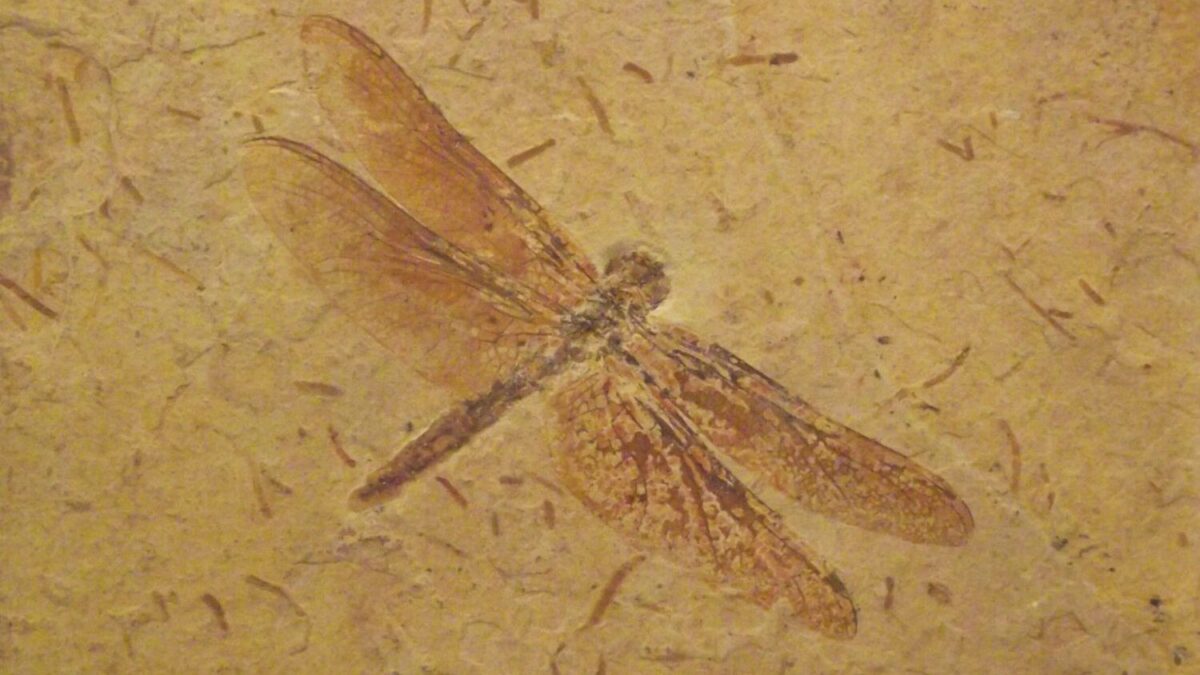
Three hundred million years ago, dragonfly-like griffinflies with wingspans reaching 27 inches patrolled the skies over vast coal forests on the supercontinent Pangaea. Scientists had long attributed these colossal insects to elevated atmospheric oxygen levels around 30 percent, far above today’s 21 percent. A recent study published in Nature, however, demonstrates that oxygen delivery to their flight muscles faced no significant constraints, prompting a reevaluation of what fueled prehistoric insect gigantism.[1][2]
The Long-Standing Oxygen Theory
Researchers first linked high oxygen to giant insects in the 1960s, building on observations of how these creatures breathe. Insects lack lungs and instead use a tracheal system: air enters through spiracles and flows via branching tubes to microscopic tracheoles that diffuse oxygen directly to tissues, including flight muscles. Larger bodies meant longer diffusion distances, so experts argued that modern oxygen levels limited insect size while ancient highs enabled monsters like the griffinfly Meganeuropsis permina.[1]
Geochemical data from the 1980s confirmed oxygen peaks during the Carboniferous period coincided with fossil evidence of these behemoths, including mayflies with 17-inch wingspans and millipedes over six feet long. A pivotal 1995 paper reinforced the idea, suggesting diffusion inefficiencies capped insect growth unless oxygen abounded. This view dominated textbooks for decades, explaining both the rise and later decline of mega-insects as oxygen levels fell.[2]
Revealing Insights from Flight Muscle Analysis
Edward Snelling of the University of Pretoria and colleagues challenged this narrative through meticulous microscopy. They examined flight muscles from 44 modern flying insect species – ranging from tiny wasps to hefty beetles and grasshoppers – using high-resolution electron microscopy. Across all sizes, tracheoles occupied less than 1 percent of muscle volume, with only trivial increases in larger specimens. Extrapolating to a 100-gram griffinfly yielded the same proportion.[2][1]
“If atmospheric oxygen really sets a limit on the maximum body size of insects, then there ought to be evidence of compensation at the level of the tracheoles,” Snelling noted. “There is some compensation occurring in larger insects, but it is trivial in the grand scheme of things.”[1] For context, capillaries in bird and mammal heart muscle claim about 10 times more relative space, hinting insects could easily scale up tracheoles if needed. These results indicate diffusion within flight muscles did not bottleneck oxygen supply, even in giants.[3]
Key Measurements: Tracheole volume fraction in flight muscle
| Insect Type | Volume Fraction |
|---|---|
| Small modern insects | <1% |
| Large modern insects | <1% (slight increase) |
| Carboniferous griffinfly | <1% |
Shifting the Search for Gigantism’s Causes
The findings do not entirely dismiss oxygen’s influence – upstream tracheal limits or other tissues might still matter – but they rule out flight muscle tracheoles as the constraint. Experts like Caleb Gordon of the Florida Museum of Natural History called it “the final nail in the coffin for the prevailing view.”[2] Attention now turns to alternatives: the absence of aerial predators like birds and bats during the Carboniferous may have allowed unchecked growth, while later vertebrate hunters curbed sizes.
Exoskeleton strength or metabolic demands could also impose physical ceilings. Roger Seymour of the University of Adelaide emphasized the evolutionary flexibility: “There must be great evolutionary potential to ramp up investment of tracheoles if oxygen transport were really limiting body size.”[3] As research progresses, these mega-insects remind us how Earth’s shifting conditions shaped life’s extremes.
This study reopens the book on insect evolution, urging scientists to probe beyond atmosphere alone for answers to nature’s largest fliers.

- Urban Coyotes Show Remarkable Adaptability, Learning to Thrive in City Environments - July 22, 2026
- Beavers Are Nature’s Engineers, Creating Vital Habitats for Other Wildlife Species - July 21, 2026
- The Recovery of the California Condor Offers Hope for Other Critically Endangered Birds - July 21, 2026