
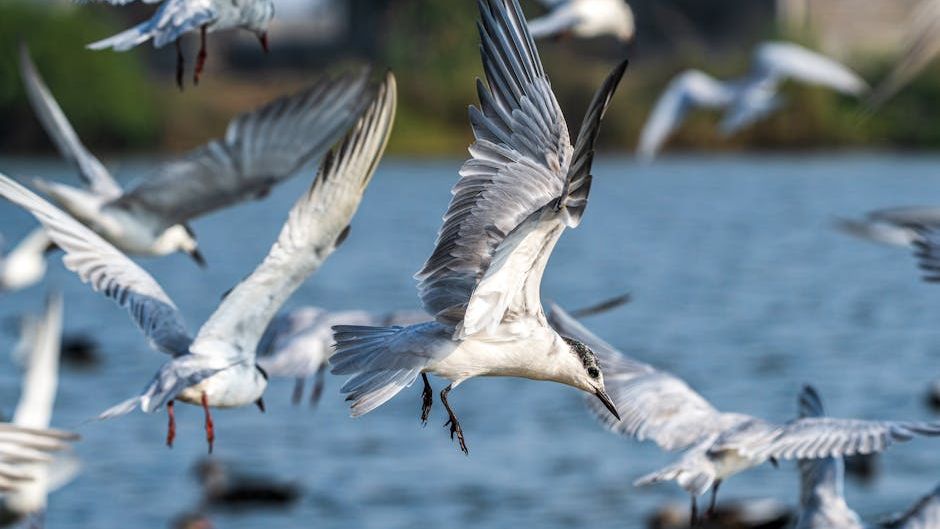
Every spring, billions of birds lift off from their wintering grounds and head toward distant breeding sites, following routes their ancestors traced for thousands of years. It’s one of the most reliable rhythms in the natural world. Reliable, that is, until now.
Rising global temperatures are quietly rearranging those ancient journeys. Some birds are leaving earlier. Others are veering off course entirely. A few are skipping parts of their routes altogether. What’s unfolding isn’t a sudden disruption – it’s a slow but measurable rewriting of one of nature’s most extraordinary phenomena.
Timing Is Shifting in Ways That Can’t Be Ignored
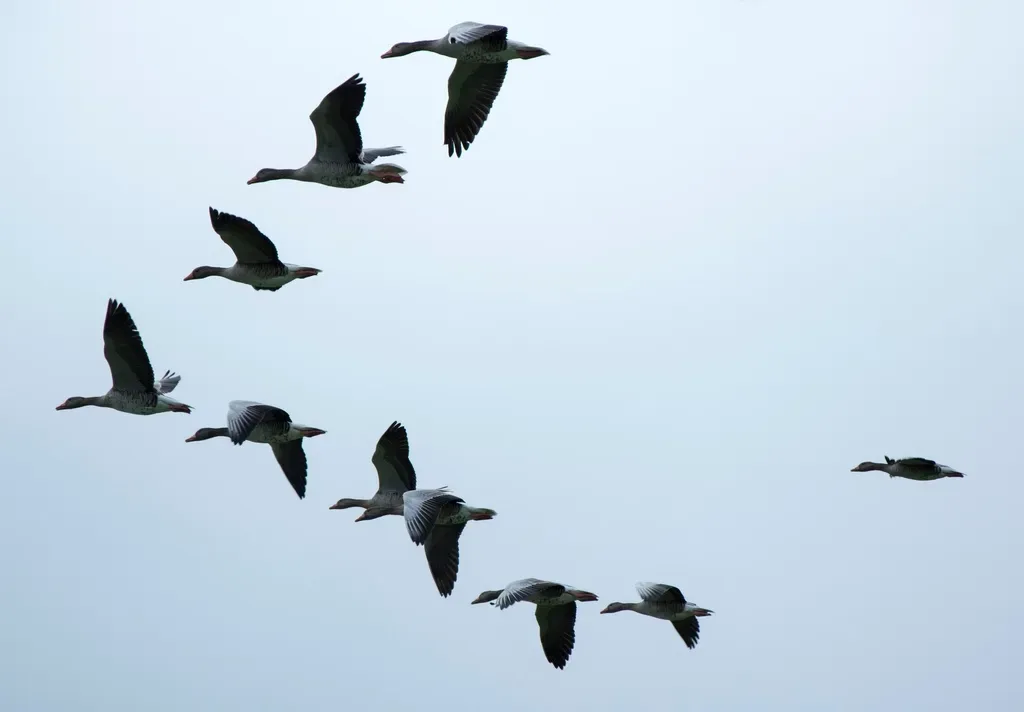
The most well-documented effect of warming temperatures on bird migration is a change in timing. Studies show that many species are now arriving at their breeding sites earlier in spring, with roughly one day of advancement for every one degree Celsius increase in temperature.
Data from weather radar spanning over two decades in the United States confirms this trend, particularly in regions warming the fastest. That’s not a minor fluctuation – it’s a documented, continent-scale shift accumulated over just a few decades.
The story isn’t uniform across all seasons, though. While spring migration is clearly shifting, autumn movements are less predictable, partly because the urgency to reach breeding grounds quickly doesn’t apply as strongly in the fall, leading to more varied changes in timing. Some species are actually stretching their migration windows rather than simply moving them earlier.
Research drawing on decades of data found that spring migration has gotten earlier by about five days overall, while fall migration has broadened – with the earliest migrants now departing their breeding grounds earlier and late migrants flying even later, stretching the duration of fall migration by roughly 17 days.
Routes Are Being Redrawn, Sometimes Dramatically
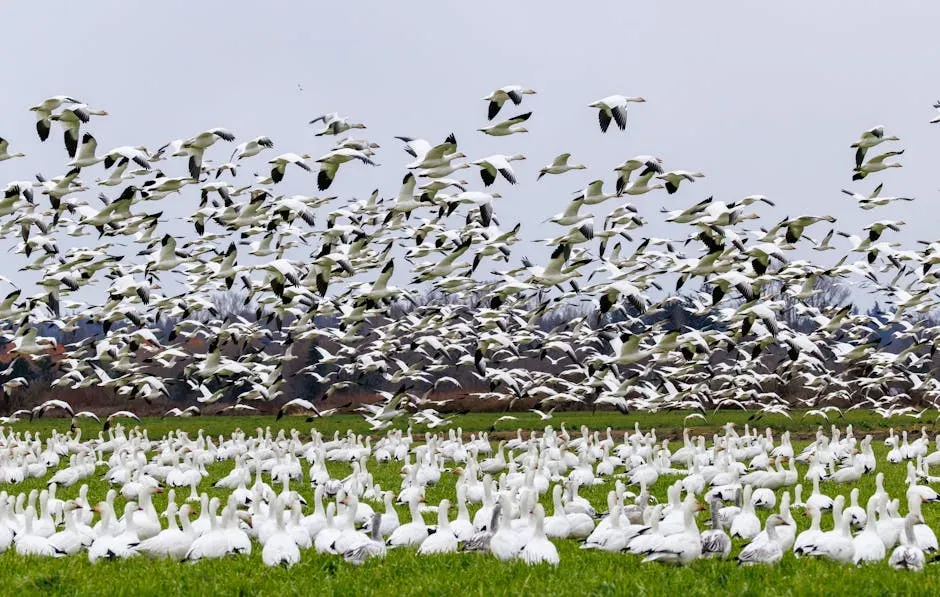
Beyond timing, the actual paths birds travel are changing. In North America, more than 300 species have shifted their winter ranges northward by an average of 40 miles in recent decades, with some birds moving inland in search of milder conditions away from the coasts.
Some shifts are striking in their speed and scale. A population of Arctic geese, apparently reacting to pressures along their former migratory route, rapidly adjusted by forming an entirely new migration route and breeding location almost 622 miles from their original grounds. Researchers described this as a remarkably rapid evolution – occurring over just 10 to 15 years – for a species traditionally regarded as highly conservative in its behavior and site use.
One study found that Richard’s pipits, a species that usually breeds in Siberia and overwinters in southern Asia, are now migrating on an east-to-west axis instead of heading south toward warmer latitudes. Researchers suspect warming conditions along their former route may be driving the change.
Data spanning more than 50 years from bird observatories in Africa and Spain’s south coast revealed that European migratory birds like the willow warbler, garden warbler, and nightingale were arriving at their overwintering spots in Africa later in the fall and leaving earlier in spring – suggesting that birds are staying longer in their summer destinations because more vegetation is available there for longer periods.
The Phenological Mismatch Problem
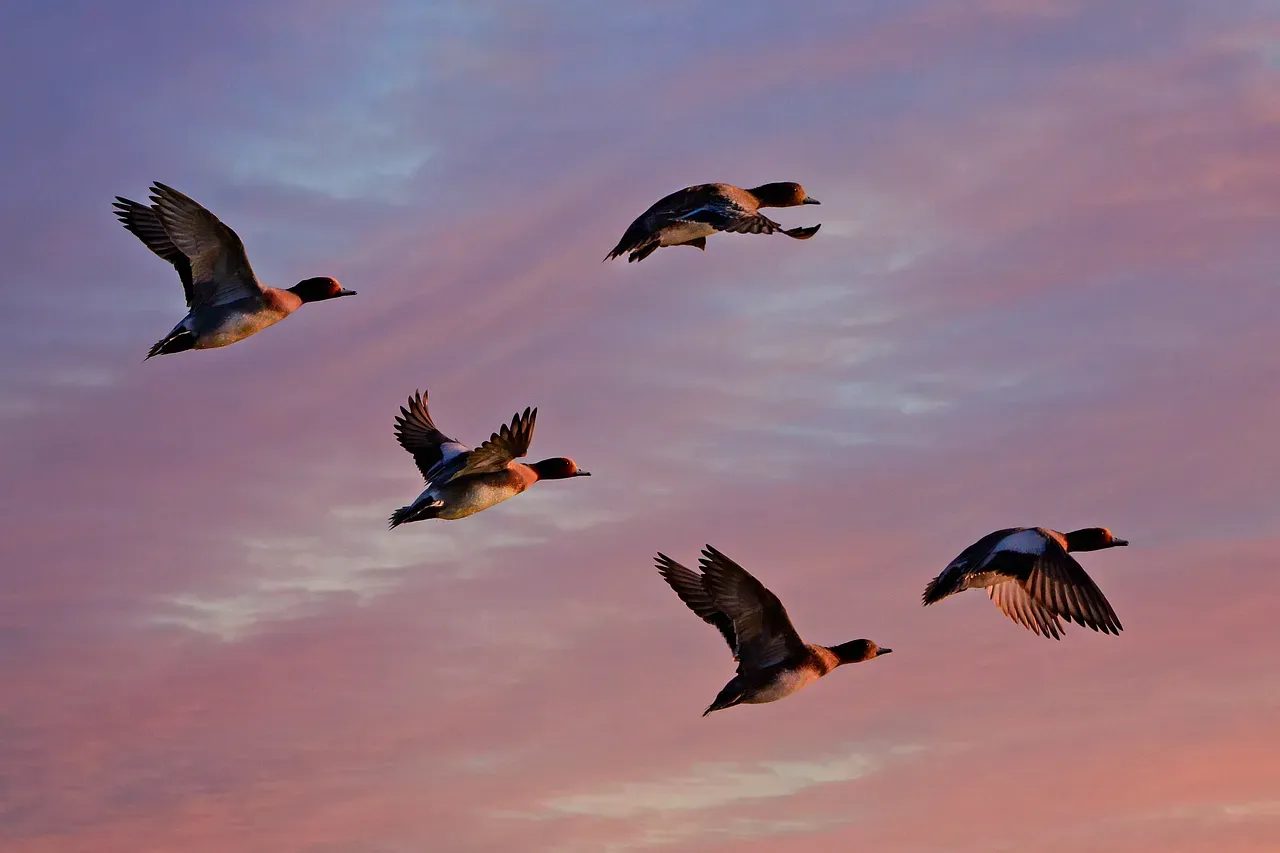
Changing when and where birds migrate would be manageable if the rest of the natural world kept pace. It doesn’t. Migration timing evolved to match peak food availability, such as insect hatches or blooming plants, and when birds arrive before or after these food peaks, it creates what scientists call a phenological mismatch.
Warmer springs mean that caterpillars hatch, grow, and pupate earlier than they did just a few decades ago, and birds that cannot eat caterpillars once they’ve entered the pupal stage face a shrinking food window – causing more and more chicks to starve during the breeding season.
The Red Knot, a shorebird that breeds in the Arctic, illustrates the stakes clearly. As the Arctic warms and insects emerge sooner, the Red Knot hasn’t adjusted its arrival time fast enough – chicks born after the food peak face malnutrition and lower survival rates, and this has already led to smaller body sizes and population declines.
In the eastern United States, scientists have documented a growing gap between the migration of Black-throated Blue Warblers and the peak of caterpillar abundance – a relationship once tightly aligned but now separated by up to ten days. That gap may seem small on paper. For the birds, it’s the difference between a successful breeding season and a failed one.
Some Species Are Struggling to Keep Up
It might seem logical that birds, among the most mobile creatures on Earth, would simply relocate as temperatures climb. The research tells a more sobering story. Researchers found that during both summer and winter, birds that moved long distances north did better than other species at reducing their exposure to warming temperatures – but nearly all species still experienced significant warming, even those that moved 100 to 200 miles north.
A study that tracked Hudsonian Godwits over 12 years found that this long-distance migratory species is actually arriving later at its Alaskan breeding grounds, with birds arriving six days later in 2023 than they did in 2012. This is the opposite of what warming-driven early-arrival trends would predict, and researchers believe it’s having measurable consequences for the birds’ ability to reproduce.
Researchers point out that although migrants might have the ability to move to more favorable locations, birds carry generations-long patterns of migration and will follow those instincts regardless of what conditions actually await them at the other end. That’s the core vulnerability. The calendar doesn’t know the climate has changed.
Migratory birds that depend on rigid internal clocks and fixed environmental cues such as day length may have the most difficulty meeting the challenges of global climate change if they cannot adjust their timing mechanisms to match new conditions. Species with more flexibility in their behavior may prove more resilient over time, but not all birds have that luxury.
What Conservation Efforts Are Beginning to Address
Research reveals that as the Sahara and Mediterranean regions become increasingly inhospitable, vital stopover sites in North Africa are shrinking and drying up, meaning birds reach their destinations weaker and with reduced chances of survival and successful breeding. The quality of stopovers along any given flyway matters enormously to a bird’s overall survival odds.
Of mounting concern is that birds are increasingly exposed to inhospitable and novel environments, and the natural pathways, corridors, and stopovers that many species have encoded into their movement strategies are under threat from climate change, pollution, habitat degradation, and urbanization.
Conservation strategies that are gaining traction include preserving floodplain catchments, restoring shorelines, managing water and air quality, preventing deforestation, and reducing soil erosion – all of which can meaningfully support birds during critical migration stages. The goal is to maintain a functional network of habitats along flyways even as conditions around those habitats shift.
Birds, particularly migratory species, are sensitive to shifting climatic conditions, and environmental stressors have been linked to earlier migration timing that can alter species abundance and disrupt ecological interactions – which is why long-term population monitoring provides essential insights into species’ capacity to adapt. Citizen science data, collected year-round by birdwatchers worldwide, has become a surprisingly powerful tool in tracking these changes at scale.
Conclusion
The routes birds have followed for millennia are not permanent fixtures. They’re responses to conditions – and conditions are changing. What researchers are documenting now, across dozens of species and multiple continents, is a migration system under real and measurable strain.
Some species are adapting faster than others. A handful are finding unexpected new paths. Many are struggling to keep pace with a world that is warming faster than evolution can respond. The outcomes will vary by species, geography, and how quickly habitat corridors can be protected and restored.
Birds have always been sensitive indicators of environmental health. What their shifting journeys are telling us, in the clearest possible terms, is that the planet’s seasonal rhythms are no longer what they were. Whether we act on that signal is, for now, still up to us.

- 12 Hippo Facts That Will Blow Your Mind - June 22, 2026
- 10 Animal Behaviors So Intelligent They Still Baffle Scientists - June 22, 2026
- 10 Most Beautiful and Strangest Caterpillars in The World - June 22, 2026