

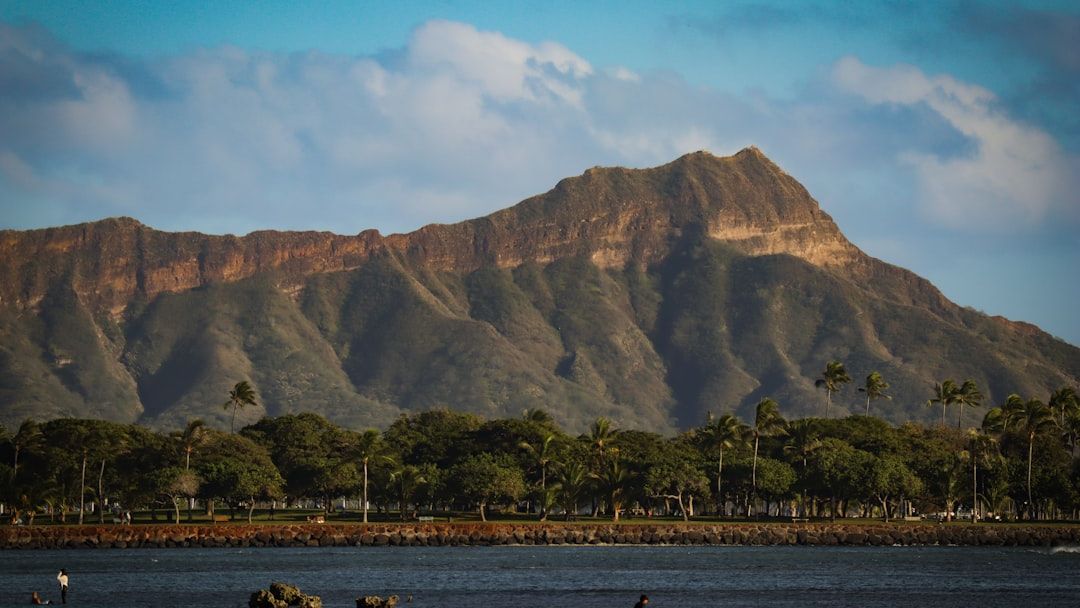
Honolulu, Hawaii — Forecasters warned that a developing El Niño could usher in a busier-than-usual hurricane season for the islands, with warmer ocean waters diminishing natural protections against storms. Experts pointed to weakened trade winds and rising humidity as immediate concerns for residents this summer. The pattern, expected to peak later in the year, carries risks that echo past disruptive events.[1]
Forecast Signals a Potent El Niño Ahead
The National Oceanic and Atmospheric Administration recently elevated the odds of El Niño emerging between May and July to 61 percent, with the event likely persisting through the end of 2026. A University of Hawaiʻi at Mānoa model reinforced this outlook, projecting ocean temperatures more than 2 degrees Celsius above normal in the equatorial eastern Pacific by late year.[2][3]
Researchers described their tool as a simple yet effective predictor, drawing on decades of ocean data to spot shifts up to 15 months out. While spring forecasts carry some uncertainty, converging models suggest at least a moderate event, with a one-in-four chance of very strong conditions by winter.[3]
This development follows a neutral phase in the Pacific, where trade winds have begun easing and subsurface warmth builds. Such changes typically spawn the warm-water pileup central to El Niño dynamics.
Hurricanes Gain Traction in Warmer Waters
Central Pacific hurricane activity historically surges during El Niño years, as the eastern Pacific becomes a hotter breeding ground for tropical cyclones. In 2015, the last strong episode produced 16 such systems, including three Category 4 monsters that fortunately skirted the islands.[1]
“During El Niño years, we tend to see higher than normal activity for hurricanes in the Central Pacific,” said John Bravender, warning coordination meteorologist with the National Weather Service. He noted that Hawaii’s surrounding cooler waters usually sap storm strength, but current above-normal temperatures could erode that buffer as the pattern strengthens.[1]
Meteorologists pegged the odds of a strong El Niño at around 25 percent, higher than average, heightening vigilance for the season ahead. Storms often track south or north of the chain, but any lapse in cooling effects raises direct-hit concerns.
Summer Brings Muggy, Windless Days
Residents may soon notice lighter breezes and stickier air, hallmarks of El Niño’s early grip. Weaker trade winds allow heat and moisture to linger, fostering sweltering conditions across the islands.[4]
“It could lead to warmer temperatures, higher humidity and muggier conditions here in the islands,” Bravender added. State Climatologist Pao-Shin Chu echoed this, recalling how faint winds amplify summer heat into “very sticky weather.”[1]
- Weaker trade winds reduce cooling relief.
- Higher humidity heightens discomfort.
- Potentially wetter spells in summer months.
- Increased tropical cyclone odds nearby.
Winter Shifts Toward Dryness and Swells
As El Niño crests in winter, drier patterns could dominate, slashing rainfall and elevating drought risks into spring 2027. “If a strong El Niño occurs as predicted, then we anticipate a dry winter into the spring for 2027,” Chu cautioned, warning of year-low precipitation totals.[1]
North and west shores might welcome massive surf from distant Pacific storms, reminiscent of 1998’s 80-foot waves or 2015-16 events. Yet rapid vegetation growth followed by dry-out could fuel wildfires, compounding threats seen in recent years like the 2023 Lahaina fires.[4]
- Clear dry brush and create defensible space around homes.
- Monitor forecasts closely as spring uncertainty fades.
- Prepare for variable risks: storms, surf, fire, and drought.
- Stay informed via National Weather Service updates.
Officials urged proactive steps amid these forecasts, balancing preparation against the pattern’s natural variability. Hawaii’s weather resilience will face another test, underscoring the value of early warnings in navigating El Niño’s reach.[3]

As a little kid, I fell in love with nature, wildlife, and animals. Living in the USA, South Africa, Italy, China and Germany gave me the opportunity to discover the world's Wildlife. My favorite animals are Mountain Gorillas, Siberian Tigers, and Great White Sharks.
I'm a certified PADI Open Water Diver, went to Everest Base Camp and Trekked Gorillas in Uganda. I hold a Master of Science in Economics and Finance.
Please send any feedback to feedback@animalsaroundtheglobe.com
- 15 PowerfulAnimals Where Females Rule the Male - July 21, 2026
- 14 Mammals That Use Tools - July 21, 2026
- Discover the Animal that can regenerate itself: Baby Axolotl - July 21, 2026