

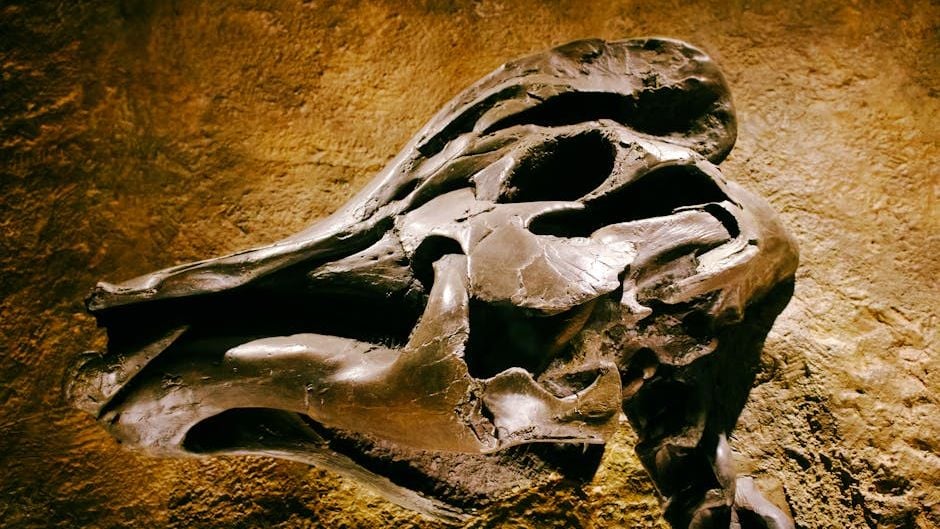
A Dinosaur Skull Sat in a Drawer for 40 Years Until It Revealed a Lost Species – Image for illustrative purposes only (Image credits: Pexels)
A weathered dinosaur skull, tucked away in a drawer and overlooked for four decades, has finally come to light as a specimen of a previously unknown species. Paleontologists identified the fossil as a member of the Herrerasauria group, early carnivorous dinosaurs that roamed during the late Triassic period. This discovery reshapes understandings of dinosaur origins and their early history.
From Neglect to Breakthrough
Researchers stumbled upon the mangled skull amid routine cataloging efforts in a museum collection. For 40 years, it had sat dormant, its significance unrecognized amid stacks of other fossils. The specimen’s poor condition initially posed challenges, yet advanced imaging and comparative analysis revealed distinct features setting it apart from known relatives.
Experts meticulously reconstructed the skull’s morphology, confirming its carnivorous traits such as sharp teeth suited for tearing flesh. This process highlighted the value of revisiting long-stored artifacts, where modern technology often unlocks secrets missed by earlier generations. The identification marked a rare win for paleontology, turning obscurity into revelation.
Traits of the Newly Named Predator
The skull belongs to Herrerasauria, a clade of agile, meat-eating dinosaurs that represented some of the earliest large predators on land. This new species likely hunted in the diverse ecosystems of the late Triassic, around 230 million years ago. Its structure suggests a lightweight build with powerful jaws, adaptations for ambushing prey in forested environments.
Distinctive cranial elements, including unique suture patterns and tooth arrangements, distinguished it from other herrerasaurs. Such features provided the evidence needed to classify it as a lost species, filling a gap in the fossil record. The find underscores how fragmentary remains can still yield profound insights when studied closely.
Rewriting Dinosaur Evolutionary History
Prior assumptions held that Herrerasauria persisted longer into the Jurassic period, bridging early dinosaurs to later dominant forms. This skull, however, points to a different narrative. It indicates the group probably vanished during the mass extinction that closed the Triassic, about 201 million years ago.
That event, marked by massive volcanic activity and climate upheaval, wiped out many lineages and paved the way for new dinosaur radiations. The discovery challenges timelines of dinosaur diversification, suggesting herrerasaurs played a shorter role in the story. Paleontologists now reevaluate museum holdings worldwide for similar overlooked clues.
Key Implications: This find prompts a fresh look at Triassic-Jurassic transitions, potentially altering textbooks on dinosaur ascent.
The identification not only celebrates the thrill of rediscovery but also reminds the scientific community of the untapped potential in archival collections. As techniques evolve, more such stories may surface, refining our grasp of prehistoric life.

As a little kid, I fell in love with nature, wildlife, and animals. Living in the USA, South Africa, Italy, China and Germany gave me the opportunity to discover the world's Wildlife. My favorite animals are Mountain Gorillas, Siberian Tigers, and Great White Sharks.
I'm a certified PADI Open Water Diver, went to Everest Base Camp and Trekked Gorillas in Uganda. I hold a Master of Science in Economics and Finance.
Please send any feedback to feedback@animalsaroundtheglobe.com
- 10 Incredible Migration Journeys in the Animal Kingdom - July 22, 2026
- 10 Most Unforgettable Hurricanes That Shaped U.S. History - July 22, 2026
- 20 Most Charming and Beautiful Towns in the United States - July 22, 2026