
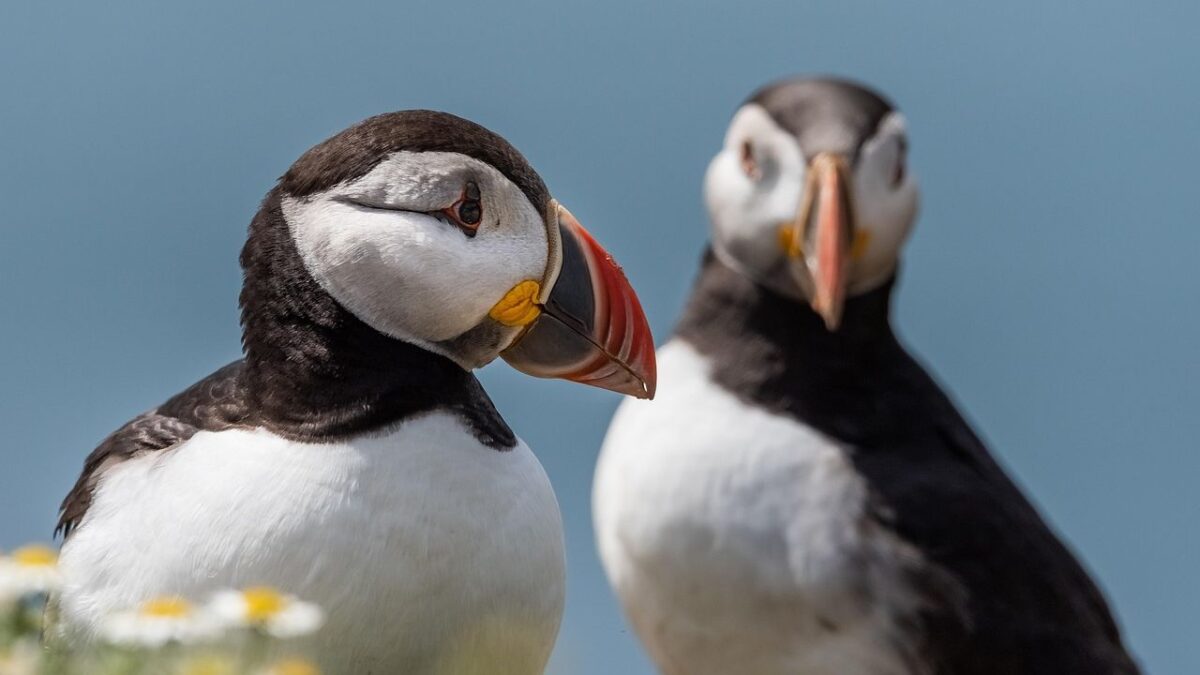
There’s a moment, if you’re ever lucky enough to witness it from a cliff edge in Iceland or off the coast of Maine, that stops most people cold. A small, tuxedoed bird waddles to the edge, drops off into the wind, and returns minutes later with a beak stuffed full of squirming silver fish. Not one fish. Not two. Sometimes dozens of them, lined up crosswise like tiny sardines in a tin.
Most people assume it’s just a matter of the beak being large and colorful, a kind of natural lunchbox. The truth is stranger and more elegant than that. Somewhere in the anatomy of that small mouth lies one of nature’s most quietly brilliant engineering solutions, a feature so specific and purposeful that it has shaped how these birds hunt, parent, and survive.
The Bizarre Mouth Anatomy Behind It All
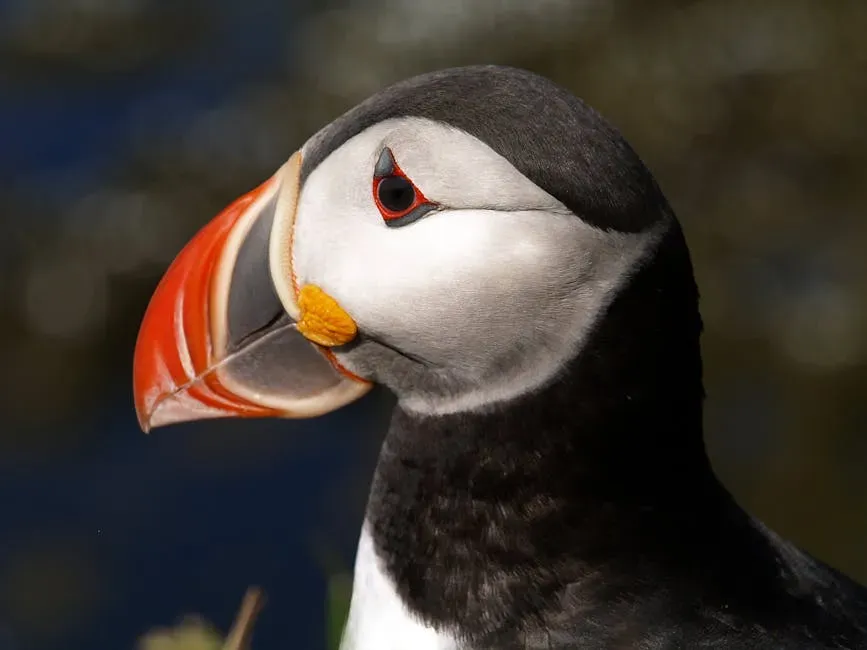
The key to understanding puffins as fishers starts not with their famous beak, but with what’s inside it. As birds, puffins don’t have teeth to keep slippery fish from escaping their beaks. Instead, they have backward-facing spines on their tongues. These spines move each fish to the roof of the mouth, where it’s held in place by another set of spines.
Even as the puffin opens its beak to catch more fish, the ones it already holds won’t slide out, because both the strong tongue and the roof of the mouth are heavily lined with backward-angled spines. It’s a locking system, essentially, that operates without any conscious effort from the bird.
The upper and lower jaws are also joined together with a soft and stretchy piece of flesh known as a “rosette,” which allows the puffin to open its mouth even wider than the average bird. This stretchy skin at the beak hinge is called the gape. Fish can be wedged into the gape, but it’s so flexible that the bill edges still line up neatly. The result is a beak that can expand to accommodate more fish without losing the ones already secured.
How Many Fish Can One Beak Actually Hold
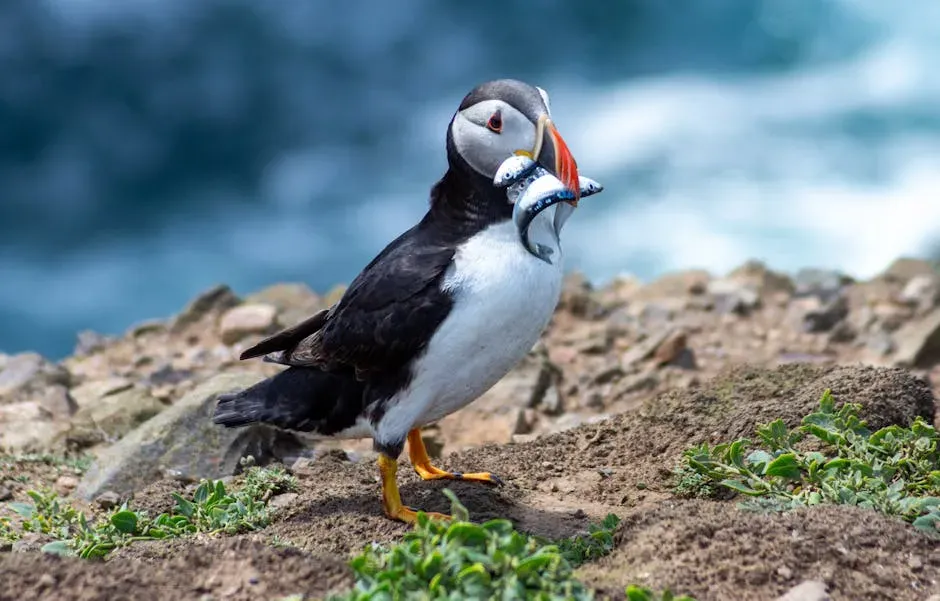
Thanks to these serrations, puffins can line fish up in their mouths horizontally, one after another. The birds dive multiple times until they have a desired number of fish in their beak before returning to shore. This stacking ability is what separates them from nearly every other seabird.
Puffins on average carry around ten fish at a time, but have also been sighted carrying up to sixty fish simultaneously. The record for most fish carried belongs to an Atlantic puffin observed with sixty-two sand eels in its bill. Those numbers aren’t a fluke. They reflect a mouth built specifically for accumulation.
Puffins have beaks that are between ten and fifteen inches in length depending on the species. The prey they target tends to be sprats, eels, herring, and capelin, which are between two and six inches long. The size ratio between beak and prey isn’t coincidental. It’s what makes that horizontal stacking pattern physically possible in the first place.
The Underwater World of a Hunting Puffin
The puffin moves through the water using a method often described as “underwater flight,” powered by its short, robust wings. Unlike most diving ducks that rely on powerful legs for propulsion, the puffin uses its wings as high-efficiency flippers. Watching one hunt underwater, it’s almost impossible not to see a bird simply flying through a different medium.
This wing-propelled swimming enables puffins to reach depths of up to sixty meters, though most dives occur in shallower waters around ten to thirty meters. They swim fast and can stay submerged for up to a minute. That combination of speed and breath control gives them a wide window in which to chase and gather fish.
Puffins’ bodies contain air sacs that they can compress before diving, reducing buoyancy and allowing deeper descents without expending excessive energy. Their excellent underwater vision and ability to adjust their eyes to different light conditions make them effective hunters even in murky waters. It’s a full system, not just one neat trick.
Why the Feeding Efficiency Matters So Much
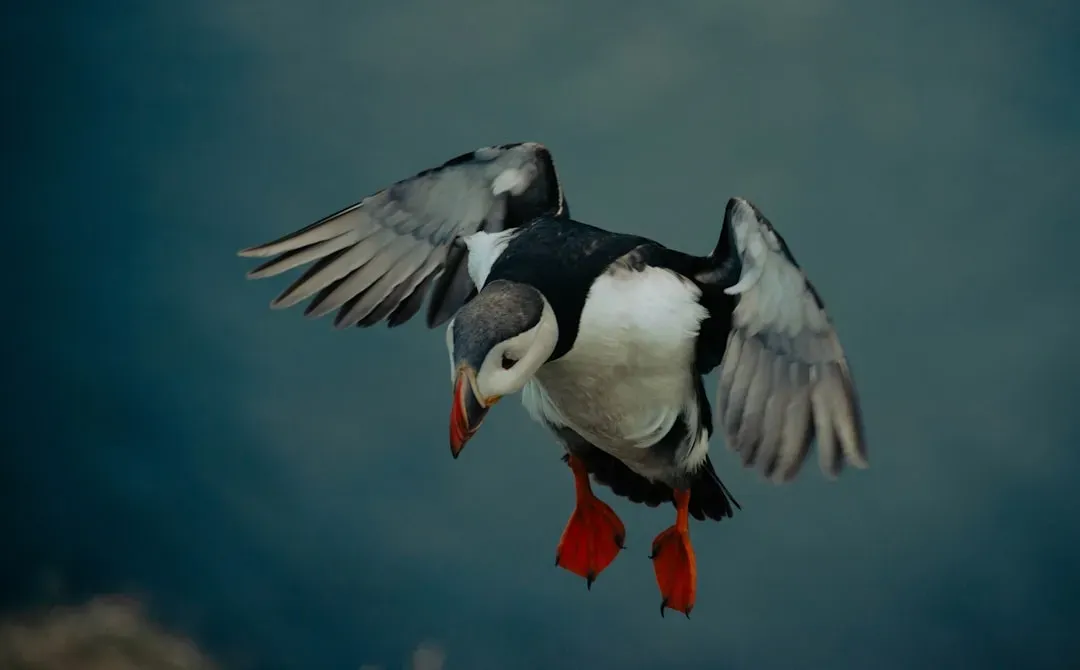
There’s a reason puffins evolved this capacity to carry dozens of fish at once, and it’s not simply about convenience. An adult bird needs to eat an estimated forty small fish per day, with sand eels, herring, capelin, and sprats being the most often consumed. That’s an enormous daily demand for a bird that weighs roughly as much as a can of soup.
Puffins may fly twenty miles in search of fish for their young, and doing so burns a lot of energy, limiting just how far they can venture from their nesting island without jeopardizing their own health. Rather than making one deep dive per trip, puffins make numerous short, shallow dives to catch large numbers of small fish, because each trip takes energy and it’s important to maximize the number of fish carried each time.
The fact that puffins can secure so many fish at one time makes them efficient hunters, which is especially necessary when caring for chicks. With both parents catching multiple fish at once, less time is spent in the ocean, and chicks are fed more often. In one day a parent may dive well over two hundred times, bringing back approximately ten fish each time. That’s a workload that demands the most efficient possible tool for the job.
Puffins, Conservation, and What Their Beaks Tell Us

The IUCN Red List currently lists the Atlantic puffin as vulnerable, with populations decreasing. Threats to puffin colonies include overfishing, which causes a shortage of food for adults to feed their young, and oil spills. A bird built to carry dozens of fish at once is still only as successful as the ocean allows it to be.
Observing puffins isn’t just about maintaining puffin populations. Their ability or inability to find ample fish of the proper size and nutritional quality to raise young can help us understand how climate change and warming water affects other species and maybe even larger ecosystems. In a sense, the contents of a puffin’s beak have become a small window into the broader health of cold northern seas.
In the late nineteenth century, spotting overladen beaks was rare, as hunting had depleted most puffin colonies along the Maine coast. Their recovery took forty years of dedicated conservation work, but the work isn’t over. The species came back once, which is its own kind of remarkable fact.
Conclusion
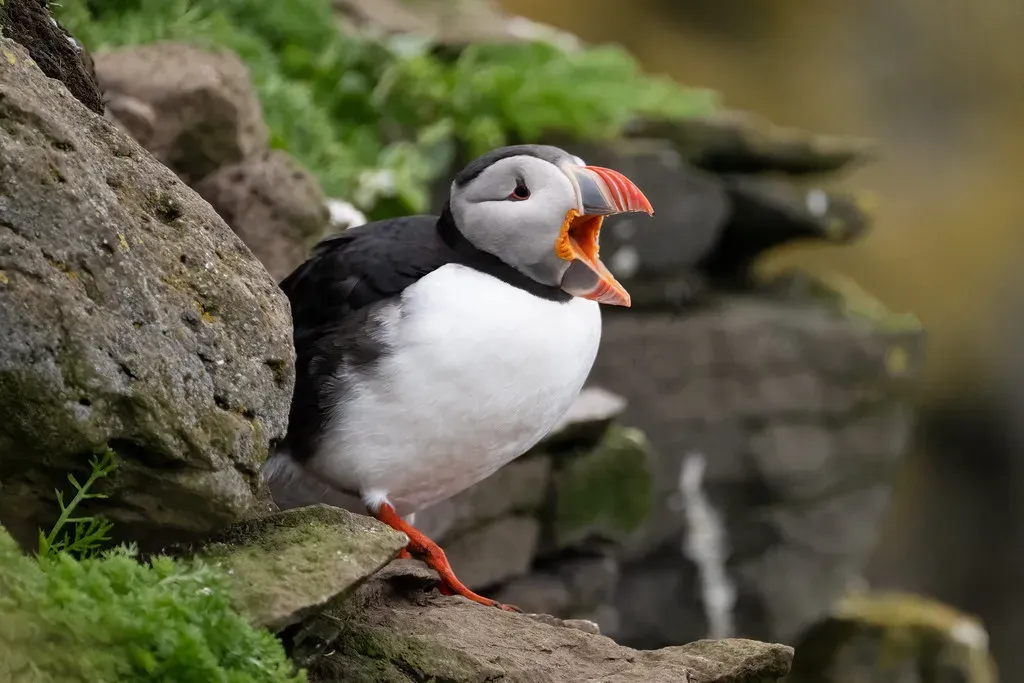
There’s something quietly humbling about the puffin’s tongue. A set of backward-facing spines, small enough to be invisible in any ordinary photograph, turns out to be the structural key to one of nature’s most efficient hunting systems. It’s not the colorful beak, the clown-like waddle, or the improbable speed through the air.
It’s the barely-seen interior architecture of a mouth that evolved, over millions of years, to solve a very specific problem: how to catch more than one fish at a time without losing the ones you already have. That problem, it turns out, has a surprisingly elegant answer.
Puffins remind us that the most remarkable adaptations are often the ones we can’t see at first glance, tucked away inside the ordinary-looking exterior of an animal going quietly about its work.

- 12 Architectural Wonders From The Ancient World That Inspire Us Today - July 18, 2026
- 6 Beautiful Ancient Cities That Time Forgot (But Shouldn’t) - July 18, 2026
- 6 Common Animal Behaviors That Are Often Misunderstood by Humans - July 18, 2026