
Most birds, when the day ends, find a branch to rest on. They tuck their heads, close their eyes, and let the earth hold them. The Common Swift does none of that. For the better part of a year, it simply never comes down. No branch, no rooftop, no ground. Just sky, continuously, for months on end.
It’s the kind of fact that takes a moment to actually process. A creature the size of your fist, weighing barely as much as a handful of coins, living out almost its entire existence suspended in thin air. Scientists suspected it for years, but it took tiny backpack-sized data loggers to finally confirm what seemed almost too extraordinary to believe.
#1: The 10-Month Sky Record That Changed What We Know About Animal Physiology
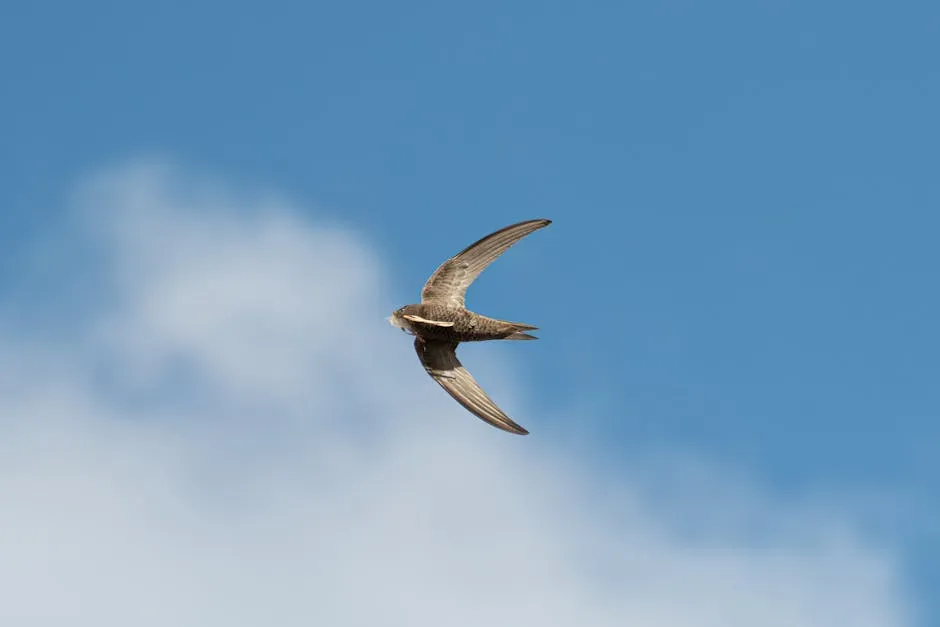
Research confirmed that Common Swifts can stay in the air for up to 10 months without stopping. That’s not a typo, and it’s not an exaggeration. Non-breeding individuals may spend up to ten months in continuous flight, never settling voluntarily on the ground where they would be vulnerable to accidents and predation.
To find out what the swifts were doing during those 10 months, researchers paired an accelerometer and a light sensor in a bird “backpack” and attached the compact data trackers to the backs of 13 individual Common Swifts before the birds set off on their round-trip voyage to Africa.
The data showed that swifts are airborne for more than 99% of the time during their 10-month non-breeding period; some individuals never settled at all, but occasional events of flight inactivity occurred in most individuals. The birds that did pause barely registered it. The birds that did land during their migratory trips still spent more than 99 percent of that time in flight, and their stops never amounted to more than one or two hours at a time.
#2: They Sleep While Flying, Thanks to a Half-Awake Brain
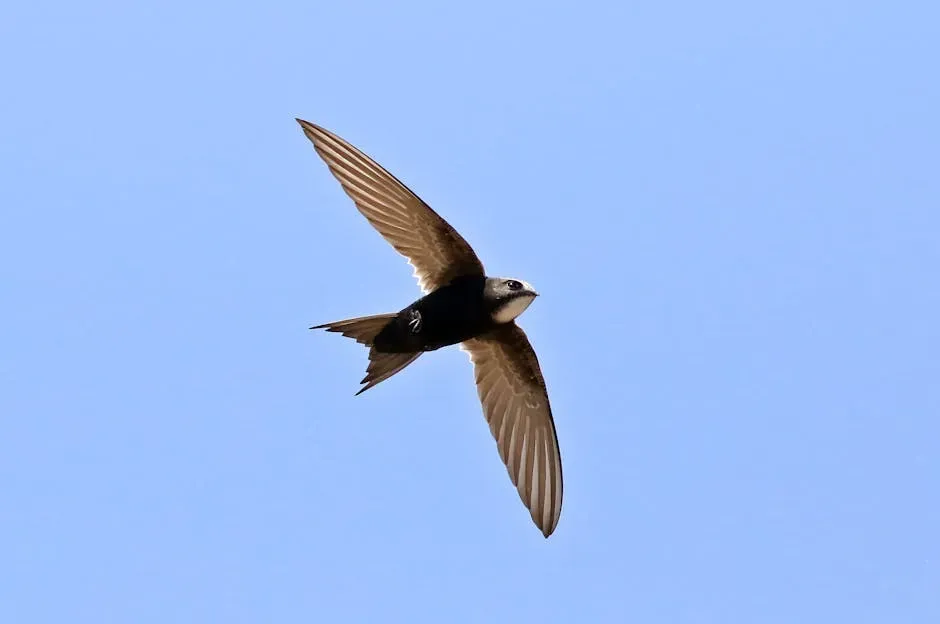
One of the most pressing questions the research raised was simple but almost philosophically strange: when exactly does this bird sleep? For sleep, swifts can alternate between the two hemispheres of their brain, so one part always stays active to ensure a safe flight even during resting. It’s a biological trick also observed in dolphins and some other birds.
They sleep while flying, entering a state called “unihemispheric slow-wave sleep,” where one half of the brain rests while the other stays alert. The result is a creature that is, in a very real sense, always partially awake, always navigating. There’s something almost meditative about that, though the swift probably isn’t reflecting on it.
One idea is that the birds take brief naps during daily dawn and dusk ascents to altitudes of 10,000 or more feet, after which they gradually glide down. Apparent flight activity was also found to be lower during the daytime than during the nighttime, most likely due to prolonged gliding episodes during the daytime when soaring in thermals. In other words, the swift doesn’t just fly, it uses the sky’s own architecture to rest within it.
#3: Their Legs Are Practically Useless on the Ground, and That’s Intentional
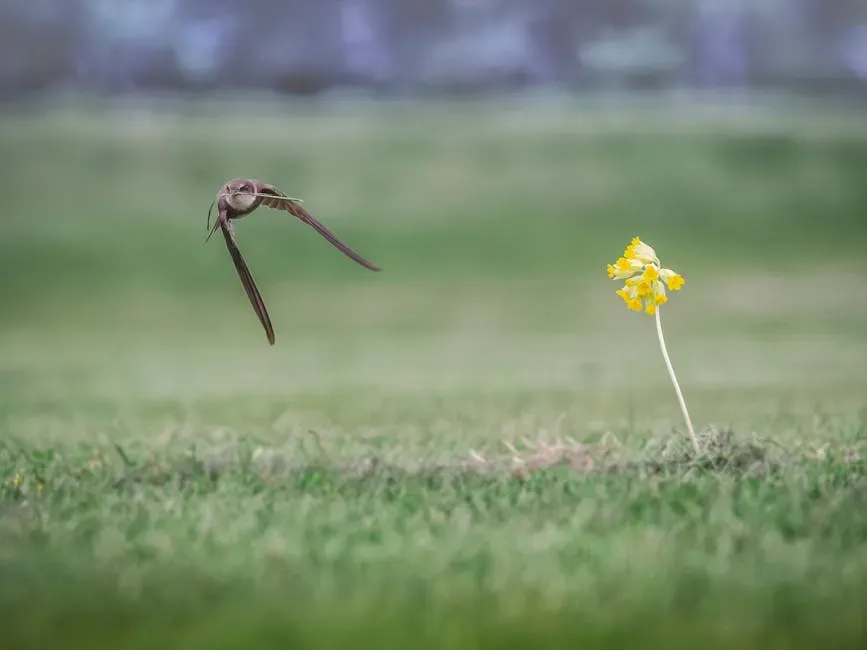
You cannot spend that long in the sky without having very finely tuned adaptations. Common Swifts have long, narrow, sickle-shaped wings with stiff feathers that help them stay airborne with minimum effort. Their silhouette is like a bow and arrow, their small head is hidden between powerful shoulders, and their body is torpedo-shaped.
Though they have legs and feet, these limbs do not work very well and have atrophied to reduce their weight. Common Swifts cannot perch on branches or wires but can cling to vertical surfaces. If they do land on the ground, their wings are too long and their legs too weak for them to take off again. Landing on flat terrain isn’t inconvenient for a swift. It’s genuinely dangerous.
Swifts have very short legs which they use primarily for clinging to vertical surfaces, which is why the German name for the bird is Mauersegler, literally meaning “wall-glider.” The family name Apodidae comes from the Greek “a-pous,” meaning “without feet,” a name that reflects their tiny, weak legs. Even in language, this bird’s entire identity is defined by its relationship with the sky rather than the earth.
#4: Young Swifts Can Go Years Without Ever Touching the Ground
Adult swifts eventually return to land to breed. Their fledglings, however, take things even further. When young Swifts leave the nest, they often do not land again for 2 to 3 years until they are ready to breed. Their very first flight is, in practical terms, the beginning of a multi-year aerial life.
Once they launch themselves off on their very first flight, they don’t return to the nest and are no longer cared for by the parents, usually starting their migration immediately. There’s no transition period, no gradual adjustment. From the moment a young swift leaves the nest, it is fully committed to the sky. The ground becomes, for years, entirely theoretical.
Mated pairs raise their chicks in Scandinavia for two months each year before taking off in August to feed on flying insects in the sub-Saharan jungles of Africa for the next 10 months. Even the brief window spent nesting is the exception that proves the rule. The swift’s entire evolutionary story bends toward flight, and everything about its biology supports that single, relentless direction.
#5: They Eat, Drink, and Even Mate on the Wing
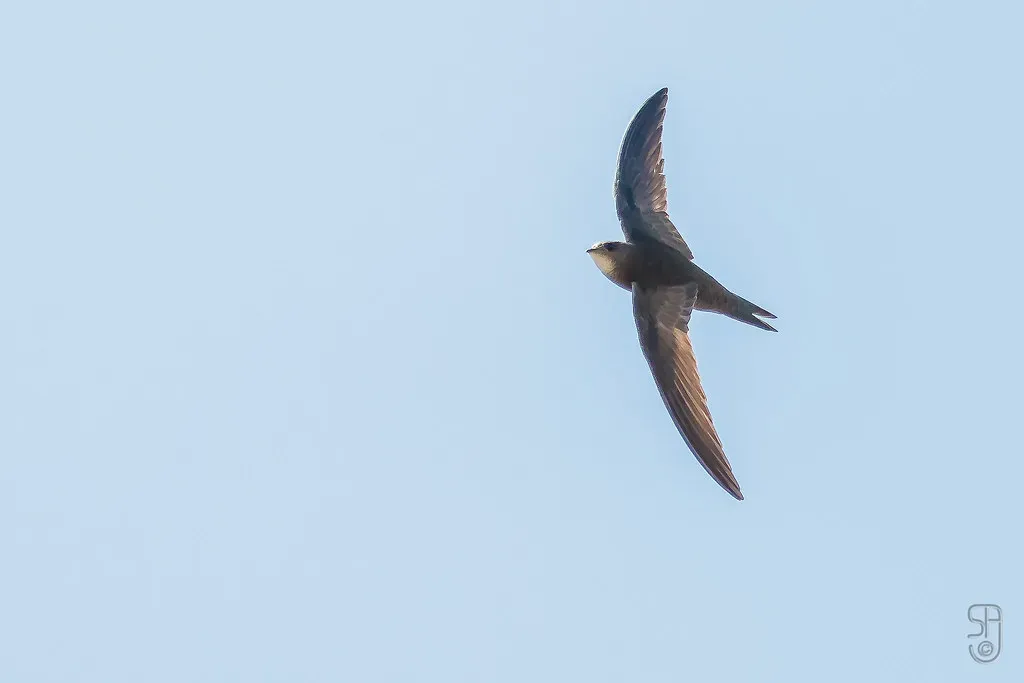
Except when nesting, swifts spend their lives in the air, living on the insects caught in flight; they drink, feed, and often mate and sleep on the wing. Drinking in particular requires a precise maneuver. The birds do slow down before they reach the water, even though this means they lose mechanical energy. They adopt a “braking” behavior with sharp turns, using headwind and postural adjustments to lose both height and speed. This slowed flight is costly in terms of energy loss, but if they approach the water at high speed, they increase their chances of falling, and if that happens, they are unlikely to be able to get out.
Over 500 prey species have been noted in the European diet of the Common Swift. Eating on the wing is relatively straightforward for them as they have a large mouth, and they are insectivorous, feeding on aerial insects and spiders that they gather as they move through the air. The swift’s mouth functions almost like an aerial net, wide and efficient, always open to what the sky provides.
#6: The Common Swift Is the Fastest Bird in Level Flight
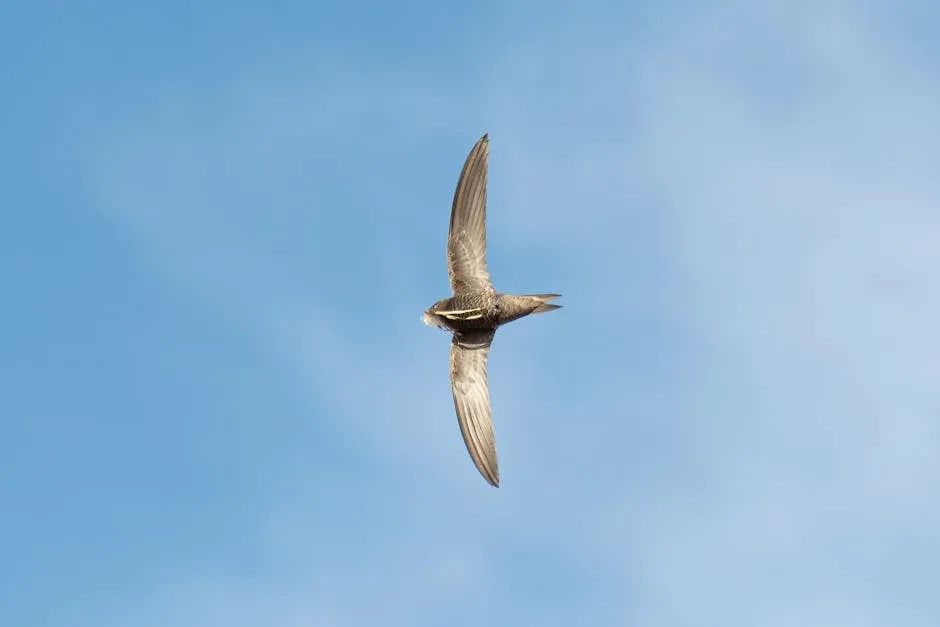
Speed gets talked about a lot with birds, but it’s worth being precise here. The Peregrine Falcon is often cited as the world’s fastest bird, which is true during a dive. In level, sustained flight, the swift is the actual champion. As a group, swifts are the fastest of all birds in level flight, with the top speed recorded in a recent scientific study being 111.6 km/h, or 69.3 mph.
What’s mystifying about the Common Swift is that its flight requires almost constant wing-flapping, making its grueling migratory habits even more of a physiological mystery than that of a soaring bird like the albatross, which is essentially a large hang glider. The albatross glides on the wind. The swift actively powers through it, hour after hour, month after month.
During migration, swifts can cover between 570 and up to 800 kilometers in a single day, flying at altitudes up to 2,500 meters. To put that into human terms, that’s roughly the distance from London to Rome, covered in a single day, by a bird that weighs about as much as a small chocolate bar. The scale of it is genuinely hard to hold in your head.
#7: Despite Their Extraordinary Lives, Swifts Are Now Under Serious Threat
Swifts are on the Red List of conservation concern, having declined by 62% between 1995 and 2021. That’s a staggering collapse for a species with such a vast global range. Like other aerial insectivores, they are experiencing population declines, possibly due to climate change and habitat destruction, with the decline in flying insects being a particularly significant concern.
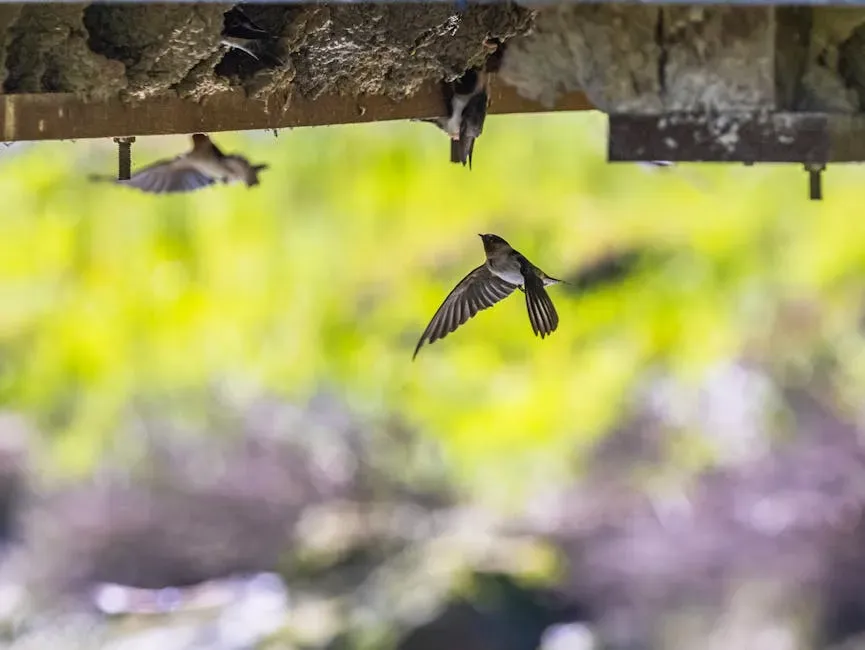
Swifts like to live in houses and churches, squeezing through tiny gaps to nest inside roofs. As more old buildings are renovated and gaps in soffits are closed up, Swift nest sites are fast disappearing. The very structures they have coexisted with for centuries are now being sealed shut, and the swift has no alternative nesting strategy ready to deploy.
The “Save Our Swifts” initiative focuses on preserving nesting sites in urban areas, promoting swift-friendly building practices, and raising awareness about the ecological importance of these birds. The average lifespan of a Swift is nine years, reaching breeding maturity at around four years old, and the oldest known Swift was ringed as a chick in Switzerland and recovered alive 21 years later. A bird capable of living two decades, spending nearly all of it airborne, deserves a reasonable fighting chance.
Final Thought: A Life Without Ground
There’s something quietly profound about a creature that has, over millions of years, evolved to need the ground so little that it became optional. The Common Swift isn’t performing a feat of endurance for our amazement. It simply became what the sky required, and the sky, in turn, became its entire world.
We tend to think of flight as something birds do between moments of rest. The swift quietly inverts that assumption. Rest, for this animal, is what happens briefly, reluctantly, and only when there are eggs to protect. Everything else, the feeding, the drinking, the sleeping, the mating, the long migrations threading across continents, happens up there, in the open air, without interruption.
In a world that increasingly values stillness and rootedness, there’s something unexpectedly clarifying about a small dark bird that simply refuses to come down. Maybe the sky isn’t an absence of ground. Maybe, for the right creature, it’s the only home that ever made sense.

- 6 Exotic Bird Species You Can Spot in U.S. National Parks - July 19, 2026
- 11 Iconic American Birds Facing New Challenges and How You Can Help - July 19, 2026
- 10 Friendliest Animals in the World - July 19, 2026