
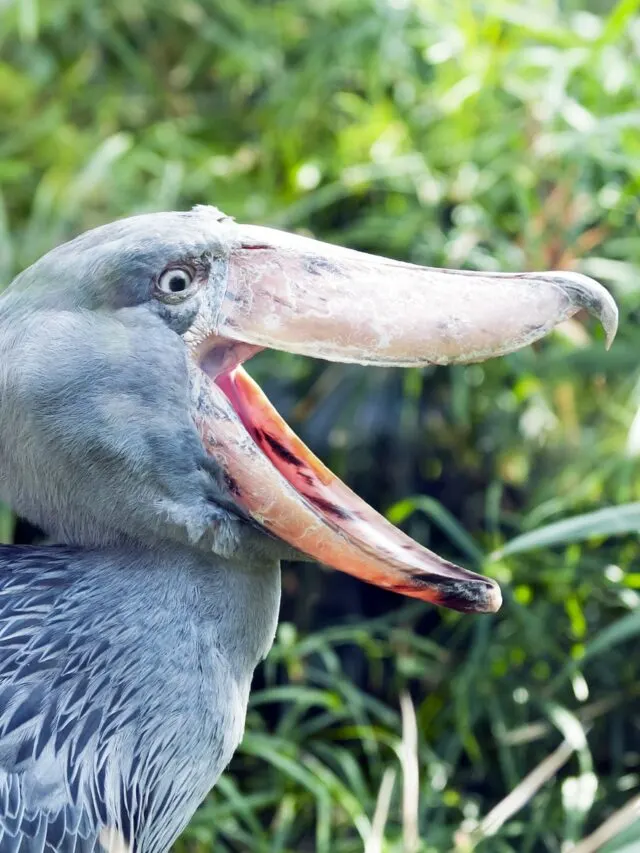
There is a bird standing somewhere in a papyrus swamp in central Africa right now, absolutely motionless, staring at the water with the cold patience of something that has been doing this for millions of years. It doesn’t flinch. It doesn’t fidget. It just waits. That bird is the shoebill, and once you’ve seen one, you won’t easily forget it.
Known scientifically as Balaeniceps rex, the shoebill is a large, long-legged wading bird named for its enormous, shoe-shaped bill. It looks like the kind of creature a child might draw if you asked them to invent a dinosaur that also happened to be a bird. Prehistoric in appearance, intensely focused in behavior, and increasingly rare in the wild, the shoebill is one of Africa’s most captivating animals. Here are ten facts that reveal just how extraordinary this creature truly is.
#1: That Bill Is Not Just for Show
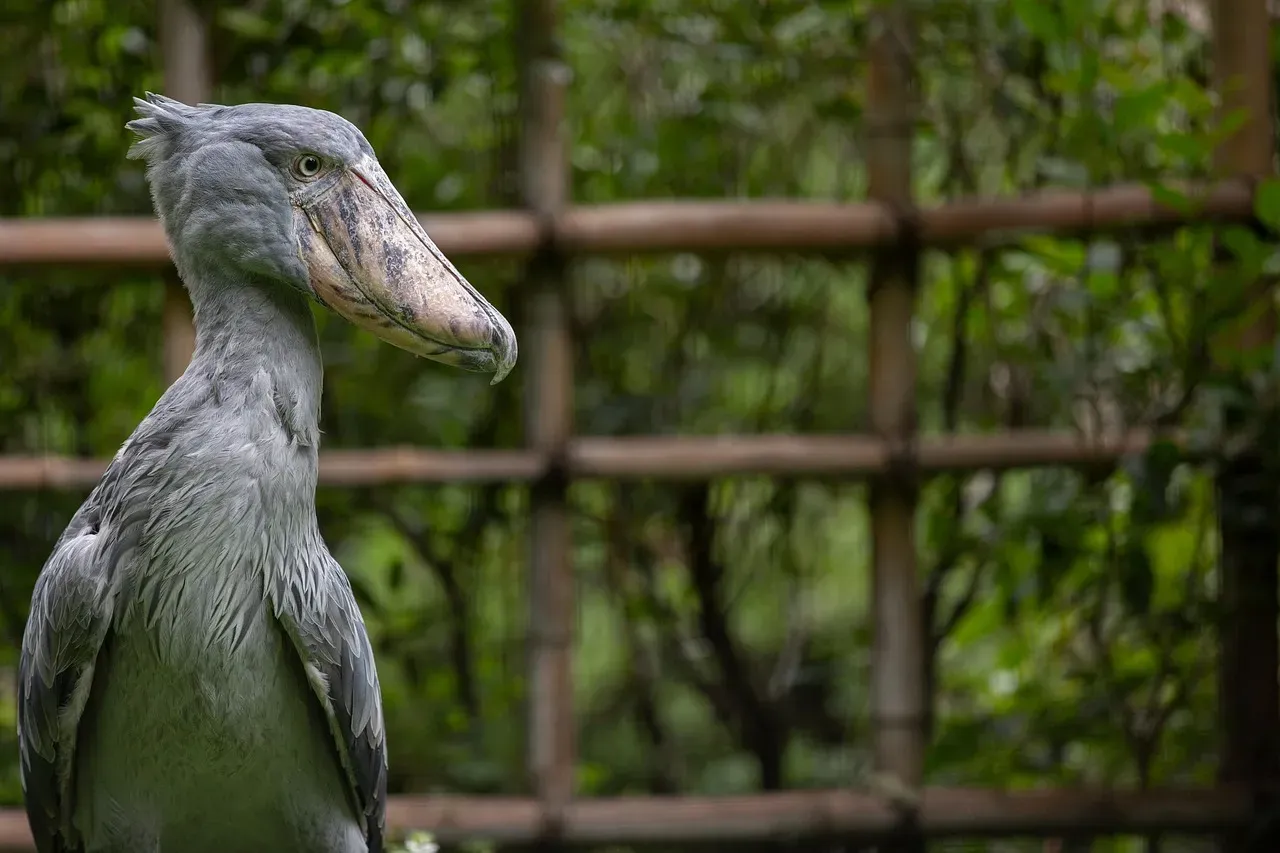
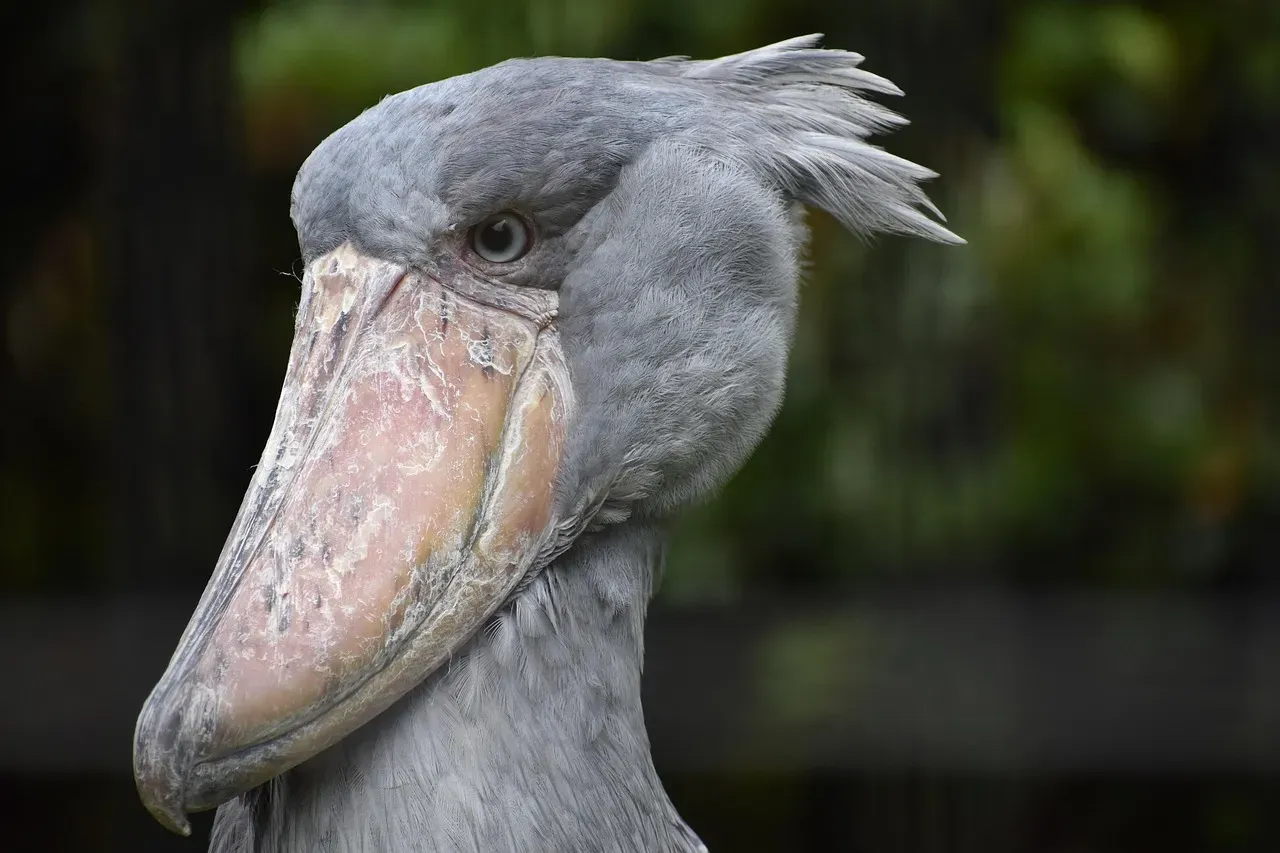
The signature feature of the shoebill is its huge, bulbous bill, which is pinkish with erratic greyish markings. The exposed culmen measures between 18.8 and 24 centimeters, making it the third-longest bill among living birds after pelicans and large storks. That’s a remarkable piece of anatomy sitting on the front of any bird’s face.
What makes the aptly named shoebill so unique is its foot-long bill that resembles a Dutch clog. Tan with brown splotches, it’s five inches wide and has sharp edges and a sharp hook on the end. Its specialized bill allows the shoebill to grab large prey, including lungfish, tilapia, eels, and snakes.
Over 7 inches long and nearly as wide, the bill is also cavernous inside, serving as a handy container for fish prey as well as water to douse eggs or chicks with, as needed. It functions as a weapon, a bowl, and a cooling device all at once. Nature rarely produces anything quite so versatile.
#2: A Hunter of Extraordinary Patience
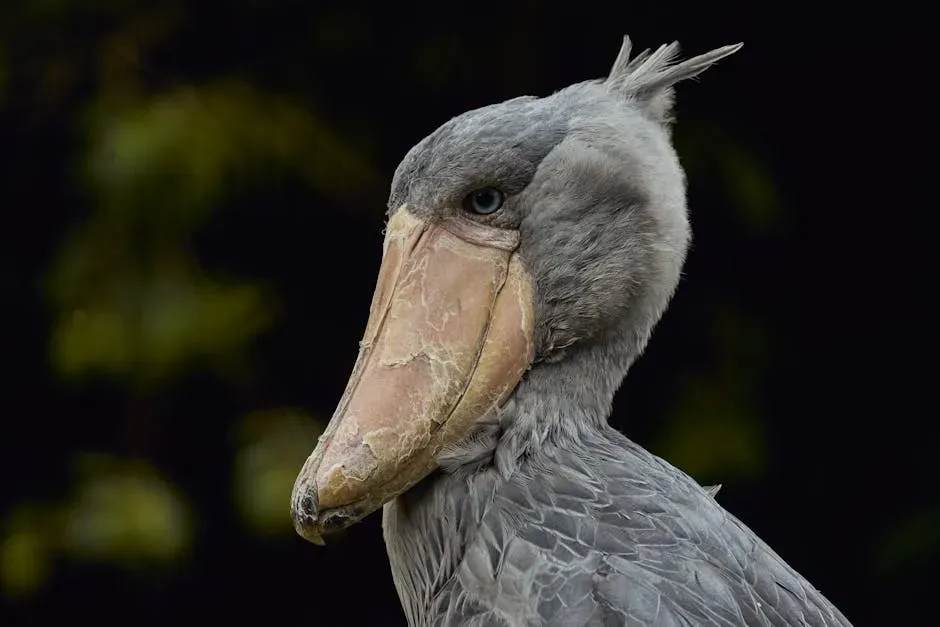
The shoebill is primarily an ambush predator, relying on stealth and patience rather than chaotic activity. This highly effective hunting technique is optimized for capturing large, powerful prey residing in dense aquatic vegetation. The central component of the shoebill’s strategy is the implementation of the “statue pose,” where the bird remains perfectly motionless, utilizing the dense papyrus and reeds of its marsh habitat for effective camouflage.
When a prey item is spotted, shoebills begin the “collapse.” The head and neck quickly stretch forward into the water, causing the bird to over-balance and collapse forwards and downwards. After a collapse, a shoebill cannot immediately perform a second collapse. It’s an all-or-nothing lunge that demands precision.
Around 60 percent of strikes yield prey. For a bird that expends so much energy on a single lunge, that’s an impressive strike rate. Unlike some other large waders, shoebills hunt entirely using vision and do not use tactile hunting. When prey is spotted, they launch a quick, violent strike.
#3: Its Preferred Prey Includes Baby Crocodiles
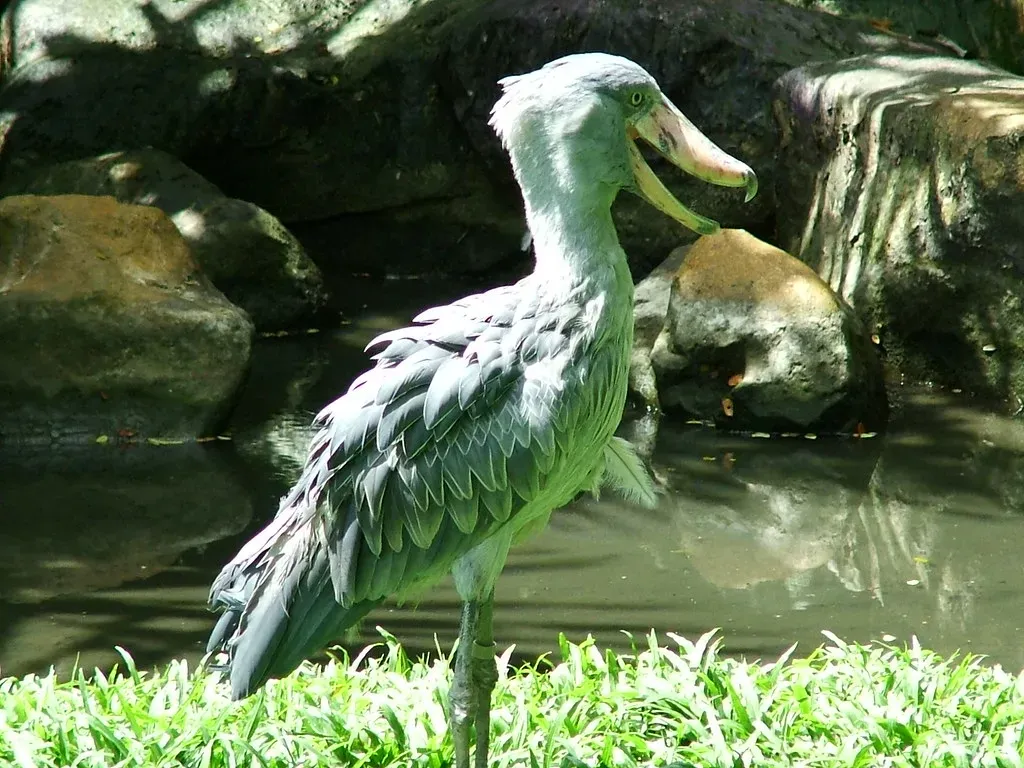
Shoebills are largely fish-eating birds, but they are also assured predators of a considerable range of wetland vertebrates. Preferred prey species reportedly include marbled lungfish, African lungfish, Senegal bichir, various tilapia species, and catfish. For most large wading birds, that would be the full story.
Other prey eaten by shoebills has included frogs, watersnakes, Nile monitors, and baby crocodiles. More rarely, small turtles, snails, rodents, small waterfowl, and carrion have reportedly been eaten. The willingness to take a baby crocodile says something genuine about this bird’s confidence in its own equipment.
During studies in the Malagarasi wetlands, fish around 60 to 80 centimeters were quite frequently taken, and the largest fish caught by a shoebill was 99 centimeters long. Fish exceeding 60 centimeters were usually cut into sections and swallowed at intervals. The entire process from scooping to swallowing ranged from 2 to 30 minutes depending on prey size.
#4: It Belongs to a Family All Its Own
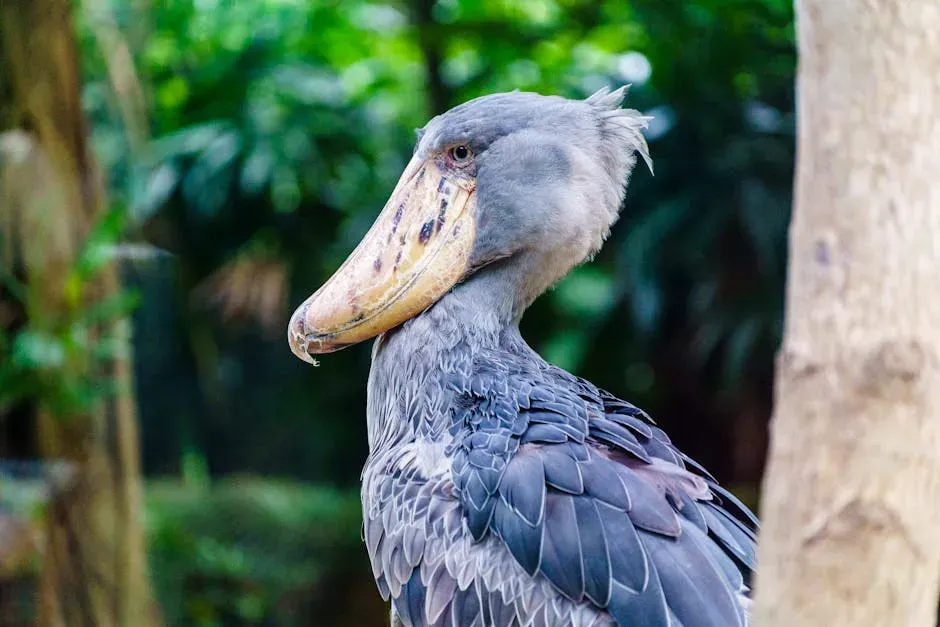
Once classified as a stork, the shoebill is now in a family of its own: Balaenicipitidae. It shares some behavioral and anatomical characteristics with storks, but it is more like herons, with its powder-downs and its habit of flying with its neck retracted. Taxonomists debated its classification for well over a century.
Over the past couple of centuries, naturalists debated where shoebills should appear on the tree of life. Some taxonomists said that the shoebill’s vocal organ resembled those of herons in the Pelecaniformes family. Others countered that herons have specialized feathers that release a powdery down for preening, but shoebills didn’t have these feathers, so they must be storks.
More recent studies on the shoebill’s eggshell structure and DNA have supported its place among the Pelecaniformes. So the bird that looks like a stork, acts somewhat like a heron, and has a skull resembling a pelican is actually closer kin to the pelican side of the family. It has always resisted easy categorization.
#5: It Stands Taller Than a Mailbox
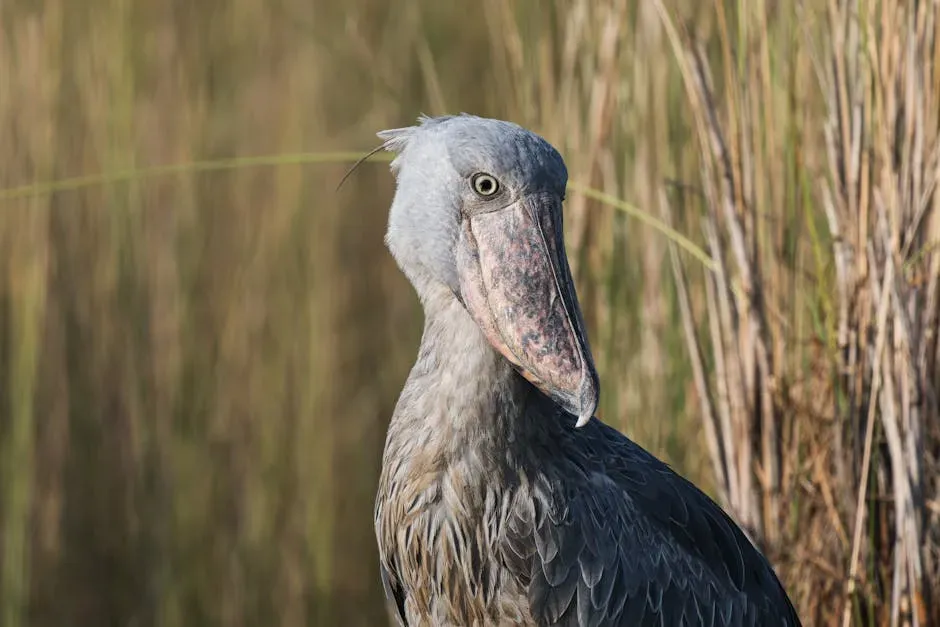
Shoebills can stand as tall as 4.5 feet and weigh up to 7 kilograms, with wingspans reaching 8 feet. Despite their size, they’re surprisingly agile in their wetland habitats, with long legs for wading and broad wings for effortless soaring.
The shoebill’s feet are exceptionally large, with the middle toe reaching 16.8 to 18.5 centimeters in length, likely assisting the species in its ability to stand on aquatic vegetation while hunting. This is essentially the bird equivalent of snowshoes, allowing it to distribute weight across floating plant mats without sinking.
When shoebills soar, they make around 150 wing flaps per minute, making them one of the slowest flappers of any bird. Shoebills rarely perform long flights; when flushed, they usually try to fly no more than 100 to 500 meters. Power and restraint in equal measure. That’s a recurring theme with this bird.
#6: It Actively Seeks Out Poorly Oxygenated Water
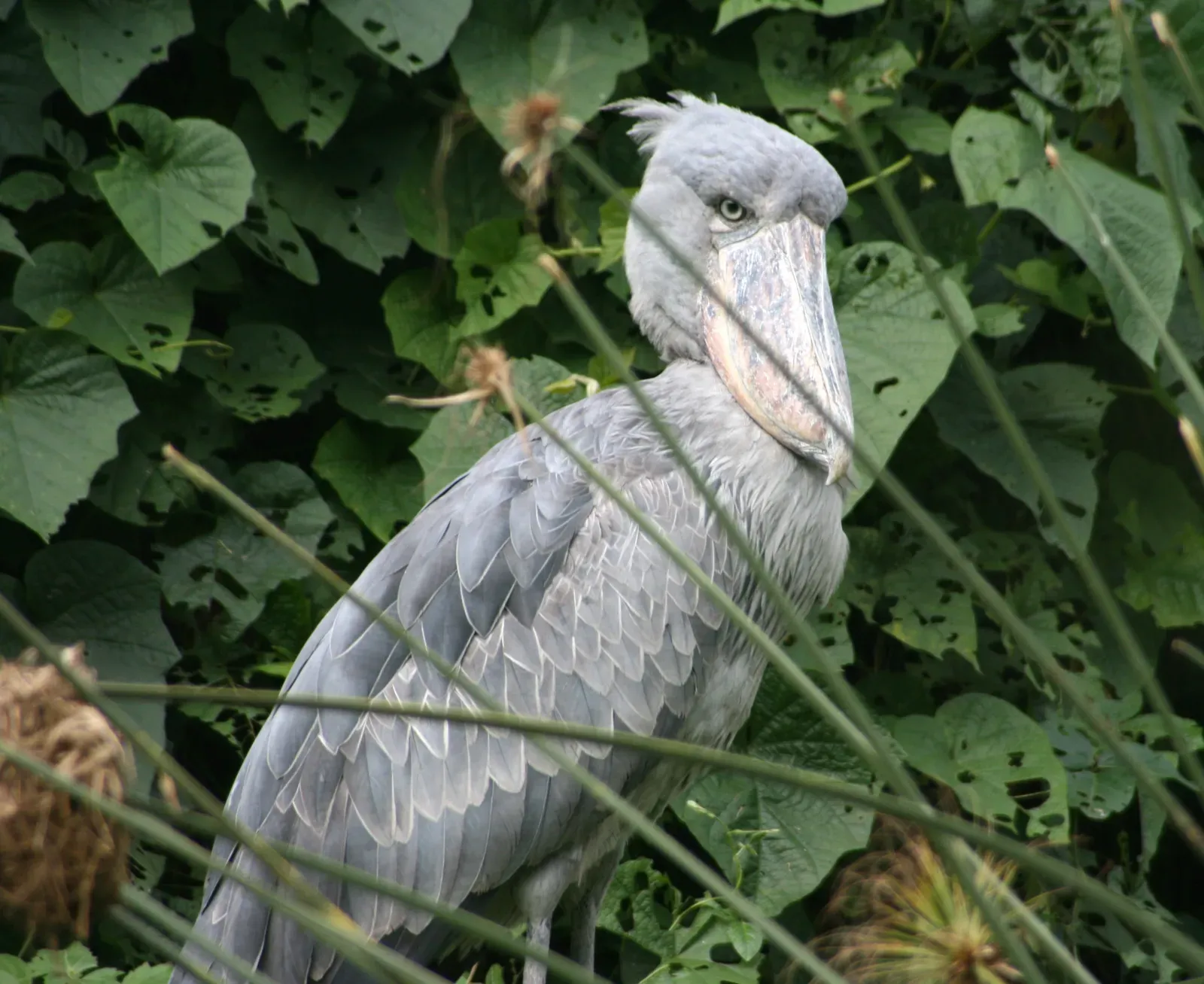
Shoebills are found where there is poorly oxygenated water. This causes the fish living in the water to surface for air more often, increasing the likelihood a shoebill will successfully capture it. This isn’t a coincidence. It’s a deliberate ecological strategy.
The lungfish, the shoebill’s preferred prey, is an ancient group of African fish that has both gills and primitive lungs. These lungs are modified swim bladders that enable them to occupy low-oxygen swamps and marshes. The shoebill essentially hunts at the intersection of ancient fish biology and wetland chemistry.
The activity of hippopotamuses sometimes benefits shoebills during their feeding, as submerged hippos occasionally force fish to the surface. When a shoebill knows that hippos are around, it positions itself and gets ready to strike on the disturbed fish. Even hippos unknowingly serve this bird’s agenda.
#7: Its Communication Sounds Like a Machine Gun
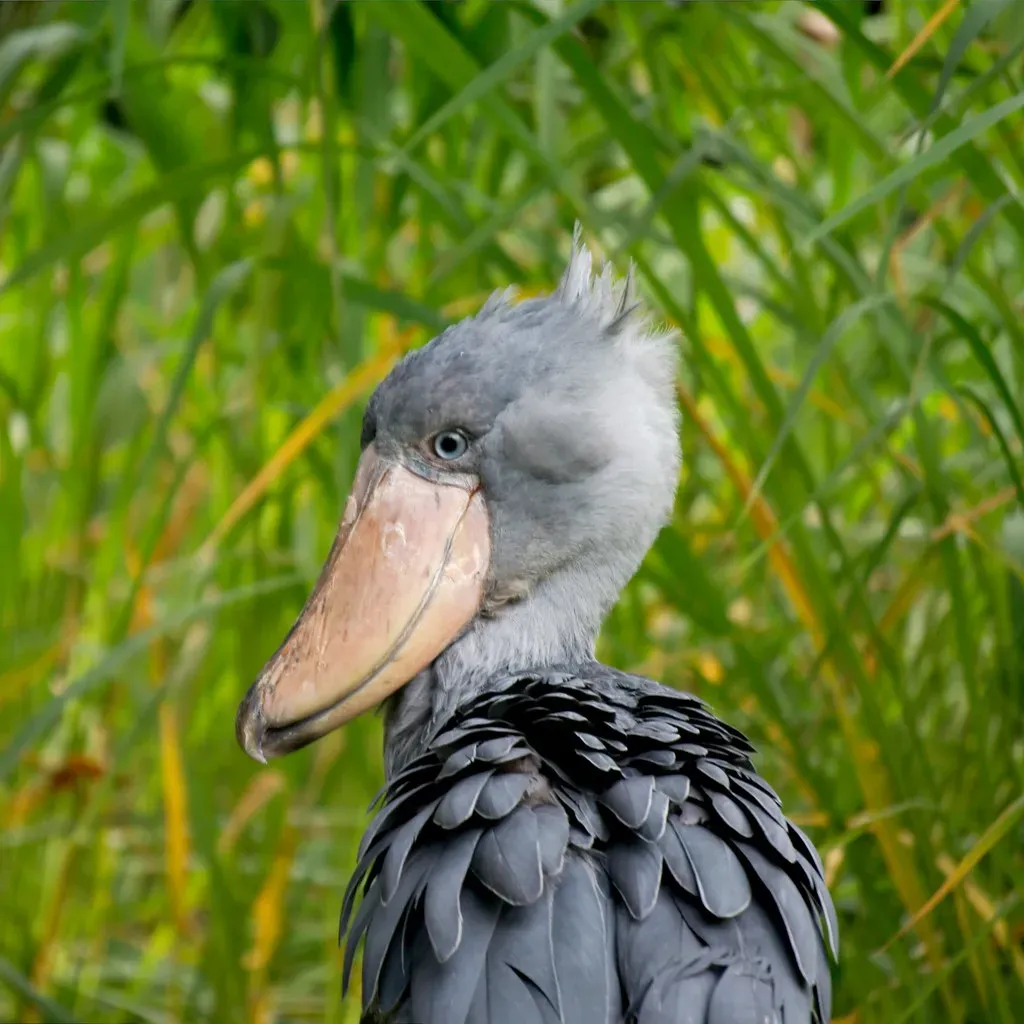
Unlike many vocal bird species, shoebills are remarkably quiet. Their primary form of communication is a unique bill-clap, used during mating rituals or to establish territory. This sound can be surprisingly loud, resembling machine-gun fire.
At the nest, shoebills make a variety of sounds. Their vocalizations vary based on age. Adults at the nest produce bill-clattering displays, deep “moo” sounds, and high-pitched whines. The contrast between the bird’s imposing silence in the field and its noisy nest behavior is striking.
When young are begging for food, they call out with a sound uncannily like human hiccups. Shoebills also keep cool with a technique called gular fluttering, vibrating the throat muscles to dissipate heat. So the throat that stays silent for hours during a hunt is actually one of the bird’s most versatile tools.
#8: Parenting Comes With a Brutal Twist
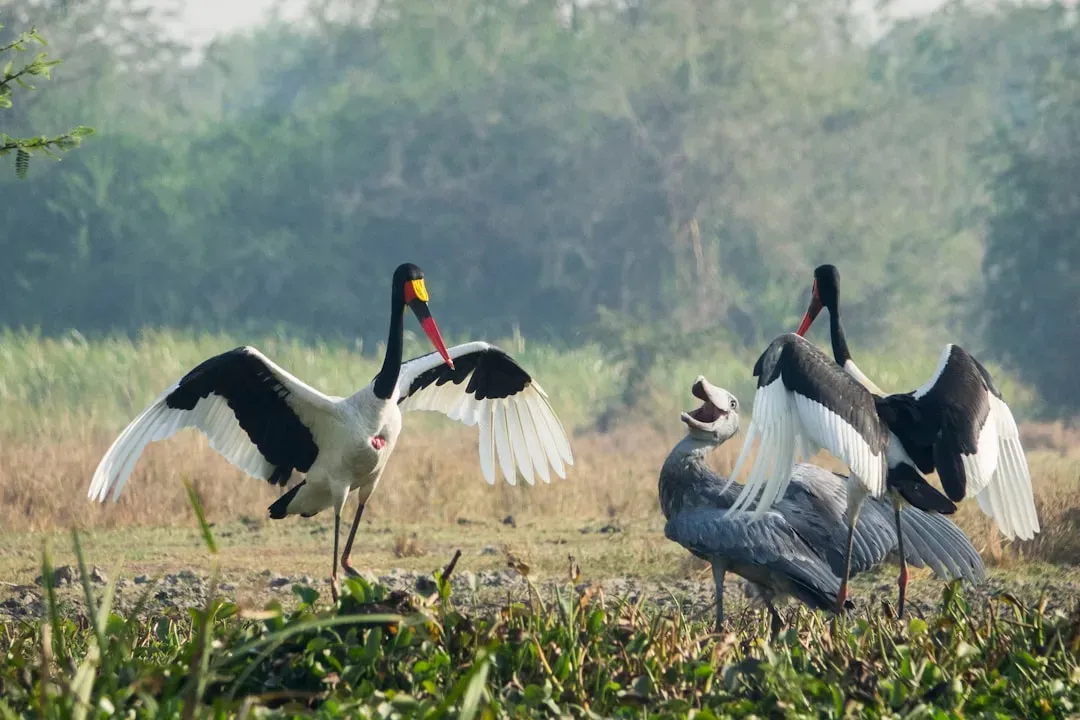
The shoebill stork invests enormous resources into the care of its young. By forming long-term monogamous pairs, they can divide up many aspects of parental duty, including nest construction, incubation, feeding, and child-rearing. The stork times its mating activities to coincide with the start of the dry season so the chicks are ready to fledge when the rains begin.
Shoebills typically lay only one or two eggs per clutch, with both parents sharing incubation and chick-rearing duties. Interestingly, if two chicks hatch, parents often focus on the stronger one, a strategy that ensures at least one chick has the best chance of survival.
During the heat, shoebills bring water in their big bills and shower over their nest to cool incubating eggs. That bill, it turns out, moonlights as an irrigation system. Older chicks tend to practice siblicide, meaning competition between siblings can be fierce and unforgiving from the very first days of life.
#9: It Has an Unusually Long Lifespan for a Wild Bird
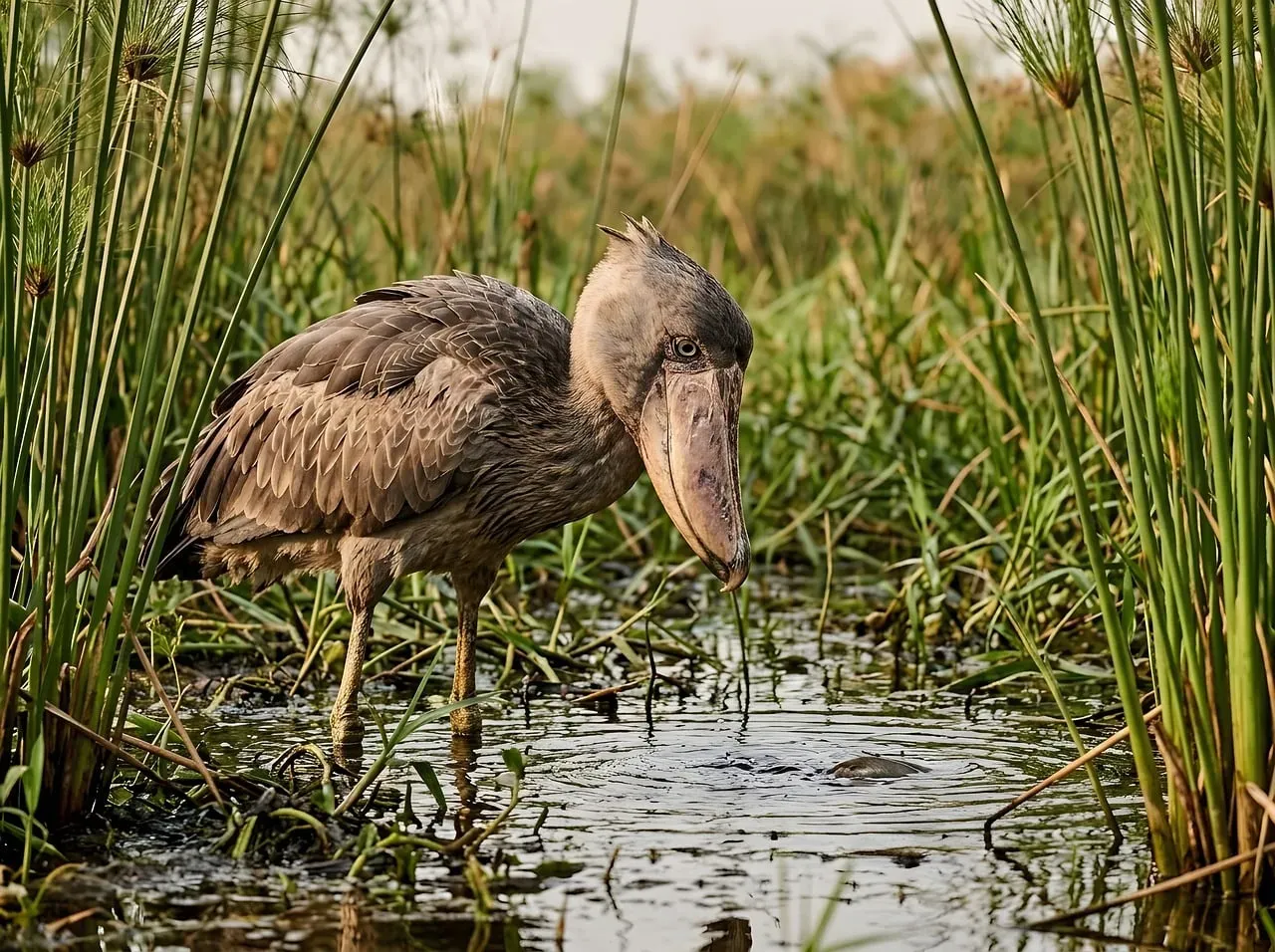
Shoebills can live up to 35 years in the wild, with even greater longevity in captivity. This unusual lifespan for a bird of their size contributes to their slow reproductive rate and impacts conservation strategies. Their longevity allows individual birds to become well-known to researchers and local communities over time.
Shoebills reach maturity at three to four years old, and breeding pairs are monogamous. Combine slow maturation, low clutch numbers, and intense sibling competition, and you have a species that reproduces very cautiously. Every individual bird genuinely matters to the long-term survival of the species.
Shoebills stay within their wetland territories all year round, moving less than 3 kilometers per day on the vast majority of days. A long life lived slowly, in a tight range, in a very specific kind of habitat. It’s a strategy that has worked for a very long time, though the pressures of today are testing its limits.
#10: The Shoebill Is Running Out of Time
Its population is estimated to be between 5,000 and 8,000 individuals, the majority of which live in swamps in South Sudan, Uganda, eastern Democratic Republic of the Congo, and Zambia. Those numbers sound modest, and they are. For a bird this large and this specialized, every wetland lost narrows the margin further.
BirdLife International has classified the shoebill as Vulnerable, with the main threats being habitat destruction, disturbance, and hunting. The bird is listed under Appendix II of the Convention on International Trade in Endangered Species of Wild Fauna and Flora. Habitat destruction and degradation, hunting, disturbance, and illegal capture are all contributing factors to the decline of this species.
Agriculture cultivation and pastures for cattle have caused significant habitat loss. Indigenous communities that surround shoebill habitats capture eggs and chicks for human consumption and for trade. Frequent fires in southern Sudan and deliberate fires for grazing access also contribute to habitat loss.
Conclusion: A Living Relic Worth Protecting
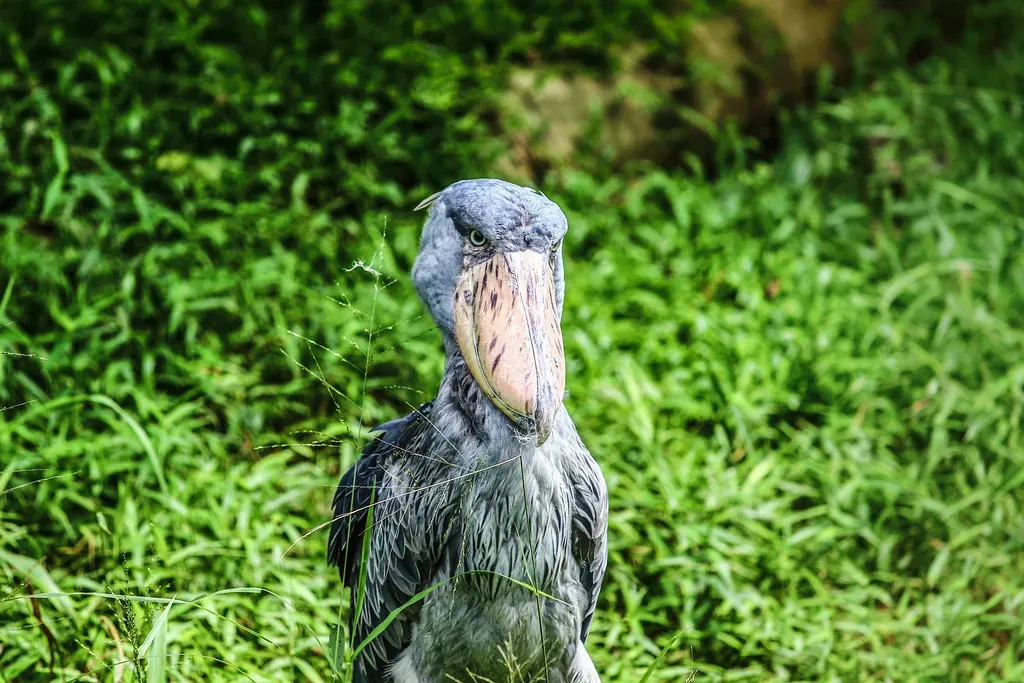
The shoebill is not a bird that asks for your sympathy. It stands too still and stares too hard for that. What it demands, instead, is your attention. Here is an animal that has refined its existence over millions of years into something almost architectural in its precision: the right bill, the right swamp, the right prey, the right level of oxygen in the water.
The truth is, the world doesn’t easily replace creatures like this. This species is considered to be one of the five most desirable birds in Africa by birdwatchers, and it’s not hard to understand why. There is something genuinely humbling about standing near an animal that looks as though it stepped out of the Cretaceous and chose, for reasons entirely its own, to stay.
We should be honest about where things stand. The shoebill’s habitat is shrinking, its numbers are limited, and its reproductive pace is slow. Conservation efforts can make a meaningful difference, but only if the wetlands that define this bird’s world are treated as worth defending. In 2026, that’s not a given. It’s a choice. And it’s one we still have time to make correctly.

- 9 Touching Stories of Animal Loyalty That Redefine Family Bonds - July 25, 2026
- 8 Unique Dog Breeds That Are Perfect for Older Owners - July 25, 2026
- The Way You Pet Your Dog Can Make All the Difference to Their Comfort - July 25, 2026