
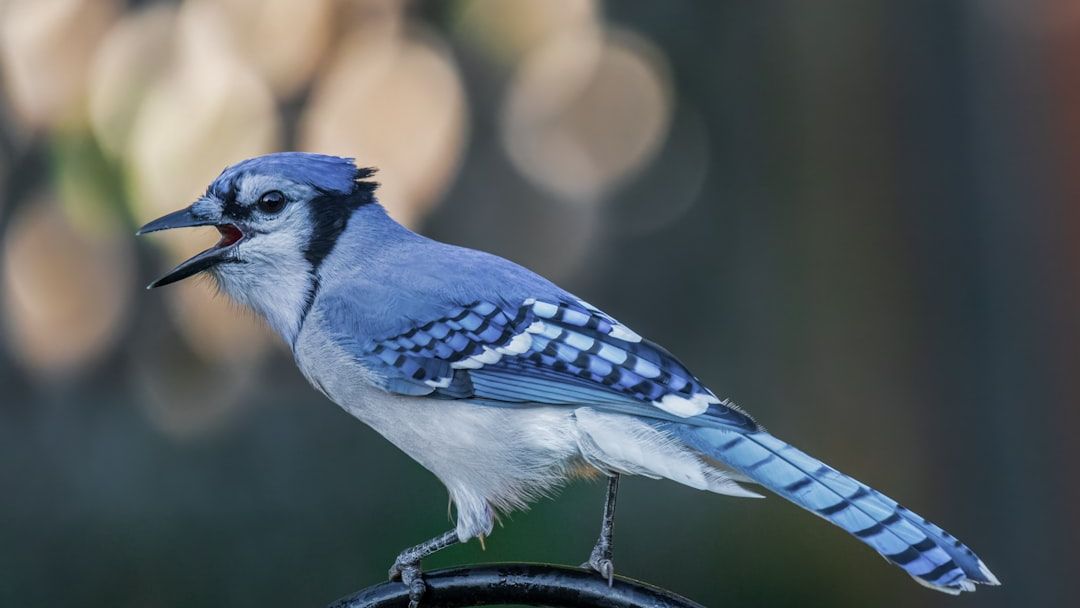
Most people spot a Blue Jay at a feeder, admire the flash of cobalt blue for a moment, and move on. It’s easy to write them off as the loud, pushy bird that scares the sparrows away. But that snap judgment misses something genuinely remarkable.
Blue Jays are, by almost every meaningful measure, one of the most intelligent, ecologically vital, and behaviorally complex birds in North America. They remember faces, forge lifelong bonds, shape entire forests, and communicate with a sophistication that rivals animals far larger than themselves. Once you know what’s actually going on behind that bold crest, a quick visit to the backyard feeder starts to feel a lot more interesting.
They’re Not Actually Blue
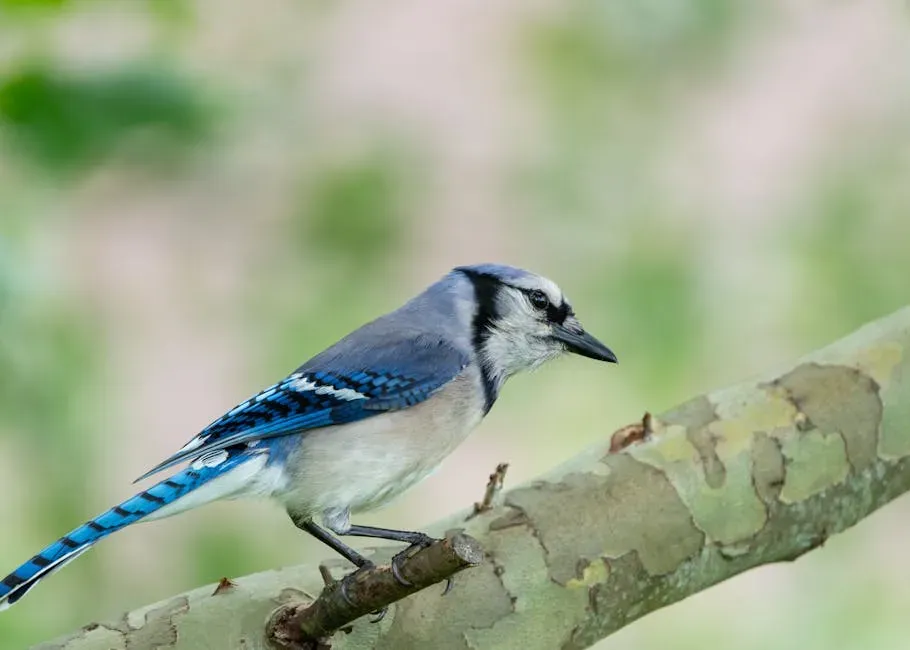
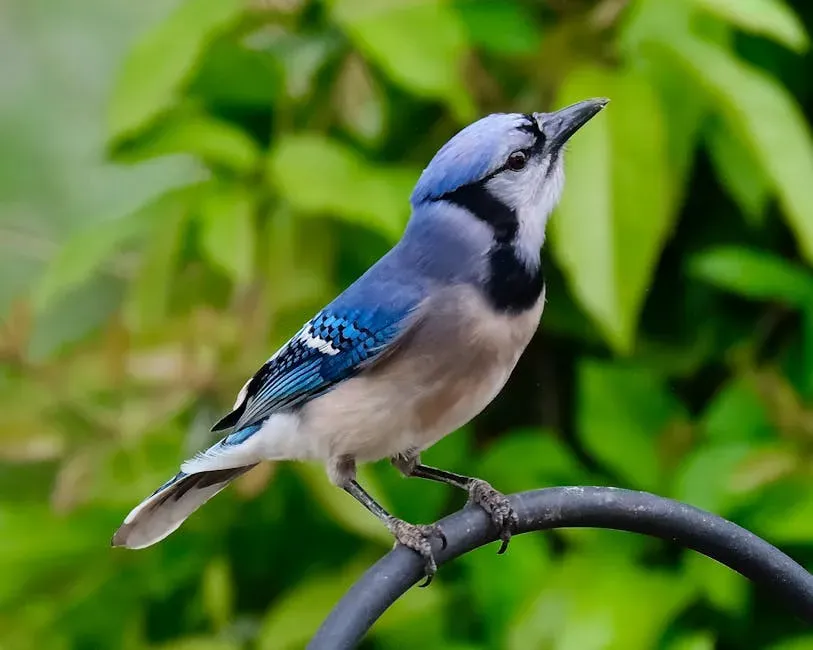
Here’s the thing that tends to stop people mid-sentence when they first hear it: Blue Jays aren’t actually blue. The main pigment in jay feathers is melanin, which primarily creates brown, black, or gray coloring. The feathers appear blue because of microscopic structures and air pockets on the surface that scatter blue light while absorbing all other colors.
This phenomenon is known as structural coloration. If a blue feather is crushed, the blue disappears entirely. So the vivid, electric blue you see on a sunny morning is essentially an optical performance, an illusion built from physics rather than pigment. It makes their color all the more striking once you understand what’s actually happening.
They Belong to One of the Smartest Bird Families on Earth
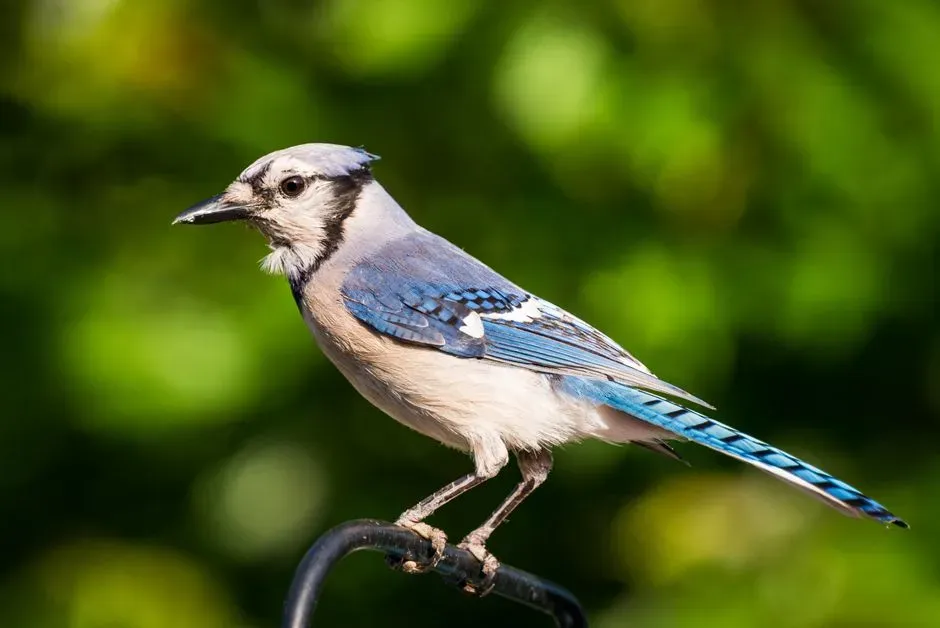
Blue Jays are part of the corvid family and are known to be very intelligent, just like their cousins the crow and raven. This isn’t casual praise. They are members of the Corvidae family, which includes ravens and crows, and many scientists consider this corvid family of birds to be the smartest animals on Earth.
Blue Jays are known for their intelligence and complex social systems with tight family bonds. Their problem-solving abilities, social awareness, and capacity for memory place them in a category of avian cognition that genuinely competes with animals much higher on the food chain. Calling a Blue Jay a “birdbrain” is, quite literally, a compliment.
They Can Recognize Your Face
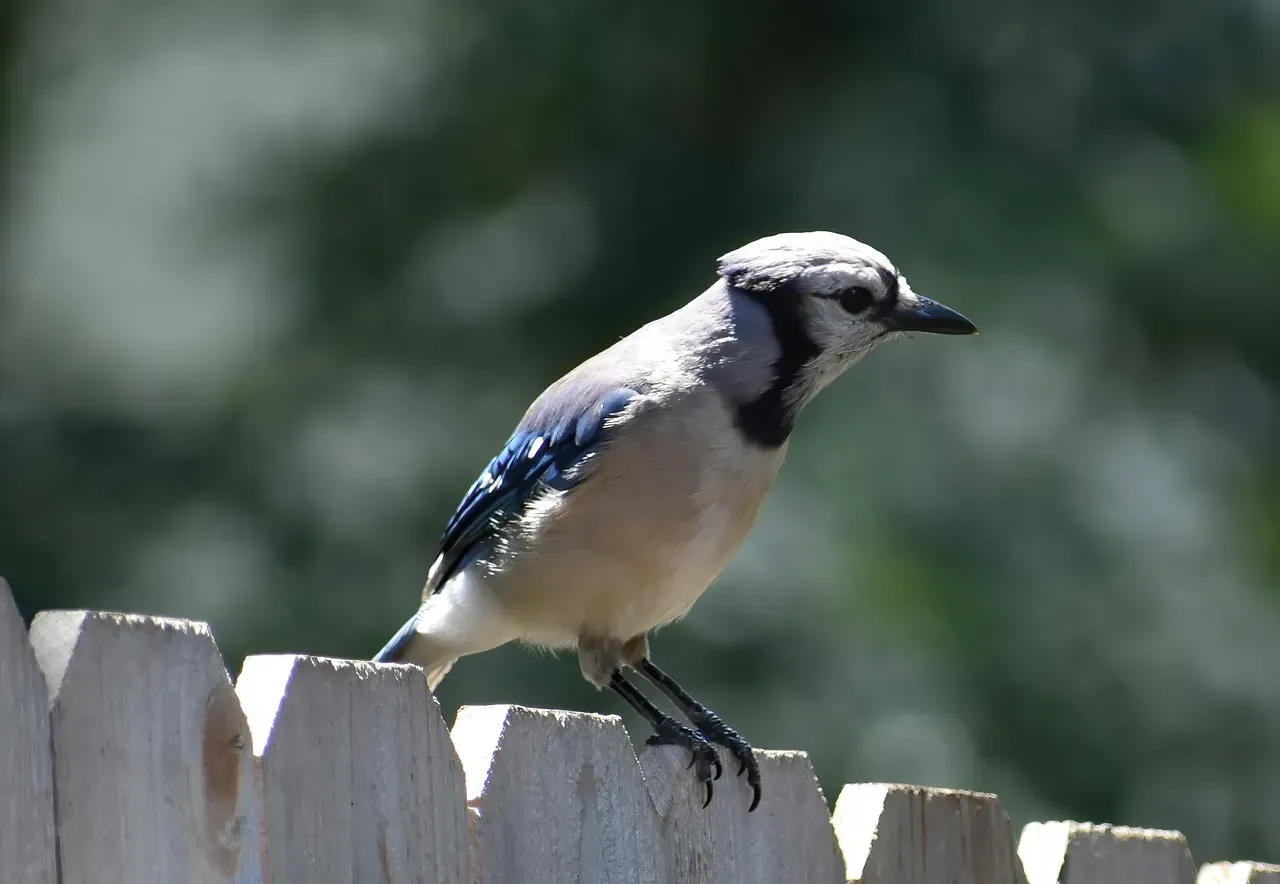
Like their corvid relatives, Blue Jays can recognize and remember human faces. They can also distinguish individuals among their own species, since each Blue Jay has a slightly different black bridle strip across their face, nape, and throat. This kind of individual recognition is considered a hallmark of higher cognitive function.
What this means in practice is genuinely fascinating. A Blue Jay that has watched you from your backyard for years may recognize you as a non-threat or as a reliable food source, making those repeated visits to your porch something closer to an ongoing relationship than a random foraging stop. It is thought that Blue Jays may be able to recognize other birds of their species from the variable black markings on their faces and are able to communicate with other Blue Jays using both body language and vocalizations.
Their Crest Is Actually an Emotional Display
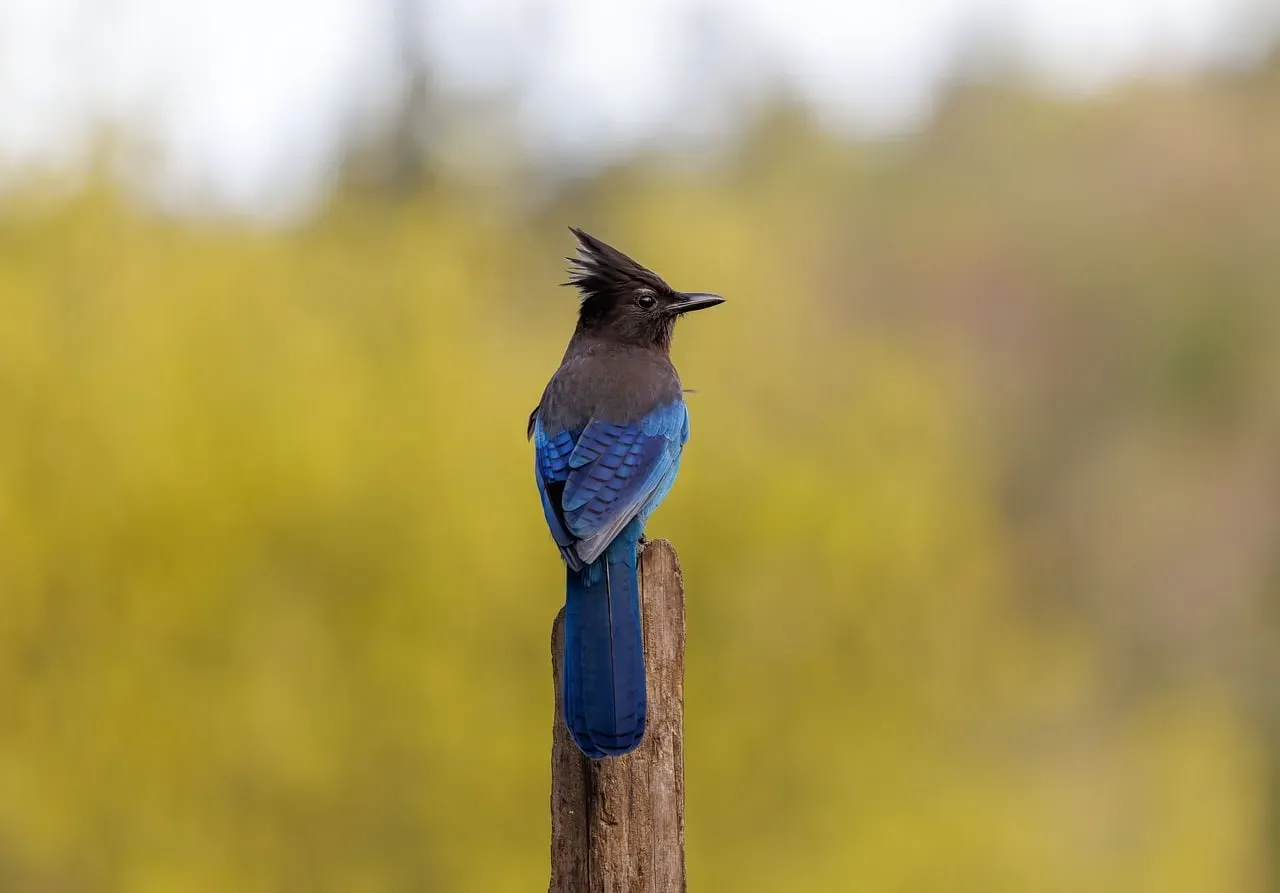
Blue Jays are extremely animated, and they use that telltale tuft of blue atop their heads to communicate their current emotional status. At the feeder, their crests will often be raised as the birds aggressively claim feeding territory and scare off other species. Around nestlings and members of their own flock, however, they relax and completely lower their crests.
They use their crests much like people use their eyebrows, or dogs use their tails. That is, they are part of their communication. Behavioral ecologists tell us that Blue Jays use their crests to communicate their levels of aggression and arousal in social situations. Once you know this, watching a Blue Jay at your feeder becomes a surprisingly readable exercise in real-time emotional signaling.
They’re Master Vocal Mimics
Next time you think you hear a Red-tailed Hawk, check if it’s actually a Blue Jay. The birds are skilled mimics known for their uncanny Red-tailed impressions, and they also imitate Red-shouldered and Cooper’s Hawks. Scientists believe the birds make these calls to trick and scare off other birds at feeders and food sources, as well as for an alarm when predators are actually nearby.
Captive Blue Jays have also learned to mimic a cat’s meow, the chime of a washer and dryer, and even human speech. This breadth of vocal mimicry goes well beyond simple instinct. Blue Jays can make a large variety of sounds, and individuals may vary in their calling style. Their most commonly recognized sound is the alarm call, which is a loud, almost gull-like scream. Every single one of those vocalizations serves a purpose.
They’ve Been Confirmed to Use Tools
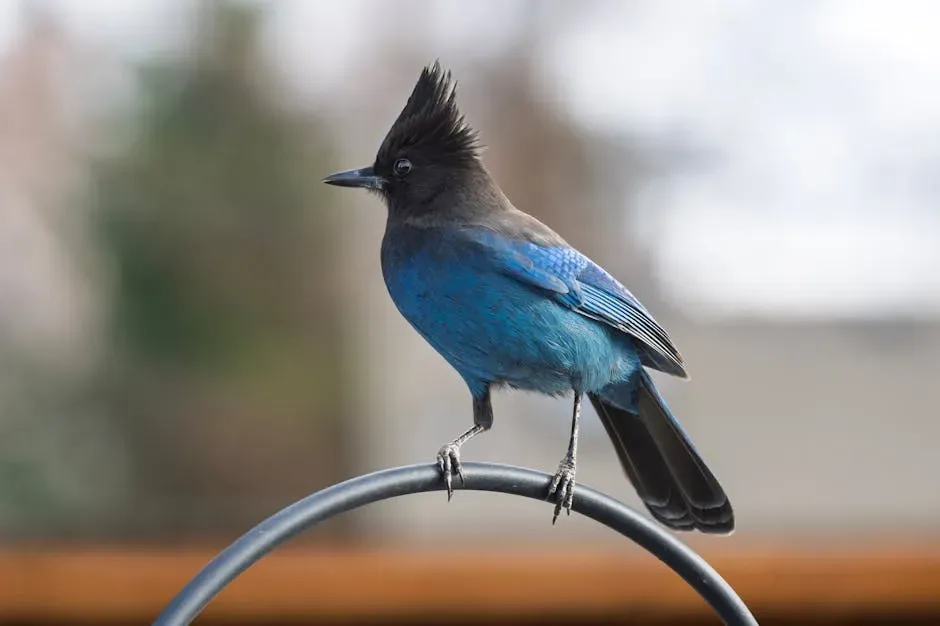
Blue Jays are confirmed to have engaged in tool use both in captivity and in the wild. Blue Jays in captivity have been observed using strips of newspaper as tools to obtain food, while captive fledglings have been observed attempting to open the doors of their cages. A wild Blue Jay was observed using a piece of bark to aid in catching a spider.
In 2025, a Blue Jay was recorded for the first time using bark to extract a spider on the branch of a pine tree. Tool use is broadly regarded as one of the most significant indicators of advanced intelligence in the animal kingdom. The fact that Blue Jays demonstrate it both in captivity and now in documented wild behavior puts them in a very select group of species.
A Single Blue Jay Can Plant Thousands of Oak Trees
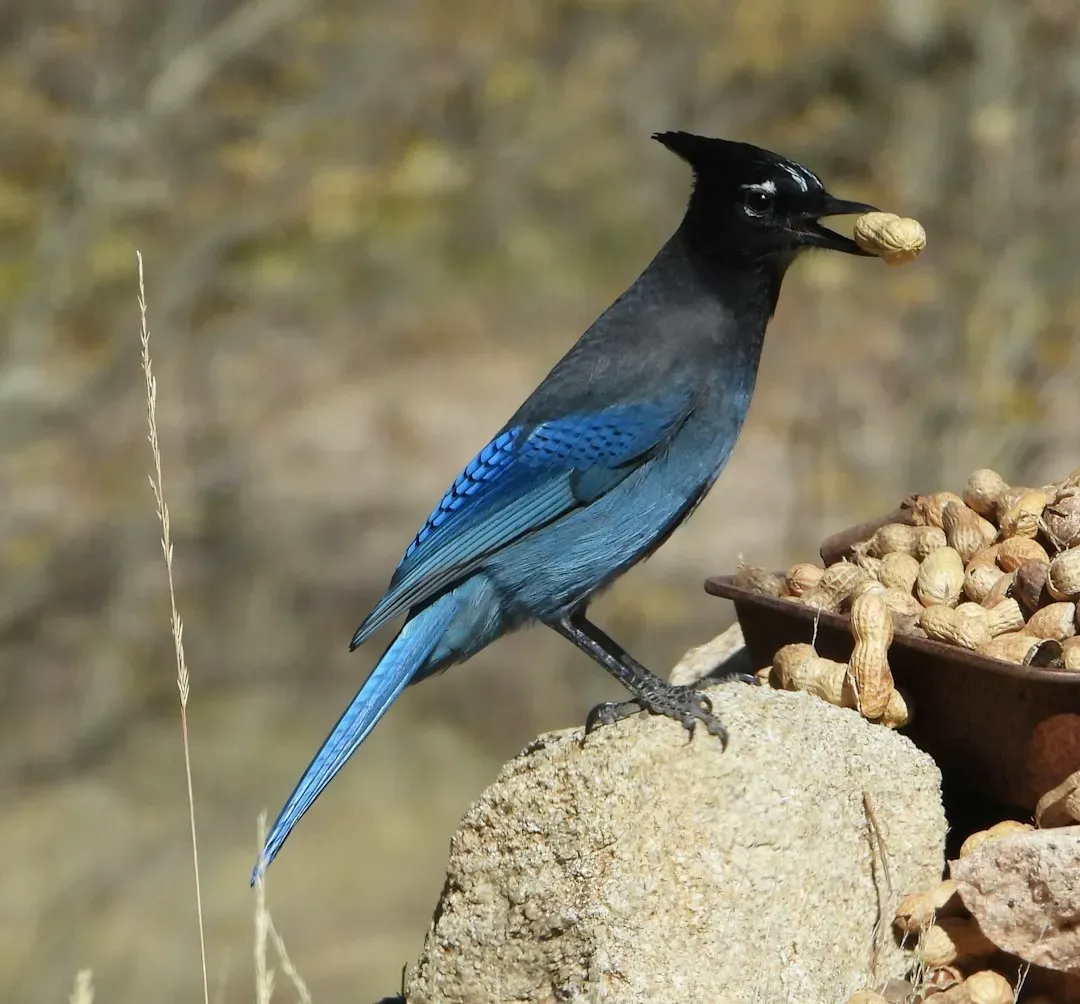
A single Blue Jay can hide up to 5,000 acorns by burying them in the ground at different locations across the landscape. However, they only remember where roughly one in four of those were buried, effectively planting thousands of oak trees each year. The birds are considered essential in spreading oak, beech, and chestnut trees in North America after the last glacial period.
When choosing acorns for caching, Blue Jays pick out the best ones with a discerning eye. Being very intelligent, they can tell good acorns from bad ones and can even figure out whether a nut has been attacked by acorn weevils, leaving those alone. The ecological footprint of this bird is enormous, quietly reshaping forest landscapes across a continent, one forgotten acorn at a time.
They’re Monogamous and Deeply Family-Oriented
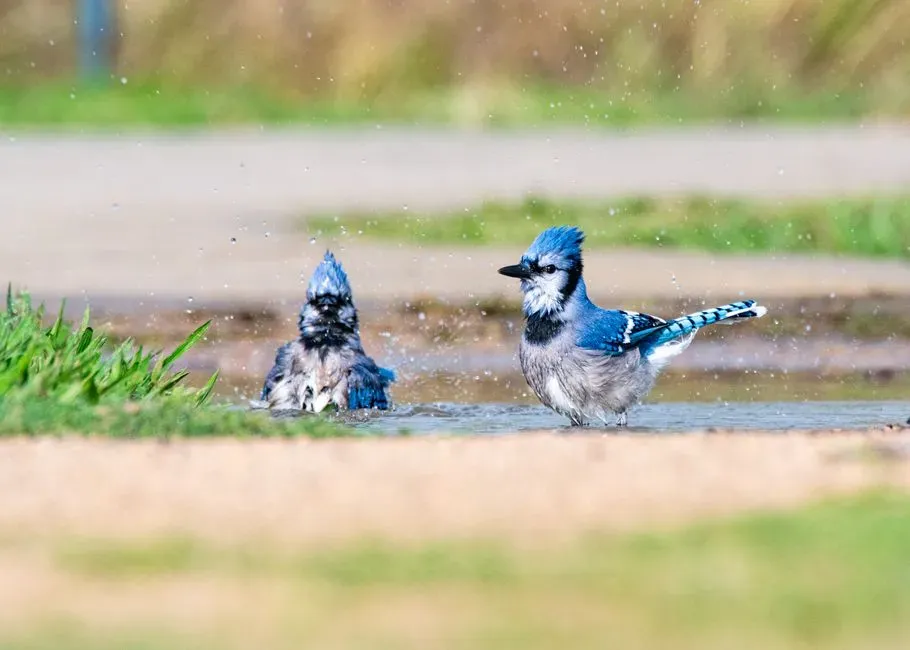
Blue Jays are monogamous and remain with their mate for life. The species’ courtship includes one bird chasing or feeding the other, and between March and July, both partners choose a site in a tree to construct a nest made of twigs, leaves, and other plant material. This isn’t a seasonal arrangement. It’s a committed, lasting partnership.
Blue Jays are a real team when it comes to raising their young. The female stays on the nest to incubate the eggs while the male brings her food. Even after the young birds leave the nest, the family stays together for weeks, with parents helping as the fledglings become more independent. The family may even help raise a second brood later in the season. There’s a quiet devotion to Blue Jay family life that rarely gets talked about.
Their Migration Is One of Ornithology’s Lingering Mysteries
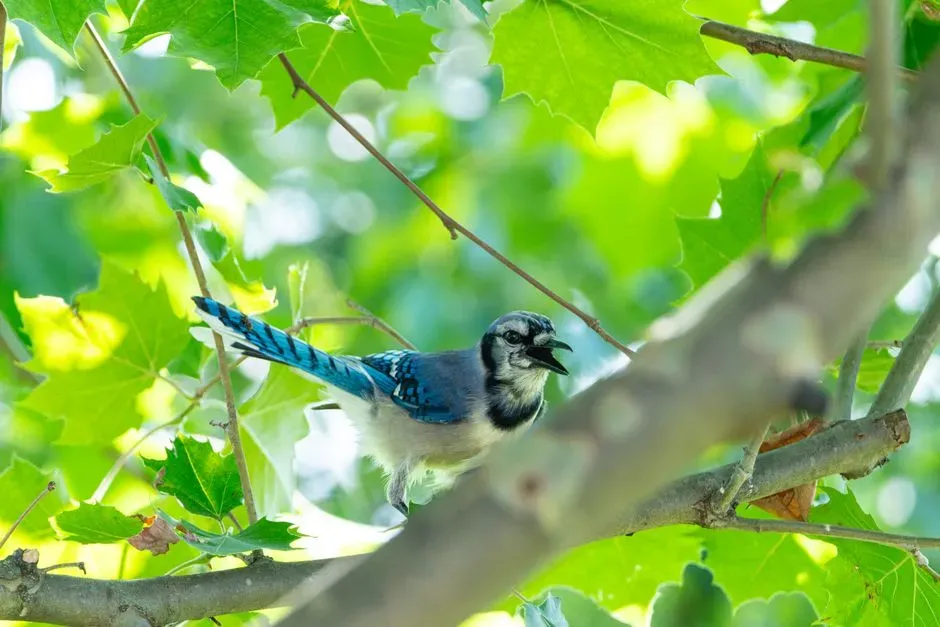
Thousands of Blue Jays migrate in flocks along the Great Lakes and Atlantic coasts, but much about their migration remains a mystery. Some are present throughout winter in all parts of their range. Young jays may be more likely to migrate than adults, but many adults also migrate. Some individual jays migrate south one year, stay north the next winter, and then migrate south again. No one has worked out why they migrate when they do.
They migrate during the daytime, in loose flocks of five to 250 birds. It is likely related to weather conditions and how abundant the winter food sources are, which can determine whether other northern birds will move south. For a bird observed so thoroughly and for so long, the unpredictability of Blue Jay migration is a reminder that nature still holds its surprises.
They Live Remarkably Long Lives
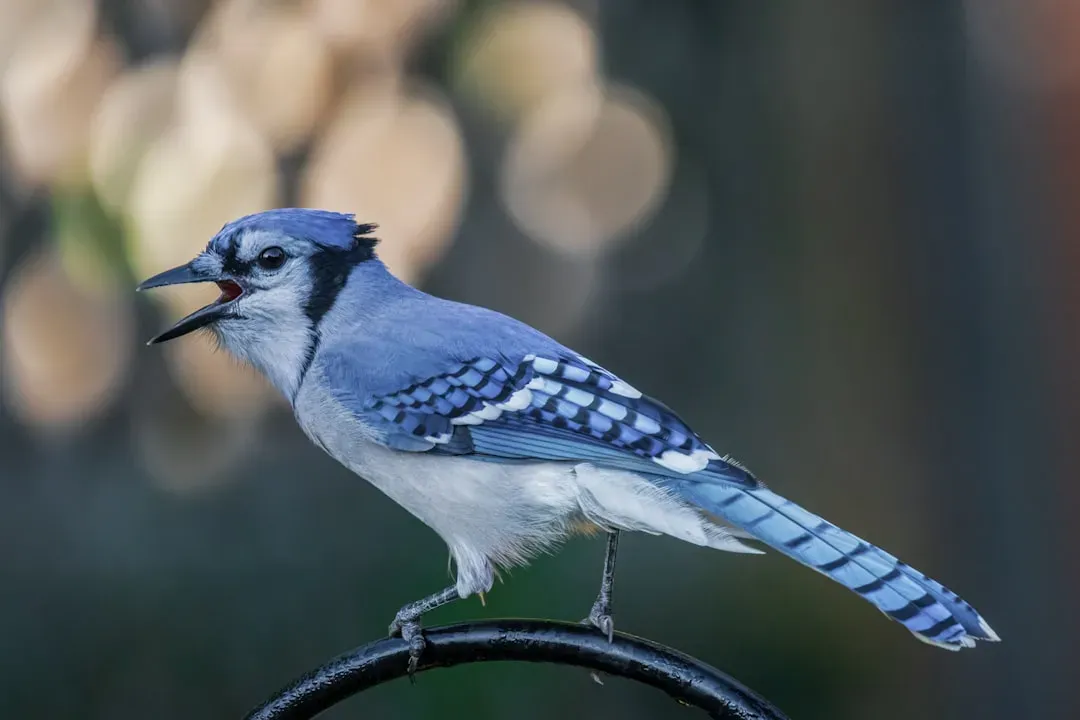
The oldest known wild, banded Blue Jay was at least 26 years and 11 months old when it was found dead after being caught in fishing gear. For context, most wild songbirds live only a few years. That a Blue Jay made it nearly three decades in the wild speaks to both the species’ resilience and its intelligence as a survival advantage.
Their average lifespan in the wild is about seven years, but they can live much longer in captivity, sometimes exceeding 20 years. The International Union for Conservation of Nature classifies the Blue Jay as a species of least concern, owing to the bird’s vast geographic range and adaptability to multiple habitats. Bird surveys note that Blue Jay populations are stable throughout their range, with some estimates reporting a total population as high as 17 million birds. They’re not going anywhere anytime soon, which is genuinely good news.
The Blue Jay Deserves a Second Look
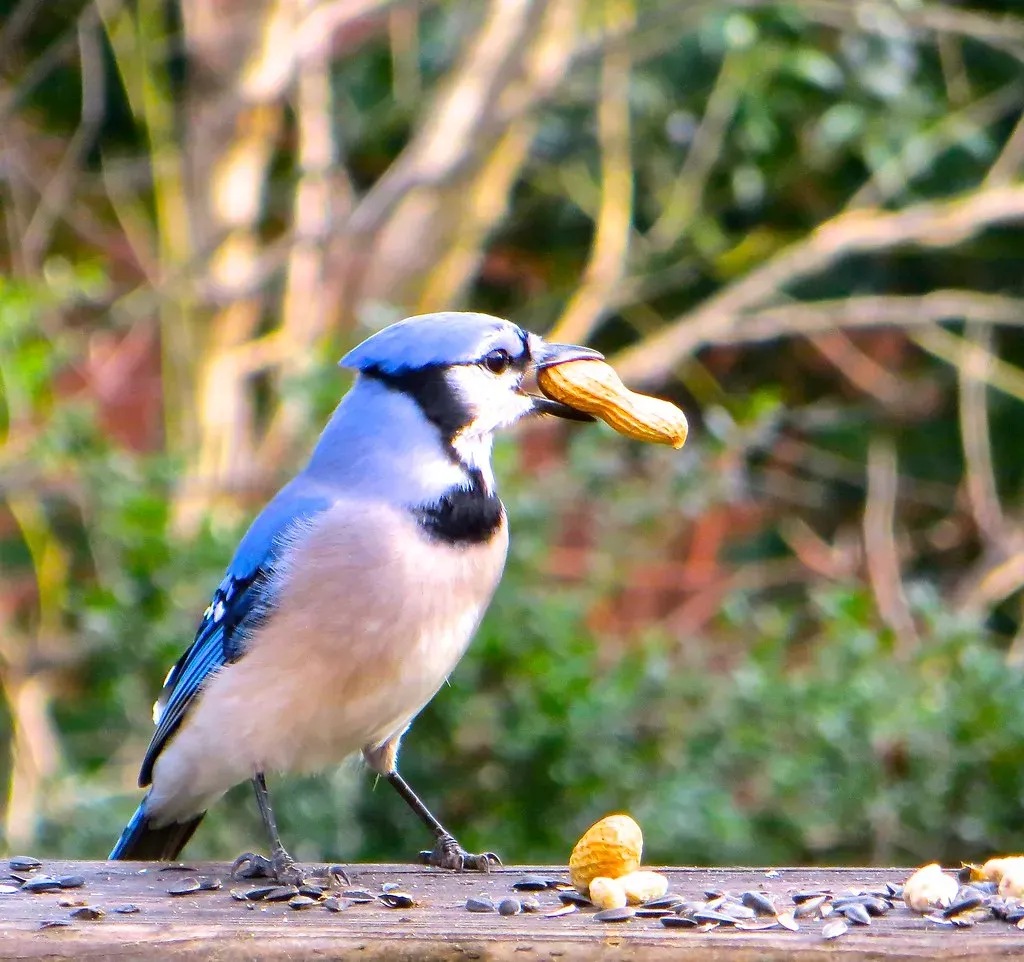
The reputation Blue Jays carry, noisy, aggressive, a bully at the feeder, is real enough on the surface. They do dominate feeding stations. They are loud. They will chase off smaller birds without a second thought. None of that is fabricated.
Still, the full picture is far richer. These are birds that remember individual faces, forge lifelong partnerships, reshape forests, communicate in emotional code through their crests, and confound ornithologists with migration patterns that follow no tidy rule. They’ve been documented using tools in the wild for the first time only in recent years, and researchers still suspect we’ve only scratched the surface of their cognitive abilities.
The next time a Blue Jay lands near you with that familiar attitude, there’s more going on than noise and nerve. There’s memory, strategy, loyalty, and a kind of ecological generosity that has quietly planted forests across a continent. That deserves more than a passing glance.
