

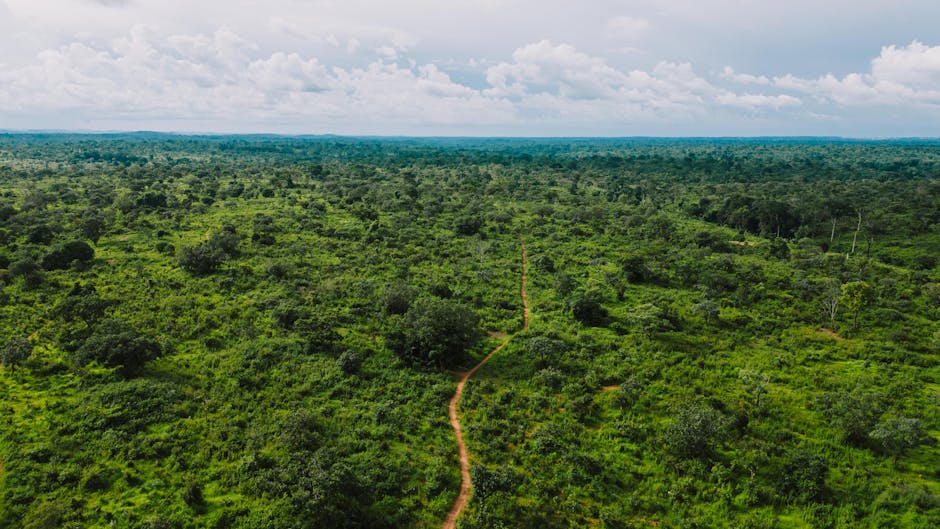
Lost for 150,000 years: Rainforest discovery upends human history – Image for illustrative purposes only (Image credits: Pexels)
In the forests of present-day Côte d’Ivoire, new evidence has emerged that early humans made their homes in dense rainforest environments far sooner than researchers once believed possible. This finding alters long-standing ideas about how adaptable our ancestors were and where they could survive. It also raises fresh questions about the environments that shaped human development across Africa.
Old Views on Rainforest Survival
For many years, scientists viewed thick rainforests as places early humans would have avoided. These environments were seen as too difficult for reliable food sources, shelter, and movement. Dense vegetation and unpredictable weather added to the perception that such areas posed too many risks for sustained living.
Textbooks and research papers often described open savannas or coastal zones as the main settings for human evolution. Rainforests appeared only later in the story, once people had developed more advanced tools and knowledge. That timeline now faces direct challenge from the West African site.
What the New Evidence Reveals
Researchers working in Côte d’Ivoire uncovered clear signs of human presence deep inside rainforest zones dating back around 150,000 years. Stone tools and other remains indicate repeated use of the area rather than brief visits. The location sits well within what would have been continuous forest cover at the time.
The discovery rests on careful dating methods that place the artifacts in a period previously thought empty of human activity in such settings. Layers of soil and associated plant remains support the conclusion that the forest was already mature when people arrived. This pushes the record of rainforest occupation back by tens of thousands of years.
Why the Finding Matters
The results suggest early humans possessed greater flexibility than earlier models allowed. They could locate food, build shelters, and navigate thick undergrowth long before the development of agriculture or metal tools. Such adaptability may have helped populations spread across more of the continent during periods of climate change.
Understanding this early presence also affects how experts interpret genetic and fossil records from other parts of Africa. It opens the possibility that rainforest groups contributed to the broader human story in ways not yet fully traced. Future work will need to test whether similar patterns appear at other forested sites across the region.
Questions That Remain
While the evidence is strong, researchers still seek more details on daily life inside these forests. It is not yet clear how large the groups were or how often they moved between forest patches and open areas. Additional excavations and environmental studies will help fill those gaps.
The find also leaves open whether other dense forests elsewhere hosted early humans at comparable dates. Only continued fieldwork can determine if Côte d’Ivoire represents an exception or part of a wider pattern. Each new layer of data will refine the picture without erasing the central shift already underway.
Key points to watch:
- Further dating of tools and plant remains at the site
- Comparisons with rainforest locations in other African countries
- Genetic studies that may link modern populations to these early groups
- Climate reconstructions that show how forests changed over time
The Côte d’Ivoire discovery reminds us that human history still holds surprises in places once considered off-limits. As more evidence surfaces, the story of where and how our species first thrived continues to grow richer and more complex.
