

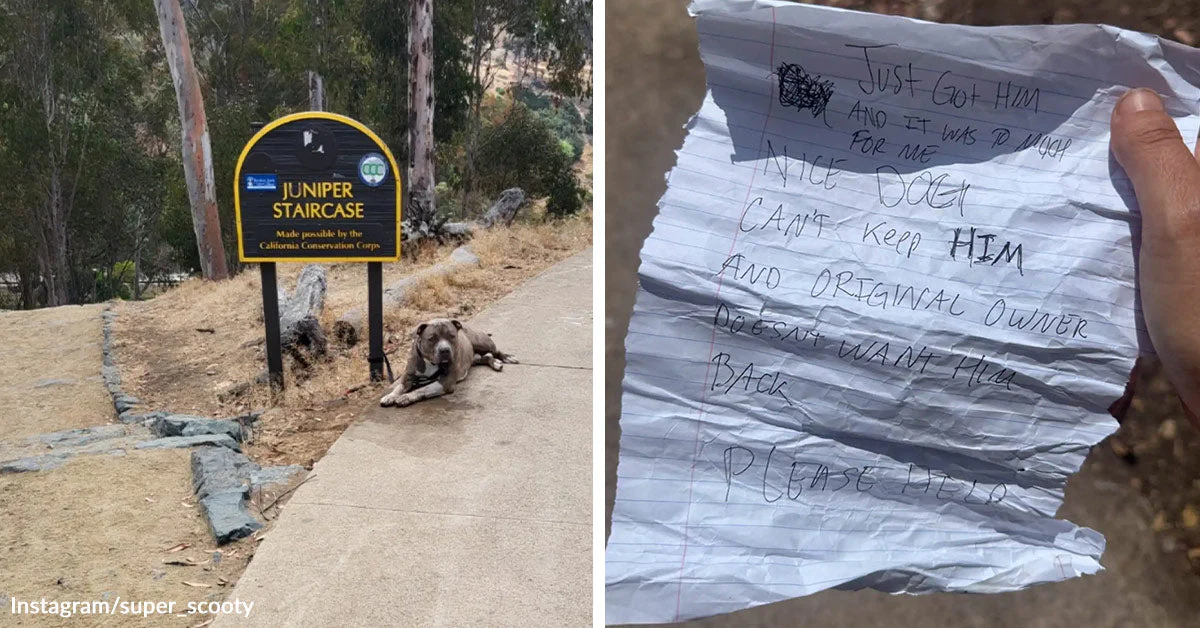
San Diego – A gray pit bull left tied to a fence near Juniper’s Staircase in Balboa Park received immediate help after a neighbor spotted the animal and contacted a local rescuer known for assisting pit bulls. The dog waited quietly beside a crumpled note that detailed the previous owners’ decision to surrender him because caring for the pet had become overwhelming. The note described the animal as a “nice dog” and expressed hope that someone else could provide better care, setting the stage for a series of steps that moved the dog from abandonment toward stability.
The Discovery Unfolds
Erica arrived at the park after receiving the call and found the pit bull sitting calmly by the fence. The note explained that the family had recently acquired the dog but could no longer manage his needs, and the original owner had no interest in taking him back. Erica recognized the signs of a dog who had been left exposed for an unknown period yet still showed trust toward people.
The pit bull greeted her with a tired wag of the tail and showed no signs of aggression. Getting the dog into her car proved straightforward, as he appeared eager for any change in surroundings. Within minutes the animal shifted from a solitary figure at the park to a passenger heading toward temporary safety.
Challenges at Home Lead to Shelter Support
At Erica’s residence the dog, soon named Juniper, showed immediate interest in toys belonging to her three resident pit bulls. He settled onto a soft bed and displayed the friendly personality noted in the original message. Despite this positive response, integration with the existing dogs proved difficult because of established routines in the household.
Erica searched for a foster placement that could offer more individual attention. When no suitable option appeared right away, she took Juniper to the San Diego Humane Society for professional care and a structured adoption process. She continued to visit daily during the stray hold period, bringing treats for Juniper and other dogs in the facility to ease the transition.
Neutering and Foster Placement Mark Progress
Once the stray hold ended, the shelter completed Juniper’s neutering as part of standard rescue procedures that support long-term health and reduce future shelter intakes. Erica then arranged a foster home better suited to the dog’s needs than her own busy environment. In the new setting the dog, now called Juno, responded well to consistent routines and steady affection.
Early updates from the foster family describe a dog who enjoys secure sleeping areas and daily interactions. His sociable nature has continued to stand out, with reports noting quick bonds with new people and a continued love for car rides and play. Juno remains available for adoption through the shelter’s programs.
Key points from Juniper’s case:
- Clear note from previous owners highlighted overwhelm rather than any fault in the dog
- Community involvement bridged the gap between discovery and shelter intake
- Daily visits and medical steps prepared the dog for a stable foster home
- Friendly traits support strong adoption potential for the right family
Stories like this one illustrate how individual actions combined with shelter resources can convert a single moment of crisis into a sustained opportunity for the animal involved. Juno continues to receive care while waiting for a permanent home that matches his outgoing temperament.

As a little kid, I fell in love with nature, wildlife, and animals. Living in the USA, South Africa, Italy, China and Germany gave me the opportunity to discover the world's Wildlife. My favorite animals are Mountain Gorillas, Siberian Tigers, and Great White Sharks.
I'm a certified PADI Open Water Diver, went to Everest Base Camp and Trekked Gorillas in Uganda. I hold a Master of Science in Economics and Finance.
Please send any feedback to feedback@animalsaroundtheglobe.com
- 10 Most Unique Reptiles You will See in the US - July 21, 2026
- 3 Dangerous Invasive Species the USA Must Eradicate - July 21, 2026
- 10 Things That Calm Cats And 4 That Make Them Nervous - July 21, 2026