
Death is the one certainty every human being has ever shared, regardless of century, continent, or culture. Yet rather than simply accepting it, people across every era of recorded history have pushed back with extraordinary force. They built pyramids, brewed potions, launched expeditions into uncharted lands, and in our own time, are pouring billions into biotech companies hunting the biological roots of aging.
The very earliest written histories reveal that humanity has had the universal desire to live forever, and has sought countless ways in which to defeat the utterly relentless inevitabilities of time and mortality. The thread connecting a Mesopotamian king to a Silicon Valley billionaire is surprisingly direct. It’s not vanity alone. It’s something far deeper, woven into what it means to be conscious of one’s own end.
#1: The Earliest Written Cry Against Death – Gilgamesh and the Mesopotamian Dread
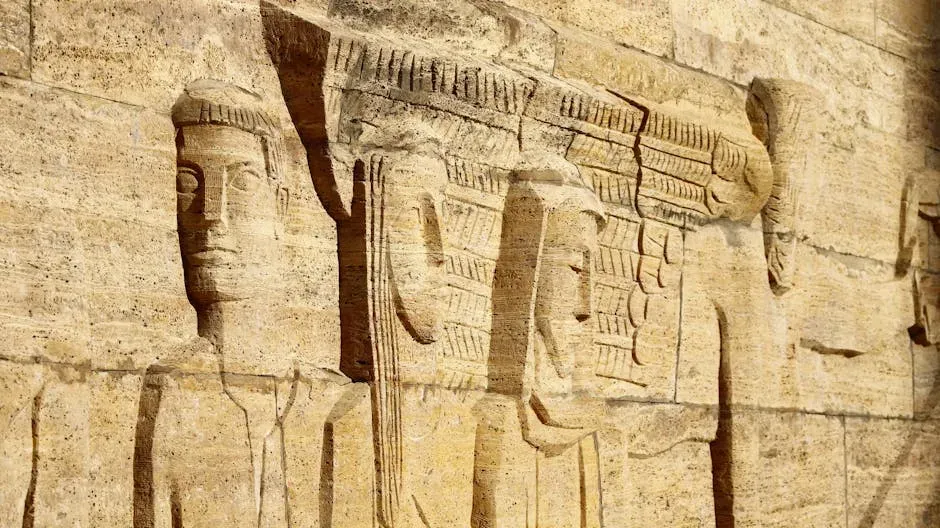
The oldest story ever written down, the Epic of Gilgamesh, is fundamentally about someone who doesn’t want to die. In ancient Mesopotamia, Gilgamesh, the King of Uruk, traveled across land and sea in search of a magical plant that could restore youth. The fact that humanity’s very first literary effort centers on the terror of mortality says something profound about our species.
The Epic of Gilgamesh is one of the earliest tales that addresses humanity’s attempts to defy death. Gilgamesh is told by the king Utnapishtim to stay awake for six days and seven nights to prove that he is worthy of being immortal. He fails the test, of course. In this 4,000-year-old tale, Gilgamesh eventually finds the plant of restored youth, but it is stolen by a snake – perhaps an ancient metaphor for death’s inevitability.
The Mesopotamians, a civilization existing in and around modern-day Iraq around the same time as the Pharaohs of Egypt, had a very particular view of death. For them, death was something to be feared. In the Mesopotamian tradition, humans were created from clay mixed with the blood of a sacrificed god. Being partly immortal, the spirit did not die after death but lingered on to suffer a dismal afterlife, retaining all the needs and emotions of the living but enduring a dark, subterranean existence eating only dust and clay. That bleak vision made the desire for physical immortality feel urgent rather than merely wishful.
#2: Egypt’s Grand Bargain – Building Eternity Out of Stone
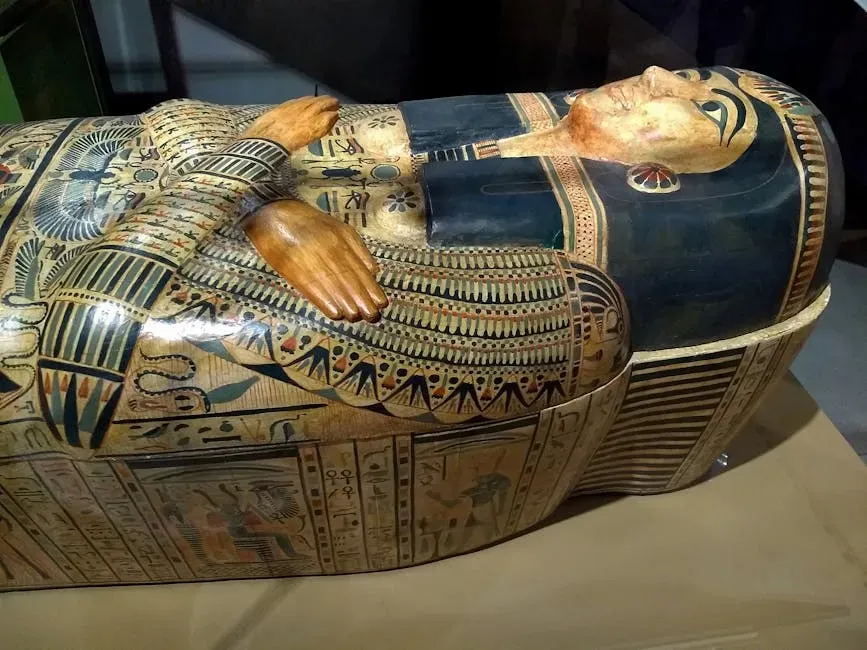
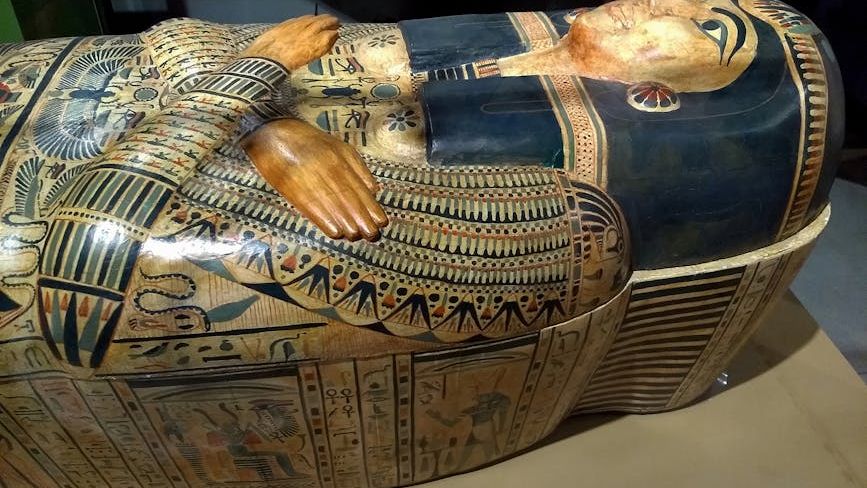
Egyptian society, it has been said, consisted of the dead, the gods, and the living. During all periods of their history, the ancient Egyptians seem to have spent much of their time thinking of death and making provisions for their afterlife. No other civilization has left behind physical evidence of that obsession quite so dramatically.
The ancient Egyptians are most famous for their fascination with death, mummifying their dead and building exquisite tombs, like the pyramids of Giza, for their dead. Many of their deities were death-related, such as Ammut, the devourer of unworthy souls; Anubis, the guardian of the Necropolis; and Osiris, the king of the dead. Their entire theological architecture was built around the premise that death could be navigated, not merely suffered.
After death, ancient Egyptians believed that the “Ka,” an entity closely associated with the physical body, was able to eat, drink, and smell, and essentially enjoy the afterlife. The soul, or “Ba,” could not survive without the body and had to be able to recognize its body to return to it. Thus the body’s preservation was essential in order for a person both to reach the afterlife and to be able to enjoy it. Mummification, in that context, was not strange ritual. It was calculated strategy against extinction.
#3: Elixirs, Emperors, and the Alchemical Chase

There are many ancient references to special drinks or liquids which were believed to grant immortality. These special concoctions, like the ancient foods of the gods, were often forbidden to mortals, who often had to win or steal them, or complete arduous quests to combine the necessary ingredients. The pattern appears across nearly every civilisation on the planet, from Vedic India to ancient China.
Chinese history is replete with legends of magical elixirs that could make people immortal, and the first emperor of China, Qin Shi Huang, went around his huge empire looking for alchemists, wizards, and physicians who could give him an elixir for life. He was so fixated with prolonging his life that he banned the mention of the word death in his presence. His obsession came with real consequences – an example of Qin’s quest for immortality includes the creation of the Terracotta Army, which consisted of thousands of clay soldiers built to guard his tomb and protect him in the afterlife.
The quest for eternal youth took a more experimental turn during the Renaissance and Enlightenment. Alchemists across Europe sought not only to transmute base metals into gold, but also to discover the Philosopher’s Stone, a legendary substance that could grant immortality. The philosopher’s stone was also believed to cure illness, possess the elixir of youth, and grant immortality to the one who possessed it. Remarkably, Chinese alchemists spent centuries formulating potions of immortality, and inventions like gunpowder were originally meant as attempts to create the Elixir of Life. Even failure, it turns out, can accidentally reshape the world.
#4: The Fountain of Youth and Other Geographic Fantasies

Many ancient cultures, such as the Sumerians, Babylonians, and Egyptians, told stories about sacred springs or rivers that could heal and rejuvenate. These early myths laid the groundwork for what would become one of history’s most famous quests. The desire was so powerful it wasn’t confined to laboratory or temple – it sent people physically out into the unknown.
Across time and cultures, tales of magical waters that could grant eternal youth or even immortality have captured our imagination. From Alexander the Great’s legendary journey to the medieval explorers of Europe, the myth of the Fountain of Youth reflects not only a fear of aging and death, but also a deep-seated desire to transcend human limits. When Spanish conquistador Juan Ponce de León arrived in Florida, he was said to be searching for this mystical spring. Although historians now believe he was more focused on claiming new land and wealth, the connection between Ponce de León and the Fountain of Youth became a permanent part of his legacy.
These themes and motifs are recurrent throughout the world: in Chinese mythology there are the “Peaches of Immortality”; in Iranian folklore there is talk about the “Cup of Jamshid”; and in Norse mythology Idunn is a goddess associated with “Apples of Youth.” The specific imagery changes by culture, but the underlying longing is identical everywhere humans have ever lived and died.
#5: The Modern Laboratory – Science Inherits the Ancient Dream

From ancient myths about the Fountain of Youth to modern advancements in anti-aging technology, the drive to extend lifespan and healthspan has never been more promising. Thanks to breakthroughs in biotechnology, we are now witnessing the emergence of solutions that not only address the symptoms of aging but also target its root causes. In the past decade, the longevity biotech space has transformed from a niche scientific endeavor into a thriving industry with massive potential.
The field of longevity science is uncovering the underlying mechanisms that drive aging and developing interventions that can slow down or even partially reverse them. The shift in focus from lifespan to healthspan is no longer considered a theoretical pursuit. Driven largely by emerging breakthroughs in molecular diagnostics and targeted drug development, longevity science is accelerating toward clinical reality. Founded in 2021 and backed by Jeff Bezos, Altos Labs focuses on cellular rejuvenation. Using Yamanaka factors, the company aims to reprogram cells to a youthful state, reversing signs of aging. By 2026, Altos Labs has initiated human clinical trials targeting neurodegenerative and immune-related aging disorders.
One of the biggest takeaways from recent research is that aging is not driven by a single biological mechanism. The evidence underscores that targeting multiple hallmarks – inflammation, metabolism, senescence, mitochondrial function, and nutrient signaling – leads to better outcomes than focusing narrowly on one pathway. This shifts longevity science closer to a familiar model seen in oncology and cardiology, where combination therapy is embraced for better outcomes. The ancient dream has not gone away. It has simply moved from alchemy labs to gene-sequencing labs, wearing a white coat instead of a robe.
Conclusion: The Thread That Never Breaks

What strikes you, stepping back from all of this, is the sheer consistency. Archaeologists have found that as early as the Paleolithic period, humans held metaphysical beliefs about death and dying. Tools and ornaments excavated at burial sites suggest that the earliest ancestors believed that some element of a person survived the dying experience. The obsession predates writing, predates civilization, perhaps predates almost everything else we’d call culture.
Immortality, insofar as it was metaphorically possible, was actualized in the memory of future generations. The Mesopotamians understood this as well as anyone. Gilgamesh never found his plant. The alchemists never found their stone. Ponce de León never found his fountain. For decades, we treated aging as an inevitable slide – a given we simply managed as the symptoms arose. A profound shift is now taking place: longevity is rapidly becoming part of our standard of care. We are shifting away from the era of biohacking for the few and toward a collective conversation on not if, but how, we age.
The obsession with defeating death was never purely a fear of pain or darkness. It reflects something stranger and more admirable – a refusal to accept that consciousness, once ignited, must simply go out. Whether that refusal leads to pyramids, potions, or gene therapies, the impulse behind it is remarkably, stubbornly human.
