

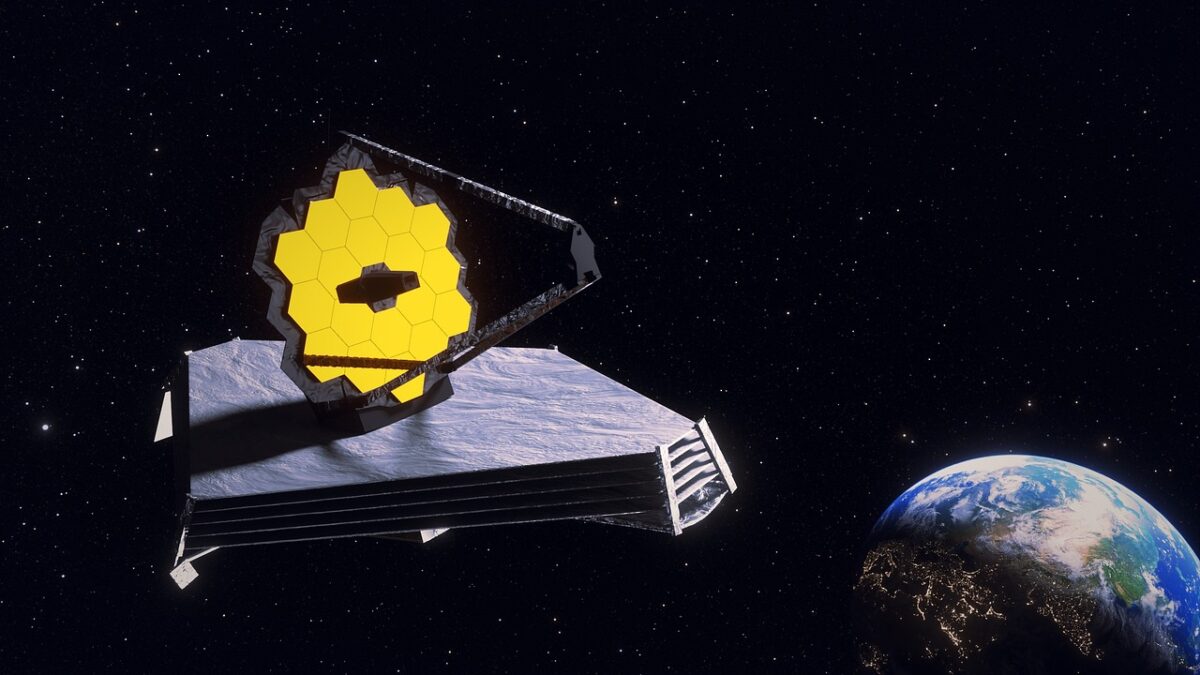
James Webb discovers a rare giant planet with surprisingly Earth-like temperatures – Image for illustrative purposes only (Image credits: Pixabay)
Astronomers have gained a clearer window into the diversity of planets beyond our solar system through a recent observation that highlights conditions rarely seen in gas giants. The finding centers on a world that maintains temperatures comparable to those on Earth despite its enormous size, offering a fresh benchmark for how atmospheres behave far from any star like our Sun. Such discoveries help refine models of planetary formation and evolution, even as they underscore how much remains unknown about these distant environments.
A Planet That Defies Simple Categories
The object, known as TOI-199b, measures roughly the diameter of Saturn yet sits in a temperature range that feels surprisingly familiar. Located more than 330 light-years from Earth, it ranks among the earliest temperate gas giants to receive detailed scrutiny with advanced instruments. Its atmosphere contains notable amounts of methane, a gas that plays different roles depending on the planet’s overall chemistry and distance from its host star. This combination of traits sets TOI-199b apart from the hotter, more extreme gas giants typically studied in other systems. Researchers note that its mild thermal profile could stem from a specific orbital distance or atmospheric composition that traps and redistributes heat in unusual ways. Still, the exact mechanisms remain under investigation, and additional data will be needed to confirm how stable those temperatures truly are over time.
What the Observations Reveal So Far
Data from the James Webb Space Telescope allowed scientists to examine the planet’s atmosphere in greater detail than previous efforts permitted. The presence of methane stands out because it can serve as a tracer for both temperature and chemical processes occurring high in the atmosphere. Unlike the intense heat that drives dramatic weather on many known exoplanets, TOI-199b appears to maintain a more moderate environment. Key details include its overall size, the detected methane signature, and the temperate conditions that distinguish it from typical hot Jupiters or Saturn analogs. These elements together paint a picture of a world that occupies a middle ground rarely captured in current catalogs of exoplanets.
Why Temperate Gas Giants Matter
Gas giants with Earth-like temperatures provide reference points for understanding how atmospheres retain heat and chemicals across a wide range of planetary masses. They also help test ideas about whether similar conditions could exist on smaller, rocky worlds that might one day be examined for signs of habitability. In this case, the planet’s scale and composition offer a contrast to the colder ice giants or scorching hot giants closer to their stars. The discovery adds to a growing list of worlds that challenge assumptions drawn from our own solar system. It demonstrates that temperate conditions are not limited to smaller planets and can occur even around objects several times the mass of Earth. Continued study may clarify whether such atmospheres remain stable or shift with subtle changes in stellar radiation.
Next Steps and Open Questions
Future observations will likely focus on refining measurements of the planet’s temperature variations and atmospheric layers. Scientists are particularly interested in determining the precise balance of gases and how they interact under these milder conditions. Uncertainties persist around the planet’s internal structure and long-term climate behavior, both of which require more extensive datasets. – Improved spectroscopy to map additional molecules
– Longer-term monitoring for seasonal or orbital effects
– Comparisons with atmospheric models developed for solar-system giants
– Integration with data from other telescopes to build a fuller profile These steps should gradually reduce the gaps in current understanding while highlighting new avenues for research. The identification of TOI-199b illustrates how incremental advances in telescope capabilities continue to reshape expectations about distant planetary systems. Much about its formation history and potential evolution stays unresolved, leaving room for further surprises as observations accumulate.

As a little kid, I fell in love with nature, wildlife, and animals. Living in the USA, South Africa, Italy, China and Germany gave me the opportunity to discover the world's Wildlife. My favorite animals are Mountain Gorillas, Siberian Tigers, and Great White Sharks.
I'm a certified PADI Open Water Diver, went to Everest Base Camp and Trekked Gorillas in Uganda. I hold a Master of Science in Economics and Finance.
Please send any feedback to feedback@animalsaroundtheglobe.com
- 16 Creatures Now Thriving in Urban U.S. Cities - July 26, 2026
- 10 Creatures That Can Paralyze Prey Instantly - July 26, 2026
- Guardians of the Wild Communities Protecting Endangered Species - July 26, 2026