
There’s something quietly unsettling about the way a cat sometimes stares at you from across the room. Unblinking. Completely still. As if it knows something you don’t. For centuries, humans have attributed a kind of sixth sense to these creatures, and depending on who you ask, that reputation may not be entirely undeserved.
Many cat owners have shared stories of their pets behaving strangely before a loved one’s passing, or showing unusual affection toward someone who is gravely ill. These experiences raise a genuinely fascinating question: can cats truly sense death in humans, or are their behaviors simply responses to subtle environmental and emotional cues? Science, it turns out, has been quietly catching up with the folklore.
#1: The Cat Who Baffled an Entire Medical Team
Oscar the cat gained notoriety for his apparent ability to sense impending death, providing comfort to dying patients at a Rhode Island nursing home for over 17 years. He wasn’t trained. He wasn’t rewarded for it. He simply started doing it.
After about six months at the facility, staff noticed Oscar would make his own rounds, just like the doctors and nurses. He’d sniff and observe patients, then sit beside people who would die within a few hours. Oscar kept curling up next to people who ended up passing in the next few hours so consistently that staff at the nursing and rehabilitation center would call family members when they discovered the cat sleeping next to someone. In total, it’s believed he predicted the deaths of anywhere from 50 to 100 patients.
In 2007, Oscar was featured in the New England Journal of Medicine, as he was seemingly capable of predicting when someone in the nursing and rehabilitation center was about to die. A physician who treated patients at the nursing home stated Oscar was better at predicting death than the people who worked there. The medical community didn’t dismiss it. They leaned in.
#2: The Secret Power of a Cat’s Nose
Cats have approximately 200 million scent receptors in their nasal cavity, compared to humans’ 5 to 6 million. This makes their sense of smell roughly 14 to 40 times more sensitive than ours. That kind of biological advantage doesn’t go unnoticed when a human body begins its final chemical shifts.
Cats have extremely sensitive noses and can detect subtle changes in body odor caused by metabolic shifts, infections, ketosis, organ failure, cancer, chemotherapy, and medications. Many diseases alter volatile organic compounds on breath, skin, and sweat, and cats are capable of perceiving those changes. These aren’t vague impressions. They’re specific, measurable chemical signals.
Their olfactory system is designed to detect even the faintest chemical signals, thanks to a specialized organ known as the vomeronasal organ. This organ plays a crucial role in their ability to perceive pheromones and other chemical markers. It is hypothesized that cats may be able to use this incredible sense of smell to detect when a person’s organs are shutting down. A dying person might also give off different pheromones that their cat could pick up with heightened senses. It’s less mystical than it sounds, and more biological than most people realize.
#3: Beyond Smell – What Else Cats Are Reading
Cats possess highly developed senses of smell, hearing, and touch, all of which allow them to detect changes in their surroundings and in the people they live with. Smell tends to get all the credit. The full picture is considerably more layered.
Cats notice changes in breathing patterns, coughing, wheeze frequency, vocal tone, slurred speech, and movement speed. They also detect micro-movements and posture changes that a human may not consciously register. Cats could also be able to sense a decreased body temperature in people close to dying as they might become more still. The change in body language could also alert cats to what is about to happen.
Experts propose that cats detect biochemical changes that occur as the body begins to shut down. These changes can produce distinct odors or temperature variations that cats notice long before humans do. Additionally, cats’ acute hearing might allow them to sense subtle physiological shifts, such as slowed respiration or weakened circulation. In other words, a dying body broadcasts signals across multiple channels. Cats, it seems, are tuned in to all of them simultaneously.
#4: Can Cats Also Detect Illness Before It’s Diagnosed?
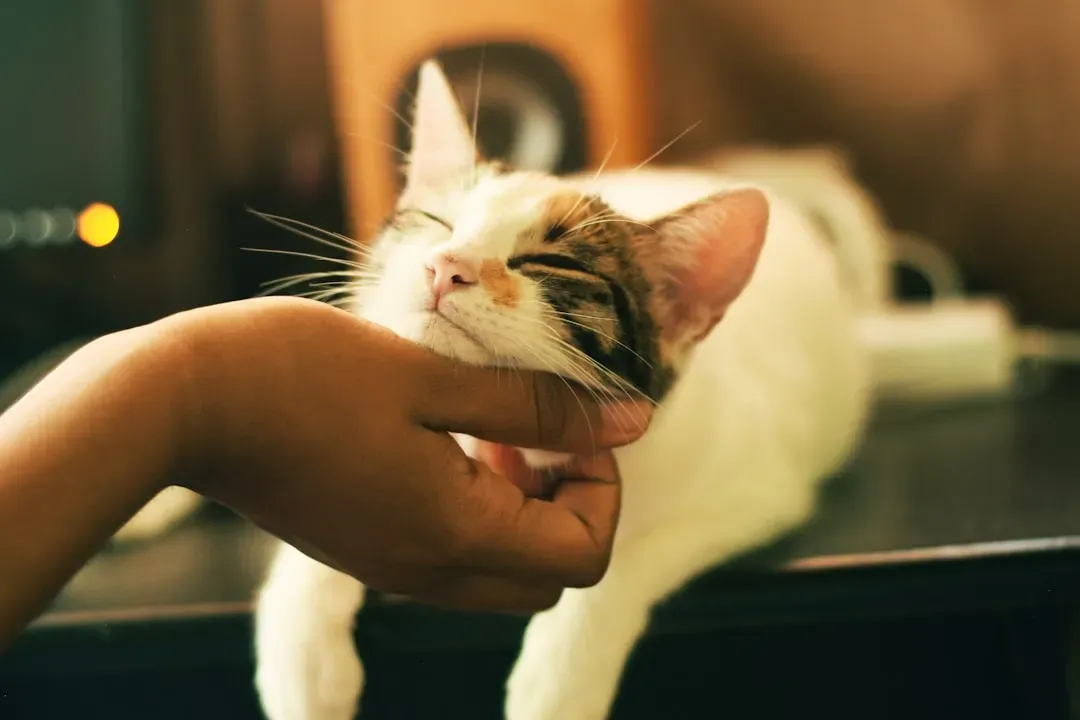
While scientific studies on feline detection are still emerging, numerous observations support the idea that cats can sense a variety of human illnesses. Anecdotal reports have shown cats repeatedly sniffing or sitting on parts of their owners’ bodies where tumors were later discovered. These aren’t isolated stories. They keep showing up with enough regularity to draw serious attention.
Research has shown that cats can identify specific biomarkers in human breath and sweat that are associated with certain medical conditions. One study found that cats were able to detect the presence of volatile organic compounds in the breath of patients with lung cancer. These compounds are produced by the body as a result of metabolic processes and can be indicative of various diseases.
When people get ill and the decomposition of cells causes chemical changes in the body, it is well evidenced that cats can sense hormonal changes using their olfactory pathway. Tumors, for instance, change the composition of affected cells and organs, and this causes chemical changes in the body that cats may detect. Beyond smell, a cat may also notice its owner’s reduced activity or high stress, and fever, inflammation, or discomfort can alter body position or heat emissions, things cats can notice quickly. The boundary between sensing illness and sensing mortality is, biologically speaking, a thin one.
#5: What Science Still Can’t Fully Explain
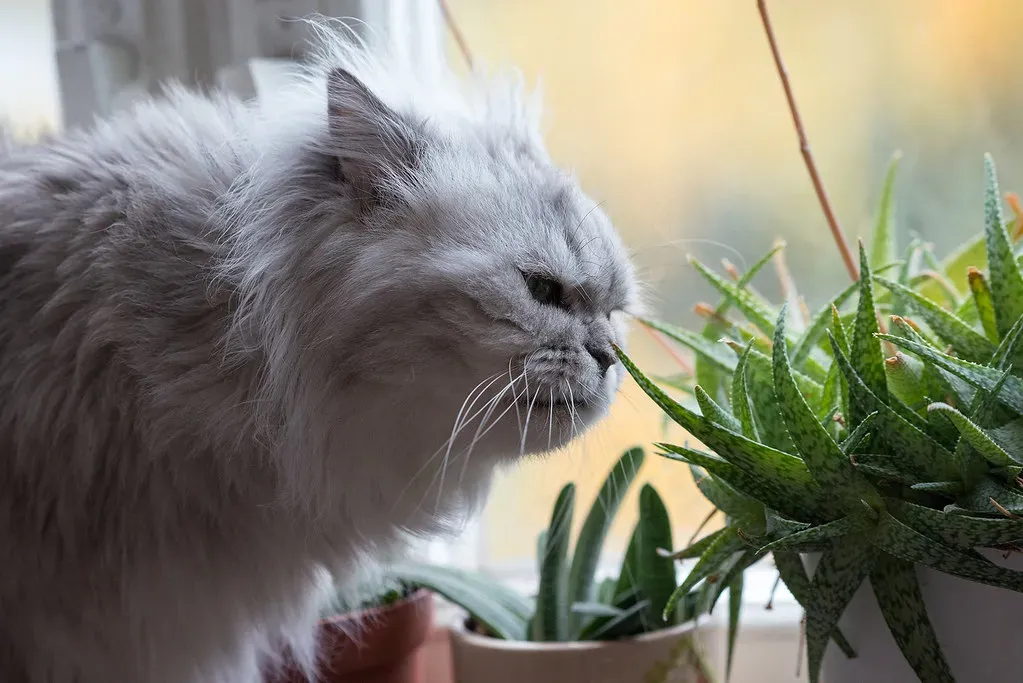
Although stories of cats predicting death are widespread, scientific evidence remains limited. However, several studies and documented cases suggest that feline intuition may have a biological basis. The careful honest answer, even in 2026, is that we’re still working it out.
Cats likely do not understand death as a concept, but they do sense physical changes when someone is ill or uncomfortable. It appears that cats have some awareness of death, but it’s impossible to know the extent of their knowledge or whether they understand the finality of it. The distinction matters. What they’re probably responding to isn’t the idea of death. It’s the living, measurable reality of a body changing.
Cats detect illness and impending death by combining highly developed senses, especially smell, with sensitivity to subtle physiological signals and learned associations. Their behaviors, whether proximity, attention, agitation, or withdrawal, offer valuable social and sometimes diagnostic cues, but they are complementary to, not substitutes for, medical evaluation. Although formal studies on the ability of cats to sniff out illness and disease remain limited, significant research suggests that dogs can detect odor signatures in the skin and sweat of humans, including things like impending seizures and cancer, making it highly likely that cats can do the same. The science is still catching up to what cats appear to have always known.
There’s something worth sitting with in all of this. Your cat hasn’t been giving you mysterious looks out of superstition. It’s been reading you, in a language built from chemistry, warmth, sound, and motion. Whether that amounts to predicting death or simply detecting change depends on how literally you want to take the question. Either way, the creature curled up at the foot of your bed knows a great deal more about your body than you probably give it credit for.
