

Few animated characters have lodged themselves into popular memory quite the way Scrat has. That gap-toothed, long-snouted, perpetually doomed little creature from the Ice Age films spent two decades chasing a single acorn across glaciers, oceans, and even outer space. He was funny, he was relatable, and most people assumed he was entirely made up. Scientists, as it turns out, had other ideas.
When paleontologists in Argentina started pulling fossils out of some of the world’s most ancient rock formations, they uncovered something that stopped them cold. What emerged from the stone looked, in ways that felt almost eerie, like something a Blue Sky Studios animator had sketched on a Friday afternoon. The real story of prehistoric Scrat-like creatures is stranger, older, and more scientifically significant than the movies ever let on.
#1: How Scrat Was Born From a Squirrel Sketch and a Rainy Afternoon
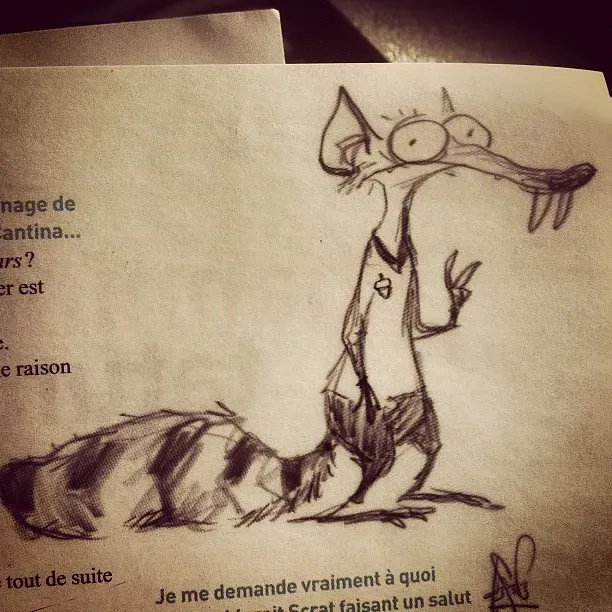
Before science enters the picture, it helps to understand where Scrat came from in the first place. During the production of Ice Age, Blue Sky Studios co-founder and film director Chris Wedge struggled to think of an introduction showcasing the setting’s climate, but imagined the possibility of a glacier chasing one small character. The idea needed the smallest, most hapless creature imaginable, and that’s where the squirrel sketch entered.
Character designer Peter de Sève went through a stack of drawings he’d been working with, pulled out a sketch of a squirrel he’d made at the Museum of Natural History, and the team decided to put some saber teeth on it so it would look like a prehistoric creature. That afternoon improvisation became one of animation’s most beloved characters.
In the 2002 film Ice Age and its follow-up shorts and theatrical sequels, Scrat is a saber-toothed, long-snouted rat-like squirrel with no dialogue who is obsessed with trying to collect and bury his acorn, putting himself in danger and usually losing his food in the process. Nobody at the studio expected him to become the franchise’s mascot. He was going to be a minor character, appearing in one sequence, with no plans to be the studio mascot or the breakout character, and was originally going to get crushed at the end.
#2: The Fossil That Changed Everything – Meet Cronopio dentiacutus
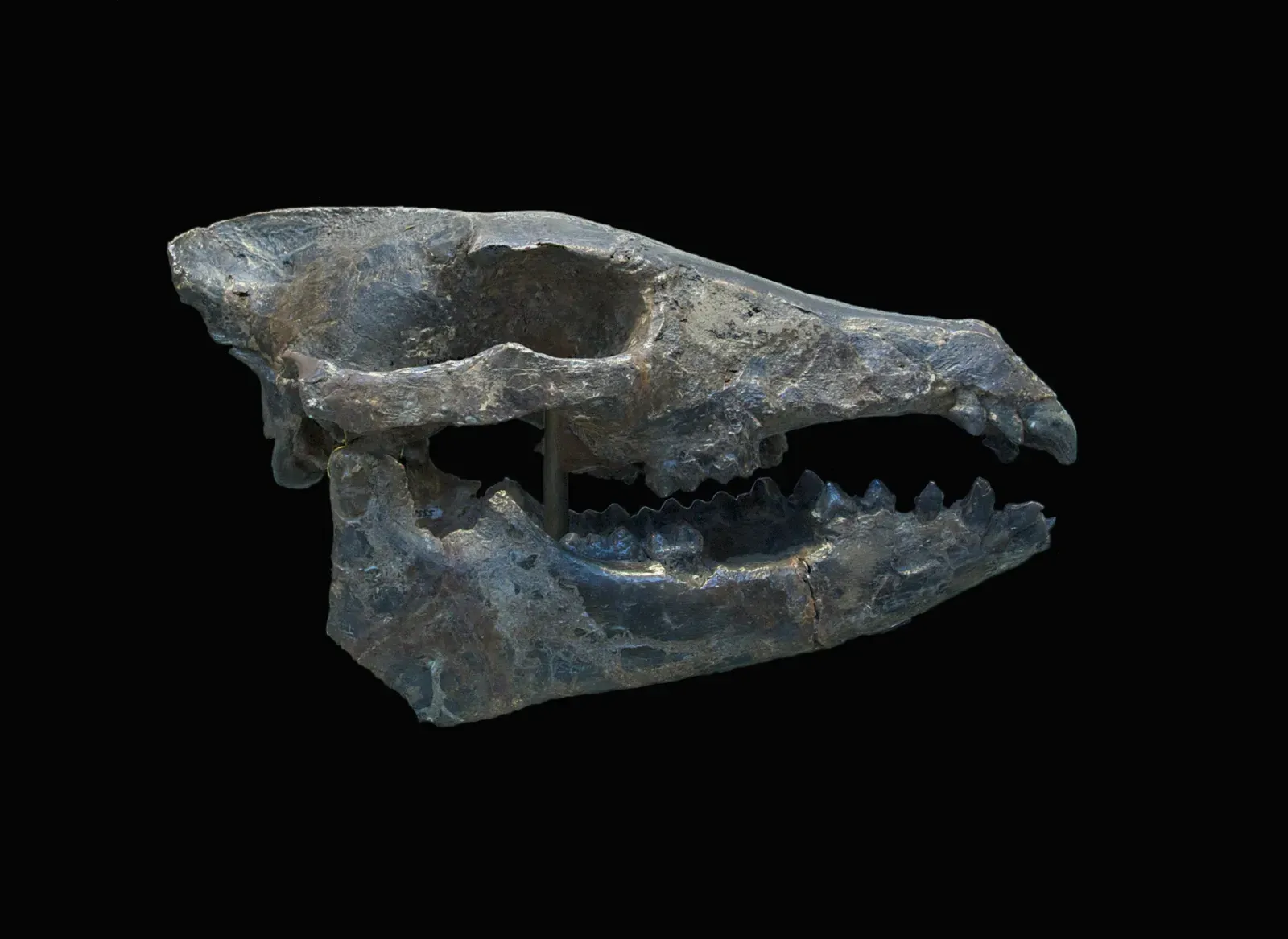
Paleontologists found a mostly complete skull in 2002 outside a rural village in northern Argentina. At the time, the skull was encased in rock and its true identity remained hidden. In 2005, the scientists sent the skull to a technician who spent three years removing the rock from around the fossil, finally revealing a saber-toothed, squirrel-like creature.
Researchers had discovered the fossil remains of a roughly 94-million-year-old squirrel-like critter with a long, narrow snout and a pair of curved saber-fangs that it would have likely used to pierce its insect prey. When word spread through the scientific community, the Scrat comparisons were instant and unavoidable. With its superlong fangs, long snout, and large eyes, the mouse-size animal bears an oddly striking resemblance to the fictional saber-toothed squirrels depicted in the Ice Age films. This newfound creature was named Cronopio dentiacutus, with “Cronopio” taken from the bizarre fictional beasts in stories by Argentine writer Julio Cortázar, and “dentiacutus” from Latin, meaning “sharp, acute teeth.”
The second oldest mammal skull ever recovered from South America, Cronopio dentiacutus existed when dinosaurs still roamed Earth, providing a tantalizing glimpse into the history of early mammals. That alone would have made it a landmark find. The resemblance to a cartoon squirrel was simply the extraordinary bonus that nobody had planned for.
#3: What Cronopio Actually Was – and How Different It Was From Any Squirrel

The creature, pieced together from skull fragments unearthed in Argentina, was not ancestral to any living mammal. Instead, it belonged to an extinct group called dryolestoids, a cadre of fuzzy mammals that scurried about in the shadow of long-necked dinosaurs. Think less cuddly woodland creature and more ancient, fanged insect-hunter living in the age of giants.
Cronopio belonged to a group of primitive, extinct beasts known as dryolestoids, which once were part of the lineage leading to marsupials and mammals with placentas such as humans. Dryolestoid remains had been found before, mainly in the northern continents, but this new discovery revealed this group of animals reached unsuspected levels of variety. The find pushed back the known dryolestoid record in South America by roughly 60 million years.
Cronopio likely ate insects, not the nuts that drive the animated Scrat so crazy, and was a dryolestoid, an extinct group more like today’s marsupials than squirrels. The visual similarity to Scrat, then, is a product of convergent form rather than shared ancestry. Nature, it seems, occasionally lands on the same design whether it’s working from scratch or not.
#4: Argentina Strikes Again – A 231-Million-Year-Old “Scrat” From the Triassic
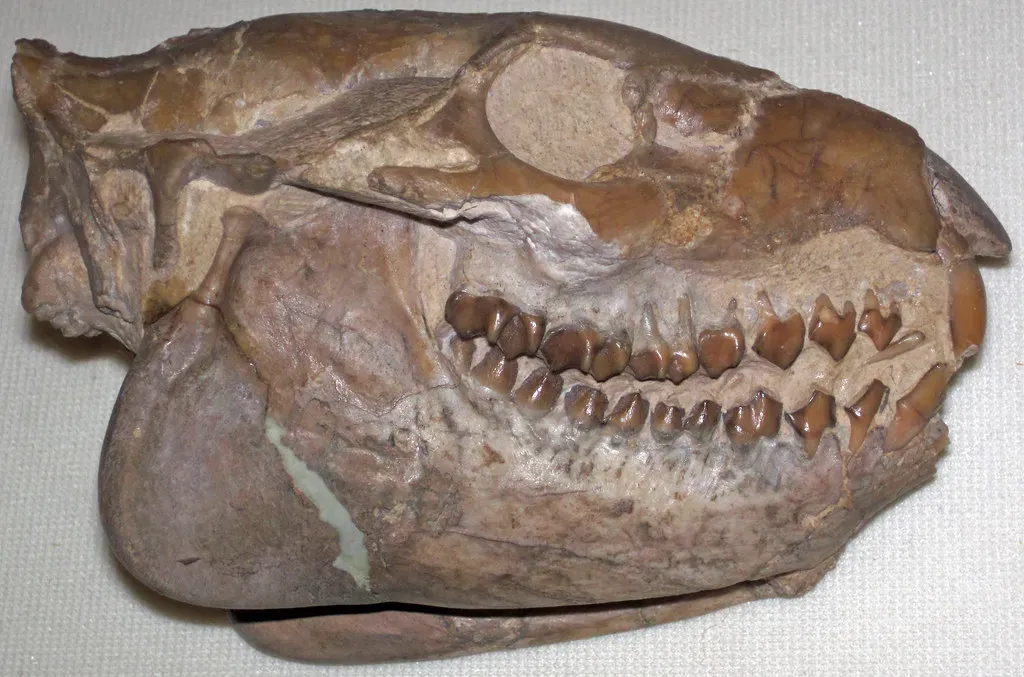
Cronopio was impressive enough, but paleontologists working in Argentina weren’t finished. Paleontologists in Argentina discovered a 231-million-year-old saber-toothed creature that bears an uncanny resemblance to Scrat. Officially named Pseudotherium argentinus, meaning “false Theria from Argentina,” its fossilized remains were unearthed in Ischigualasto alongside two of the oldest dinosaurs known to date.
It wasn’t a squirrel, or even technically a mammal. Instead, it was classified as a mammaliamorph, a group of close mammal relatives living 231 million years ago. Pseudotherium may have been quite closely related to an ancestor of mammals, but it lacked the distinct expanded brain regions that separate mammals from their predecessors. It predates Cronopio by well over a hundred million years and existed when the earliest dinosaurs were only just appearing on Earth.
The species had a very long, flat, and shallow snout, and its very long fangs located almost at the tip of the snout, so the resemblance to Scrat is described by its discoverer as “tremendous.” Dr. Martínez and colleagues used high-resolution CT scans of the specimen to study its internal structure, and the scans revealed a developed inner ear and structural features suggesting the animal was warm-blooded. That’s a remarkably sophisticated set of traits for something living before the age of dinosaurs even properly began.
#5: What These Discoveries Actually Tell Us About Early Mammal Evolution
Ancient mammal fossils are still exceedingly rare, mostly because of their small sizes. Finding even a partial skull from the Mesozoic era is considered a significant event. As a result, paleontologists know of roughly one genus of mammal for every million years between 65 million and 220 million years ago, making for a woefully incomplete record. Each new find, then, carries a weight far beyond what its modest size might suggest.
While Scrat may resemble real ancient creatures in certain ways, the species shown in the movie has never actually existed. Paleontologists have yet to find a true saber-toothed squirrel at any time during squirrels’ evolutionary history. There were squirrels during the last ice age, including all the squirrel species you see today, but Douglassciurus, the oldest squirrel genus, first appears in the fossil record about 40 million years ago. Scrat, then, would have been living tens of millions of years before squirrels of any kind even existed.
The Scrat comparison, according to researchers, actually proves an important point: it just goes to show how diverse ancient mammals are, that we can imagine some bizarre critter and later find something just like it. That’s not a small statement. It implies that the shapes life gravitates toward are more finite than we might expect, and that animators sketching prehistoric creatures on a deadline can, entirely by accident, land on something that once actually walked the Earth.
The deeper takeaway here isn’t just that Scrat had real-world cousins of a sort. It’s that prehistoric mammal diversity was extraordinary, often stranger than anything Hollywood imagined, and we’ve only found fragments of it. Every time a paleontologist crawls across a remote Argentine hillside, the fossil record gets a little less incomplete. What they keep finding is that life has always been weirder, more varied, and more inventive than our best guesses. Sometimes a cartoon squirrel turns out to be the best preview of a truth that was buried in stone for 94 million years.

- 8 Amazing Landmarks To See When Visiting Dakota - July 14, 2026
- 23 Things Hospice Vets Wish Every Family Knew Before a Dog's Final Weeks - July 14, 2026
- 10 Unique Facts About The ‘Lost World’ of Madagascar - July 14, 2026