

Most people picture the desert as a place of stillness and stone. Vast, featureless, almost hostile. What they rarely expect is color. Not just a stray bloom clinging to a crack in the rock, but sweeping waves of purple, gold, white, and pink stretching to the horizon. The desert holds this secret close, releasing it only when everything lines up just right.
Many desert wildflowers are annual plants that complete their entire life cycle from germination to flowering to seed production within a single growing season, racing through that cycle in a matter of days or weeks before heat and drought return. There’s something deeply compelling about that. A flower that has waited years, sometimes decades, for its single opportunity. These ten rare desert blooms are exactly that kind of patient, extraordinary miracle.
#1. The Night-Blooming Cereus (Queen of the Night)
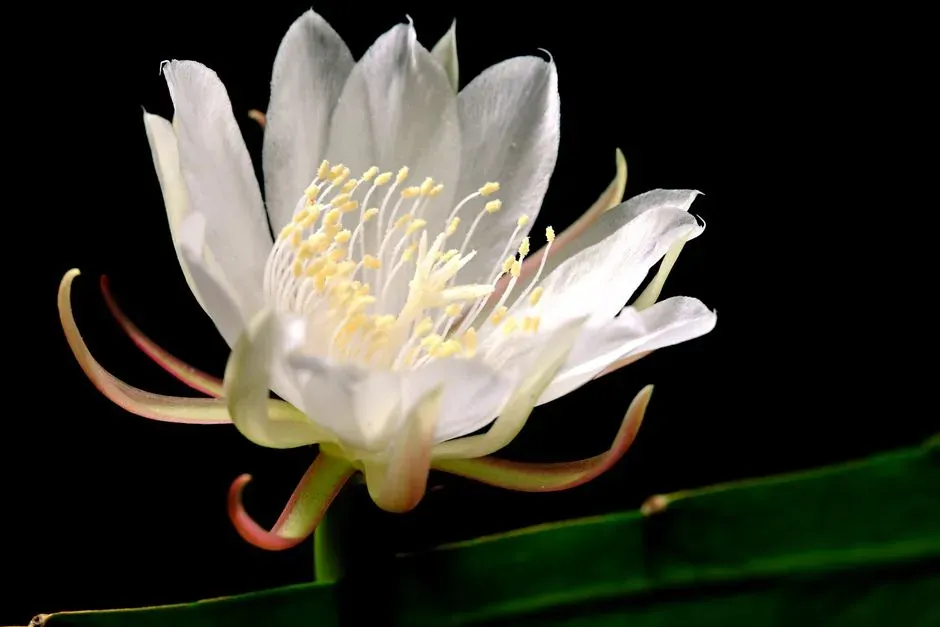
There’s no flower in the desert that plays harder to find than the Night-Blooming Cereus. It resembles nothing more than a dead bush most of the year and is rarely seen in the wild because of its inconspicuousness, but for one midsummer’s night each year, its exquisitely scented flower opens as night falls, then closes forever with the first rays of the morning sun. That’s it. One night. No second chances.
These very fragrant trumpet-shaped flowers, which bloom for only one night in June or July, are up to four inches wide and as much as eight inches long. The Queen of the Night is native to the Sonoran Desert in Arizona and Mexico, where it hides in plain sight for fifty-one weeks a year before staging its dramatic, single-evening performance. For anyone lucky enough to witness it, the encounter feels almost unreal.
#2. The Atacama’s Añañuca (Rhodophiala Flowering Desert)
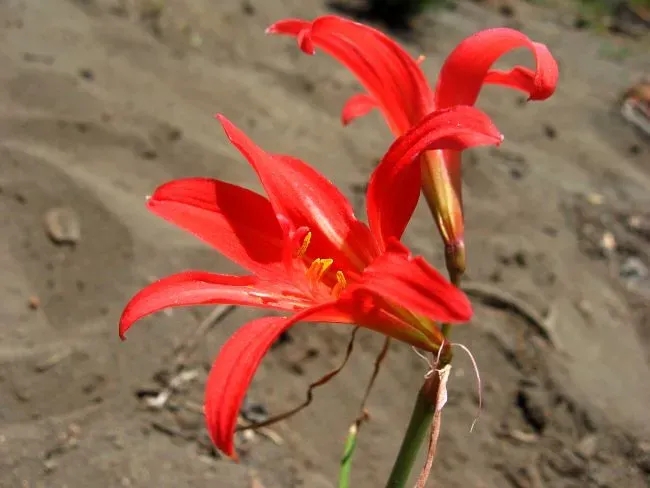
The Atacama Desert is an inhospitable stretch of land west of the Andes Mountains that normally gets just two millimeters of rain every year. In a place like that, flowers shouldn’t exist at all. Yet when rain does come, pink Añañucas create vast carpets that look almost artificial in their intensity.
The Desierto Florido, or flowering desert, is a rare phenomenon that occurs when a perfect balance of rainfall, humidity, and temperature awakens seeds that have lain dormant beneath the arid soil for years. This phenomenon typically occurs every five to eight years, though climate patterns are making predictions increasingly difficult. The Añañuca is the undisputed star of that spectacle, a deep rose-pink bulb flower that transforms barren hillsides into something that looks painted.
#3. The Desert Lily (Hesperocallis undulata)
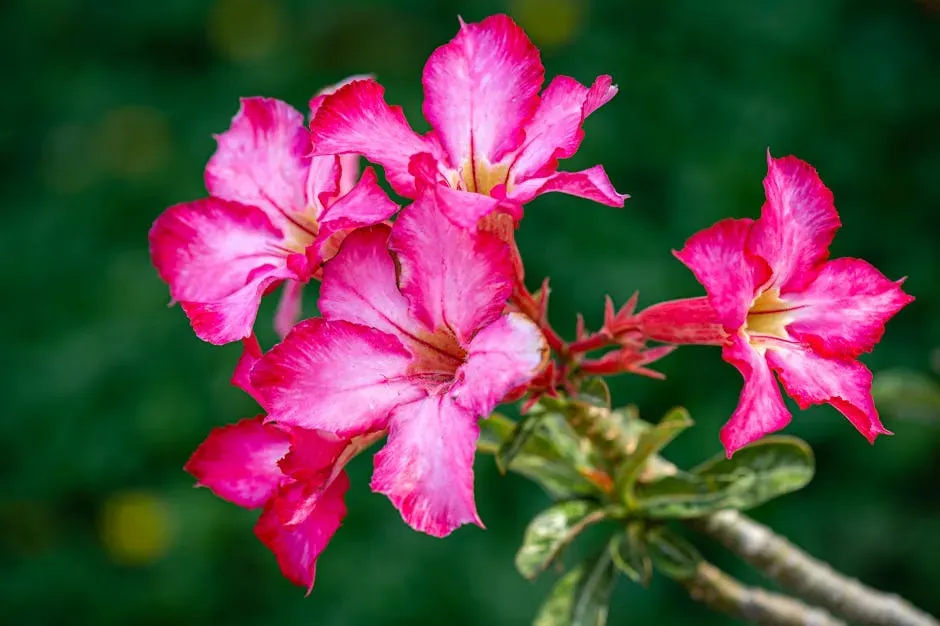
Limited in its range to the desertlands of southern California and southwestern Arizona, the desert lily resembles a small Easter lily, and during dry seasons the plants do not bloom at all, but following wet winters each deeply buried bulb sends up a vigorous shoot. That patience is what makes finding one so rewarding. It simply refuses to appear unless the conditions are worth it.
The desert lily pushes through dry sand, and when it blooms it gives off white, star-shaped flowers that smell sweet, usually blooming after rare winter rains and often popping up in the middle of nowhere like a surprise gift. The bulbs were dug and eaten by Native Americans, and because of their flavor were called ajo (garlic) by Spanish pioneers, which eventually gave the town of Ajo in southwestern Arizona its name. History and botany, quietly knotted together in a single bloom.
#4. The Ghost Flower (Mohavea confertiflora)
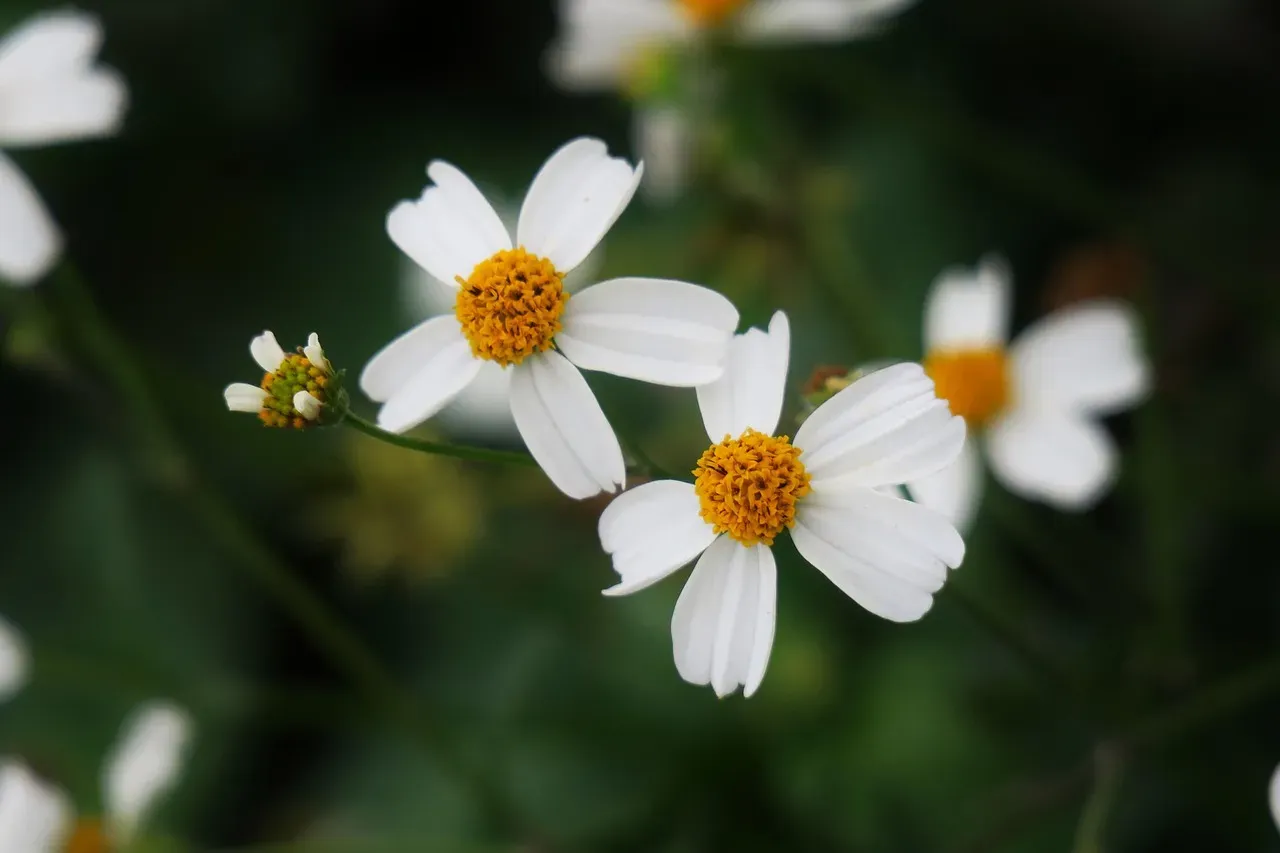
The Ghost Flower earns its name on two levels. It’s pale, almost translucent in appearance, and it’s rarely seen in any meaningful numbers. The ethereal Ghost flower uses mimicry to survive, tricking pollinators into thinking it offers nectar. It mimics the desert blazing star, drawing in bees that have already learned to associate that flower’s appearance with a reward. The Ghost Flower offers no reward at all.
This small, cream-and-purple annual grows only in the Mojave Desert of California and Arizona, emerging briefly in early spring after sufficient winter rain. To survive desert extremes, these plants produce large numbers of seeds that can lie dormant in the soil for years or even decades, and because only a fraction of seeds sprout in most years, seeds accumulate in the soil seed bank during extended dry periods. When a good rain year finally arrives, the Ghost Flower materializes like a rumor turned true.
#5. The Desert Five-Spot (Eremalche rotundifolia)
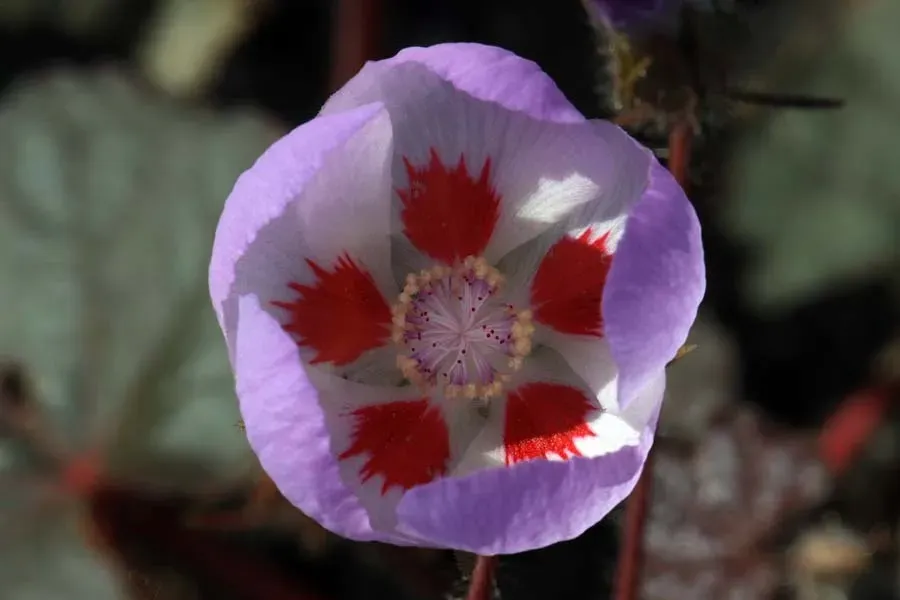
If you’ve spent time in the Mojave during a bloom year, you’ve likely seen the Desert Five-Spot without knowing its name. It’s a rounded, papery pink globe with five dark magenta spots at the base of its petals, one of the most visually distinctive wildflowers the desert produces. For a super bloom to fully materialize, temperatures must remain above freezing and below the mid-seventies, and winds need to stay relatively calm, conditions the Five-Spot needs just as much as any other desert ephemeral.
A deep soaking, gentle rain is essential for a desert floral display: a rainstorm of at least a half inch is needed to wash the protective coating off wildflower seeds and allow them to sprout, and for plants to continue growing, rainstorms must come at evenly spaced intervals throughout the winter and spring. Miss even one of those intervals and the Desert Five-Spot stays underground, waiting for a better year. It’s a bloom that rewards the patient and the lucky in equal measure.
#6. The Sand Verbena (Abronia villosa)
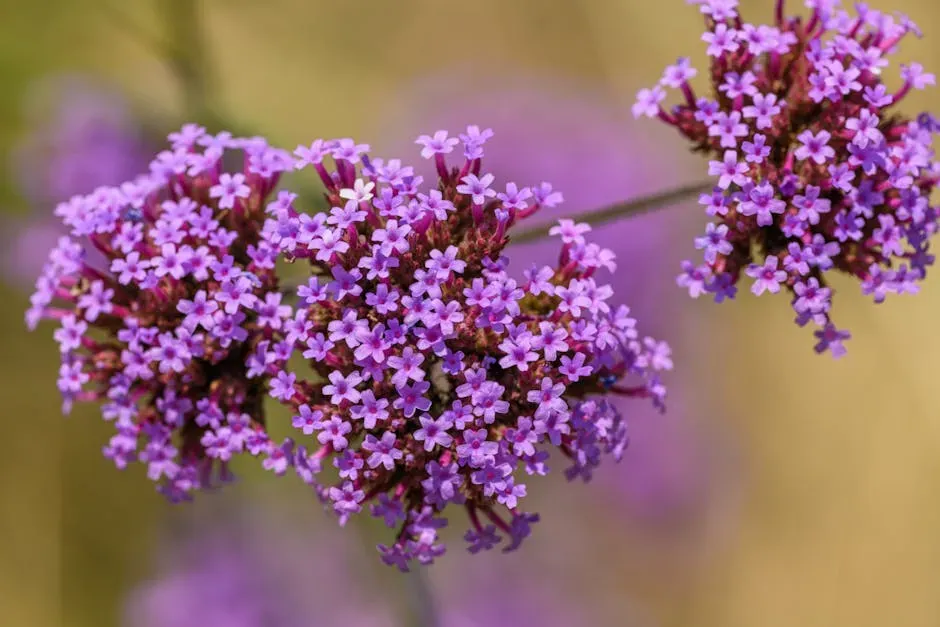
The Sand Verbena is a delicate desert flower native to the deserts of the southwestern United States and northern Mexico, characterized by its pink or purple flowers and its ability to thrive in sandy and rocky soils, blooming in the spring and summer and often found growing in washes and along roadsides. In a superbloom year, it’s the flower that makes the desert floor look like it’s been lit from within.
After a good rain, the sand verbena turns dry land into a carpet of color, growing in clusters and producing bright purple or pink flowers that look almost too cheerful for the desert, with a sweet scent that spreads with the breeze especially in the early morning or late evening. Sand verbena leaves are covered with a dense growth of short, soft hairs which retard the loss of moisture, a quiet adaptation that makes all that extravagant color possible in the first place.
#7. The Saguaro Cactus Blossom (Carnegiea gigantea)
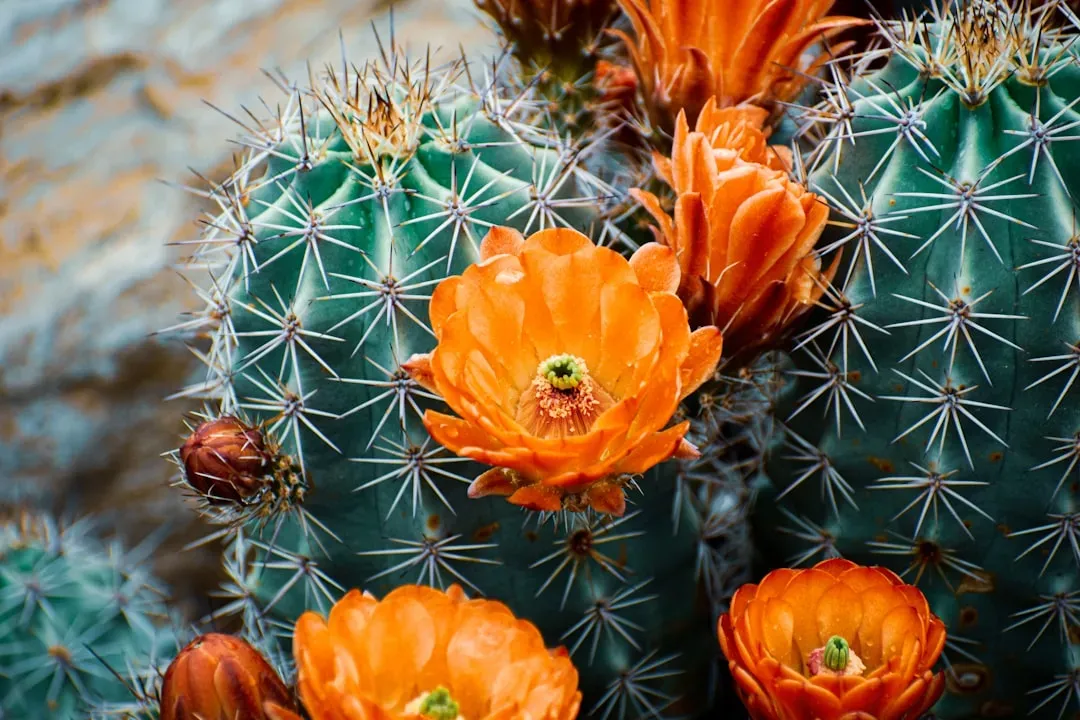
The Saguaro itself is famous. Its flower is a different story entirely. This giant cactus grows tall and spiny, but in late spring it surprises everyone with large, creamy white flowers that open at night, are pollinated by bats and bees before closing again the next day, bloom at the very top of the plant, and are actually Arizona’s state flower. Most people standing beside a Saguaro never think to look up.
Blossoms form as huge bud clusters at the branch tips, opening a few at a time each night, usually in May, and remain open until mid-afternoon of the following day. By blooming en masse during good years, wildflowers can attract large numbers of pollinators such as butterflies, moths, bees, and hummingbirds that might not otherwise visit Death Valley and other desert regions. The Saguaro’s bloom is brief, nocturnal, and strangely easy to miss. It’s worth a deliberate late evening walk to catch it.
#8. The Namaqualand Daisy (South Africa’s Desert Spectacle)
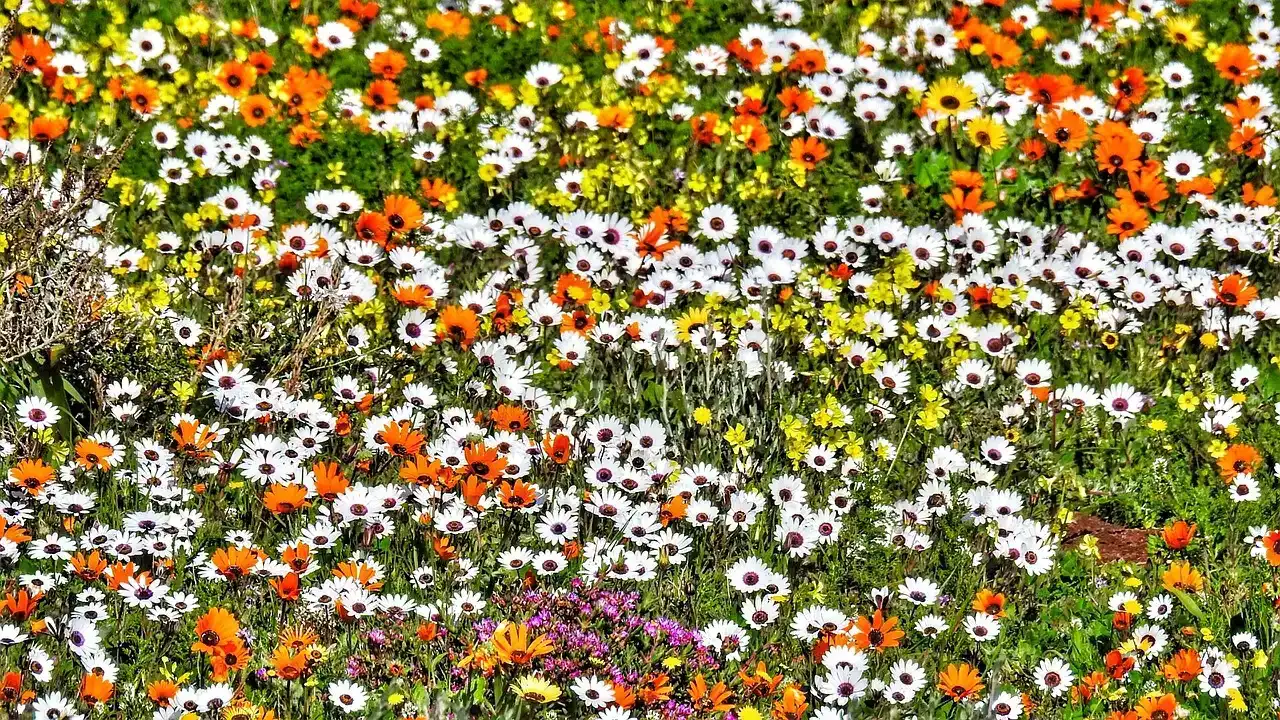
In South Africa’s Namaqualand, a strip of semi-arid desert along the country’s north-west corner transforms from a dusty, dry, and barren land into something extraordinary, triggered by winter rains and cooler spring temperatures, as swathes of bright orange, yellow, pink, and white flowers suddenly appear almost overnight. Few other places on Earth produce a bloom display quite this dramatic on a near-annual basis.
Namaqualand boasts a remarkable diversity of plant species, many of which are endemic to the region, with over 3,500 plant species recorded and nearly a third of these found nowhere else on Earth. The annuals, such as the famed Namaqualand daisy, squeeze all of their growing, flowering, and setting of seed between late winter and the end of spring, making up for these short life cycles by producing prolific amounts of seed, which once set into the surrounding soil remains dormant for some time. A lifetime compressed into weeks.
#9. The Dune Evening Primrose (Oenothera deltoides)
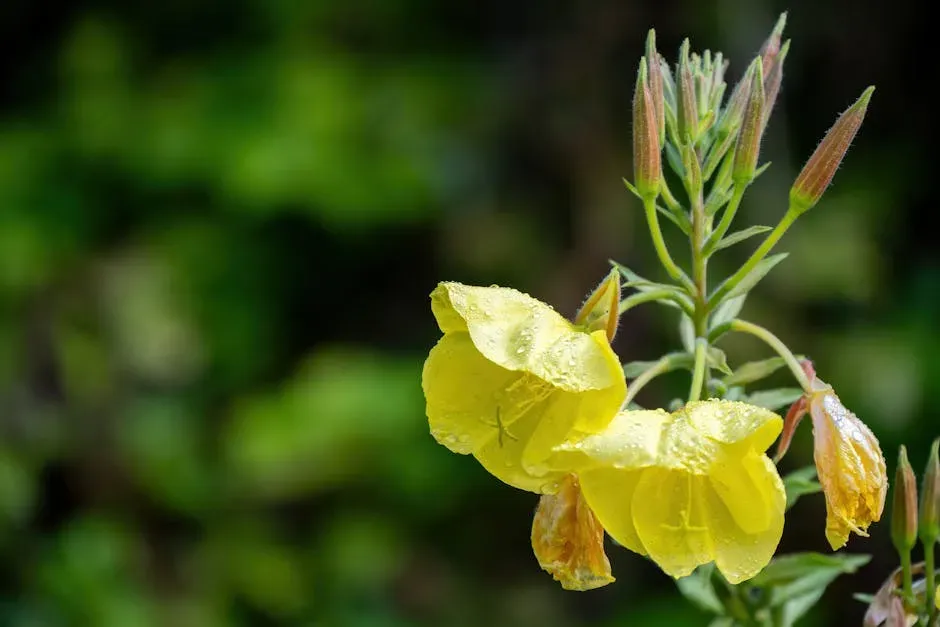
White, wide-petaled, and almost luminous in the low desert light, the Dune Evening Primrose is one of the most photographed flowers of the American Southwest’s bloom season. It grows on shifting sandy dunes and open flats, appearing in pale, fragrant clusters after the right combination of autumn rain and mild winter temperatures. The types of blooms that occur depend on a mysterious code of rainfall, temperature, and wind conditions, with some years netting a larger bloom than others, and desert wildflowers showing their glory when given just the right amount of well-spaced rains from winter through early spring, as well as warm sunlight and little or no desiccating winds.
Creamy white flowers with yellow centers clustered near the ends of the branches or stems open during the cooler desert nights and close during the heat of the day, normally by midday. That daily opening and closing cycle is part of what makes the Evening Primrose so captivating. It tracks the temperature with extraordinary sensitivity, and in a superbloom year, entire dune fields go white with its blossoms, only to close tight by afternoon as if the show never happened.
#10. The California Poppy’s Desert Cousin (Eschscholzia glyptosperma)
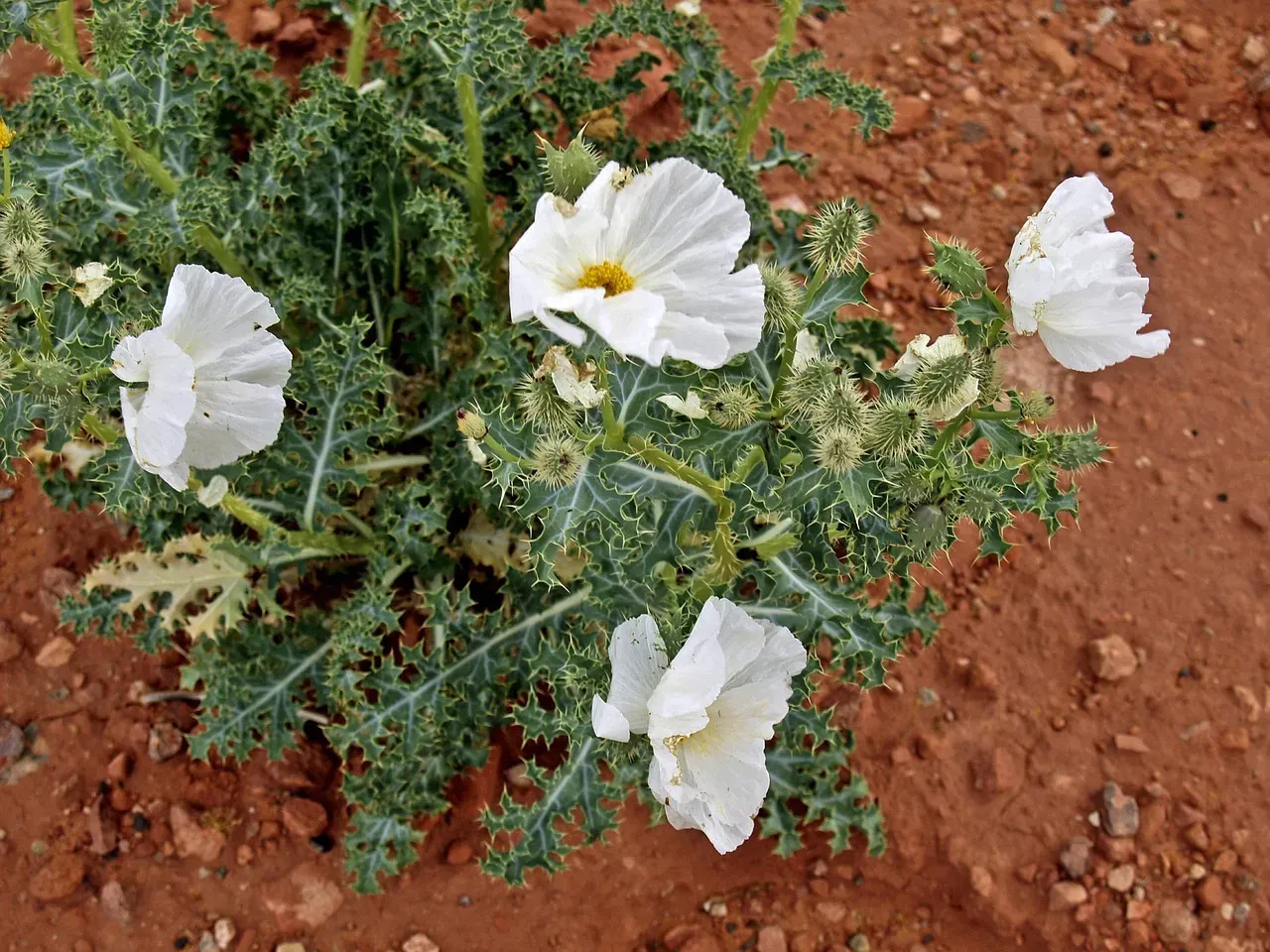
Closely related to the orange California poppy, the desert species is a bright yellow annual that, following warm, wet winters, sends clusters of glorious blooms dotting the hillsides in late February or early March, and by April they may cover the slopes with a blanket of gold interwoven with the blue threads of lupines and purple patches of owlclover. It’s one of the most visually striking combinations the desert produces.
The 2026 bloom has been fueled by record-breaking rainfall across the Southwest, followed by favorable temperatures, essentially checking every box for a strong bloom year, with fields of flowers stretching for miles in some areas and drawing visitors from around the world. Super blooms are brief, and extreme heat and wind can quickly end the display, with some lower-elevation blooms already peaking early in 2026 due to a March heat wave. The desert poppy understands urgency better than almost any living thing. It blooms hard and fast, then disappears, leaving nothing behind but seeds and the memory of gold.
Why These Blooms Matter Beyond Their Beauty
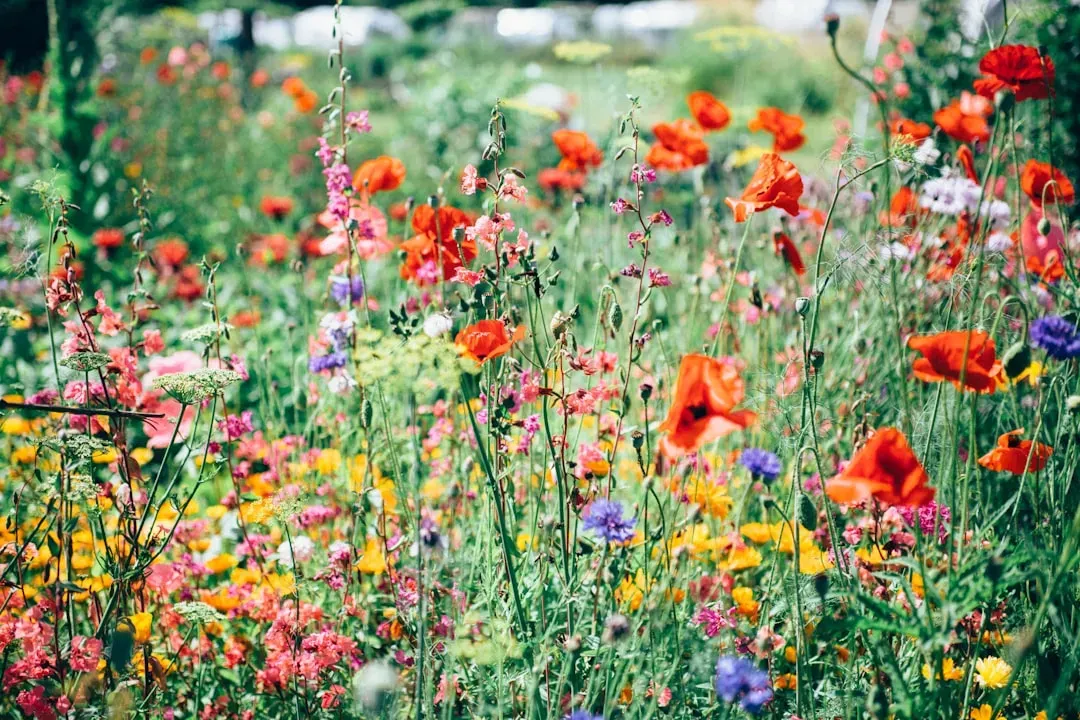
For flowers to bloom in the spring, native plants must survive years of drought, herbivory, and habitat disturbance, and they must also overcome obstacles brought on by climate change such as plant-pollinator temporal mismatch, in which earlier high temperatures signal plants to bloom before their pollinator has emerged for the season. The bloom isn’t just a visual event. It’s an ecological negotiation that’s becoming more fragile every year.
The effect of a superbloom is so significant that park visitation often surges dramatically, with tourists arriving in large numbers drawn by the rare spectacle while scientists take the opportunity to study how extreme ecosystems respond to climate variability. Visitors should stay on marked trails to avoid trampling the delicate wildflowers and biological soil crusts, since leaving marked trails can crush wildflowers before they set seed, disrupting the soil seed bank that makes future super blooms possible. Witnessing these flowers is a privilege. Protecting the conditions that make them possible is a responsibility.
The desert has always known how to keep a secret. These ten flowers are proof of that. They don’t bloom on demand, don’t follow a calendar, and can’t be coaxed by wishful thinking. They wait for the world to meet them exactly where they need it to, and when it finally does, they offer something genuinely unrepeatable. There’s a lesson in that kind of patience, whether or not you’re a botanist.
