
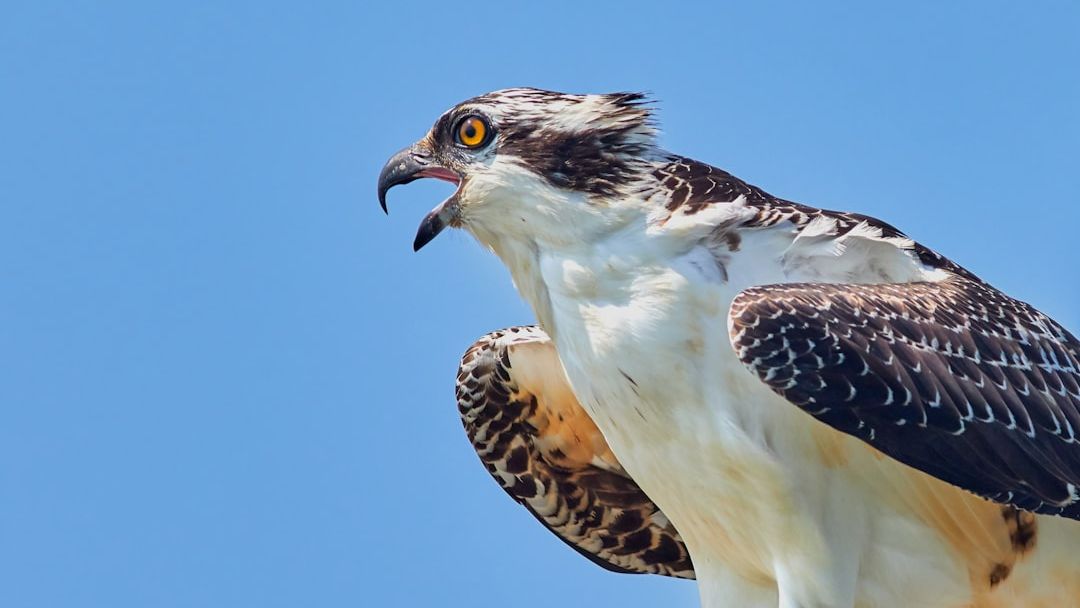
Few birds on Earth have committed so completely to one thing. While most raptors hedge their bets, hunting whatever the landscape offers, the osprey made a different choice millions of years ago. It went all in on fish.
This is the osprey, a hunter so specialized that its entire anatomy revolves around one pursuit: catching fish. Every physical feature, every behavioral quirk, every clever instinct they possess has been refined over time with a single objective in mind. The result is one of the most precisely engineered predators alive. Here’s what makes them genuinely extraordinary.
#1. They Stand Alone in Their Own Taxonomic Family
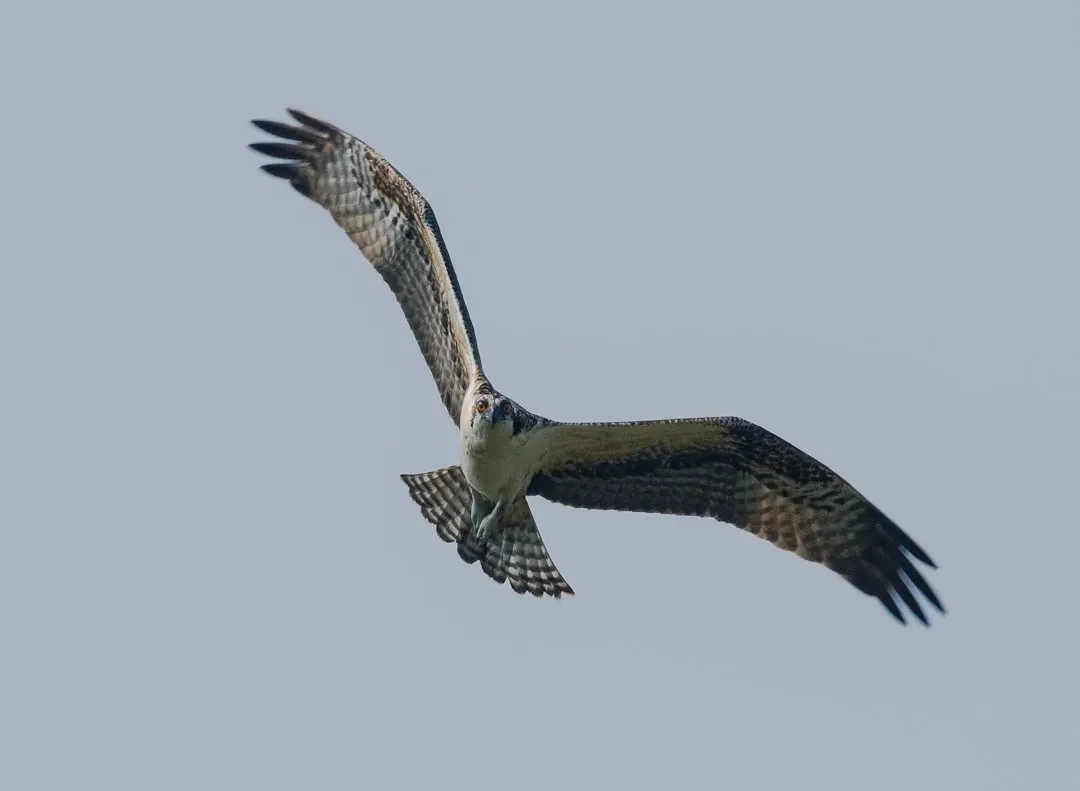
Most birds of prey share family trees with dozens of cousins. The osprey doesn’t. While eagles and hawks diversified their diets and tactics, ospreys carved out a niche so specific they earned their own taxonomic family. That family is Pandionidae, and it contains exactly one species.
This extreme specialization means ospreys belong to their own unique family, entirely separate from all other hawks and eagles. Scientists recognize four subspecies distributed across different parts of the globe, though most authorities currently treat them under the single species Pandion haliaetus. It’s a level of biological distinction that very few birds on the planet can claim.
#2. Their Eyes Can Correct for Water Refraction
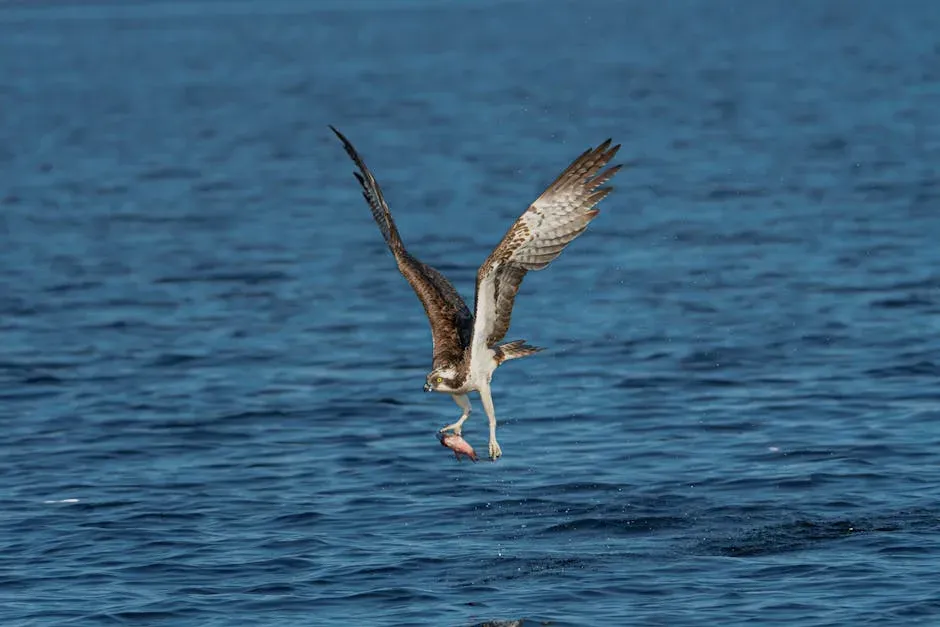
Spotting a fish from 30 meters up isn’t just about sharp vision. The real challenge is that water bends light, which shifts the apparent position of anything beneath the surface. In addition to physiological vision attributes, ospreys use behavioral adaptations that make them effective at catching fish underwater. They position themselves at steeper angles relative to their potential prey, which is crucial to reduce the effect of refraction caused by the water.
Ospreys have incredible vision. Visual adaptations that allow them to spot fish below the water include two foveas in each eye that give them a wide angle of sharp focus, a structure in the eye called a “pecten” composed of photoreceptor cells that enable greater visual resolution, and special muscles called Crampton’s muscles, allowing their ocular lenses to see prey at great distances. It’s a complete optical system built for hunting through a reflective surface.
#3. They Have a Third Eyelid That Protects on Impact
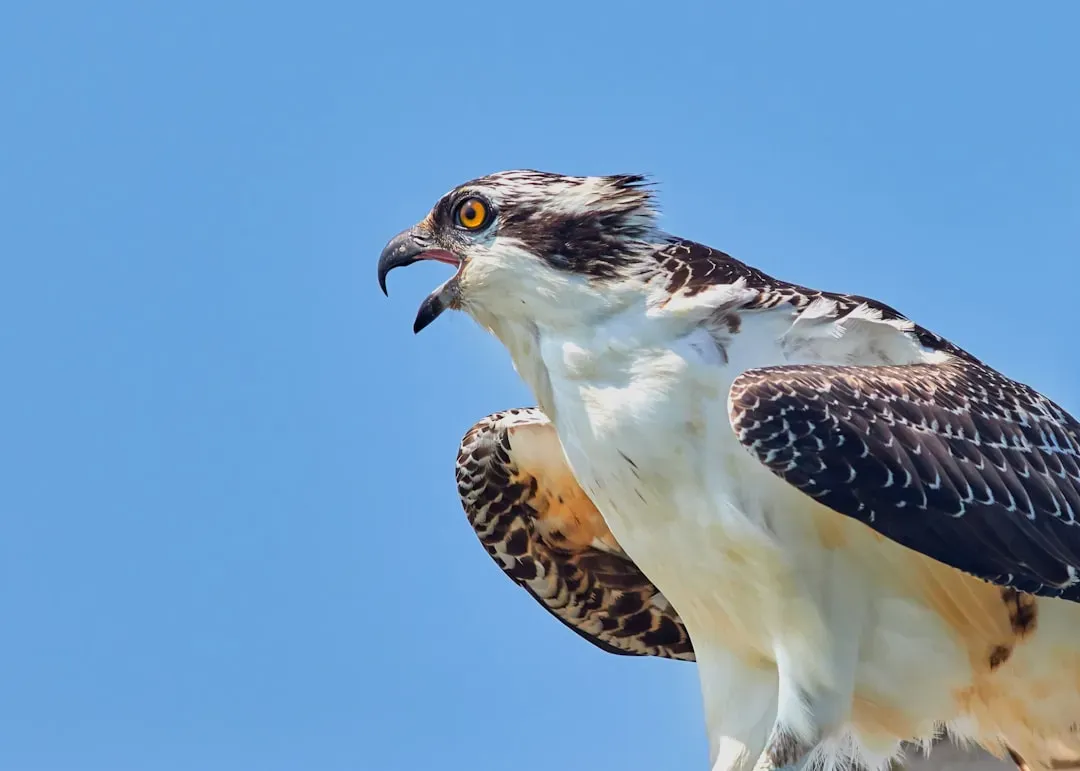
Hitting water at high speed with your eyes open sounds like a fast way to go blind. Ospreys have that problem solved. Their eyes are adapted for proficiency in hunting fish in another way, as they have a third transparent eyelid, or a nictating membrane, which protects the eye upon impact with the water. It snaps shut at precisely the right moment.
Ospreys commonly soar above water to hunt at heights of up to 40 meters, and can plummet downwards at a speed of 125 kilometers per hour. At these altitudes, excellent vision is a must for being able to see a potential catch. A high density of receptors in the eye enables this excellent, clear vision. The nictating membrane lets them keep tracking the prey right up to the moment of impact, then shields the eye as they submerge.
#4. Their Outer Toes Are Fully Reversible
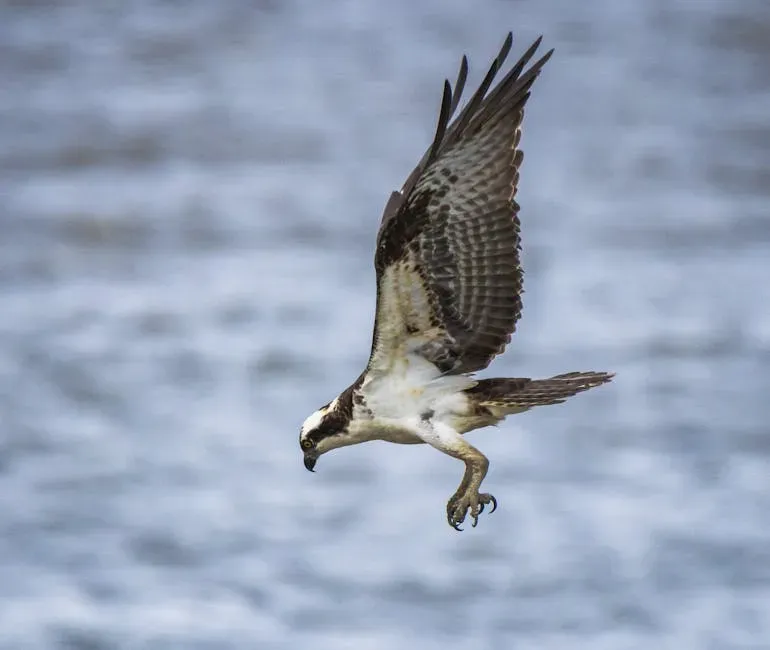
Most raptors grip prey with three toes pointing forward and one pointing back. The osprey has a trick the others don’t. Two of the osprey’s toes face forward while two face backward. They can change the position of their toes from this configuration to having three forward and one back. This helps these birds get a better grip on prey.
Their answer to holding a live, slippery fish is a reversible outer toe, a biological feature unique among North American raptors. Combined with their curved talons, this rotational grip essentially locks around a struggling fish. The strength in their leg muscles is also used to hold the fighting fish still and suspend it mid-air in a head-first aerodynamic position, until arriving at a perch to dine peacefully.
#5. Tiny Spines on Their Feet Prevent the Fish from Slipping
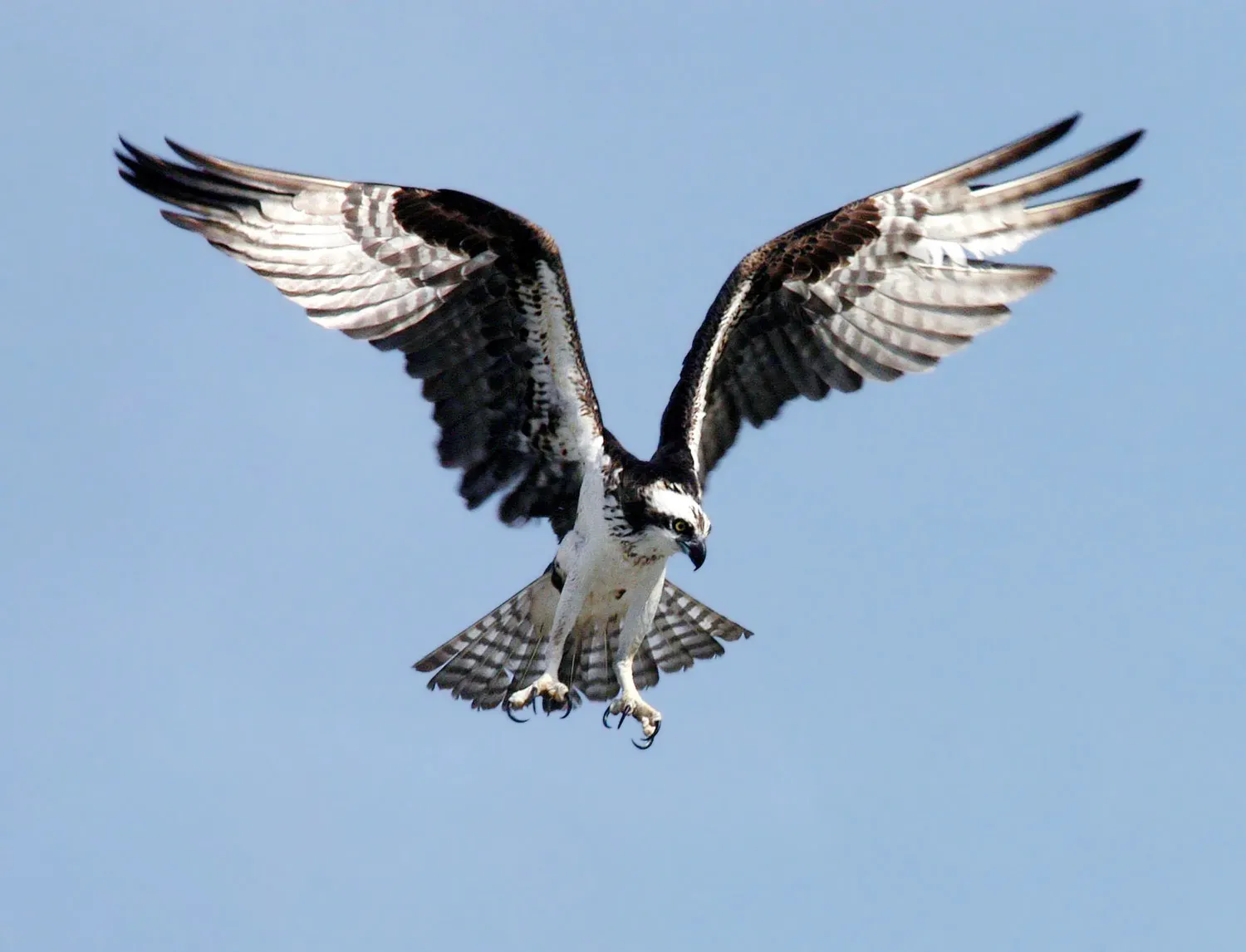
Even with a reversible outer toe, a wet fish is a genuinely difficult thing to hold onto. Ospreys deal with this through a surface texture most people never notice. The osprey’s sharp and curved talons pierce the unsuspecting fish, while the grippy, ridged skin on the underside of their feet, called spicules, prevent the fish from slipping away.
Ospreys have huge, scaly feet and razor-sharp claws that give a tight grip on wet fish. Small spines called spicules on the underside of the toe pads enhance their grip further. The birds’ outer toes are reversible too, giving extra maneuverability when catching and holding onto fish. It’s a multi-layered grip system, and every layer serves a purpose.
#6. They Can Close Their Nostrils Underwater
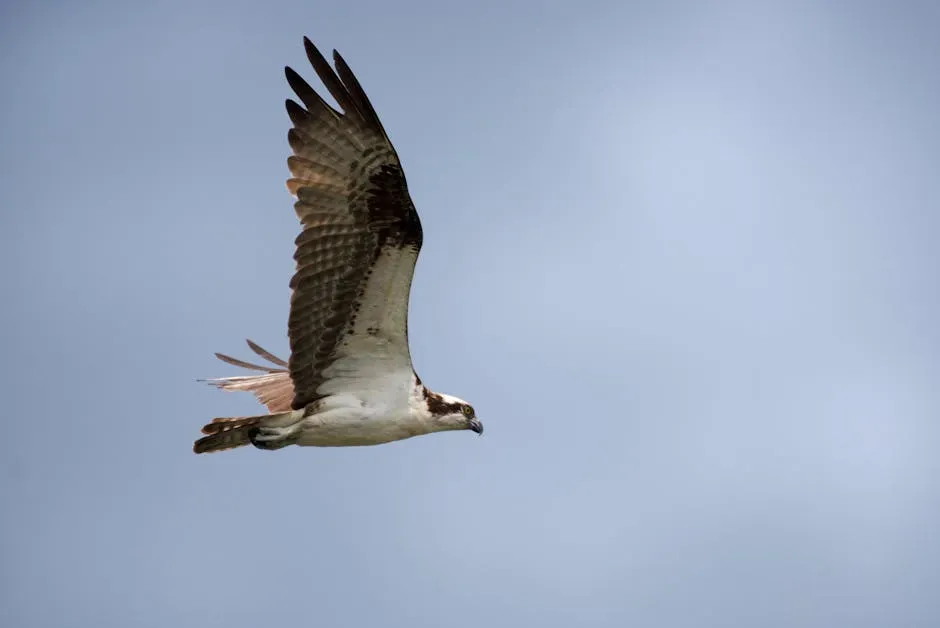
A full-speed plunge into water, head and all, creates obvious problems for any animal that breathes air. When ospreys are underwater, they can close their nares, or nostrils, to prevent water from flowing in. It’s one of several anatomical features that allow them to submerge completely without consequence.
Unlike other fish-eating birds of prey, ospreys can dive feet-first all the way into the water, getting soaked from head to talon, and still fly away with their meal. The impact creates a white plume of spray, and the bird emerges by vigorously flapping its strong wings to gain lift, a feat made easier by its water-resistant plumage. This method of full submersion is unique among raptors.
#7. They Rotate Caught Fish to Face Headfirst in Flight
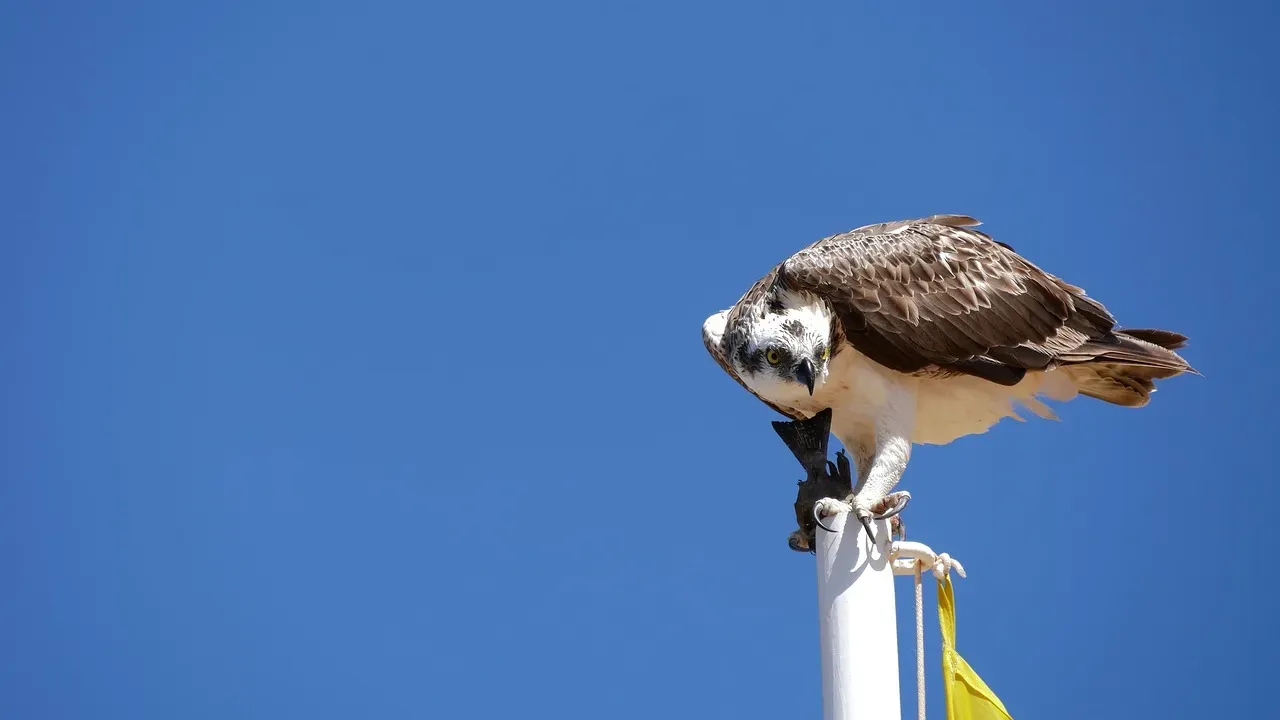
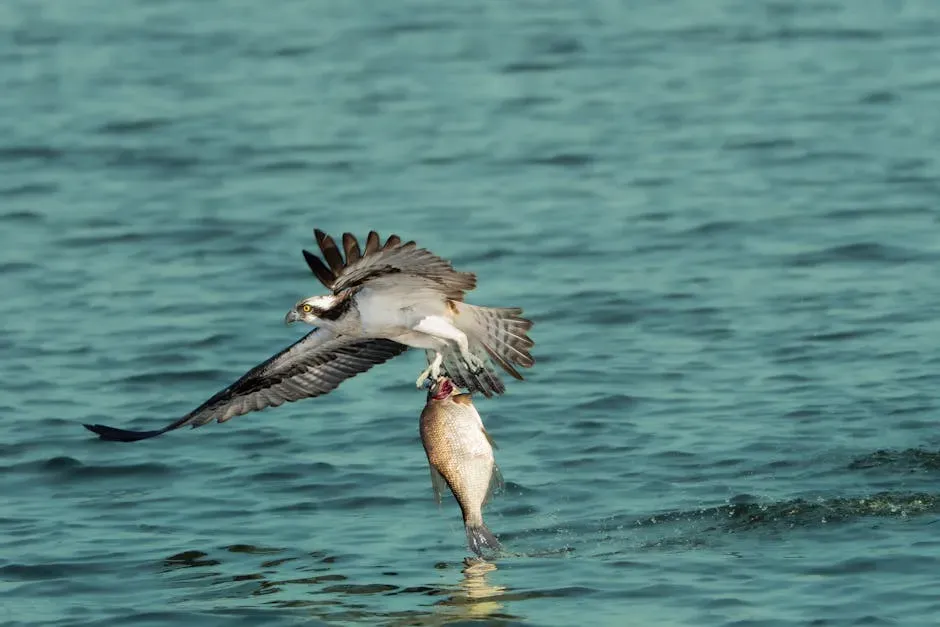
Carrying a fish while flying is a drag problem, literally. A fish held sideways creates wind resistance that makes every meter of flight back to the nest more costly. Immediately upon lifting off from the water, a successful osprey will perform a critical mid-air adjustment of its catch. The bird uses its specialized feet to rotate the fish so that it is held head-first beneath its body, aligning the fish with the direction of flight. This aerodynamic orientation significantly reduces wind resistance, making the heavy load easier to transport back to a feeding perch or the nest.
After catching a fish, ospreys often fly high above the water and orient the fish headfirst, reducing wind resistance and making it easier to carry. This behavior is something unique to ospreys, as most other raptors do not need to reposition their prey in this way. It’s a small behavioral detail that reveals a great deal about how thoroughly they’ve optimized for this lifestyle.
#8. Fish Makes Up Nearly Their Entire Diet
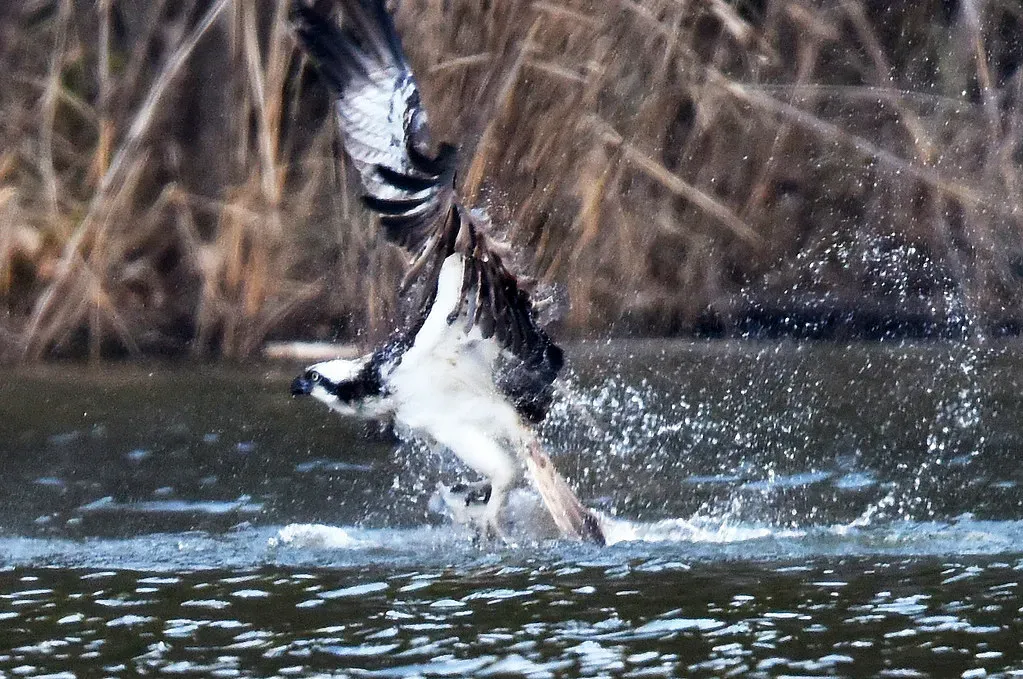
Many predators will diversify when their preferred food is scarce. Ospreys are about as committed to fish as any animal gets. Ospreys demonstrate unparalleled expertise as fish-eating raptors, with nearly all of their diet consisting of fish species. Their hunting prowess combines remarkable precision with specialized adaptations that make them one of nature’s most efficient aquatic predators.
Fish comprises the vast majority of an osprey’s diet, typically targeting shallow-water species measuring 6 to 16 inches like trout, bass, and carp. Adult ospreys consume 300 to 400 grams of fish daily. Observations of ospreys hunting and consuming other kinds of prey have been linked with periods of hunger due to the scarcity of fish. Periods of bad weather, partially frozen bodies of water, fish die-offs, or other circumstances cause fish to become scarce. Fish is essentially the default, and everything else is a last resort.
#9. They Use Three Distinct Hunting Methods
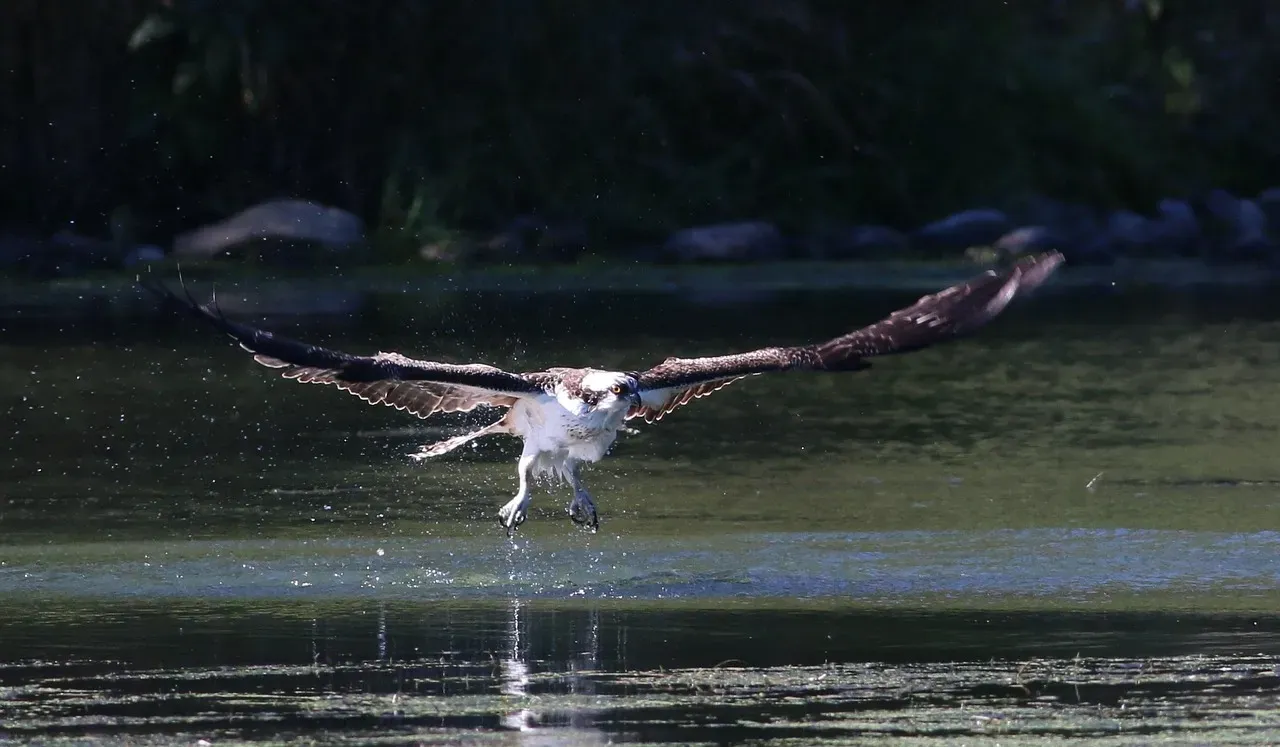
The dramatic plunge dive is what most people picture when they think of an osprey hunting. It’s spectacular, but it’s only one of their techniques. Three distinct hunting methods are employed by these skilled predators: hover fishing, perch hunting, and direct plunge techniques. Hover fishing represents the most common approach, where ospreys maintain stationary flight positions 30 to 130 feet above water surfaces while scanning for prey movement. Birds execute this technique for 3 to 10 minutes before either diving or moving to new locations. Perch hunting involves ospreys positioning themselves on elevated structures like dead trees, poles, or rocks overlooking productive fishing areas.
Ospreys use an image-search approach to find and identify their preferred fish. Studies have shown that some ospreys prefer certain species of fish over others, as preferred fish are caught in numbers that are not consistent with the amount available in nature. There’s clearly more active decision-making happening up in that hover than it might appear from the ground.
#10. They Migrate Thousands of Miles and Return to the Same Spot
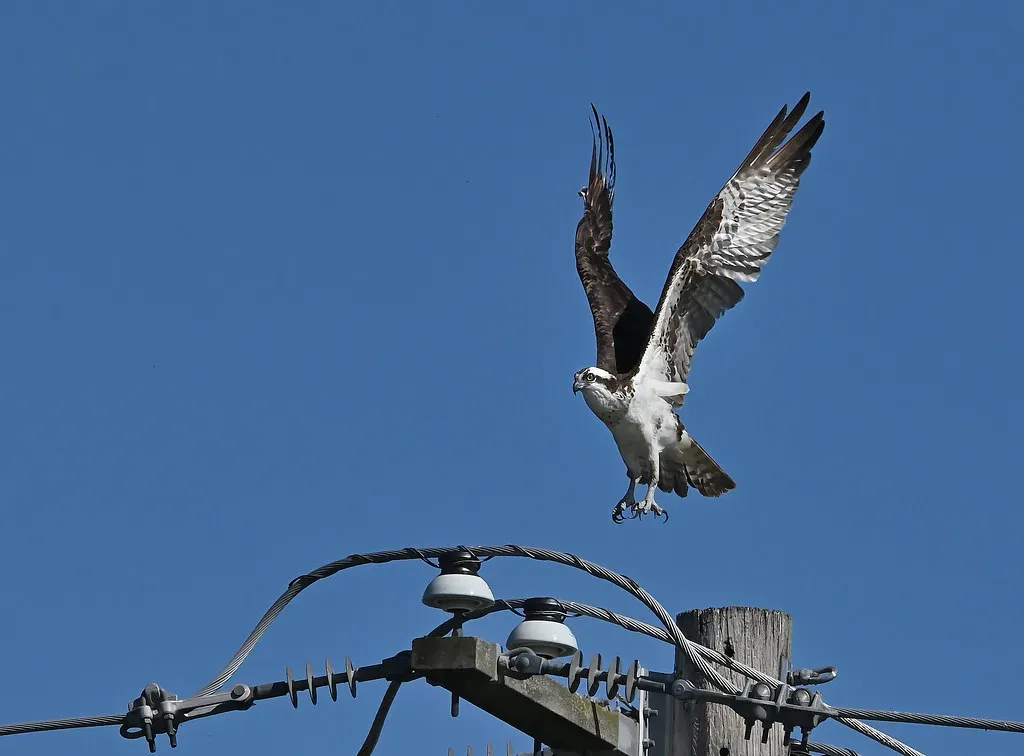
The navigation abilities of ospreys are genuinely difficult to fully explain. Satellite-tracked individuals migrate more than 8,000 kilometers each year, yet many return to the same perch within a few hundred meters of where they were born. Across continents, across oceans, back to essentially the same patch of shoreline.
Northern osprey populations undertake extensive migrations to wintering grounds in Central America, South America, Africa, and Southeast Asia. Some individuals cover remarkable distances during their lifetime migrations, traveling thousands of miles between breeding and wintering territories. Southern populations may remain year-round residents in suitable climates. Over a lifetime, ospreys can travel over 250,000 kilometers in total. That’s a staggering cumulative distance for a single bird.
#11. They Came Back from the Brink of Extinction
Perhaps the most remarkable fact about ospreys isn’t a physical adaptation at all. It’s their story of survival. During the 1950s to 1970s, osprey populations declined by roughly ninety percent along the US East Coast. Habitat destruction, illegal shooting, and the contamination of their food source due to the use of the pesticide DDT decimated the population. The collapse was swift and severe.
North American breeding pairs increased from fewer than 8,000 pairs in 1970 to over 240,000 pairs by 2019, representing a roughly 30-fold population increase within five decades. Globally, the osprey is now classified as a species of Least Concern by the International Union for Conservation of Nature. It’s one of conservation’s clearest success stories, proof that when the right protections are put in place, nature can recover in ways that genuinely surprise us.
A Bird That Earned Every Advantage It Has
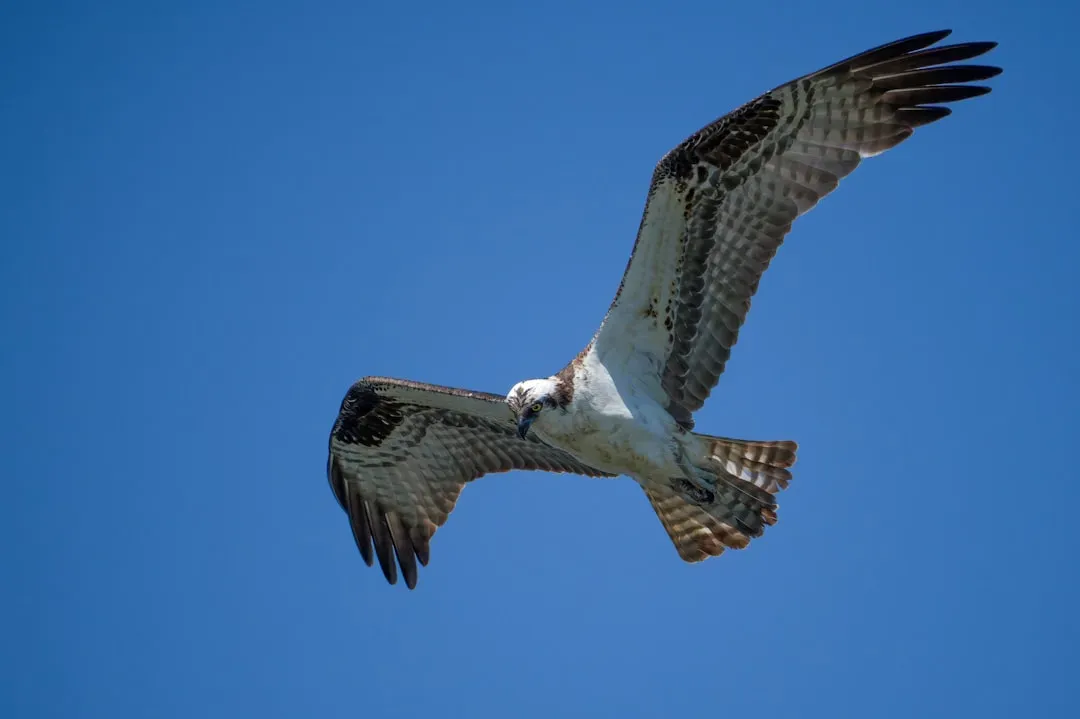
The osprey isn’t a generalist that stumbled into fishing. It’s a precision instrument shaped by millions of years of evolutionary pressure, fine-tuned from the angle of its dive to the texture of its toe pads. Every feature connects to every other feature, all of it serving the same purpose.
What makes ospreys worth paying close attention to isn’t just the spectacle of the hunt. It’s the layered intelligence behind it, biological, behavioral, and navigational, stacked into one bird that decided, a very long time ago, to become the best fish hunter in the sky. On balance, that bet paid off.

- How Did Reindeer Become a Symbol of Christmas? - July 19, 2026
- 10 Facts About The Endangered Jaguarundi - July 19, 2026
- Why Labrador Retrievers Remain a Southern Favorite in Georgia and the Carolinas - July 19, 2026