

Imagine the sound echoing across ancient battlefields, a harsh, brassy roar that sent chills down the spines of Roman soldiers. That sound hasn’t been heard in nearly two millennia, yet a stunning archaeological discovery in England is bringing us closer to understanding the terrifying symphony of Iron Age warfare. The find has experts buzzing with excitement, not just because of what it is, but because of who might have wielded it.
What makes this discovery truly remarkable is where it was found. Buried in West Norfolk, in the very heart of territory once controlled by the Iceni tribe, this ancient war trumpet might have played a role in one of history’s most legendary uprisings. The connection to Queen Boudica, a warrior queen who nearly drove the Romans from Britain, makes this more than just an artifact. It’s a potential window into a rebellion that shook an empire.
An Extraordinary Find Beneath English Soil
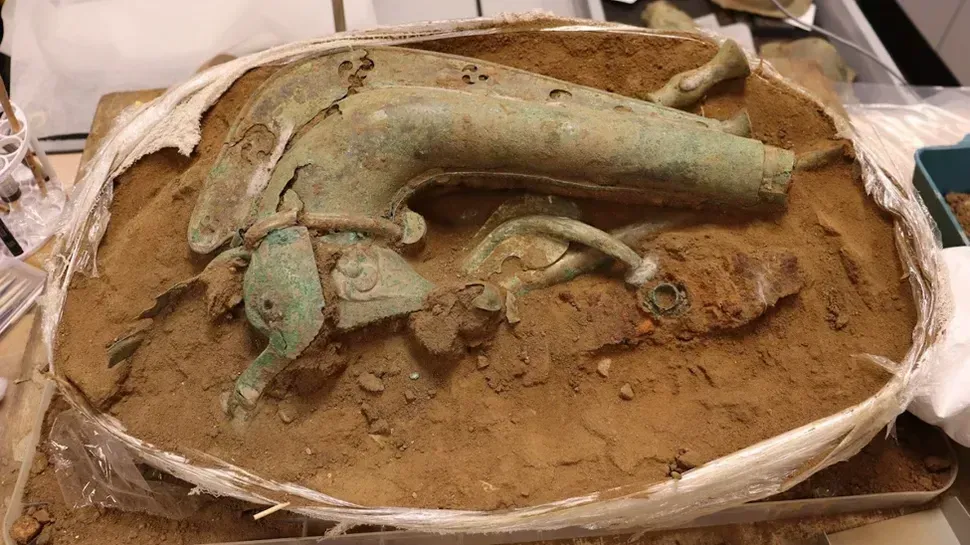
The battle trumpet, known as a carnyx, was part of a hoard of metal artifacts discovered ahead of residential construction in West Norfolk last year. What started as routine excavations before a housing development turned into something archaeologists dream about their entire careers. Mark Hinman, chief executive of Pre-Construct Archaeology, described it as “a once-in-a-career find,” adding that in over 40 years of archaeological work, he had never seen anything like this.
The sheer completeness of the instrument sets it apart from anything else found across the continent. The carnyx is just the third one found in Britain and the most complete example found anywhere in Europe. Think about that for a moment: of all the ancient war trumpets discovered from Scotland to Spain, this one survived in the best condition. The instrument retains its mouthpiece, pipe, and decorative bell.
A Weapon of Sound and Terror

The carnyx was distinguished by its elongated vertical shape and animal-headed bell, used by Celtic tribes across Europe to intimidate enemies and rally warriors during battle, standing up to two meters tall and producing a loud, brassy, almost roaring sound designed to echo across battlefields. Picture warriors hoisting these massive instruments above their heads, the bronze animal heads appearing to snarl and howl at approaching enemies. It wasn’t just music. It was psychological warfare at its finest.
Conservators described the instrument as being made from exceptionally thin metal sheets that survived over two millennia underground, a rarity given how fragile such objects are. The fact that something so delicate endured through countless seasons, soil shifts, and time itself borders on miraculous. Honestly, it’s hard to imagine how terrifying these instruments must have been when freshly polished bronze gleamed in the sunlight, amplifying their menacing appearance.
The Iceni Connection and Boudica’s Rebellion
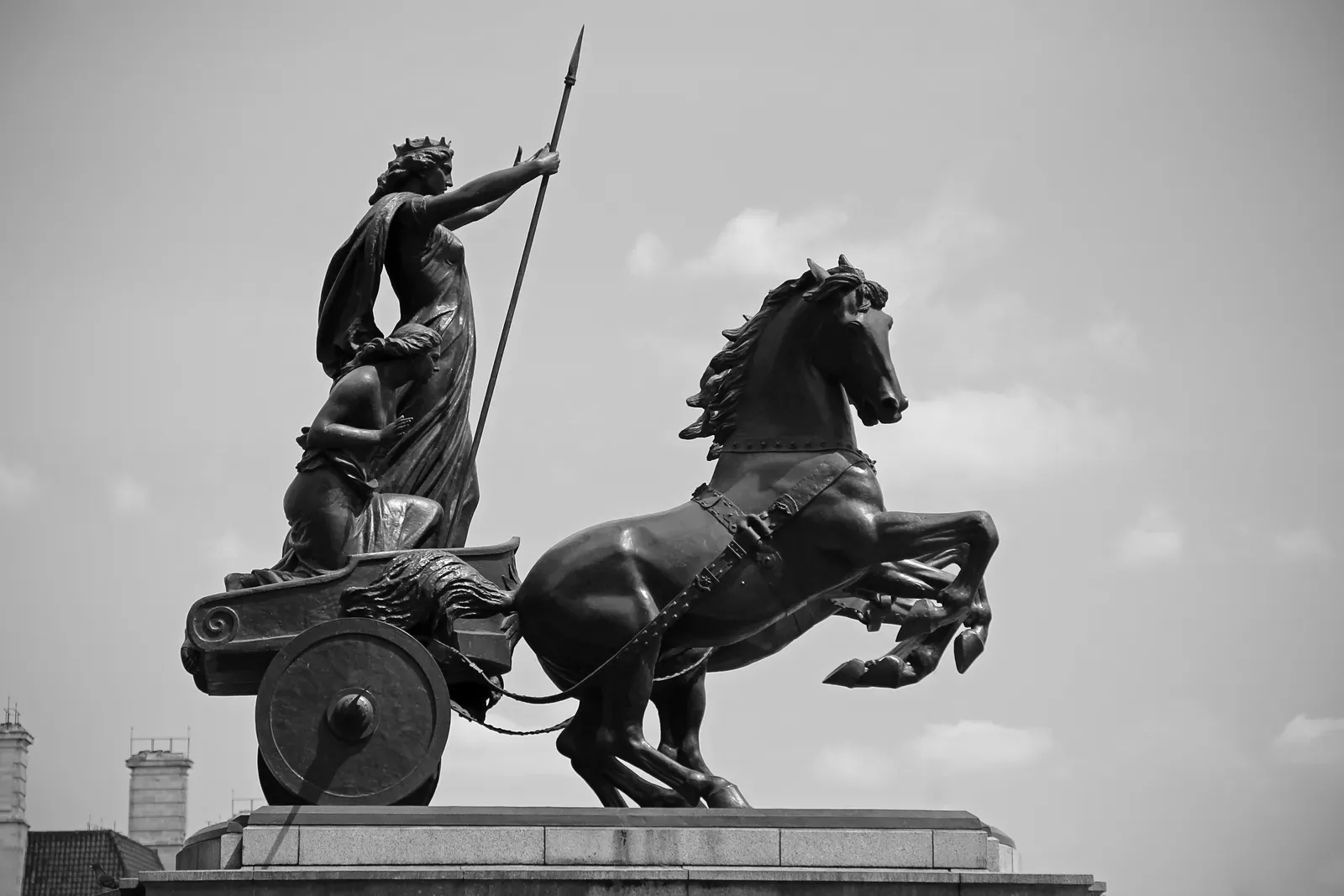
The haul was buried around 2,000 years ago and is linked to the Celtic Iceni tribe which occupied the region, who famously revolted against Roman rule in 60 or 61 AD under the leadership of their queen, Boudica. This geographical connection is no coincidence. The discovery’s location is deep within the territory of the Iceni tribe, the Celtic clan that rose to prominence under Queen Boudicca during her legendary uprising against Roman occupation.
In A.D. 60, Boudica, queen of the powerful Iceni tribe that was based in what is now Norfolk, led a revolt against the Romans, though Boudica and the Iceni were defeated, paving the way for the Roman rule of Britain. Her uprising nearly succeeded in driving the invaders out. Cities burned, thousands died on both sides, and for a brief moment, it seemed the Romans might lose their grip on Britain. Whether this very trumpet sounded during those desperate battles remains uncertain, yet the timing and location make it tantalizingly possible.
More Than Just a Trumpet

The carnyx wasn’t discovered alone. It was found alongside a collection of other Iron Age artifacts, including pieces of another carnyx, five shield bosses, and a bronze boar’s head battle standard. The boar’s head is particularly significant. Military standards served as battlefield rallying points, and the boar was a potent Celtic symbol representing strength, courage, and ferocity.
The presence of both the carnyx and the boar standard suggests that the hoard may have belonged to a high-status warrior, chieftain, or ceremonial retinue. These weren’t everyday items that any soldier carried. They were symbols of power and authority. Someone important once owned these treasures, someone who commanded respect and led warriors into battle. The question of whether they were buried by the Iceni themselves or taken as spoils by Roman victors adds another layer of mystery to an already captivating find.
Preserving the Past With Modern Technology

To preserve the delicate artefacts, specialists removed them inside a solid block of soil before scanning and conservation began. This technique prevents fragile objects from crumbling the moment they’re exposed to air and modern conditions. Imagine the care required, treating a chunk of earth like a precious jewel, knowing that inside lies something irreplaceable.
Historic England is now working closely with Norfolk Museums Service and the National Museum of Scotland, a leading authority on carnyx research, to study the objects in detail. Scholars believe the find could transform our understanding of Iron Age soundscapes, ritual practice, and warfare. The collaboration between institutions demonstrates how significant this discovery truly is. When multiple national heritage organizations mobilize together, you know something special has emerged from the earth.
What This Discovery Means for History

Let’s be real, finds like this are exceptionally rare. Archaeologists have made what they’re calling a “once-in-a-lifetime” discovery in Norfolk, England, unearthing the most complete Iron Age war trumpet ever found in Europe. The implications extend far beyond just adding another item to a museum collection. This carnyx will help researchers reconstruct not just the sounds of ancient warfare, but the entire sensory experience of Iron Age battle.
The discovery will be featured in the second episode of BBC Two’s Digging for Britain on January 14, 2026, at 9pm, offering viewers an unprecedented look at these extraordinary artifacts and the people who once wielded them in battle. Soon, the public will get to see what archaeologists have been marveling over. Perhaps most exciting is the possibility that the trumpet’s sound might be recreated, allowing us to hear across the centuries what Roman legionaries heard as Celtic warriors advanced toward them, carnyces blaring their terrible song.
Conclusion
This discovery reminds us that history isn’t confined to dusty textbooks or distant museum displays. It’s literally beneath our feet, waiting to be uncovered. The carnyx and its companion artifacts offer a tangible connection to a pivotal moment when Celtic Britain stood defiant against the might of Rome. Whether these objects belonged to Boudica’s warriors or were captured by Roman victors, they witnessed events that shaped the future of an entire island.
The most complete war trumpet ever found in Europe has survived two thousand years underground to tell its story. As conservation work continues and researchers unlock more secrets from this remarkable hoard, we move closer to understanding not just what happened, but what it felt, sounded, and looked like to live in that tumultuous age. What do you think these artifacts can still teach us about ancient warfare? Let us know your thoughts.
