
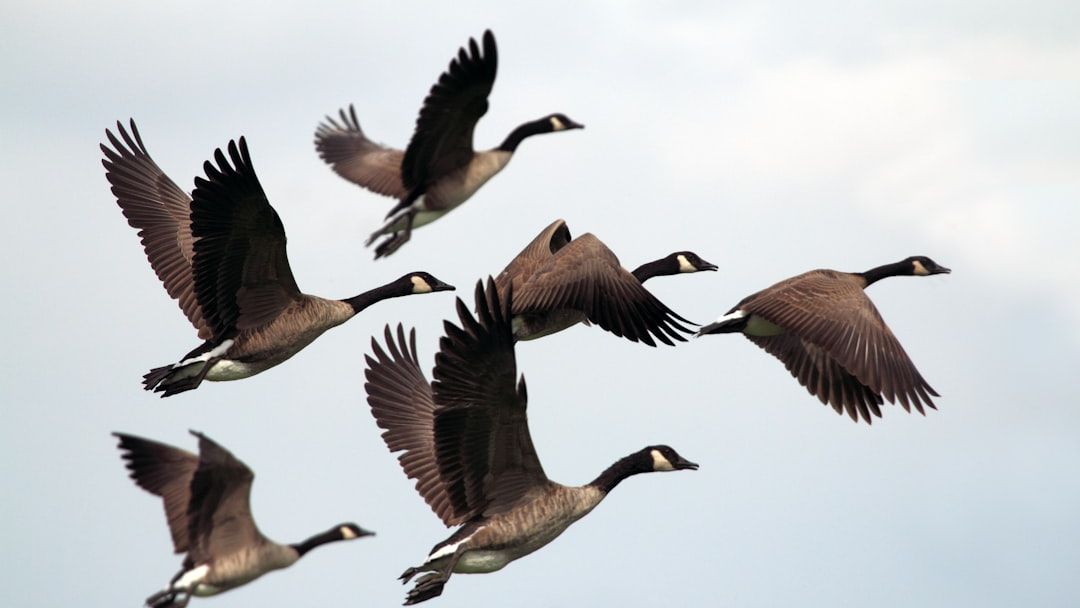
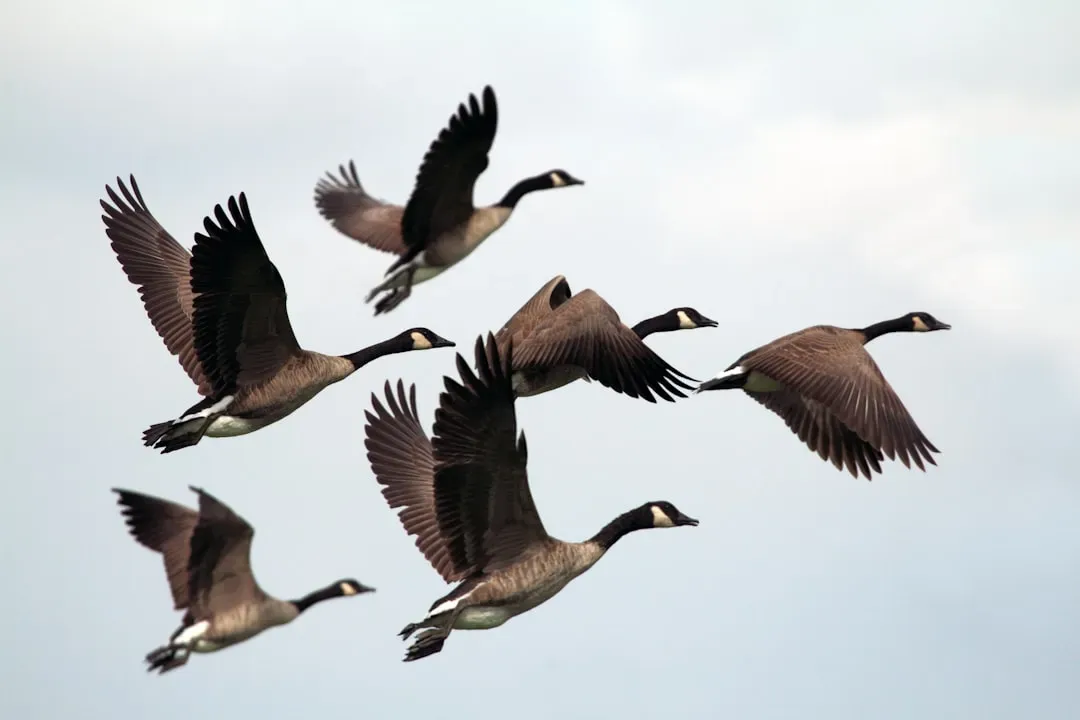
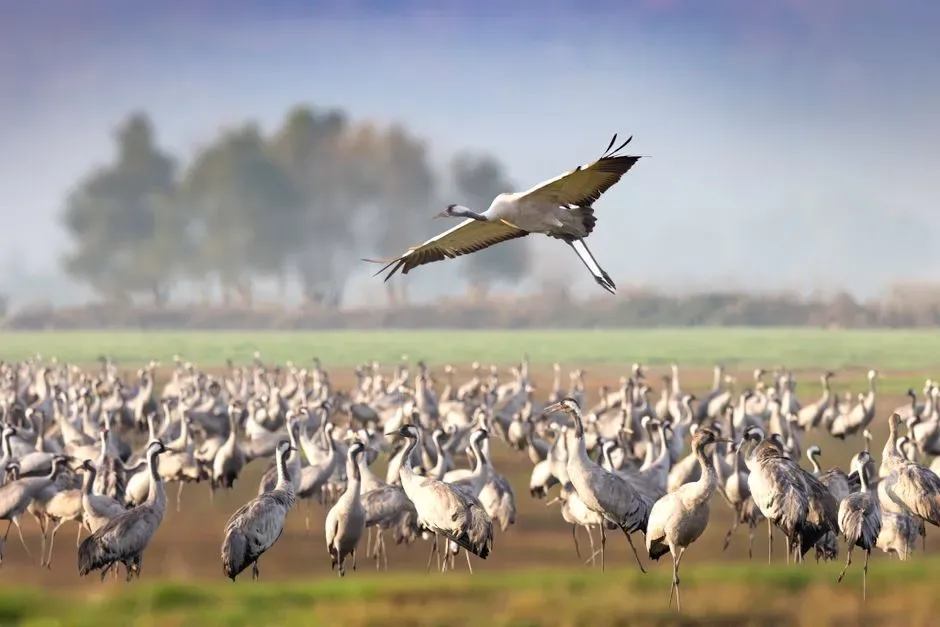
Every autumn, flocks of birds set off on journeys that span continents and oceans, often returning to the exact same nesting sites year after year. Their ability to find the way without maps or landmarks has puzzled observers for generations.
Recent ideas from quantum biology suggest the answer may lie in something far stranger than ordinary senses, something happening at the level of individual molecules inside the eye itself.
The Ancient Puzzle of Long Distance Navigation

Birds have crossed vast distances for millions of years, guided by cues that remain only partly understood. They respond to the sun, stars, and even the Earth magnetic field, yet none of these explanations fully accounts for their precision during cloudy nights or over featureless seas.
Researchers have long suspected an internal sense that detects magnetic direction directly. This sense appears tied to light, because many species lose their orientation in complete darkness.
Quantum Biology Steps Into the Conversation
Quantum effects were once thought too fragile for warm, wet living systems. Yet certain chemical reactions inside cells can preserve delicate quantum states long enough to influence behavior. Migratory birds may rely on one such reaction to read the planet magnetic field.
The idea connects everyday biology with principles once confined to physics labs. It proposes that the birds compass operates through entangled particles rather than conventional magnetic materials.
Cryptochrome Proteins as the Likely Sensor
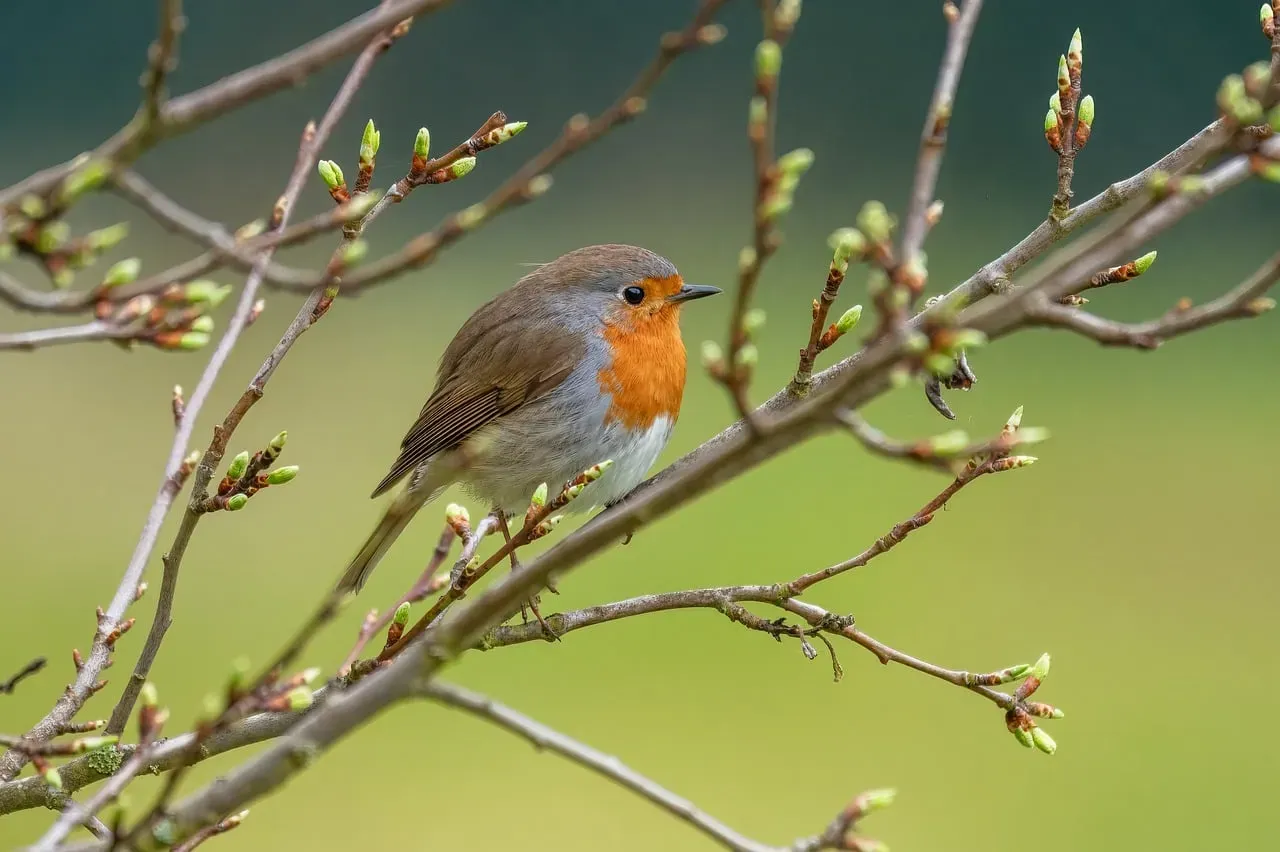
Special proteins called cryptochromes sit in the retina of many bird species. When struck by blue light, these molecules form pairs of radicals whose electron spins can become entangled. The entanglement lasts just long enough for the magnetic field to tip the balance between two possible outcomes.
Different orientations of the field produce slightly different chemical signals. The bird brain may interpret these signals as directional information, much like a compass needle swinging toward north.
Entanglement Inside Living Tissue
Entanglement links two particles so that measuring one instantly affects the other, regardless of distance. In the bird eye, this link forms between electrons in the radical pair. The Earth weak magnetic field can alter the pair spin state before the entanglement collapses.
The process repeats thousands of times per second across many protein molecules. The accumulated effect gives the bird a continuous sense of magnetic heading even while the bird is in flight.
Laboratory Clues That Support the Model
Experiments with isolated cryptochrome molecules show magnetic sensitivity under controlled conditions. Birds whose cryptochrome genes are altered often lose their ability to orient correctly in artificial magnetic fields. These results line up with predictions from quantum models rather than classical alternatives.
Further tests involve changing the light wavelength that reaches the eye. Only certain wavelengths trigger the radical pair reaction, and only those wavelengths preserve the birds directional sense.
Remaining Questions and Open Pathways
Direct proof of entanglement inside a living bird remains difficult to obtain. The radical pair mechanism fits the data better than competing ideas, yet alternative explanations involving iron based sensors have not been ruled out entirely. Ongoing work focuses on measuring spin states in real time within intact retinas.
Advances in sensitive detectors and genetic tools may soon clarify whether entanglement truly operates in nature or whether the effect is an interesting laboratory curiosity.
A Broader View of Nature Hidden Mechanisms

If the quantum compass proves real, it would show that evolution discovered and harnessed entanglement long before physicists named it. The same principle might appear in other animals or even in human cells, though evidence for that remains speculative at present.
Such findings remind us that the boundary between the quantum world and everyday life may be thinner than textbooks once suggested. Birds may simply be the most visible example of a deeper pattern still waiting to be mapped.

- 10 Remarkable Facts About the African Cheetah: The Lightning of the Grasslands - July 29, 2026
- 10 Most Heroic Horses in History - July 29, 2026
- Why You Should Never Play Dead When Attacked by a Black Bear - July 29, 2026