
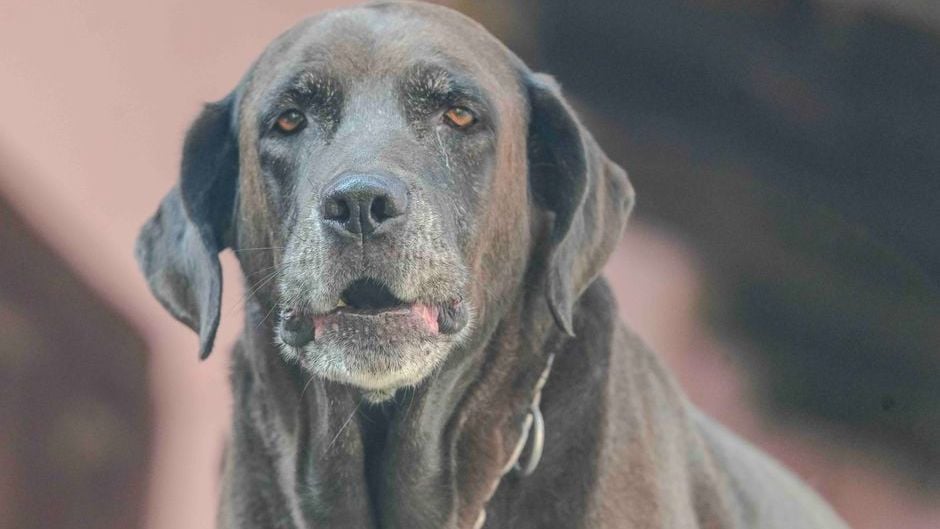
There’s a particular kind of heartbreak that comes from finding out too late. Your senior dog wasn’t “just getting old” – they were quietly asking for help in the only language they know. Vets see it constantly: dogs brought in for a routine checkup whose pain or cognitive decline has been building for months, invisible to the people who love them most. The truth is, dogs are hardwired to hide discomfort. It’s not stubbornness. It’s survival instinct, and it works against them in a world where their owners would move mountains if they only knew.
What follows are 15 of the gentlest, easiest-to-miss signals your senior dog may already be sending. Some will make you nod. A few might stop you cold. And at least one will probably make you want to go sit with your dog right now – which, honestly, isn’t the worst place to start.
#1 – Sleeping Far More Than Before

Most owners see the extra naps and think, “Well, he’s earned it.” And maybe he has. But vets flag a sudden, sustained increase in sleep as one of the earliest indicators of chronic pain or metabolic slowdown – conditions that often respond dramatically to treatment once they’re actually caught. Your dog might linger in bed well after the household wakes up, skip the afternoon window-patrol she used to love, or seem genuinely difficult to rouse for meals. Week by week, it quietly becomes the new normal.
Here’s the test that matters: does your dog still light up for the highest-value triggers in her world – the leash jingling, the treat bag crinkling, your car pulling into the driveway? If that spark is fading alongside the extra sleep, this isn’t just rest. It’s your dog conserving energy because something costs more than it used to. That deserves a conversation with your vet, not a shrug.
#2 – Skipping Favorite Walks or Cutting Them Short

The dog who once dragged you to the door now hesitates at the threshold. She makes it half a block and slows. Or she simply sits down and looks back toward home. Owners almost universally read this as the dog “not needing as much exercise anymore.” What’s actually happening, in many cases, is that sore hips or aching knees have quietly renegotiated the terms of every outing. Shortening the walk isn’t laziness – it’s self-protection.
Start tracking it, even loosely. If the distance drops consistently over several weeks, even by just a block or two, that pattern tells a story your vet needs to hear. Joint pain caught early is dramatically more manageable than joint pain caught after mobility has already declined. And the cruelest part? Many dogs keep trying to please you right up until they physically can’t.
Fast Facts
- Arthritis affects an estimated 80% of dogs by age 8, making it one of the most common senior health conditions.
- Most dogs begin showing joint-related signs between ages 7 and 8; large breeds often show symptoms earlier.
- Many dogs never limp, even with significant joint pain – slowing on walks is frequently the only visible signal.
- Early arthritis intervention significantly improves comfort and slows mobility decline compared to late-stage treatment.
- Cartilage damage accumulates silently over years; by the time limping appears, the condition is already well advanced.
#3 – Stiffness After Rising From a Nap
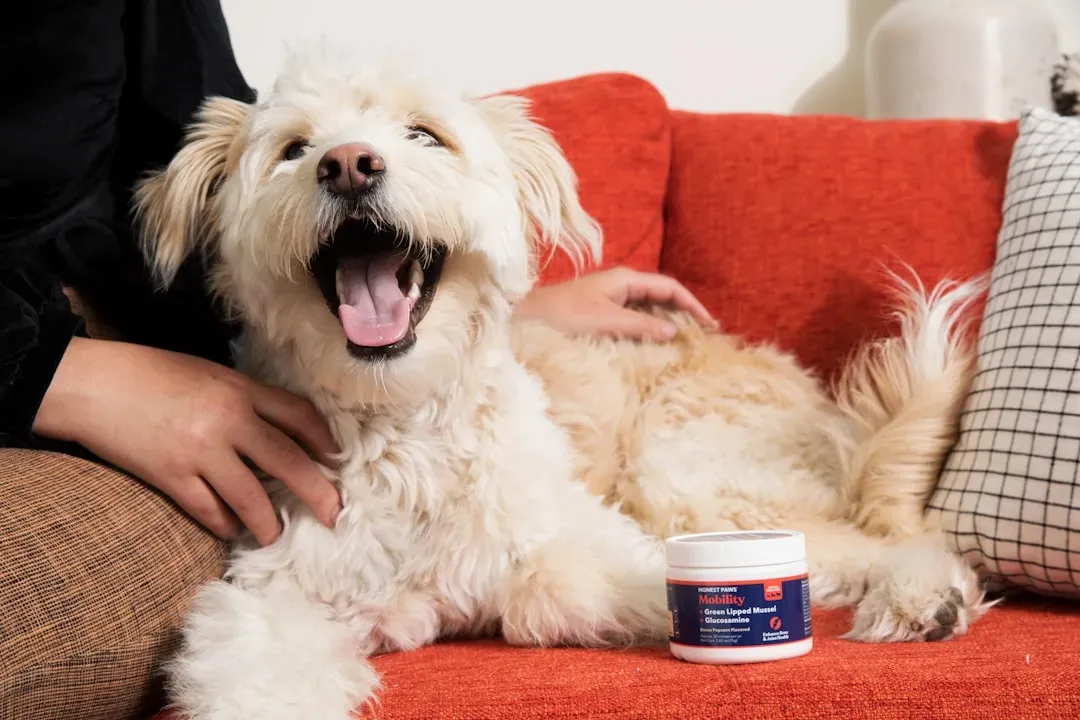
Watch your dog the moment he stands up after lying down for a while. There’s a pause. A weight shift. A few stiff, careful steps before the movement smooths out. Most families see this and think, “Oh, he just needs a second to wake up.” That’s exactly what early arthritis wants you to think. The stiffness eases after a minute or two of movement, which reinforces the idea that nothing is really wrong – but that temporary ease is the joint warming up, not the problem resolving.
Pay attention to the choices your dog makes when you’re not actively watching. Does she migrate to the carpet instead of the tile? Does she avoid the hardwood hallway? Does she pick the lowest couch cushion over her old favorite spot on the bed? These small environmental decisions are your dog quietly engineering around pain she can’t describe to you. The adjustments come long before limping does.
#4 – Occasional Accidents Indoors
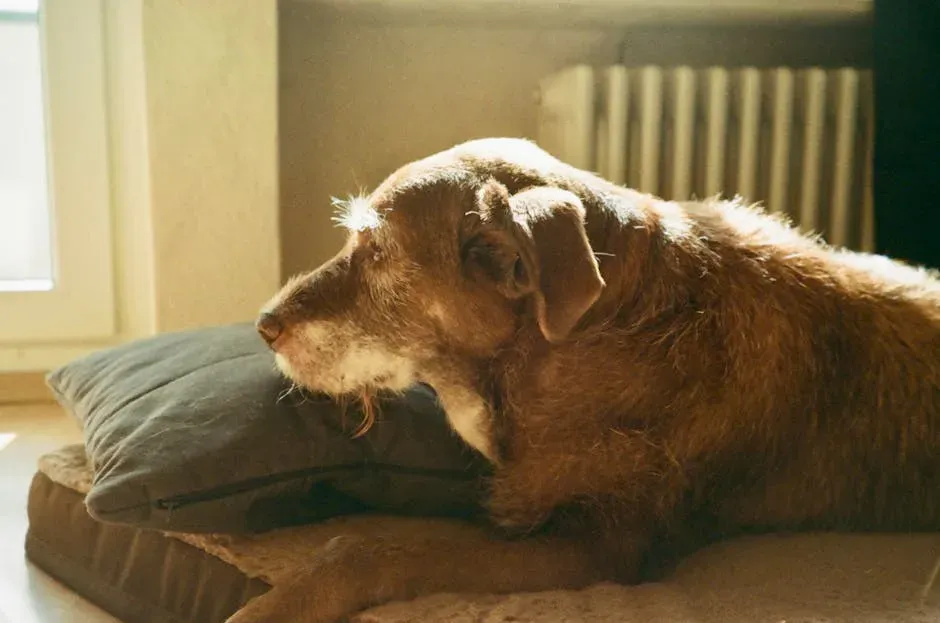
A dog who has been reliably housetrained for a decade starts leaving small puddles near the door, or doesn’t quite make it outside in time. The instinct for many owners is frustration, or the assumption that something cognitive is slipping. But in senior dogs, indoor accidents more often trace back to a physical reality: the signal still fires, but the body can’t execute fast enough. Reduced mobility, weakened bladder muscles, or early urinary tract changes can all close the window between “need to go” and “going.”
The timing tells you a lot. Accidents right after waking up suggest the dog simply can’t hold through a long sleep the way she once could. Accidents during excitement or greeting point to sphincter control changes that are common and treatable. Before assuming this is a cognitive decline story, rule out the physical ones. Addressing the root cause – rather than the mess – often restores reliability without anyone needing to feel blamed.
#5 – Eating More Slowly or Leaving Food Behind
Your dog still comes to the bowl. He’s interested. But he picks at it, chews carefully, and walks away with kibble still sitting there. Owners tend to label this as pickiness, or worry about appetite loss linked to bigger illnesses. The more mundane and more treatable culprit is often right there in his mouth – dental pain, inflamed gums, or a cracked tooth that makes every crunch a small ordeal. Dogs don’t stop eating because they’ve lost interest in food. They slow down because eating hurts.
One simple test: offer something softer, like wet food or moistened kibble, and watch whether the enthusiasm comes back. If it does, you’ve learned something important. Small and toy breeds are especially prone to dental disease that progresses quietly for years before it becomes obvious. A dental evaluation at your next vet visit – or sooner if the appetite changes are sharp – can genuinely change your dog’s quality of life overnight.
Worth Knowing
- Over 80% of dogs over age three have active dental disease, yet few show obvious outward signs of mouth pain.
- Small and extra-small breeds are up to five times more likely to be diagnosed with periodontal disease than giant breeds.
- Most dogs and cats almost never show obvious signs of oral pain – changes in eating pace are often the only clue.
- A professional dental cleaning can relieve low-grade chronic pain your dog has been quietly managing for months or years.
#6 – Panting or Trembling While Resting
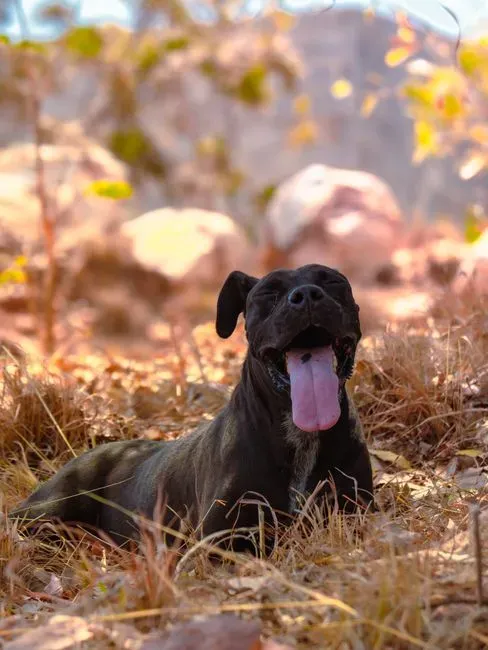
Your dog is settled on her bed. The room isn’t hot. Nothing exciting just happened. And yet she’s panting, or there’s a low, persistent tremble running through her body. Owners often reach for the most available explanations – she’s dreaming, she’s a bit anxious, it’s just an old-dog thing. But panting and trembling at rest, particularly when they appear regularly and without an obvious trigger, are the nervous system’s way of broadcasting discomfort that the dog can’t otherwise express.
Sit with this one. Compare her breathing rate when she’s truly settled versus during a mild walk. If the resting rate is consistently elevated, or if the trembling returns most nights, document it. Video is your best tool here. A short clip of the behavior during a calm moment gives your vet far more to work with than a verbal description, and what looks like “just shaking” can point directly to pain sources that respond well to management.
#7 – Greeting You Less Enthusiastically at the Door
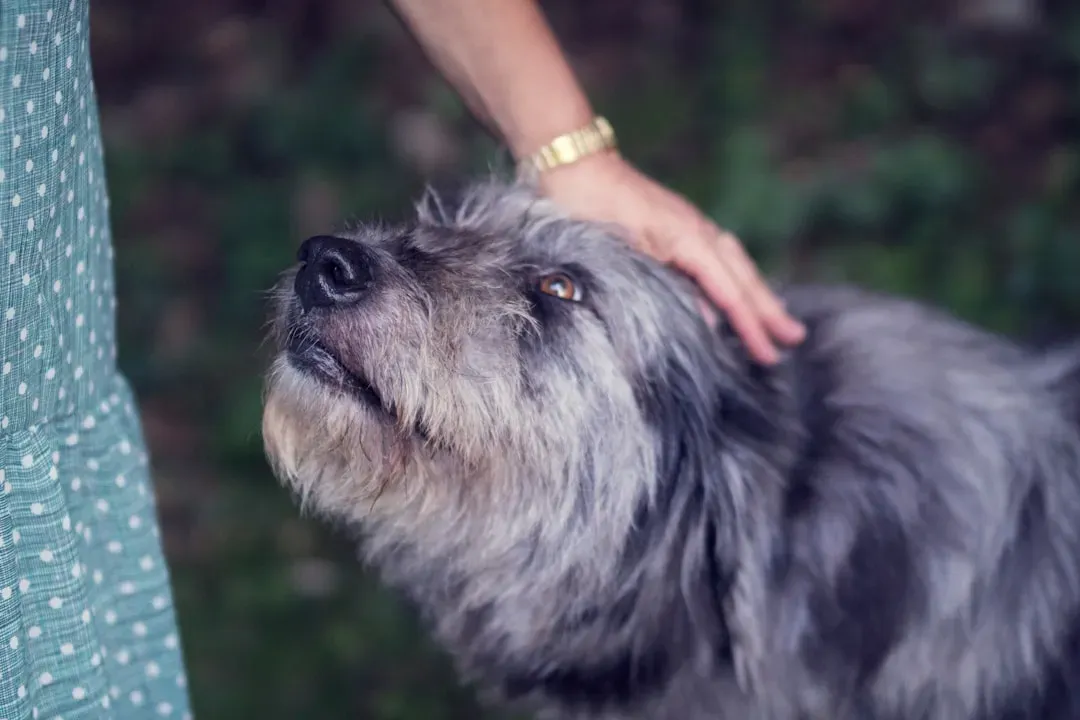
He used to meet you in the driveway in his mind the moment he heard your engine. Now he lifts his head from across the room and gives a slow wag – and that’s it. It’s easy to read this as emotional distance, or to quietly worry that the bond has shifted. It almost certainly hasn’t. What’s more likely is that springing up quickly hurts, or the excitement of movement carries a cost his body now charges. The love is the same. The physics have changed.
Try this: instead of waiting for him to come to you, go to him. Sit on the floor, offer a treat from your hand, and watch how his whole demeanor shifts without the physical ask of getting up and crossing the room. If the connection is still clearly there when the movement barrier is removed, you’re looking at pain management, not emotional withdrawal. That distinction matters, and it’s worth knowing.
#8 – Flinching or Growling During Routine Touch

Grooming, petting, a hand along her back – things that used to feel good now produce a quick head turn, a soft grumble, or a flinch away from your fingers. This is one of the most misread signals in senior dogs, and one of the most important. Owners hear the growl and think the dog has become “grumpy in her old age.” What the dog is actually doing is communicating pain as clearly as she knows how, and hoping you’ll listen before she has to be louder about it.
Run a quiet, gentle touch test on your own. With your dog relaxed, slowly move your hand along her spine, hips, and shoulder blades. Note any area where she stiffens, turns to look, or pulls away. These are worth marking mentally and showing your vet – not by poking the spot again in the exam room, but by describing exactly where and describing the reaction. Focal pain along the spine and hips is extremely common in seniors and extremely treatable when it’s identified.
Dogs are not stoic because they are brave. They are stoic because in the wild, showing pain is dangerous. Our job is to look harder.
Dr. Marty Becker, veterinarian and author
#9 – Staring at Walls or Getting Briefly Stuck
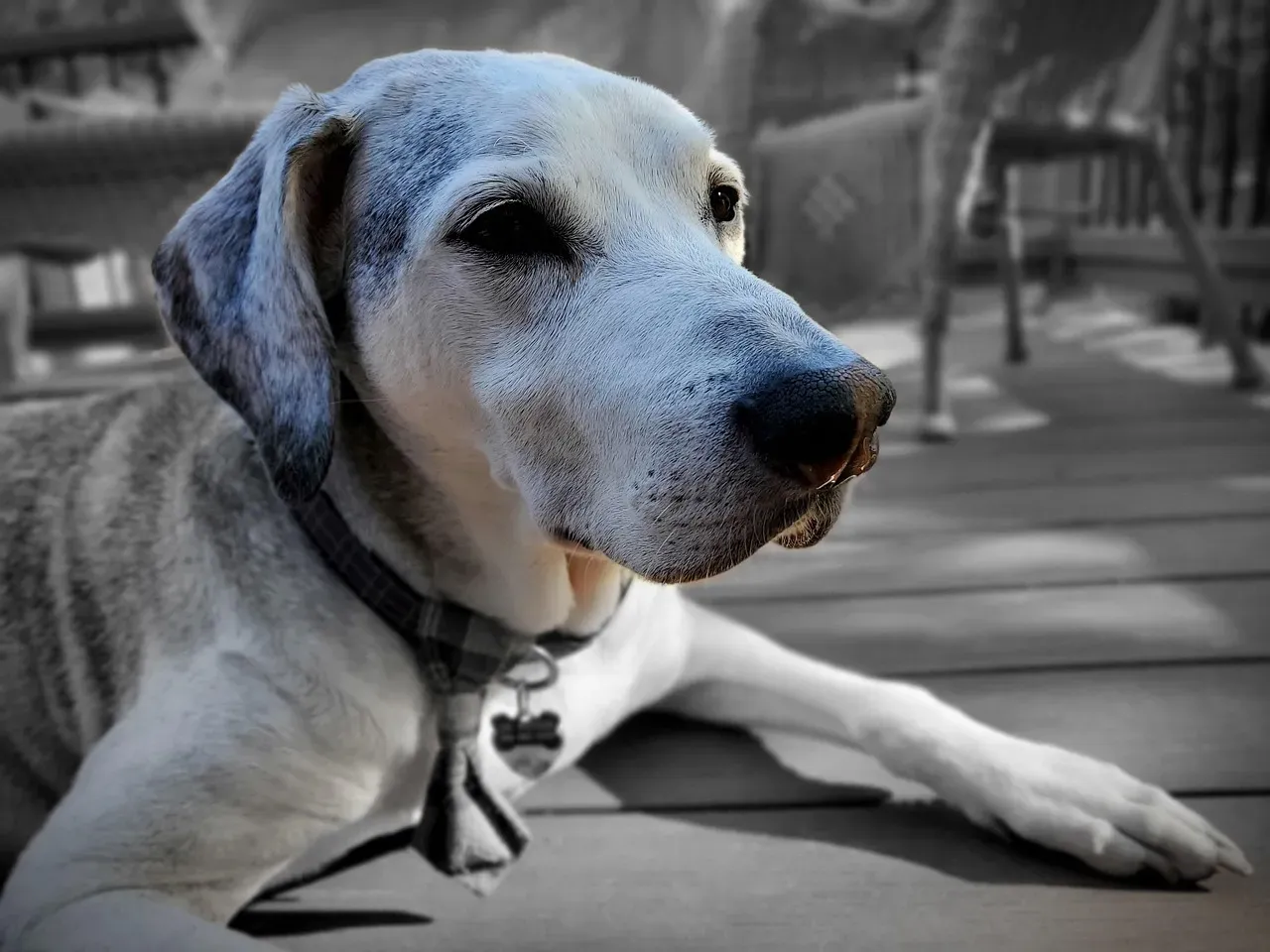
You find your dog standing in the hallway facing the wall. Or she walks into the kitchen and stops, seemingly unsure what she came for. Or she gets to the back door and just stands there, not pushing through the way she always has. These moments are brief and easy to laugh off as senior quirks – and sometimes they are. But they can also be the earliest visible flicker of Canine Cognitive Dysfunction, the dog equivalent of dementia, which is both more common and more manageable than most owners realize.
The key isn’t to panic at a single odd moment – it’s to notice whether these episodes are becoming more frequent, longer in duration, or clustering around certain times of day. Low-stimulation periods, early morning, and late evening tend to surface them most. If you see it happen, quietly take out your phone and record it. Vets who specialize in senior care have seen hundreds of these clips and can often distinguish a concerning pattern from normal senior variation in under a minute.
At a Glance: Canine Cognitive Dysfunction
- CCD affects an estimated 28% of dogs aged 11–12, rising to around 68% of dogs aged 15–16.
- Surveys suggest 14–22.5% of dogs older than eight already show signs of cognitive impairment.
- The odds of CCD increase by approximately 52% with each additional year of age.
- CCD is frequently underdiagnosed because owners – and sometimes vets – mistake its signs for normal aging.
- Early dietary, environmental, and medical management can slow progression and meaningfully improve daily quality of life.
#10 – Hesitating Before Jumping Into the Car or Onto Furniture
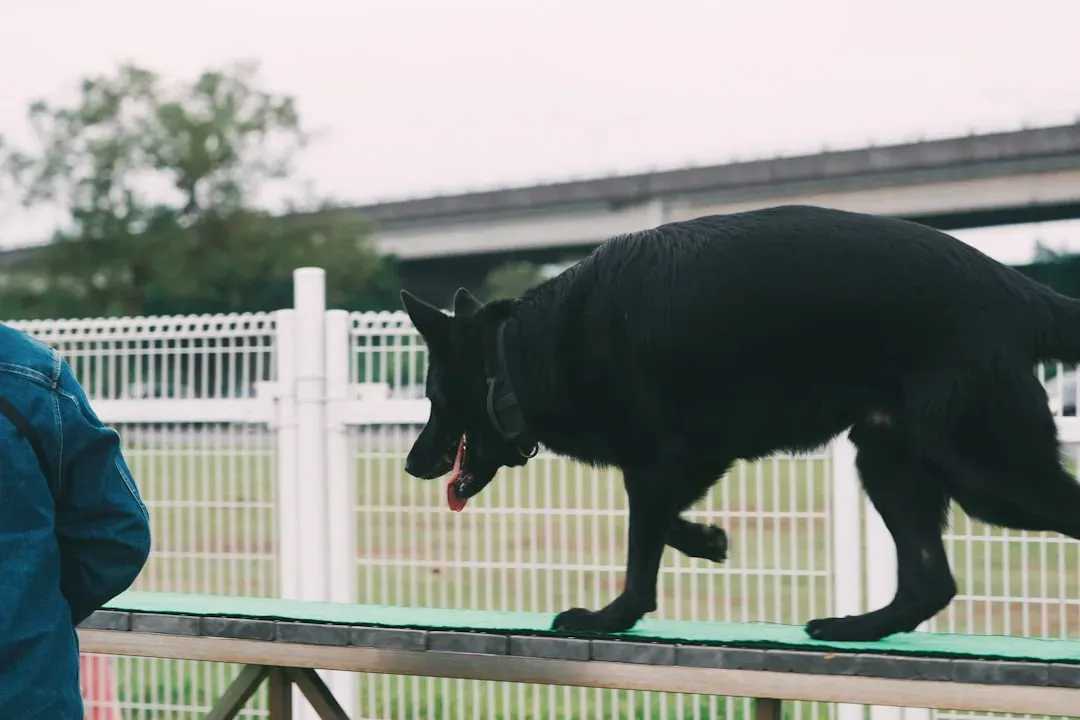
He used to launch himself into the back seat before you’d even opened the door fully. Now he plants his front paws on the edge and stands there, calculating. He might attempt the jump and land awkwardly, or he might just look at you with an expression that says, “A little help here?” This pause is not a crisis. It’s actually the most considerate thing your dog can do – he’s protecting himself before the injury happens, not after. The problem is that owners often wait until the dog stops trying altogether before they take it seriously.
Adding a ramp or a set of pet stairs is one of the most straightforward quality-of-life investments you can make for a senior dog, and introducing it before the hesitation becomes refusal preserves both his independence and his muscle condition. Dogs who stop jumping stop using entire muscle groups, which accelerates decline faster than the joint issue alone would. The ramp isn’t giving up on him. It’s meeting him where he is.
#11 – Shifting to a Hunched or Wide Stance

You’re feeding her a treat and you notice something subtle: her back is slightly rounded, or her front legs are placed wider than they used to be. It doesn’t look dramatic. It looks like she’s just standing there. But posture changes like these are the body’s quiet engineering work – the spine rounding to unload a painful area, the legs spreading to redistribute weight away from a sore hip or knee. Dogs don’t consciously decide to do this. The body just starts doing it, automatically, over weeks and months.
The best time to observe this is when your dog is standing still and distracted – waiting for food, watching something out the window, greeting a visitor. Get low and look from the side. A slight roach in the back or an unusually wide front stance is worth photographing and bringing to your next vet appointment. You may be the only one who notices it because you know what “normal” looks like for this dog. That familiarity is diagnostic gold your vet doesn’t have.
Quick Compare: Pain Signal vs. Normal Aging
- Stiffness that fades after 10+ minutes of movement → likely pain, not just age
- Posture change in a specific spot (hip, spine) → worth a vet exam; often treatable
- Slowing on walks by a consistent margin week-to-week → pattern to track and report
- Reduced greeting energy with no treat response → possible pain; emotional bond likely intact
- Occasional stumble or misstep on stairs → warrants evaluation, not a “wait and see”
#12 – Excessive Licking of One Paw or Joint

One paw, one wrist, one spot on the hip – your dog returns to it again and again, even when the skin looks clean and there’s no obvious wound. Owners typically read this as an allergy, a habit, or mild OCD. And sometimes it is. But in seniors, targeted repetitive licking often functions as pain relief – the same way a person might rub an aching knee without thinking about it. The licking stimulates blood flow and provides a small measure of comfort against low-grade joint or nerve pain that has nowhere else to go.
The timing is your best clue. Does the licking increase after walks or more active play? Does it happen more in the evening when the dog has been resting a while? Does the fur in that spot look thinned or damp most mornings? These patterns point away from allergy and toward pain. Rule out the skin surface first, but if the skin looks fine and the behavior persists, bring it to your vet as a possible pain signal rather than a grooming quirk.
#13 – New or Heightened Reactions to Everyday Sounds

The refrigerator kicks on and your dog startles. A car door closes two houses away and she trembles. The TV volume that never bothered her before now sends her under the bed. This isn’t random anxiety or a personality shift – and it’s worth resisting the urge to explain it away as the dog “getting more sensitive with age” as if that’s a complete answer. Heightened sound reactivity in senior dogs is frequently tied to two distinct underlying causes: pain that makes the nervous system hyper-alert, and early cognitive changes that reduce the brain’s ability to filter and contextualize sensory input.
Note whether the reaction includes trembling, hiding, or panting – those additions shift it from startled to distressed, which is a meaningful clinical distinction. Environmental adjustments like white noise, consistent sound levels, and a designated quiet retreat can reduce the day-to-day impact significantly. But identifying and addressing the underlying pain or cognitive component is what actually improves things at the source, rather than just managing the symptoms.
#14 – Pacing or Restlessness at Night
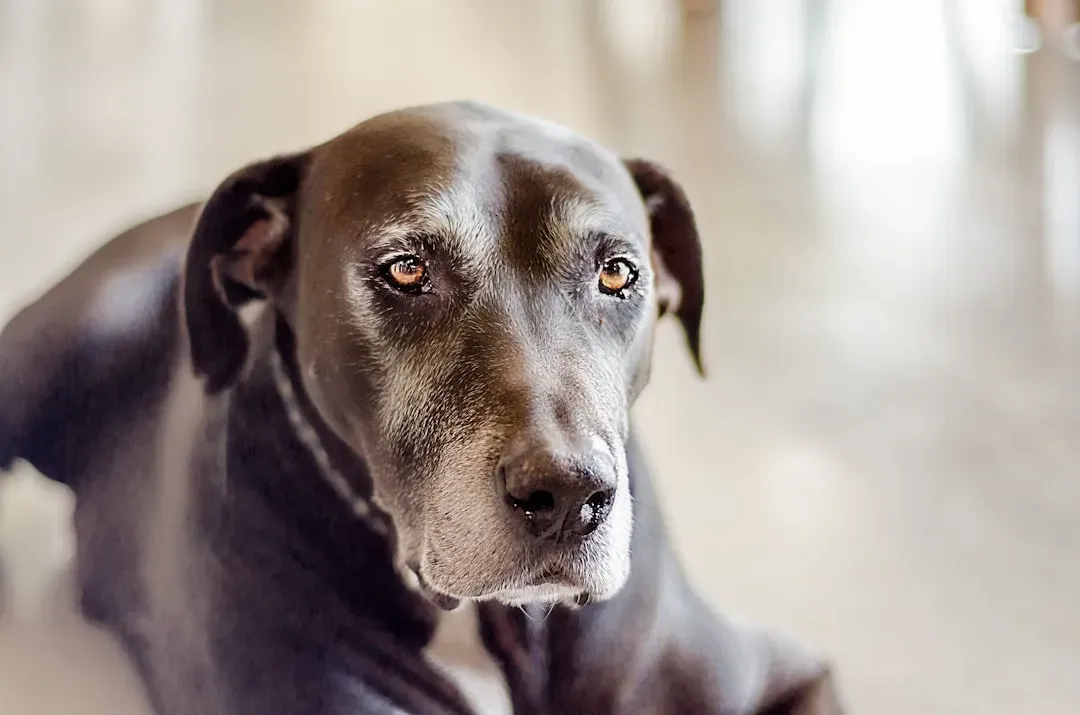
The house is quiet. Everyone is in bed. And your dog is walking slow circles in the hallway, lying down, getting up, lying down again, unable to find a position that works. You get up at 2 a.m. and find him staring at nothing in the kitchen. Nighttime restlessness in senior dogs is one of the most disruptive signs on this list – disruptive to the household, and far more disruptive to your dog than you might realize. It typically signals one of three things: pain that worsens with sustained stillness, cognitive dysfunction that disrupts the sleep-wake cycle, or both at once.
If you can, track when it starts each night and how long it lasts. Does it seem worse on nights after more activity? Does it correlate with the timing of any medications he takes? Does he settle more easily in a different room or on a different surface? These specifics transform a vague complaint into actionable data. Nighttime pacing that responds to pain management or cognitive support supplements is one of the areas where early intervention produces some of the most visible, immediate improvements in a senior dog’s life.
#15 – Reduced Response to Your Voice or Commands
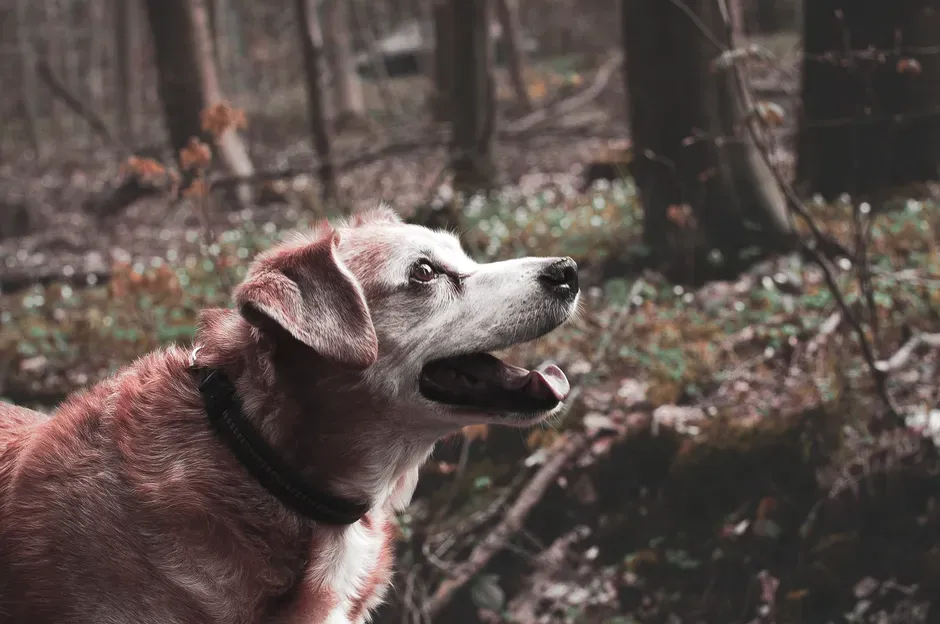
You call her name and nothing happens. You call again. Still nothing, until you’re right beside her. Or you give a familiar command – “sit,” “come,” the words she’s known for a decade – and there’s a long pause before any response, or no response at all. Owners often land on “selective hearing” as the explanation, and sometimes they’re not entirely wrong. But in senior dogs, this gap between stimulus and response is frequently the last gentle sign on a list that started months earlier, and it can stem from any combination of hearing loss, pain that makes movement costly, or early cognitive shifts.
Test this carefully, in quiet moments, with the highest-value reward your dog knows. If she hears the treat bag and turns immediately but misses her name called softly from across the room, you’re likely looking at hearing decline. If she hears you clearly but takes a long beat before deciding whether to respond – or begins to respond and stops – that gap is worth exploring with your vet. This sign rarely appears alone. By the time it surfaces, several of the other 14 signals have usually been building quietly in the background, waiting to be noticed.
Fast Facts: Senior Dog Hearing Loss
- Age-related hearing loss in dogs – known as presbycusis – typically begins to manifest around ages 8–10 in most breeds.
- Approximately 80% of dogs show some signs of hearing loss by 15 years of age.
- Dogs lose higher-frequency hearing first, which means they may still respond to lower-pitched sounds or voices.
- Research shows a strong link between hearing loss and CCD: dogs with the greatest hearing loss showed zero symptom-free cases in one study.
- Transitioning from verbal to visual or hand-signal commands can help hearing-impaired dogs adapt successfully and maintain quality of life.
What These Signs Are Really Saying

Here’s the opinion no one seems to say loudly enough: we owe senior dogs a different kind of attention than we give younger ones. Not more love – most of them already have that in abundance – but more literacy. The ability to read the small, undramatic, easy-to-rationalize signals they send before the dramatic ones arrive. A dog who sleeps more, walks less, flinches at touch, paces at night, and stares at walls isn’t “getting old gracefully.” She’s narrating an experience she has no other way to share.
The fifteen signs above – extra sleep, shortened walks, morning stiffness, indoor accidents, slow eating, resting panting, muted greetings, touch sensitivity, brief disorientation, jump hesitation, postural shifts, targeted licking, sound reactivity, nighttime pacing, and quieter responses – are not inevitable features of aging that you simply accept. Most of them are addressable. Many of them improve significantly with treatment. And all of them are your dog communicating with you in the only way she knows how. The owners who catch these signals early don’t love their dogs more than the ones who miss them. They just learned the language in time. You can too.

- 10 Remarkable Facts About the African Cheetah: The Lightning of the Grasslands - July 29, 2026
- 10 Most Heroic Horses in History - July 29, 2026
- Why You Should Never Play Dead When Attacked by a Black Bear - July 29, 2026