
There’s something quietly unsettling about the idea that everything you’ve ever seen, touched, or known might be just one small corner of a much larger reality. Not a poetic metaphor. A serious scientific proposition, backed by equations, defended in peer-reviewed journals, and pursued by some of the most rigorous minds in physics today.
The question isn’t new, but it’s grown considerably more precise. What was once the province of philosophers and science fiction writers has shifted into the domain of cosmology, quantum mechanics, and abstract mathematics. The claim isn’t merely that another universe “might exist somewhere.” The deeper claim is that our universe’s own physical laws, when taken to their logical conclusions, seem to demand it.
When the Math Starts Pointing Outward

The hint doesn’t come from a single source. It arrives from at least three separate areas of physics: quantum mechanics, inflationary cosmology, and string theory. Each arrived at the same uncomfortable suggestion independently. Each uses different equations. Each reaches a version of the same conclusion.
Science and philosophy together constitute the two main wings of the great quest to understand reality, and the concept known in physics as a potential “God equation,” an ultimate expression that unites all the laws of nature in a single mathematical expression, is aimed at shedding light on this mystery. What makes the multiverse idea particularly striking is that it wasn’t invented to be exotic. It emerged as a byproduct of trying to make other things work.
In certain interpretations of quantum mechanics, like the Many-Worlds interpretation and the Pilot Wave theory, the universe can be described by a single giant equation known as a quantum wavefunction, and any time a quantum process occurs anywhere in the universe, this wavefunction splits in two, meaning parallel universes are constantly created. That’s not a metaphor. That’s the math, read literally.
Hugh Everett and the Equation Nobody Wanted to Accept

In 1957, a graduate student named Hugh Everett III submitted a doctoral thesis that the physics establishment largely ignored for years. His proposal was straightforward in form and radical in implication: the wave function of quantum mechanics never actually collapses. Every possible outcome of every quantum event simply happens, each in its own branching version of reality.
One prominent interpretation that explores the connection between quantum events and parallel realities is the Many-Worlds interpretation proposed by physicist Hugh Everett. According to this interpretation, when a quantum measurement occurs, the universe splits into multiple branches, each representing a different outcome, and in each branch a parallel reality is created where the measured quantity takes on a specific value.
The many-worlds interpretation has many detractors, but it’s become less and less on the fringe, and more and more physicists have been willing to come out and support it, partly because the alternatives, such as Bohmian mechanics and dynamical-collapse theory, have trouble dealing with relativity or are unwieldy to calculate with. Everett’s idea survived not because it was easy to accept, but because it was genuinely hard to dismiss.
Max Tegmark and the Mathematical Universe Hypothesis
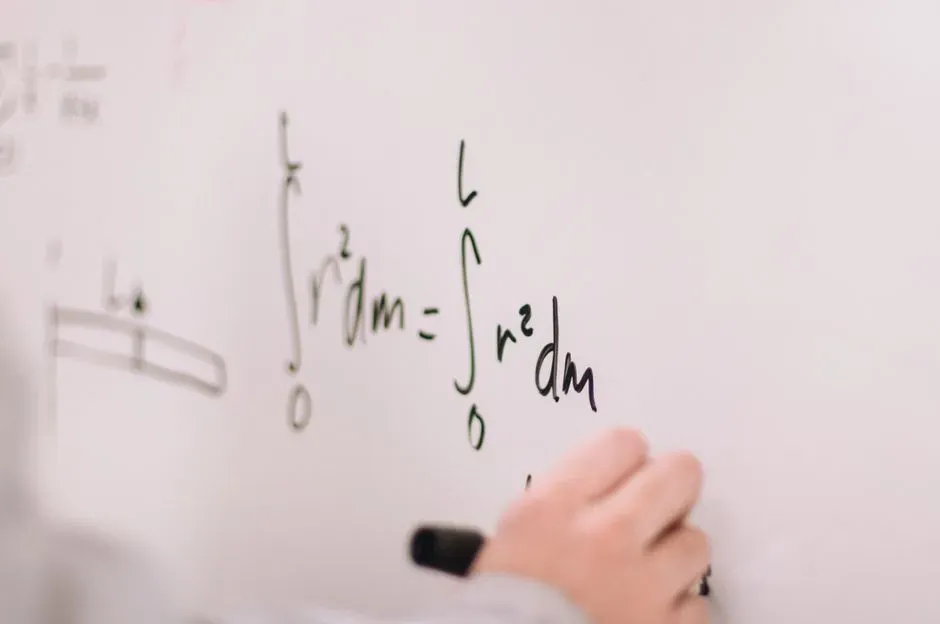
In physics and cosmology, the Mathematical Universe Hypothesis, also known as the ultimate ensemble theory, is a speculative “theory of everything” proposed by cosmologist Max Tegmark. Its central claim is deceptively simple: our physical reality isn’t just described by mathematics. It is mathematics. The universe doesn’t merely obey equations. It is an equation.
Tegmark’s work presents the argument that physical reality is fundamentally a mathematical structure, and his Mathematical Universe Hypothesis posits that our external physical reality is an abstract mathematical object, independent of human perception, and that all mathematical structures exist as distinct universes in a Level IV multiverse. Every self-consistent mathematical structure, in this view, physically exists somewhere.
Tegmark was inspired by Hugh Everett III’s 1957 many-worlds interpretation, which posits that all quantum outcomes occur in branching parallel realities, and he also built upon Alan Guth’s 1981 inflationary cosmology, which explains the universe’s uniformity through rapid early expansion and implies eternal inflation generating bubble universes with varying properties. These were the pillars he stacked to build his framework.
Eternal Inflation: The Universe That Never Stops Expanding
Cosmic inflation solves a problem physicists had with the Big Bang: why does our universe look so remarkably uniform in all directions, even in regions that could never have been in contact with each other? The answer involves an extraordinarily rapid expansion in the universe’s first fractions of a second. Inflation explained the uniformity elegantly. It also produced an awkward side effect.
According to the theory of eternal inflation, bubble universes apart from our own are theorized to be constantly forming, driven by the energy inherent to space itself, and like soap bubbles, bubble universes that grow too close to one another can and do stick together, if only for a moment. The inflationary mechanism, once started, doesn’t simply stop. It keeps generating new regions, new bubbles, new universes.
Both mechanisms of eternal inflation lead to a mosaic structure for the universe, where causally disconnected thermalized regions with different values for various effective coupling constants are separated from each other by a variety of inflating patches. This mosaic isn’t cosmetic speculation. It follows directly from the equations governing how inflation ends in different regions of space.
String Theory’s Staggering Landscape of Possibilities
String theory arrives at the multiverse from a completely different direction. Rather than starting with quantum measurement or inflationary dynamics, it begins with the geometry of extra dimensions. The theory requires more than three dimensions of space, and those extra dimensions need to be curled up too small to detect.
String theory requires extra spatial dimensions that must be compactified, curled up too small to detect, and the number of ways those dimensions can be arranged is estimated at around 10 to the power of 500, with each arrangement corresponding to a different set of physical constants: different masses for particles, different coupling strengths, and a different value for the cosmological constant. That number, ten to the power of five hundred, is not just large. It’s larger than the number of atoms in the observable universe by an almost incomprehensible margin.
A common feature of much string theory model building is that there is a “landscape” of solutions, corresponding to spacetime configurations involving different dimensionality, different types of fundamental particles and different values for certain physical constants, and eternal inflation transforms such potentiality into reality, actually creating regions of space realizing each of these possibilities. In other words, string theory doesn’t just allow other universes. It arguably requires them.
The CMB Cold Spot: A Cosmic Bruise?
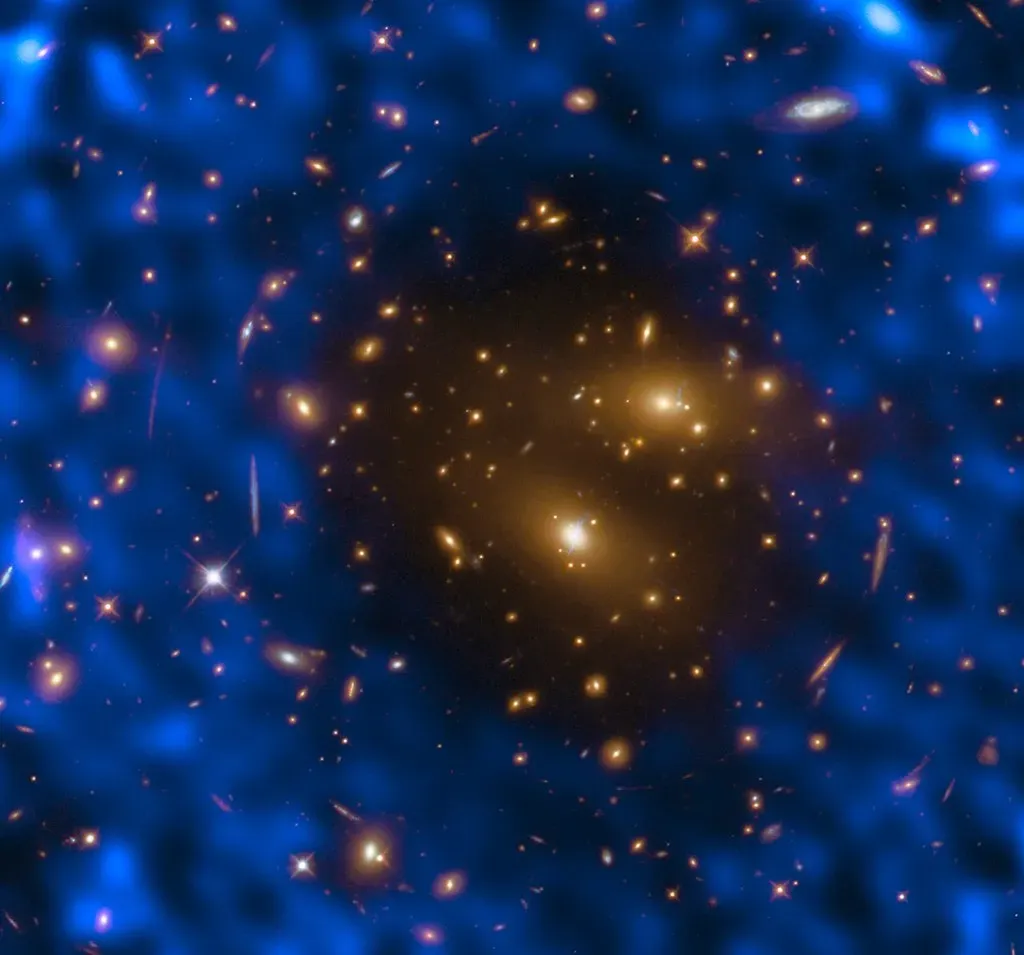
One of the most debated pieces of evidence for a parallel universe comes from the Cosmic Microwave Background, the remnant radiation from the Big Bang, which is a snapshot of the infant universe and is remarkably uniform. That uniformity, when examined at extremely high resolution, breaks down in a way that has puzzled astronomers for years.
Detailed maps from satellites like Planck have revealed a mysterious and massive Cold Spot, a region of space significantly colder than its surroundings, and some cosmologists propose that this Cold Spot is a bruise left from a collision with a bubble universe in the multiverse during the early inflationary period of our cosmos. The bruise metaphor is surprisingly precise. In some multiverse scenarios, our bubble universe could have collided with another bubble universe in the distant past, and theoretical work suggests such a collision would leave a bruise on our CMB appearing as a large disk-like temperature anomaly.
Current theories of the origin of the universe, including string theory, predict the existence of a multiverse containing many bubble universes, and these bubble universes will generically collide, with collisions producing cosmic wakes that enter our Hubble volume and appear as unusually symmetric disks in the cosmic microwave background, with preliminary observational evidence consistent with one or more of these disturbances on our sky. The word “preliminary” matters. This is not confirmation. It’s a signal worth watching carefully.
The Quantum Wavefunction and the Problem of Many Worlds
One reason the Many-Worlds Interpretation continues to gain traction among physicists is that it doesn’t require modifying any of quantum mechanics’ existing equations. It takes the formalism seriously, without adding extra rules to make measurements “collapse” into a single outcome. That mathematical elegance is compelling to a significant number of researchers.
The Many-Worlds Interpretation is mathematically consistent with the formalism of quantum mechanics and does not require any modification of its equations, though it is not without its critics. One of the main criticisms is the lack of empirical evidence, and while it is mathematically consistent, it has not yet been possible to test it experimentally.
Researchers at the Autonomous University of Barcelona have used simulations to show that on large scales, a robust reality with classical features can emerge for a broad class of quantum systems, independently of their detailed microstructure, and their conclusion suggests how the emergence of our classical world can be explained in the context of the many-worlds interpretation, in which countless parallel worlds branch off from each other each time a measurement occurs. That’s a meaningful step toward making Many-Worlds compatible with the solid, definite world we actually experience.
What the Critics Have to Say
The multiverse isn’t a universally embraced idea. Serious physicists have serious objections, and those objections deserve fair treatment. The most fundamental criticism is one of falsifiability. The primary criticism of multiverse theory is that it is not falsifiable and cannot be tested or disproven by experiment, which is a key requirement for a scientific theory. A hypothesis that can never be ruled out, some argue, isn’t doing the work science is supposed to do.
Because the different universes proposed by the Many-Worlds Interpretation do not interact with each other, they are impossible to detect or observe directly, and this has led some physicists to argue that the Many-Worlds Interpretation is not a scientific theory but rather a philosophical interpretation. That’s a pointed objection. Physics without testability risks becoming metaphysics with better notation.
While the Many-Worlds Interpretation is a compelling idea, direct evidence for parallel universes remains elusive, yet the theoretical underpinnings of parallel universes are grounded in serious scientific inquiry, lending credibility to the idea. The tension between mathematical elegance and experimental accessibility is real, and it isn’t going away.
What Physicists Are Actually Searching For
Despite the skepticism, the search is real and ongoing. Teams are hunting for specific signatures in the CMB that would be consistent with bubble collisions. Others are probing the fine-tuned values of physical constants, looking for statistical distributions that make more sense in a multiverse framework than in a single universe. The work is painstaking and not always glamorous.
The Many-Worlds theory provided a conceptual basis for some theories in cosmology, and it may prove useful in attempts to bridge quantum physics with gravity, significantly influencing the kind of unified theory of quantum gravity for which physicists are searching. The multiverse isn’t just about finding other universes. It’s about understanding why ours has the properties it does.
While the anomalies in the CMB have yet to be fully explained, they provide valuable insights into the early universe and the possibility of parallel universes, and as scientists continue to study the CMB, they may be able to uncover even more evidence of the multiverse and gain a better understanding of the origins of our universe. The next generation of telescope surveys and CMB polarization maps will be critical to narrowing the possibilities.
The Philosophical Weight of Being One of Many
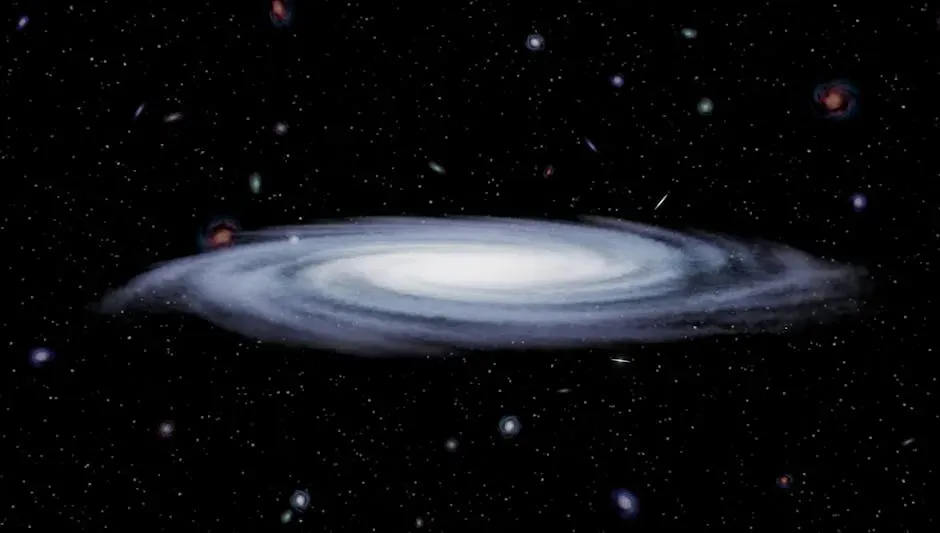
There’s something genuinely disorienting about taking the multiverse seriously. Not just intellectually. Emotionally. The universe has always carried a certain gravity, a sense that this is the totality of things. If the equations are right, that totality dissolves into something far stranger: an ensemble of realities so vast that the human mind has no intuitive grip on its scale.
The multiverse is purely a mathematical structure, and an ultimate description of the universe or the multiverse cannot depend upon components that are actually within the universe or multiverse it is trying to describe. That constraint is philosophically vertiginous. It means we might be fundamentally limited in our ability to describe the whole from inside a part.
One of the most fundamental questions humanity has faced since time immemorial has been why the universe exists and what power governs it, and over time this question has become a common interest not only in the religious and metaphysical spheres but also in mathematics, physics, and philosophy. The multiverse debate is, at its core, a modern chapter of the oldest conversation our species has ever had.
Conclusion: A Framework Worth Taking Seriously, Not Literally
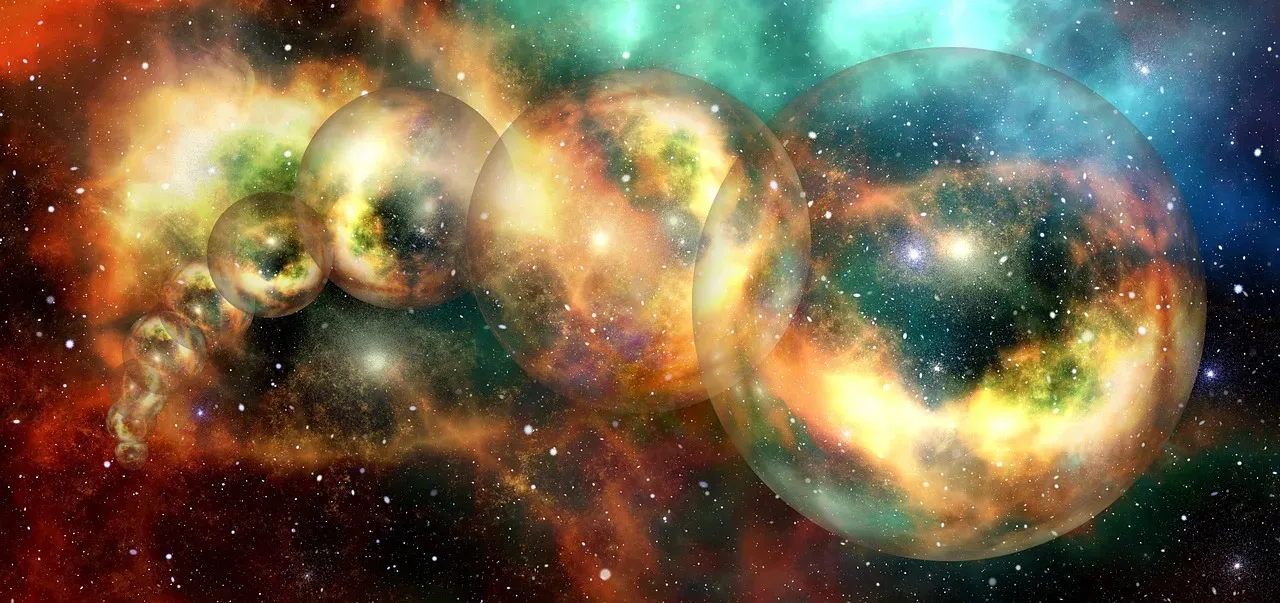
The case for a multiverse is not a fringe idea dressed up in technical language. It emerges naturally from three separate and well-tested areas of physics. That convergence is hard to dismiss. Still, convergence of theoretical frameworks is not the same as evidence, and that distinction matters enormously.
What’s remarkable about this entire field is how it forces a reckoning with the limits of science itself. Some of the most precise and powerful mathematical tools ever developed seem to point beyond what any telescope or experiment can ever directly confirm. Whether that’s a profound insight or a quiet warning about the limits of abstraction is a question physicists are nowhere near settling.
What we can say is this: the universe’s own equations, followed faithfully, keep opening doors that lead somewhere beyond it. Whether anything actually lives behind those doors remains genuinely unknown. That uncertainty, far from being a weakness, is exactly what makes it worth pursuing. The most honest thing physics can currently offer is not an answer, but a more precisely calibrated version of the question.

- The Ancient Secrets of Yellowstone’s Wild Animals Revealed - August 6, 2026
- Are Some Common Pet Behaviors Actually Signs of Undiagnosed Stress? - August 6, 2026
- 8 US States With the Most Horseshoe Crab Spawning Beaches - August 6, 2026