
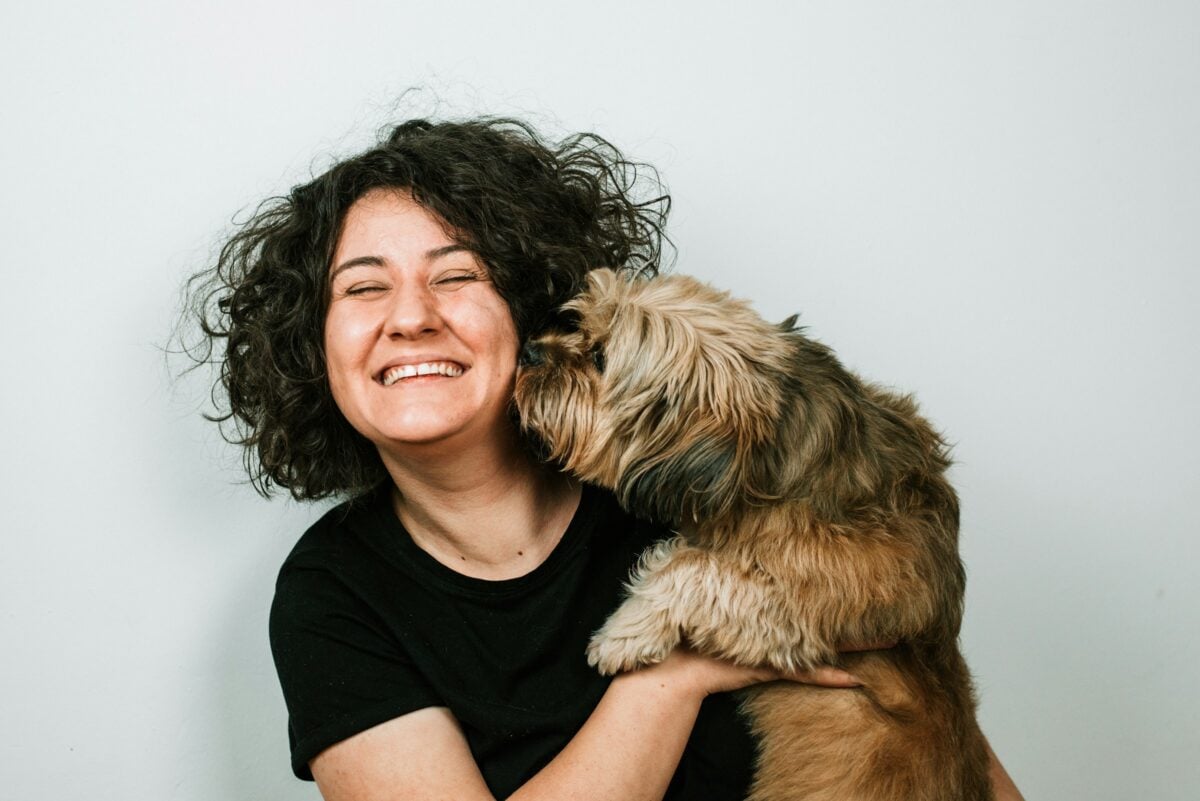
There’s a particular quiet that settles over a room when a dog rests its head on your lap and simply exhales. You might not notice it consciously, but something is happening beneath the surface, something that researchers have only recently started to measure with any real precision. It turns out the connection between a person and their dog runs deeper than affection or habit.
Scientists studying the physiology of the human-dog bond have found that calm moments together do something measurable to both bodies at once. What starts as a simple observation about shared relaxation opens into a much bigger question about how two different species end up, quite literally, breathing the same rhythm of life.
The heart rate clue that started it all
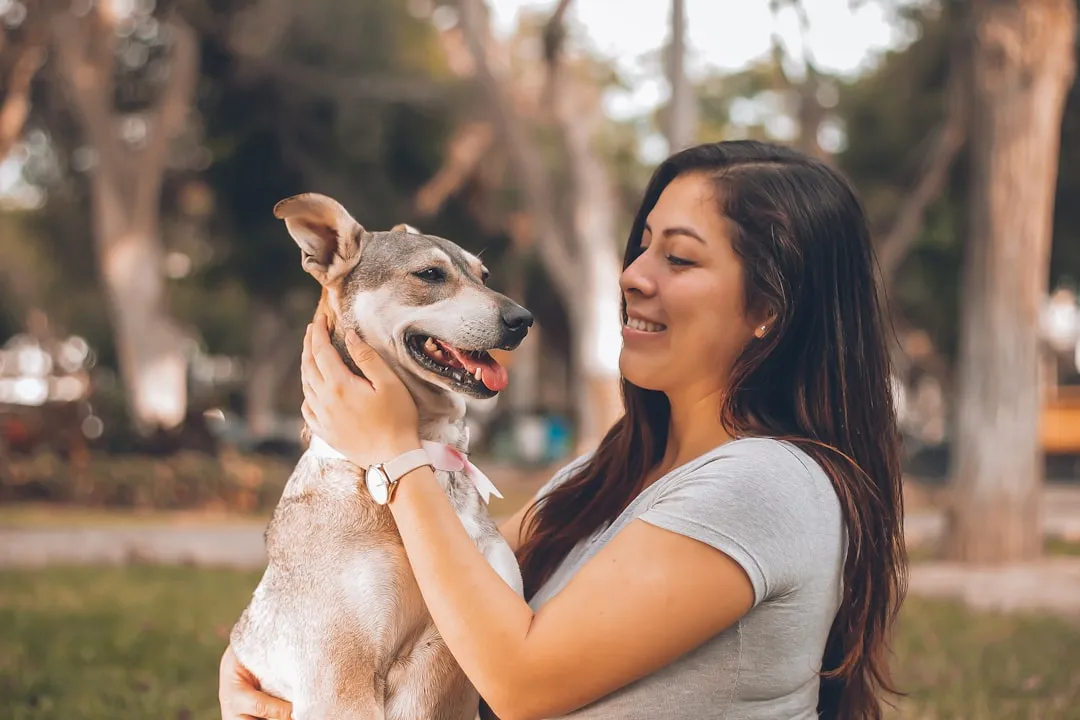
Long before anyone thought to look at breathing specifically, researchers noticed something odd happening with heart rates. A study published in Scientific Reports found that a dog’s heart rate variability adapts to its owner’s heart rate variability during interaction, suggesting that emotional states are shared between dogs and their owners. That single finding reframed how scientists think about the bond.
What made the discovery credible rather than sentimental was the control group. The physiological synchronization occurred only within established pairs, and when researchers randomly matched dogs with non-owners, the connection disappeared. In other words, this wasn’t just any calm body relaxing near any other calm body. It required a real relationship, built over time, to produce the effect.
Why breathing sits at the center of the story

Heart rate variability and breathing are not separate systems, they’re tightly linked through something physiologists call respiratory sinus arrhythmia, where the heart naturally speeds up slightly on the inhale and slows on the exhale. So when researchers say heart rate variability is synchronizing between a dog and its owner, breathing patterns are almost certainly part of that shared rhythm, even if it isn’t always measured directly.
Finnish researchers who ran ECG monitors on dogs and owners during quiet baseline periods actually built breathing into their protocol on the human side. During pre and post baseline periods, dogs were free to rest or wander around the room while owners were instructed to rest breathing calmly. That detail matters because it shows scientists already treat controlled, calm breathing as part of the physiological picture they’re trying to capture in these dyads.
The strongest signal shows up at rest, not during play
You might expect the deepest physiological connection to appear during an exciting game of fetch, but the data says otherwise. Researchers observed that both heart rate and physical activity levels adapt between dogs and owners, but the strongest emotional connection appears during restful moments, indicating shared relaxation.
That finding lines up neatly with what dog owners often describe anecdotally, the sense that the deepest bonding happens in stillness rather than motion. A study out of the University of Jyväskylä’s Department of Psychology reinforced this, noting that physical activity and heart rate variability adapted differently, with emotional state synchronization strongest during rest. Play may build the relationship, but rest seems to be where the bodies actually align.
The oxytocin loop that makes closeness physical

None of this synchrony happens in a vacuum. Underneath it sits a hormonal feedback loop that researchers have been tracking since a landmark study on dog-owner gazing. Mutual gazing increased oxytocin levels, and sniffing oxytocin increased gazing in dogs, an effect that transferred to their owners.
What’s striking is how specific this loop is to dogs. The same research team found that wolves, who rarely engage in eye contact with their human handlers, seem resistant to this effect. Oxytocin doesn’t just make you feel warm and fuzzy, it also slows the nervous system down, which helps explain why a calm gaze or a gentle scratch behind the ears can nudge both bodies toward the same relaxed baseline, breathing included.
What brainwaves and heartbeats reveal together
The synchrony story doesn’t stop at the chest. Neuroscientists studying interbrain coupling, the phenomenon where neural activity between two individuals falls into step, have started finding traces of it between dogs and their owners too. One study reported that mutual gaze and petting induce interbrain synchronization in the frontal and parietal regions of the human-dog dyads.
Even more interesting is who seems to be setting the pace. The same research noted that the strength of the synchronization increases with growing familiarity of the human-dog dyad over five days, and the human is the leader while the dog is the follower during human-dog interactions. That detail suggests the dog is, in a sense, tuning itself to us rather than the other way around, which fits the pattern seen in the heart rate and breathing research as well.
Lessons borrowed from human-to-human synchrony
Dogs are not the only ones who fall into rhythm with the people they’re close to. Human couples show the same tendency, and studying that parallel helps put the dog research in context. A University of California study found that couples’ breathing patterns and heart rates tend to sync just by being close to each other, based on research involving 32 heterosexual couples connected to monitors measuring heart rate and breathing.
Researchers describe this pairing across species as resembling attachment bonds seen much earlier in life. The findings suggest that dogs and their owners mirror each other’s emotional states, akin to the bonding seen between parents and children. That comparison isn’t just poetic, it points to a shared biological mechanism, one built for regulating stress within close relationships, that apparently doesn’t much care whether the two bodies involved belong to the same species.
What this means the next time your dog curls up beside you
None of this means every dog syncs with every owner in every moment, and it’s worth being honest about the limits of the science here. Most of the strongest evidence comes from measured heart rate variability rather than breath counts taken with a stopwatch, so calling it proven breath-for-breath synchrony would be getting ahead of the data.
Still, the underlying physiology, the shared nervous system responses, the oxytocin loop, the interbrain coupling, all point in the same direction: calm is contagious between species that trust each other. Owners with a strong emotional attachment to their dogs saw more pronounced effects, since dog parents who reported higher levels of negative affectivity were more likely to feel close emotional bonds with their dogs, which affected the dogs’ physiological responses. The quieter the moment, it seems, the more two bodies that trust each other start moving as one.
Final thoughts
I’ll admit a mild bias here. Having watched a dog’s ribcage rise and fall in the same unhurried tempo as my own breathing during a quiet evening, I find the science less surprising than confirming. What the heart rate and oxytocin research consistently shows is that closeness between a person and a dog isn’t just behavioral, it’s biological, built on the same regulatory circuits that calm a parent holding a sleeping child.
Whether every claim about literal breath-matching holds up to future study or not, the broader picture feels solid and, frankly, a little reassuring. Somewhere between the oxytocin, the heart rate variability, and the deepening brainwave coupling researchers are only starting to map, dogs seem to have found a genuine shortcut into our nervous systems, one calm exhale at a time.
