
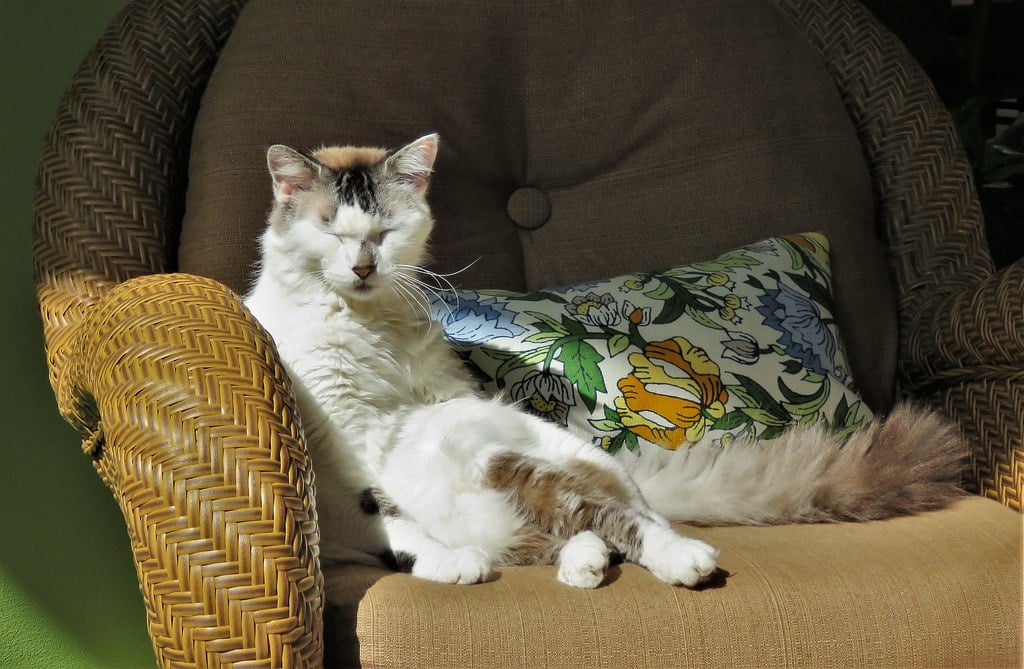
Everyone assumes the big moment is obvious. The cat stops hiding under the couch, comes out to eat, maybe even lets you pet its head once. Case closed, right? Except shelter workers who spend years with traumatized cats will tell you that’s not trust. That’s just survival mode easing off by a few degrees.
Real trust shows up in details so small most owners scroll right past them without noticing anything happened. A tail. A blink. A sound that wasn’t there yesterday. By the time you finish this list, you’ll probably realize your rescue cat has already been trying to tell you something for weeks.
#13 – Relaxed Tail Position
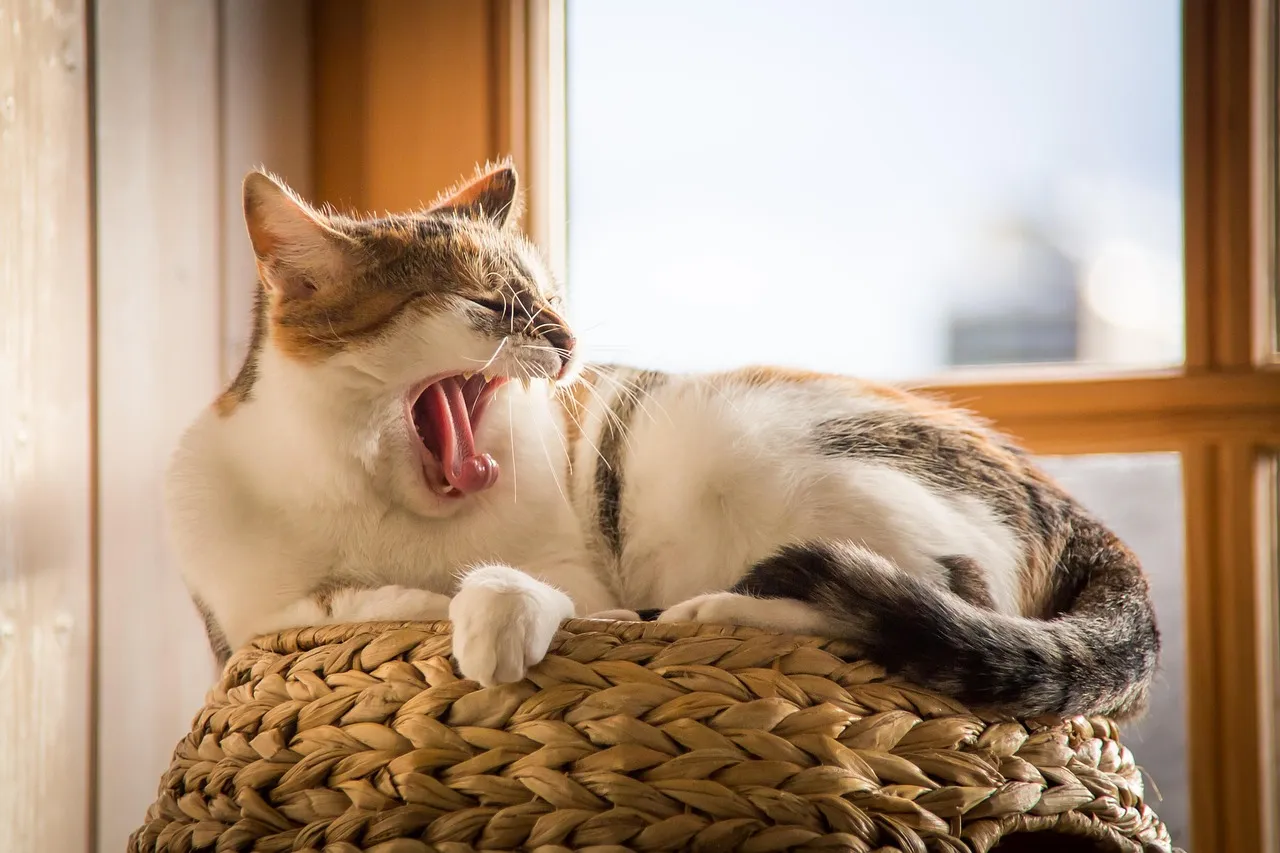
Most owners are watching for a happy tail swish and completely miss the quieter victory: the tail just… hangs there. Loose. Natural. Maybe with a soft upward curve at the end. A cat that used to keep its tail clamped tight or dragging low finally lets it rest, and that shift usually doesn’t show up until weeks or even months after adoption, long after everyone assumed the adjustment period was over.
Here’s the part that catches people off guard: that relaxed tail can snap right back into a tucked, tense position the second a door slams or a stranger walks in. Shelter staff see this constantly. It doesn’t mean the cat regressed. It means trust at this stage is still thin, still being tested room by room, sound by sound.
Fast Facts
- Many shelters teach adopters the "3-3-3 rule": 3 days to decompress, 3 weeks to learn routines, and 3 months to feel fully at home.
- Some rescue cats need closer to a full year to settle completely, depending on their history.
- Body language shifts, like tail position, often change weeks before a cat is ready to vocalize trust.
- A tense tail reappearing after progress is common and not a sign of failure.
#12 – Eating Calmly in Your Presence
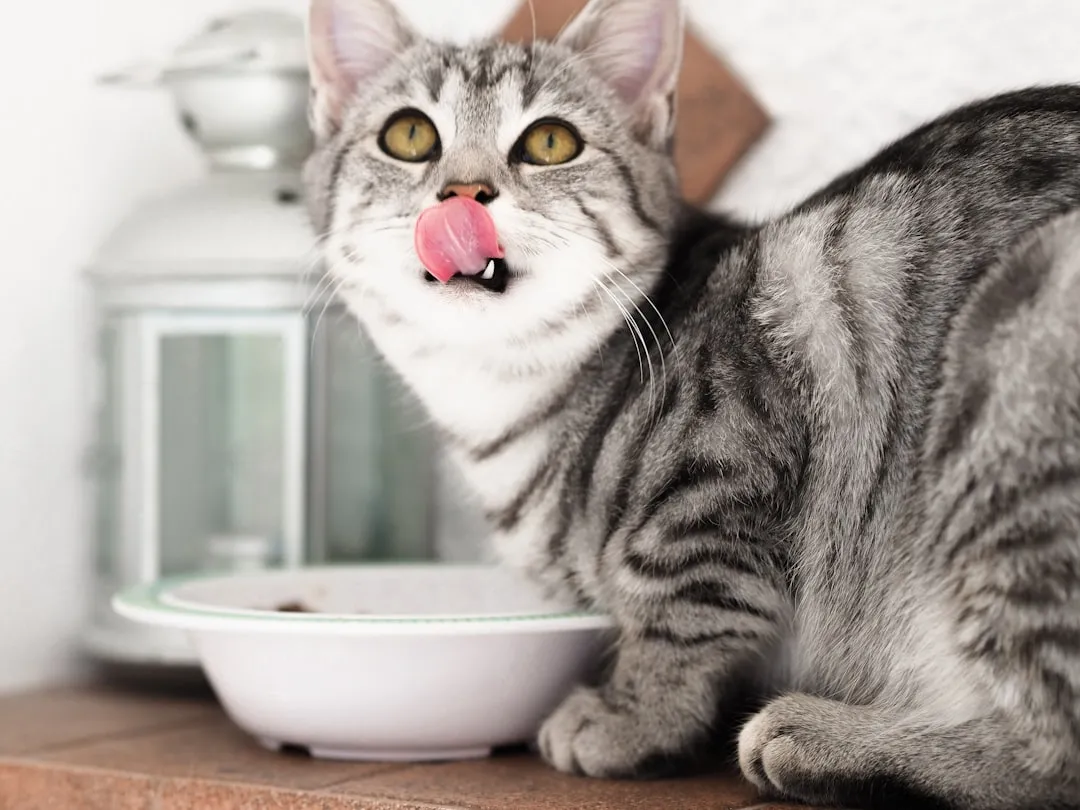
A cat that once bolted the instant you walked near its bowl will eventually just… stay. Finish the meal. Not scan the doorway every three bites. That’s not a small thing. For a rescue cat, food scarcity or competition is often baked into memory, so eating without an exit strategy is a genuine milestone, not a cute quirk.
Most people celebrate the day their new cat eats at all. But the real progress happens later, when the frantic gulping slows down into actual chewing while you’re standing five feet away. That only happens after weeks of the same bowl, same spot, same routine, with zero pressure from you to hurry up or perform.
#11 – Initiating Play Sessions
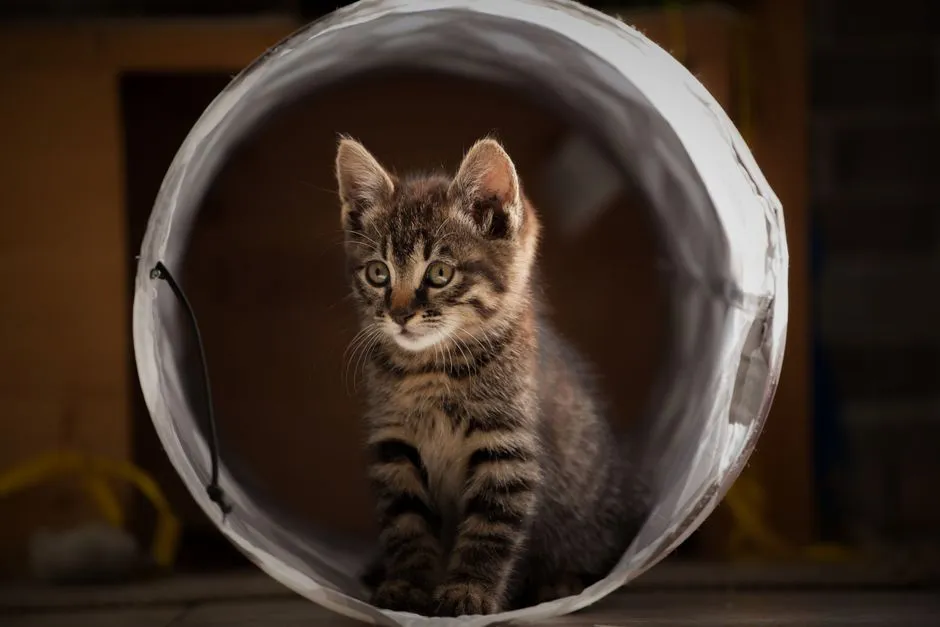
Play is usually the last thing to come back after trauma, and for good reason. Play burns energy a scared animal thinks it needs for survival. So when a rescue cat bats at a toy on its own, unprompted, in the quiet of the evening, it’s making a quiet declaration: it feels safe enough to waste a little energy on fun.
Here’s the detail that matters most. A cat playing alone in another room is one thing. A cat choosing to play near you, in the same space, is crossing a real line. You’ve stopped being background noise. You’ve become part of the game, and often this is the first moment personality starts leaking through the fear.
#10 – Following You Between Rooms
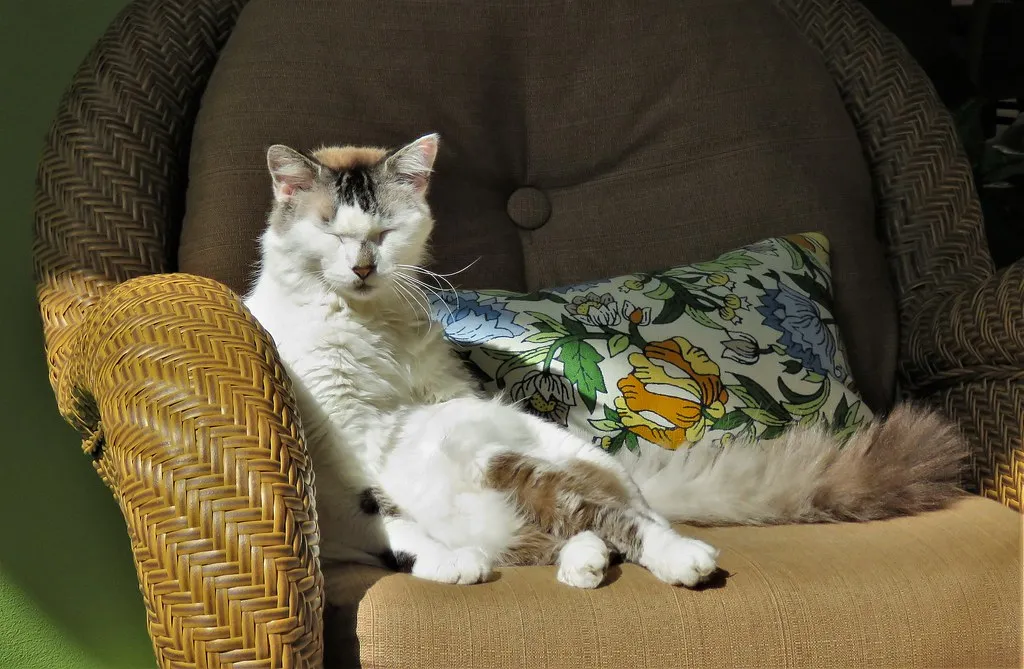
This one looks nothing like the eager, bouncy following of a confident kitten. It starts small: the cat appears in a doorway you just walked through, watching. Then, slowly, actual footsteps behind you. It’s not affection exactly. It’s verification. The cat is checking that the one safe person in the house hasn’t vanished.
What most people never notice is the second half of the pattern. True trust-following includes the cat turning around and going back to its own spot once it confirms you’re still there. It’s not clinginess. It’s a quick, quiet check-in, repeated as many times a day as the cat needs to feel steady.
#9 – Gentle Head Bunting
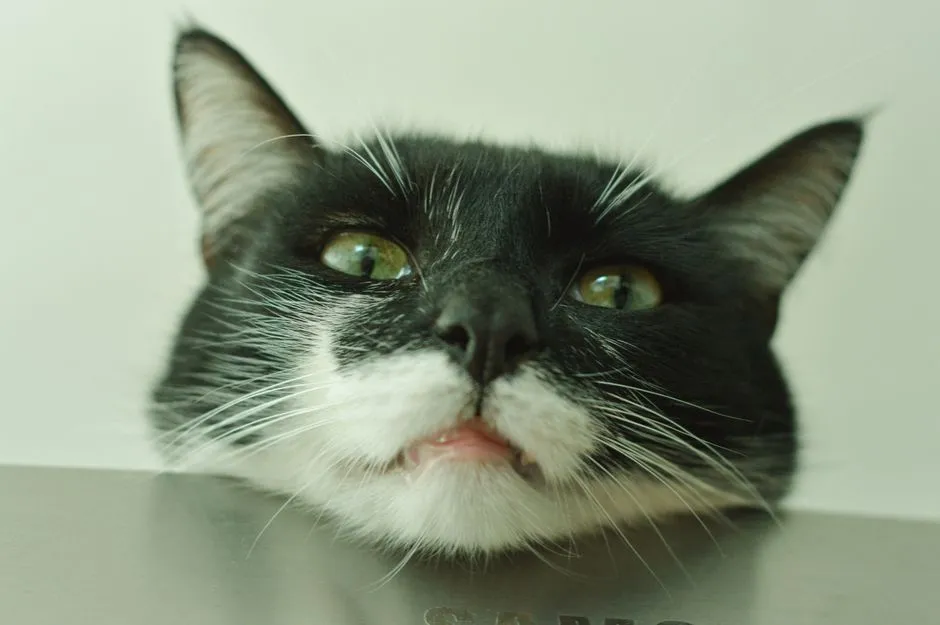
Bunting your hand or leg is a scent-marking behavior, and rescue cats often withhold it for months because it demands the kind of physical closeness they’ve been avoiding on instinct. When it finally happens, it’s not random. The cat has decided you belong to its territory now, not the other way around.
The first attempts are almost funny to watch. A quick bump, then the cat retreats immediately to see how you react, like it’s testing whether the gesture was a mistake. Once the bunting happens again without the retreat, without the flinch, you’re watching real trust settle in.
#8 – Slow Blinking Directly at You

Owners misread this one constantly. A long, steady stare from a cat can look like a challenge, but a slow, deliberate blink is closer to a smile. It’s a rescue cat actively telling you it feels safe, not just tolerating you from across the room.
This signal tends to strengthen once hiding starts to fade, and it gets more meaningful the more comfortable the cat is when it does it. A slow blink from a cat curled up on the couch, holding your gaze instead of looking away first, is one of the earliest real signs you’ll get.
#7 – Kneading on Soft Surfaces Near You
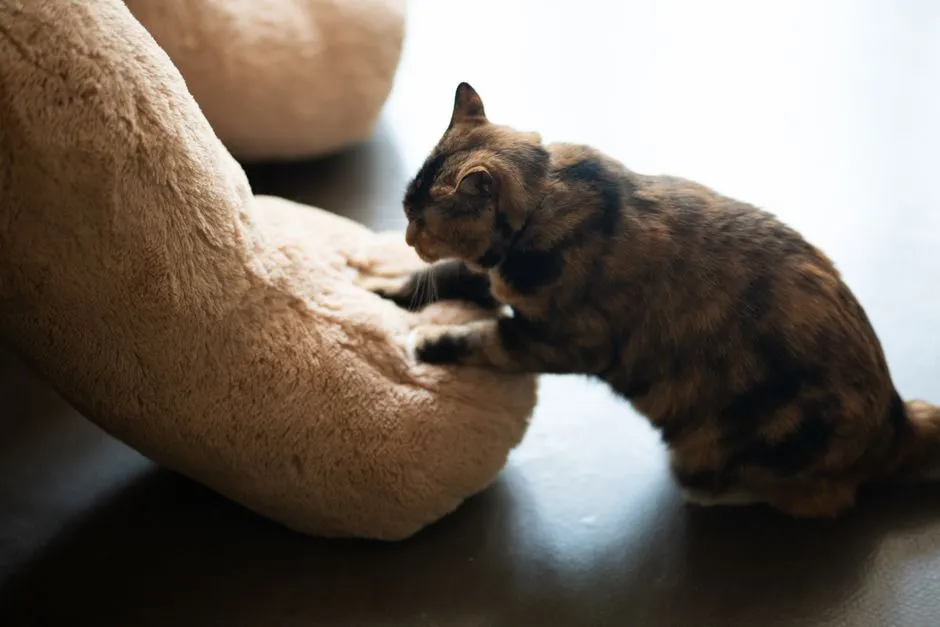
Kneading is a leftover from kittenhood, and it only comes back once a cat feels secure enough to let its guard down completely. It usually starts on a blanket or bed rather than directly on you, which tells you something important: the cat is relaxed, but still keeping a small buffer of distance while it tests the waters.
Watch how the motion changes over time. It gets slower, longer, more rhythmic, less mechanical. That shift happens once the cat no longer feels it needs its claws ready for a fast exit. A home that was just shelter has quietly become a safe base.
#6 – Loud, Sustained Purring
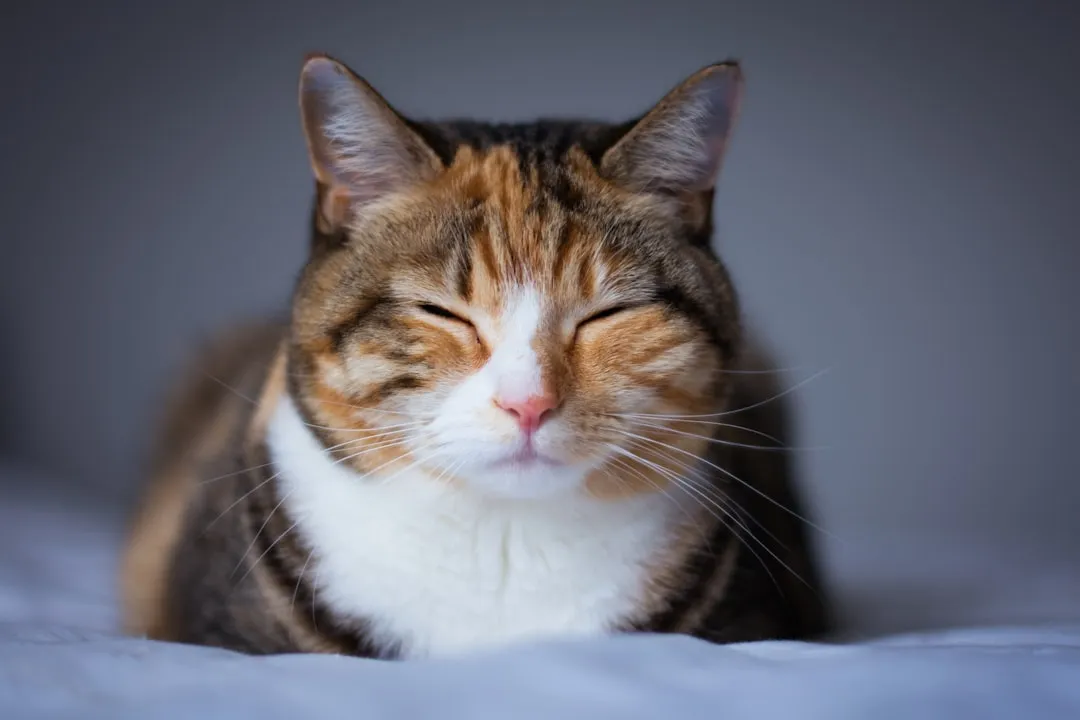
Here’s something most people get backwards. Purring in a scared or recovering cat isn’t always happiness. Early on, it’s often self-soothing, a sound the cat makes to calm its own nervous system, not to communicate with you. The purring that means something different is loud, sustained, and happens while you’re right there petting it or simply sitting nearby.
What surprises a lot of owners is that many rescue cats purr first when they’re completely alone in a safe spot, long before they’re willing to risk that sound in front of a human. By the time the purring gets loud and long in your presence, the cat has already decided the sound is safe to share.
Quick Compare
- Self-soothing purr: happens alone, softer, often paired with a tense body
- Trust purr: happens near you, louder, sustained, paired with a relaxed posture
- Fear-based silence: no purring at all, frozen stance, avoids eye contact
- Bonded purr: starts the moment you sit down, no petting required first
#5 – Exposing the Belly While Relaxed
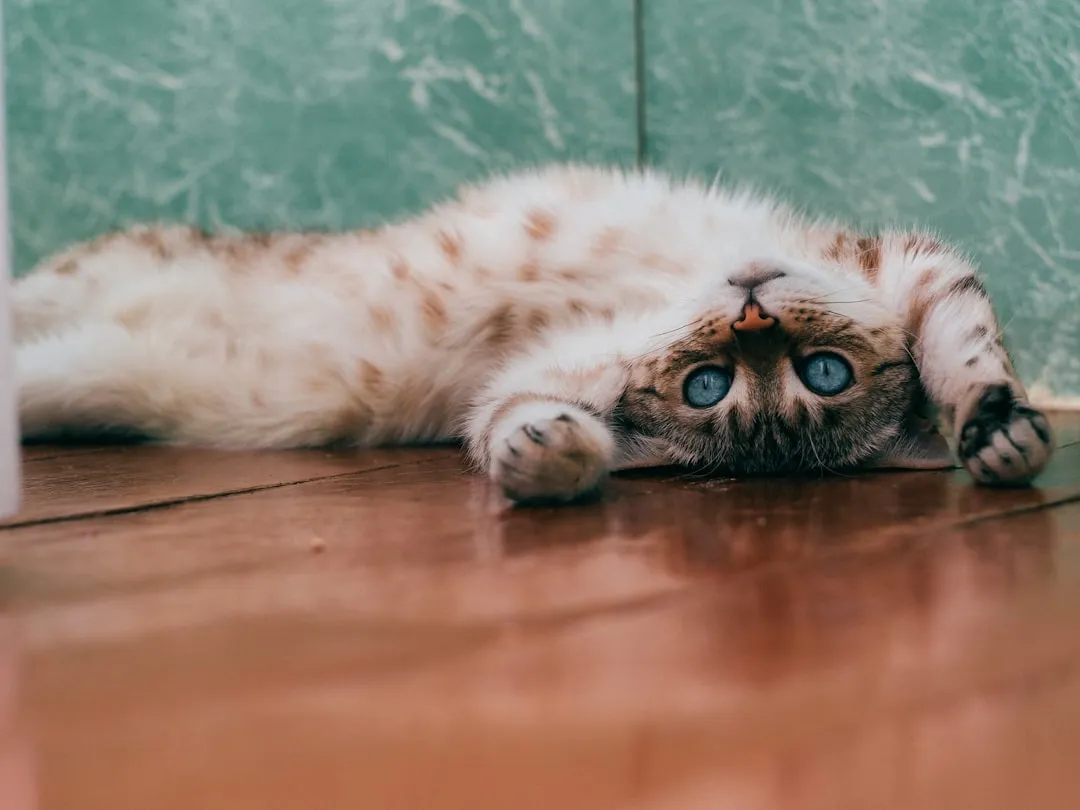
This one trips up almost every new cat owner. A rolled-over belly looks like an invitation for rubs, but in a rescue cat it’s usually something closer to a dare: will you exploit the most vulnerable position a cat can offer? When the cat rolls over and actually stays there, no tensing, no quick flip back, that’s the answer settling in.
The detail almost nobody catches is eye contact. Sometimes the cat exposes its belly while looking straight at you instead of keeping one eye locked on the nearest exit. That combination, full exposure plus full attention, is rare, and it’s one of the more meaningful signs on this entire list.
#4 – Choosing to Sleep on or Near You
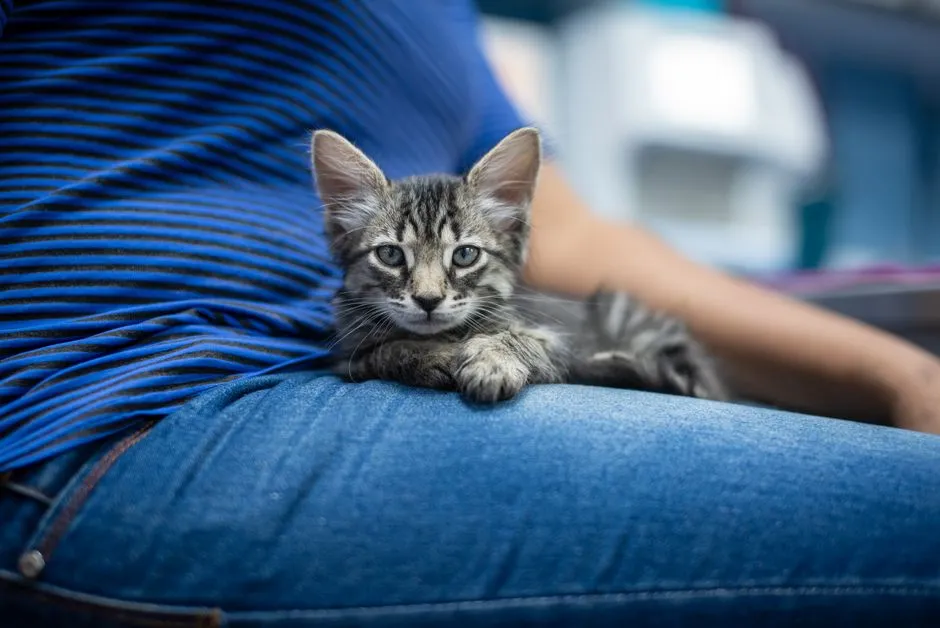
Sleep is the single most defenseless state a cat can be in. So when a rescue cat picks your lap, your bed, or even the floor beside your chair over solitude, that’s not random comfort-seeking. It’s a calculated decision that you, specifically, are safer than being alone.
The progression tends to follow a pattern: same room first, then within arm’s reach, then finally directly on you. Once a cat reaches that last stage, even small interruptions during the nap become a quiet test of whether the trust holds, and most rescue cats pass it without even waking fully.
#3 – Reciprocal Grooming
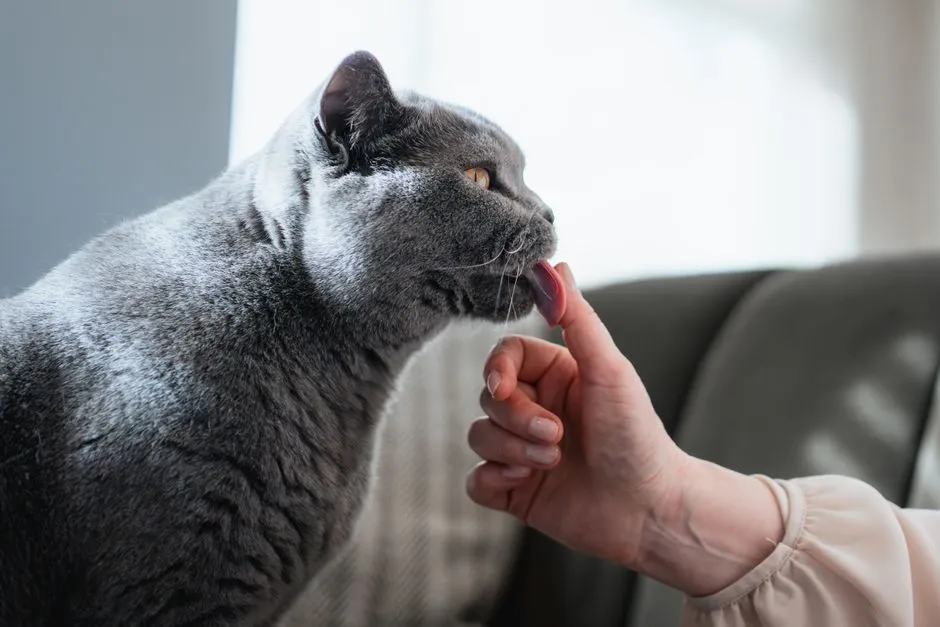
When a rescue cat starts licking your hand, your arm, even your hair, it’s not being weird. It’s treating you as a member of its social group, which is a status almost never handed out until the cat has fully decided you belong inside its inner circle.
The part that surprises owners is how tentative it starts. The first lick is often brief, almost accidental, like the cat is testing the gesture before committing. Once it becomes a regular ritual instead of a one-time thing, you’re not just a safe person anymore. You’ve been claimed.
Worth Knowing
- Forcing physical contact too early can undo weeks of quiet progress in seconds.
- Loud noises, sudden movements, and rearranged furniture are common trust-breakers for a settling rescue cat.
- Letting a cat approach on its own terms almost always builds trust faster than daily coaxing.
- A predictable routine, same feeding times, same quiet spots, matters more than toys or treats.
#2 – Conversational Meowing and Chirping
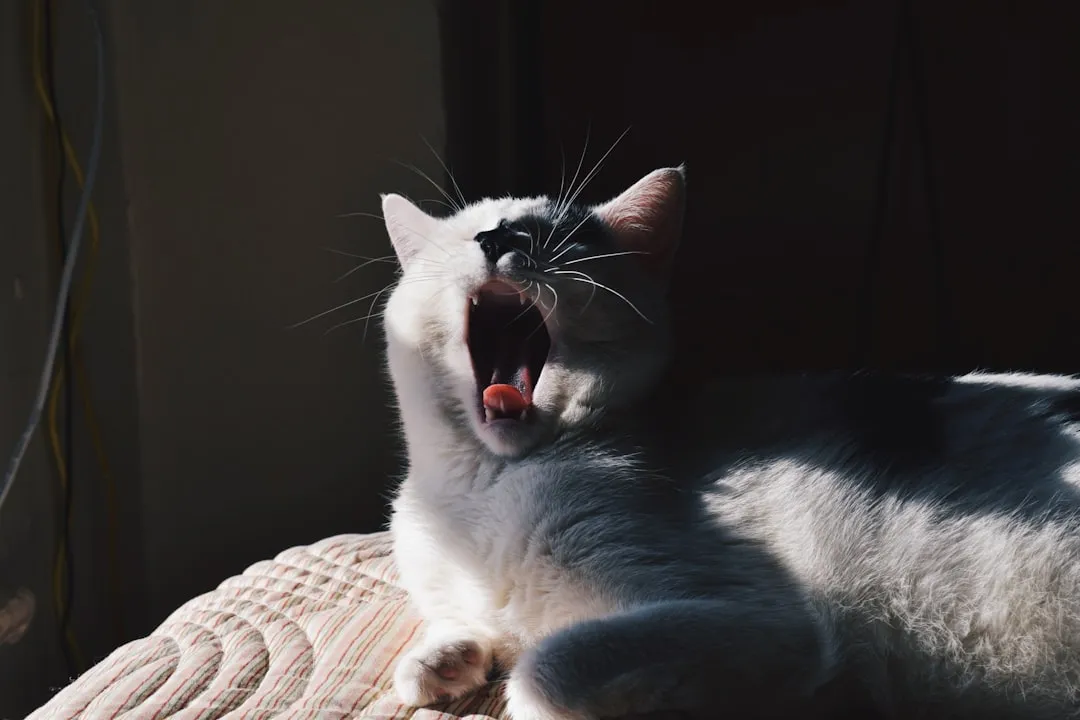
A cat that stayed dead silent for weeks will eventually start offering short meows, trills, or chirps the moment you walk into the room or speak to it directly. These aren’t demands for food or attention. They’re an attempt at actual back-and-forth conversation, something a scared cat simply doesn’t have the bandwidth for.
The real shift happens when the cat starts seeking you out to make these sounds instead of waiting for you to approach first. That change, from silence to a cat actively initiating conversation, is one of the strongest day-to-day signs that the fear has genuinely lifted.
#1 – Actively Seeking You Out for Comfort
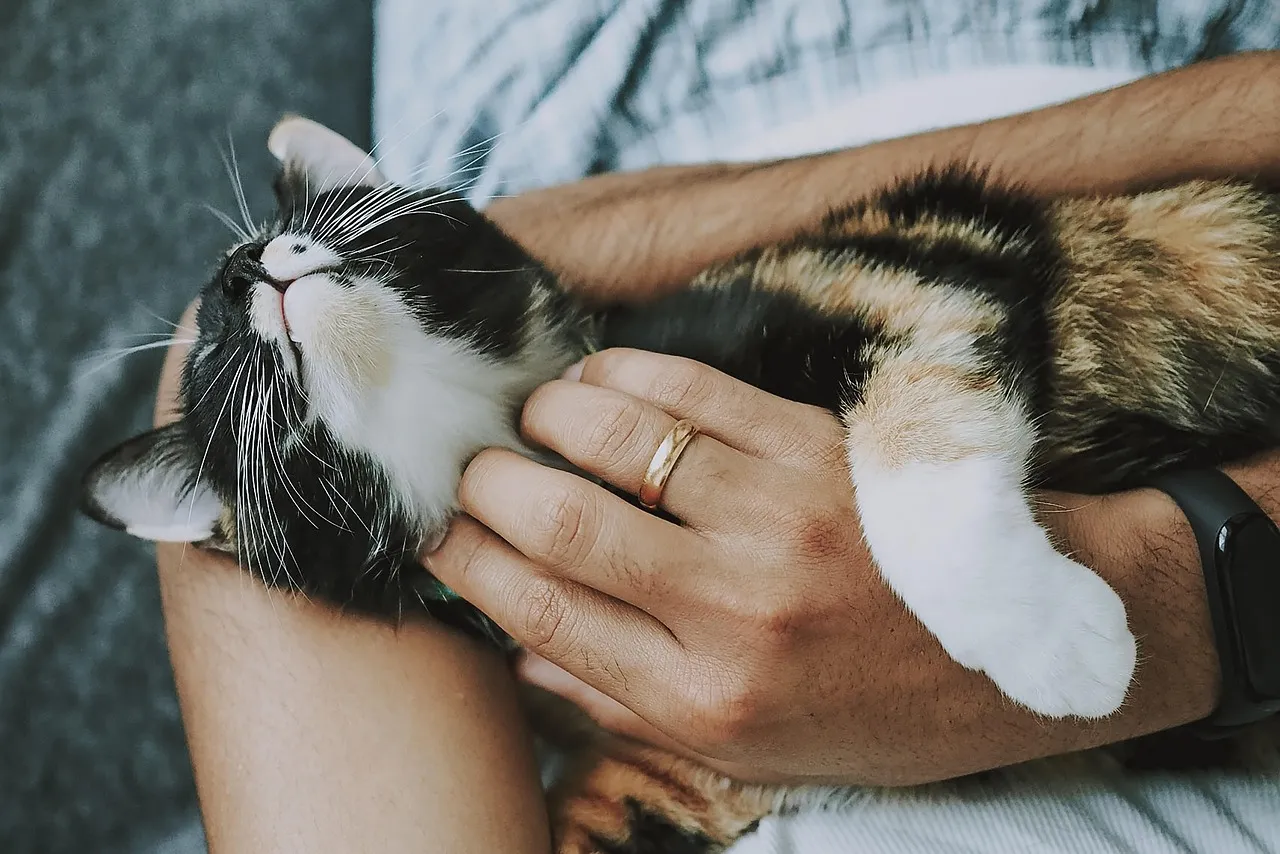
This is the one that matters most, and it’s not subtle once you see it. A rescue cat that deliberately comes to you during a thunderstorm, a loud argument next door, or simply because it wants contact has made a decision that overrides every instinct it walked in with.
It has stopped merely tolerating your presence and started treating you as its primary source of safety. No earlier sign on this list carries the same weight, because this one means the cat isn’t just accepting closeness anymore. It’s asking for it.
The Bottom Line

These signs don’t arrive in a neat, predictable order, and they don’t have to. What matters is that they build on each other, and the final one, a cat choosing you during a moment of real stress, is the deepest trust a rescue animal has to give.
At a Glance
- Body language cues: relaxed tail, exposed belly, slow blinks
- Everyday habits: calm eating, kneading, sleeping close by
- Social signals: head bunting, grooming, purring, following you room to room
- The big one: actively seeking you out for comfort during real stress
Here’s the opinion part, and I’ll stand by it: some cats never hit every single sign on this list, and they still live full, content, happy lives. Forcing affection, rushing the process, or treating a missing sign as a failure only slows everything down. The cats that get there fastest are the ones nobody pushed.
So which of these have you already caught happening in your own living room, and which one surprised you the most when you finally noticed it?
