
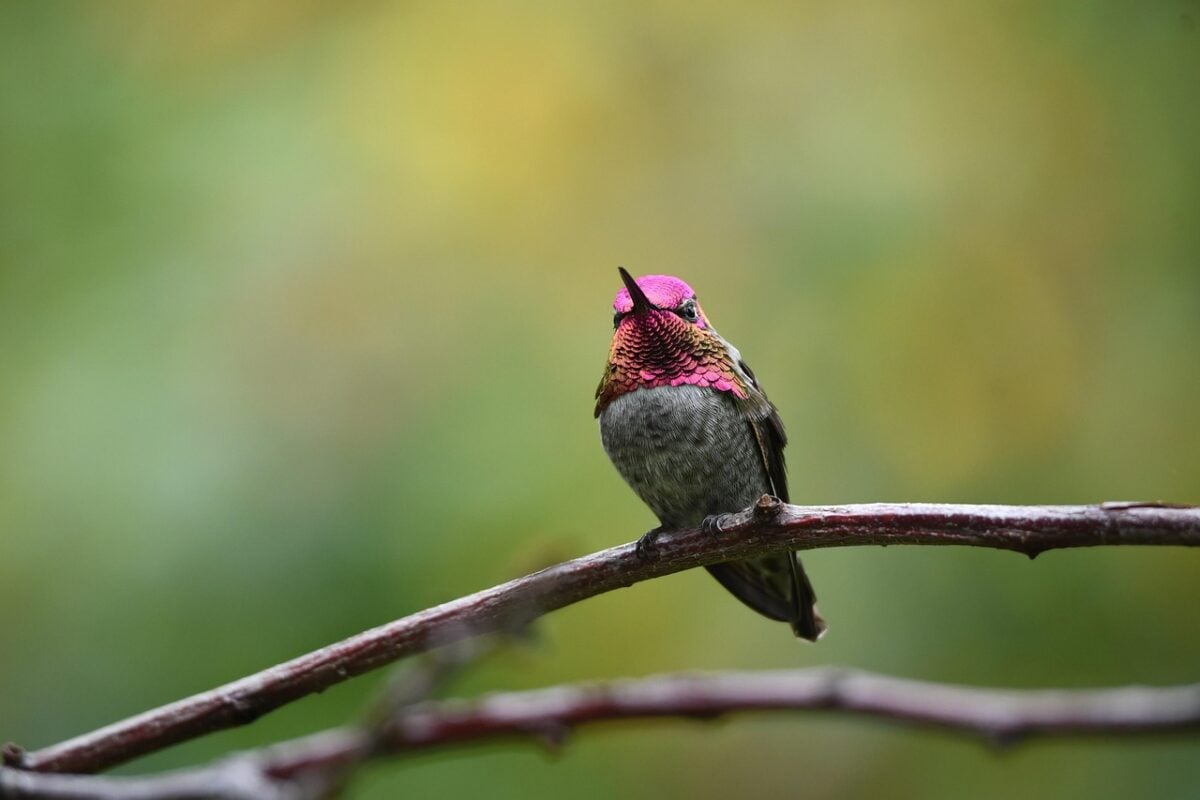
You caught yourself talking to it, didn’t you? “Hey, you’re back,” muttered under your breath to a bird that weighs less than a coin, and then you felt a little silly for saying it out loud. Most people assume that’s just a nice thought, not an actual fact – that the hummingbird buzzing your porch this July has to be a completely different bird than the one you watched all last August.
Researchers who’ve spent years banding these tiny fliers say that assumption is often wrong. Hummingbirds show remarkable site fidelity, returning to the exact same yard, the exact same feeder, year after year. The real question isn’t whether they come back. It’s whether they remember you specifically – and the behavioral evidence for that is stranger, and more convincing, than most backyard birders realize.
#1 – It Zips to the Same Spot Before You’ve Even Filled the Feeder
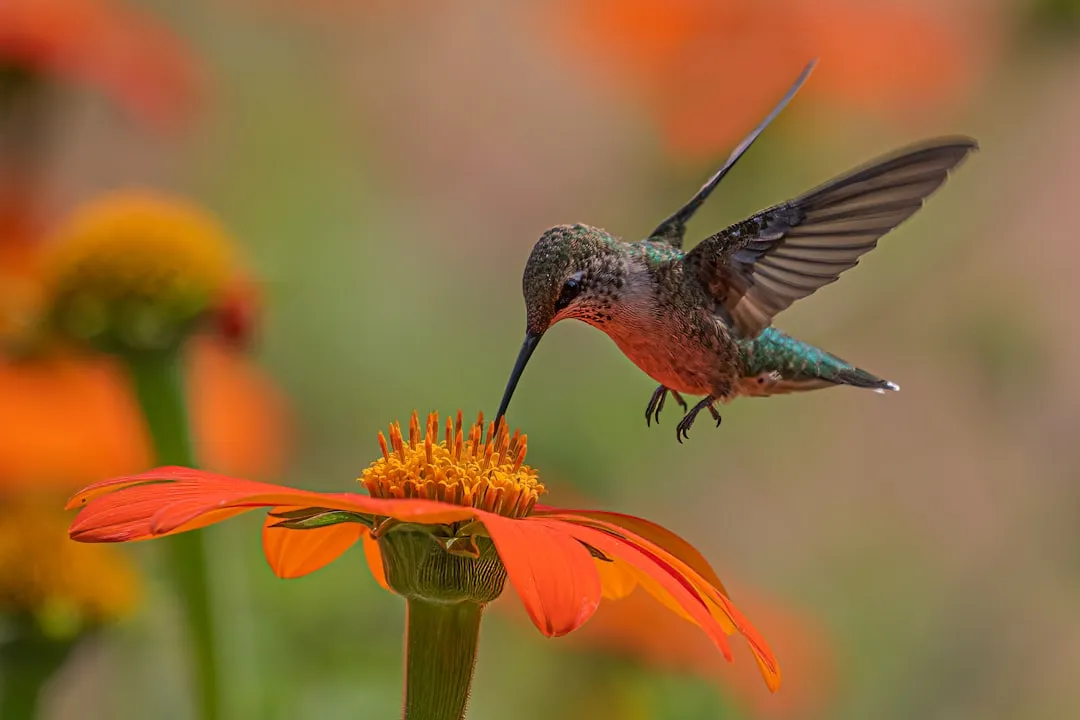
A returning hummingbird doesn’t wander your yard looking for food. It flies directly to the exact pole, hook, or window bracket where the feeder hung last summer – even if the feeder itself is gone.
This isn’t luck. Research indicates that once a hummingbird has fed from a location a few times, it primarily relies on spatial memory rather than visual cues to return. That means the bird isn’t recognizing “a feeder” in general – it’s recognizing a precise coordinate in space, mapped out months earlier using a hippocampus built for exactly this kind of navigation. When that bird beelines for an empty hook, it’s not confused. It’s running a memory check. But that’s nothing compared to what happens in sign #2.
#2 – It Hovers at Eye Level Instead of Bolting
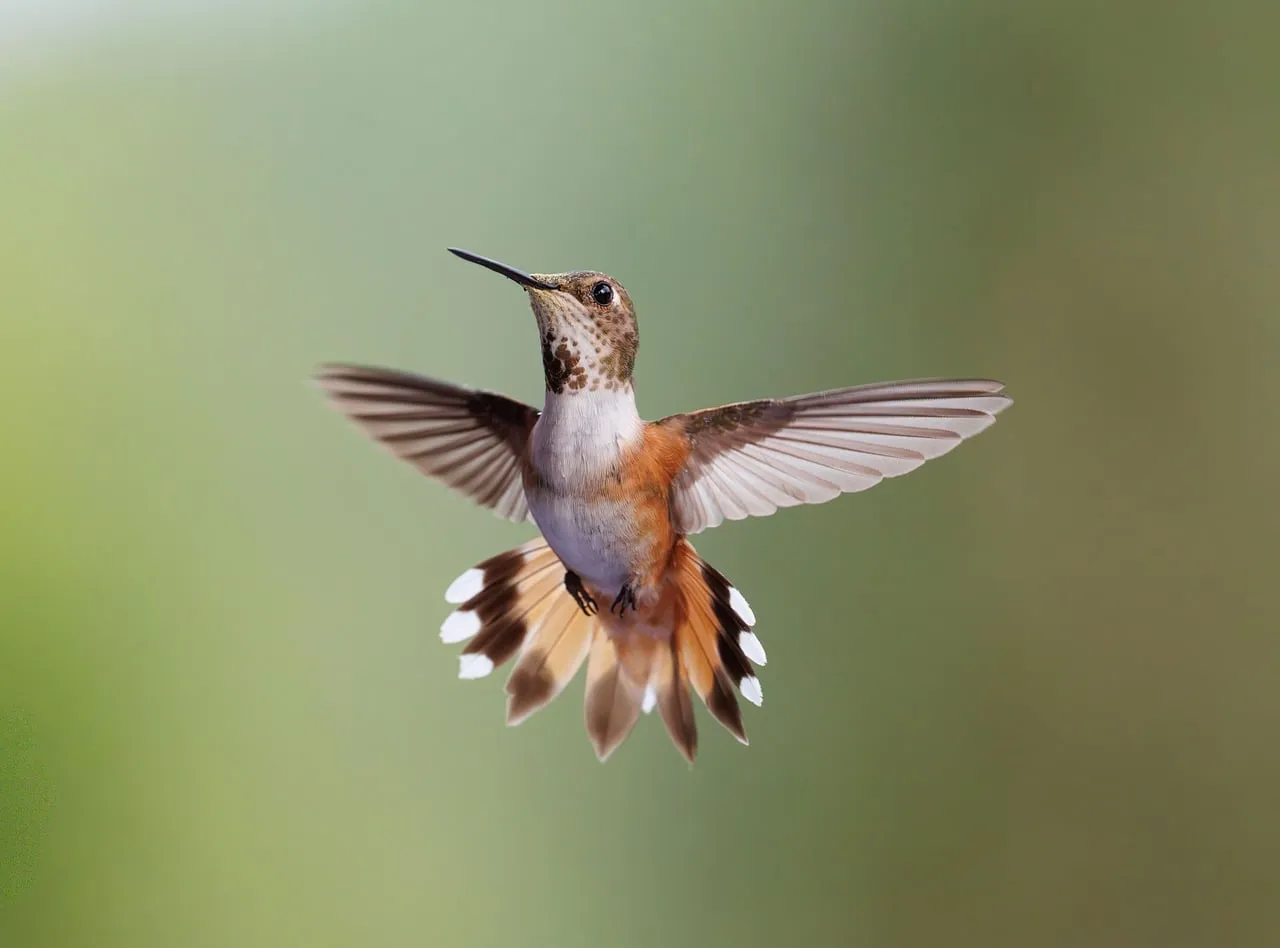
A stranger hummingbird treats every human as a potential threat and keeps a wide, jittery distance. A bird that remembers your yard does something different – it hovers at eye level, almost like it’s checking who’s home.
Researchers studying Northern Mockingbirds found the birds could distinguish between humans who’d threatened their nests and humans who hadn’t. Hummingbirds share that same kind of sharp, associative memory. Scientists haven’t proven hummingbirds clock individual human faces the way crows do, but the pattern is hard to ignore – if you’re the one who reliably refills the feeder, that hover is the bird doing the math on exactly who you are. Sign #3 takes it a lot further.
Fast Facts
- A hummingbird’s brain weighs about 4.2% of its total body weight – the largest brain-to-body ratio of any bird.
- Wild hummingbirds have been shown to remember the refill schedules of hundreds of individual flowers at once.
- Their memory leans heavily on pattern recognition, not blind instinct, which is why routines matter so much to them.
- That outsized brain is largely dedicated to spatial and associative memory – exactly the toolkit needed to “place” a familiar human.
#3 – It Ignores the Full Feeder and Comes Straight for You
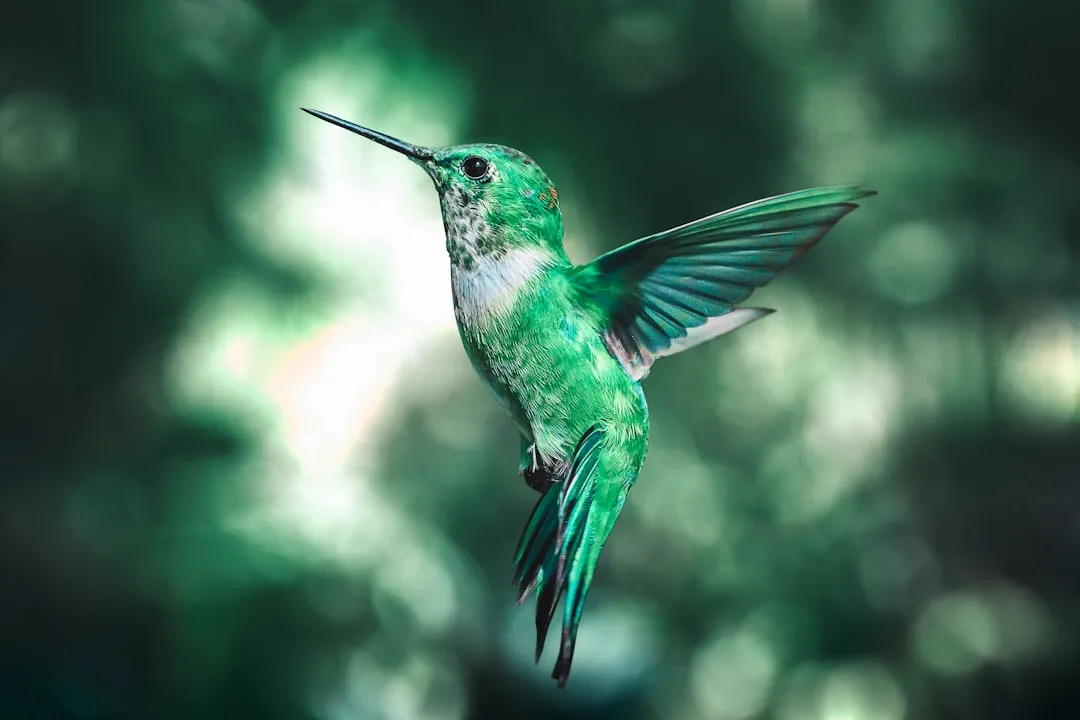
Here’s the one that gives people chills: a hummingbird flying directly at a person, hovering a foot from their face, completely bypassing a full feeder six feet away.
Bird enthusiasts report this constantly, and it lines up with documented territorial behavior toward the humans who keep the feeders full. It’s closer to a hungry demand than a friendly hello, honestly – but the bird is still choosing you as the target, not the flowerbed. It’s treating a human as part of its resource map, the same way it treats a reliable blooming vine. Whether that counts as “recognition” is genuinely debated among bird cognition researchers, but the behavior itself is consistent and repeatable, and it’s usually the same individual doing it season after season. That consistency is exactly what makes #4 so striking.
#4 – It Shows Up on Almost the Exact Same Calendar Date
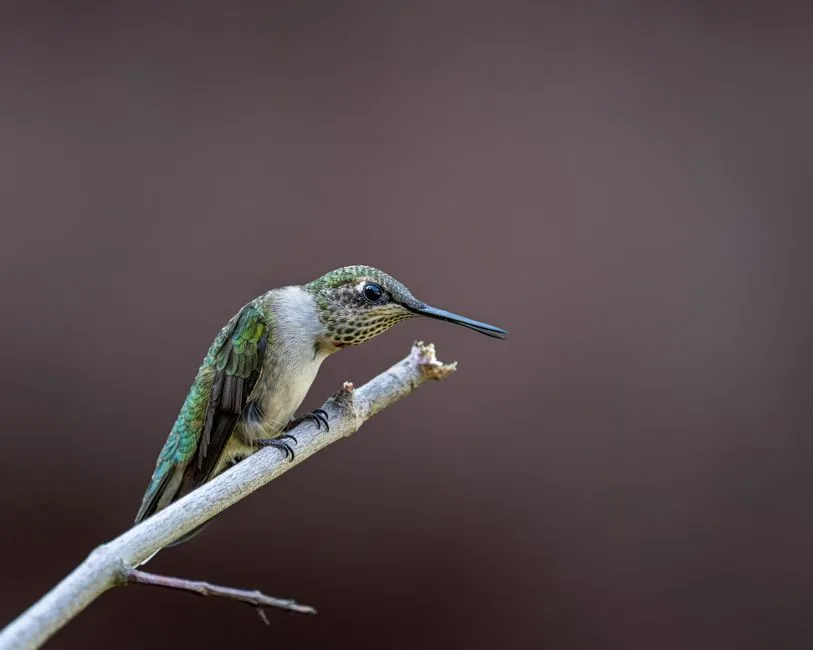
If your hummingbird reliably reappears within a few days of the same date every single year, that’s not a coincidence. It’s one of the most well-documented signs of individual return in the entire species.
Ruby-throated hummingbirds follow the same migration routes every year, arriving at and leaving from stopover points on almost the same date, within a few days, across a journey of thousands of miles. That’s tight enough that longtime feeder-watchers can practically set a calendar reminder by their bird’s arrival. Banders have documented the same phenomenon at stopover sites far from any backyard, which tells us this isn’t a fluke tied to one friendly yard – it’s hardwired. But #5 is where things get personal.
#5 – It Perches Closer Each Week, Not Farther
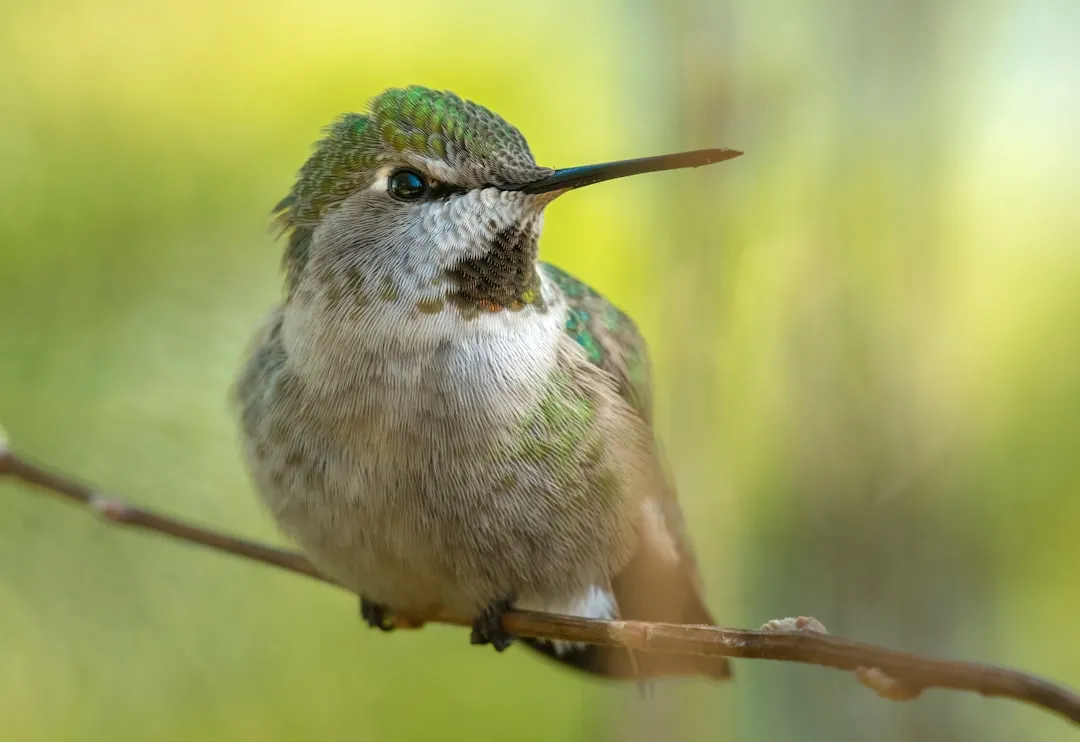
A hummingbird that’s new to your yard treats every perch as temporary and keeps its distance from human activity. A returning bird, week over week, closes that gap.
This is the slow build of familiarity, not affection – but it’s measurable. Hummingbirds remember kind caretakers, but they don’t feel affection or form friendships; the motivation is resources, plain and simple. That’s a slightly uncomfortable truth: your bird isn’t bonding with you emotionally, it’s recalculating risk versus reward every time it sees you, and each safe interaction moves the needle. Still, that gradual, weeks-long shift from distant to bold only shows up in birds that have logged repeated, low-risk encounters with the same human. That pattern sets up #6 perfectly.
#6 – It Chases Off Rivals But Tolerates You Standing Right There
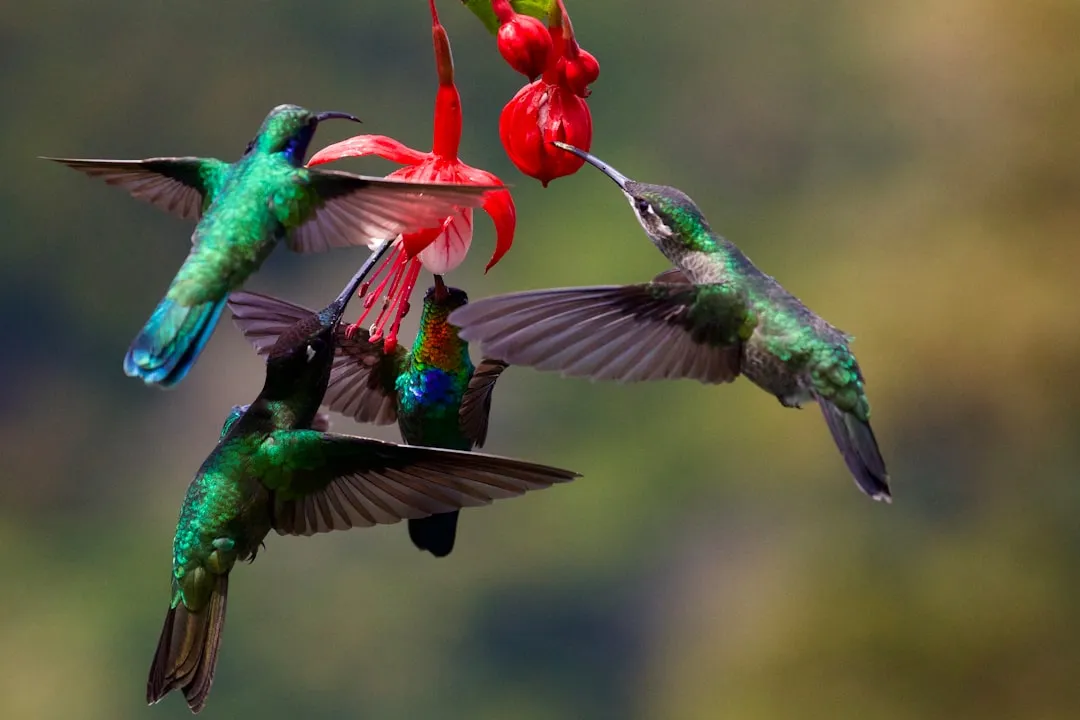
Hummingbirds are famously aggressive toward each other. A bird defending “its” feeder will dive-bomb other hummingbirds without hesitation – but let a familiar human stand two feet away without flinching.
This selective tolerance is a strong tell. Adult hummingbirds are typically territorial and will remember and return to their feeding territories, which means constantly reassessing who belongs and who doesn’t. A bird willing to defend that territory against other hummingbirds while completely ignoring a nearby human has filed that person under “non-threat” – a designation that takes repeated exposure to earn. Some researchers argue this selective aggression is stronger evidence of recognition than the friendly hovering everyone loves to post about, because it shows discrimination, not just habituation. Wait until you see what #7 reveals about timing.
#7 – It Times Its Visits to Your Refill Schedule, Not the Clock
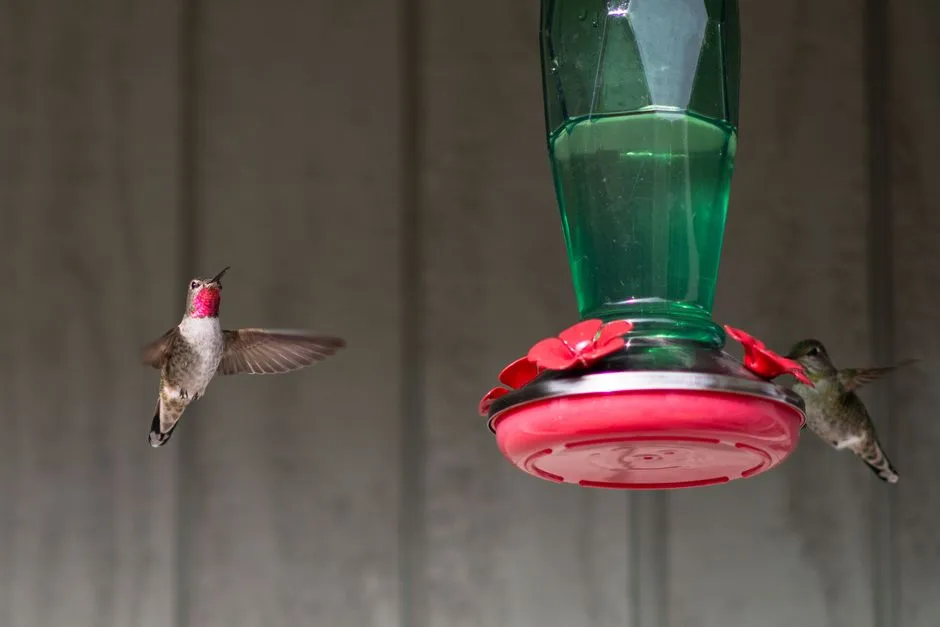
If your hummingbird shows up almost exactly when you refill the feeder – not on a fixed hourly schedule, but tied to your habits – that’s one of the clearest signs of individual memory at work.
Studies led by researchers like Dr. Susan Healy found that wild hummingbirds can remember the refill schedules of hundreds of individual flowers. In controlled experiments, hummingbirds quickly learned that artificial feeders were refilled at specific intervals, ranging from 10 minutes to 24 hours, and then returned precisely when nectar was available again. This isn’t just spatial memory. It’s a built-in calendar and alarm clock rolled into one, and if your bird’s visits track your habits rather than the sun, it has been studying you longer than you’ve been studying it. That leads directly into #8.
Hummingbirds that defend territories of many flowers remember which flowers they have recently emptied.
Dr. Susan Healy
#8 – It Returns to the Same Perch, Branch, or Wire Every Year
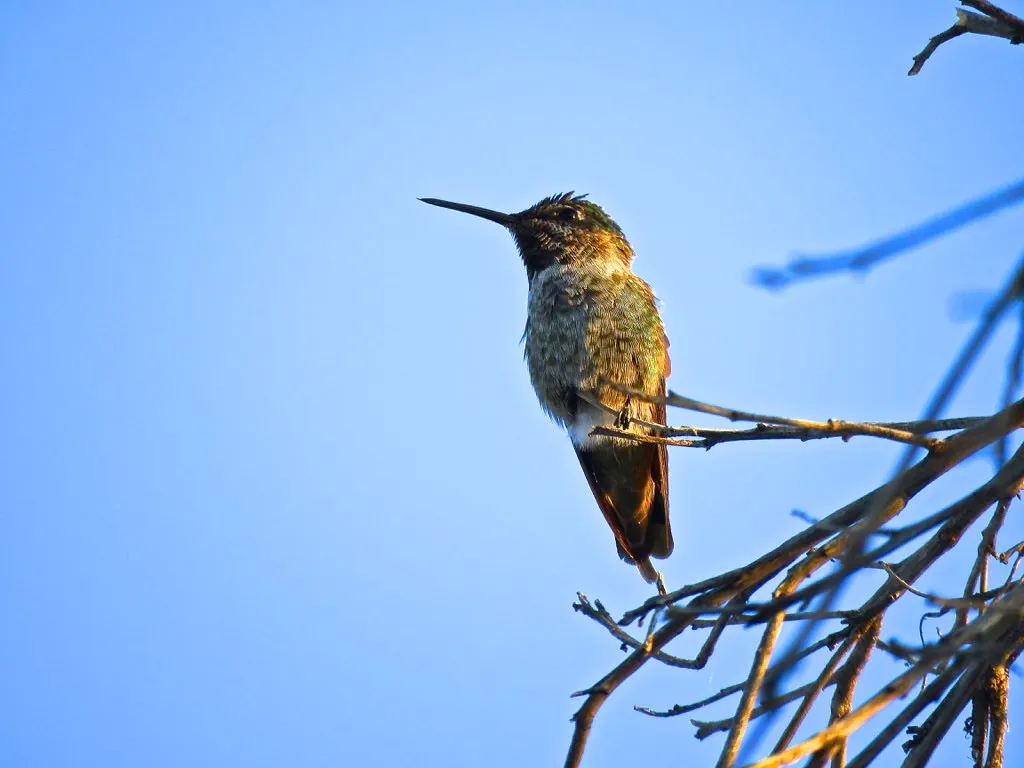
Beyond feeders, hummingbirds pick specific resting spots – a particular twig, wire, or shepherd’s hook – and return to that exact perch summer after summer, even when better-looking branches sit right next to it.
This is landmark-based memory in action. Landmark recognition assists navigation back to summer ranges, and a bird using the same six inches of wire year after year isn’t being lazy – it’s relying on a mental map built from prior successful visits. Most backyard birders never notice this repeat-perch behavior because they’re focused on the feeder, not the resting spots nearby. Once you start watching for it, though, the pattern becomes obvious – the bird lands, surveys the yard from the identical angle, then moves to feed. That’s #9’s cue.
#9 – It Skips the “Scouting” Phase Other Hummingbirds Do
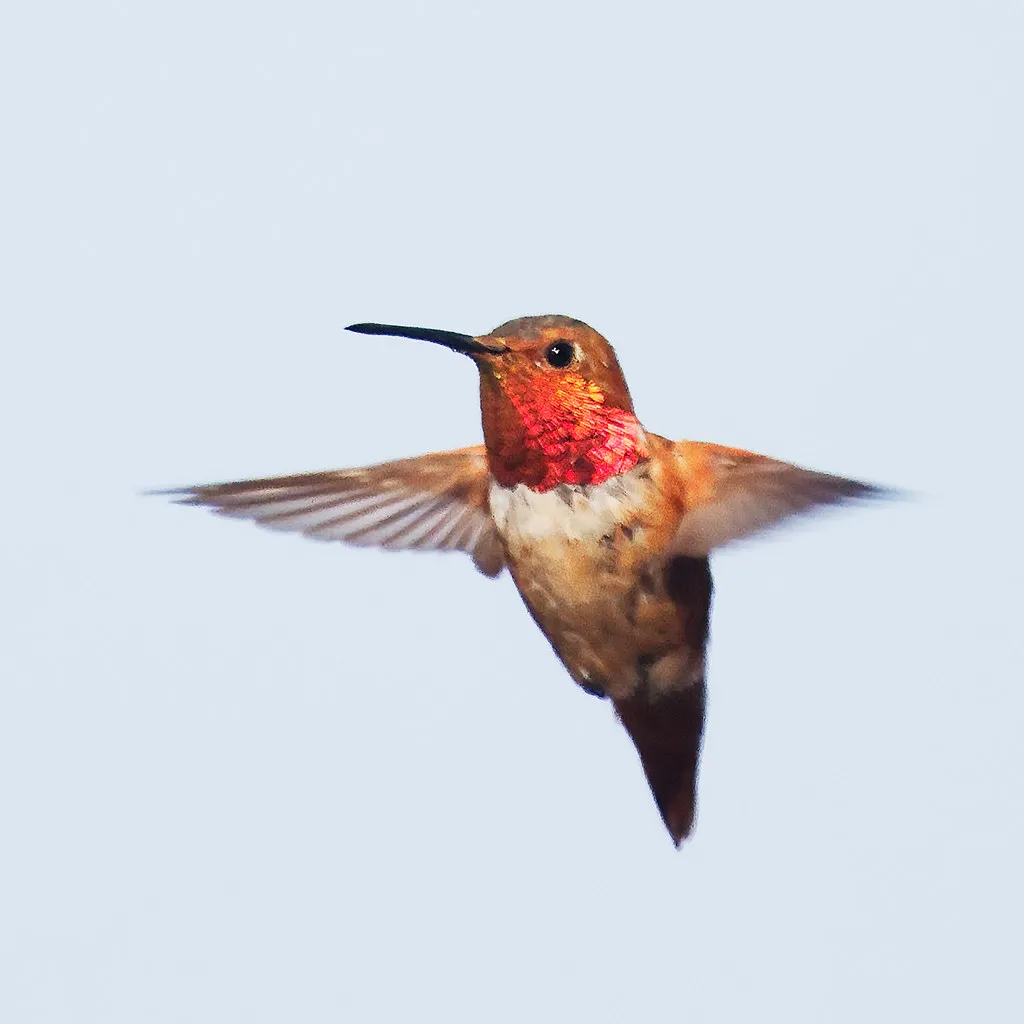
New hummingbirds entering an unfamiliar yard spend real time scouting – circling the feeder, testing multiple ports, checking nearby flowers before settling in. A returning bird skips straight to business.
Field studies have shown hummingbirds can remember the locations of artificial feeders and return to them even after several days, which highlights just how sharp their recall really is. The absence of scouting behavior is arguably more diagnostic than any single friendly gesture, because it shows the bird already did the risk assessment in a previous season and simply trusts the outcome. A brand-new bird treats your yard like an unknown variable. A returning one treats it like a known equation. That efficiency connects directly to #10.
Quick Compare
- New bird: Circles the feeder, tests multiple ports, checks nearby blooms before committing.
- Returning bird: Flies straight to the port it used last summer, no hesitation.
- New bird: Treats the yard as an unknown, higher-risk environment.
- Returning bird: Treats the yard as a known, already-vetted resource.
#10 – It Reacts Differently to You Than to Strangers in the Yard
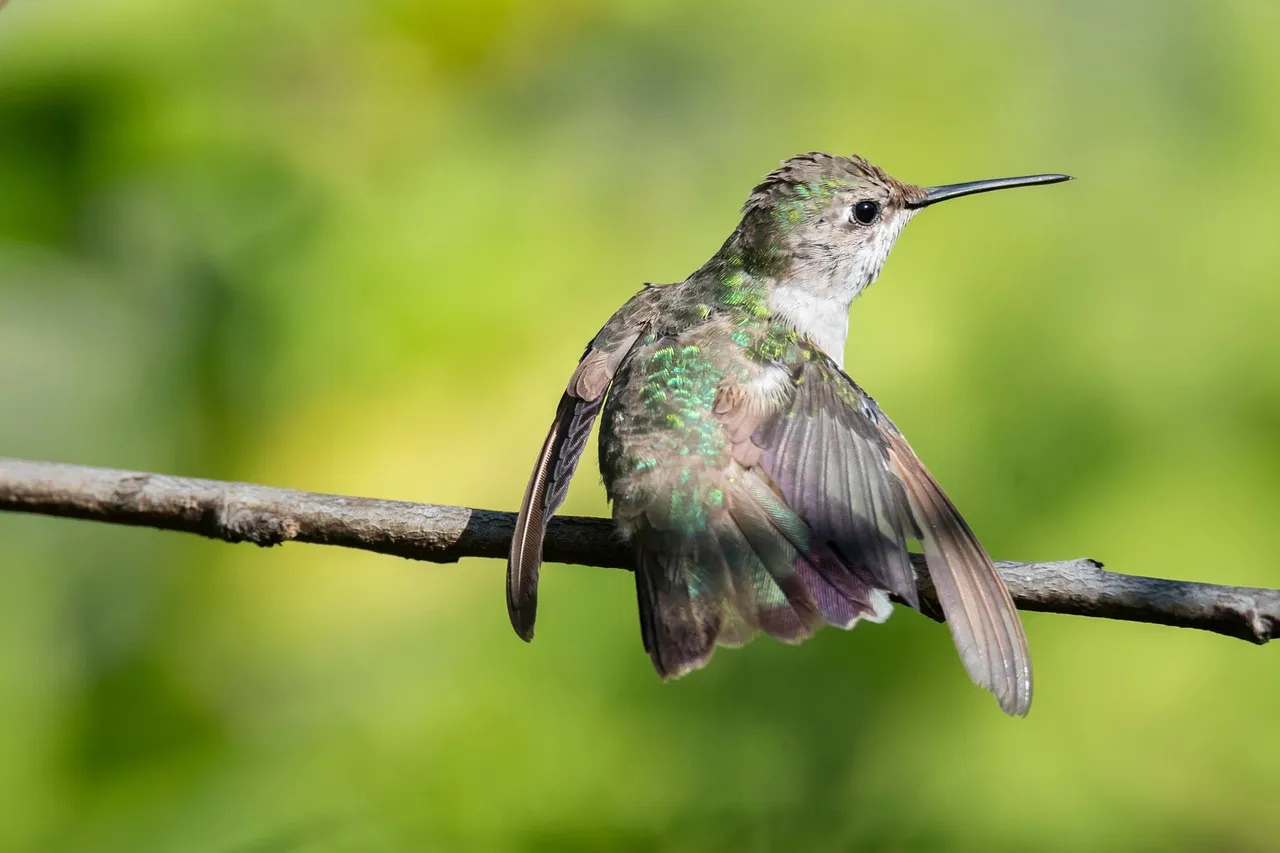
A returning hummingbird will often stay calm when you walk by, but scatter the instant an unfamiliar visitor steps into the same spot. That contrast is one of the more compelling clues available to backyard observers.
Direct proof of individual face recognition in hummingbirds remains limited, but the comparison to other well-studied species is telling – crows, pigeons, and parrots can all recognize individual humans. Hummingbirds pack an outsized amount of neural tissue into that tiny skull relative to body size, largely dedicated to spatial and associative memory. A bird that’s visibly relaxed around you but skittish around a new face is showing exactly the kind of selective discrimination that memory-based recognition would predict. Number 11 pushes this even further.
#11 – Its Chirps Change When You Step Outside
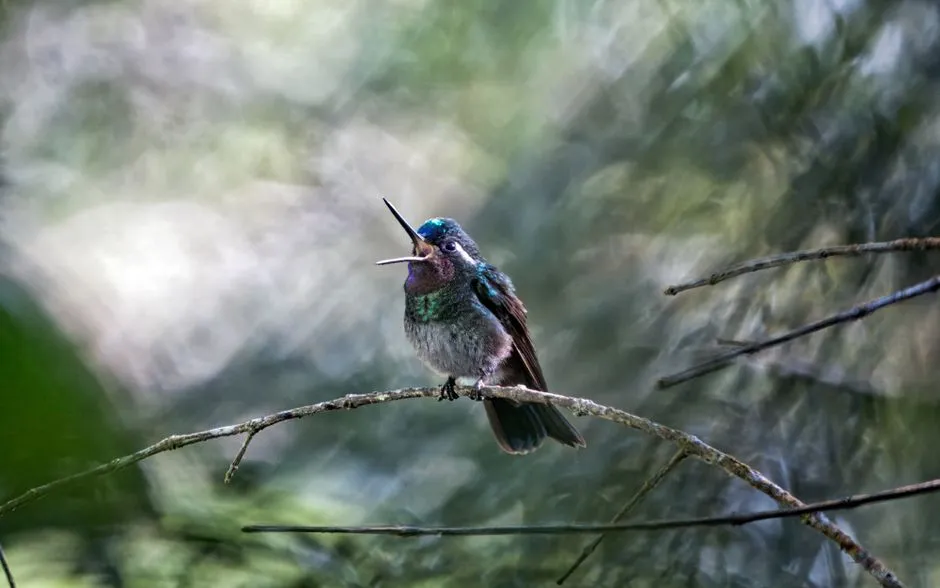
Longtime feeder hosts often report a specific, repeated chirp pattern the moment they walk outside – different from the alarm calls used for predators or rival hummingbirds.
This lines up with what’s known about hummingbird cognition generally. They aren’t purely instinct-driven; they’re intelligent learners with brains that, though tiny, run efficient pattern recognition. Formal studies isolating “human-specific chirps” are still thin, but we do know hummingbirds use different calls for different threats and different food-related excitement levels – the vocabulary is flexible, not fixed. A distinct “you’re outside” chirp, repeated reliably across a season, suggests the bird has categorized your appearance as a specific, predictable event worth its own signal. That predictability theme carries straight into #12.
#12 – It Rebuilds Near the Same Nest Site, Not a Random One
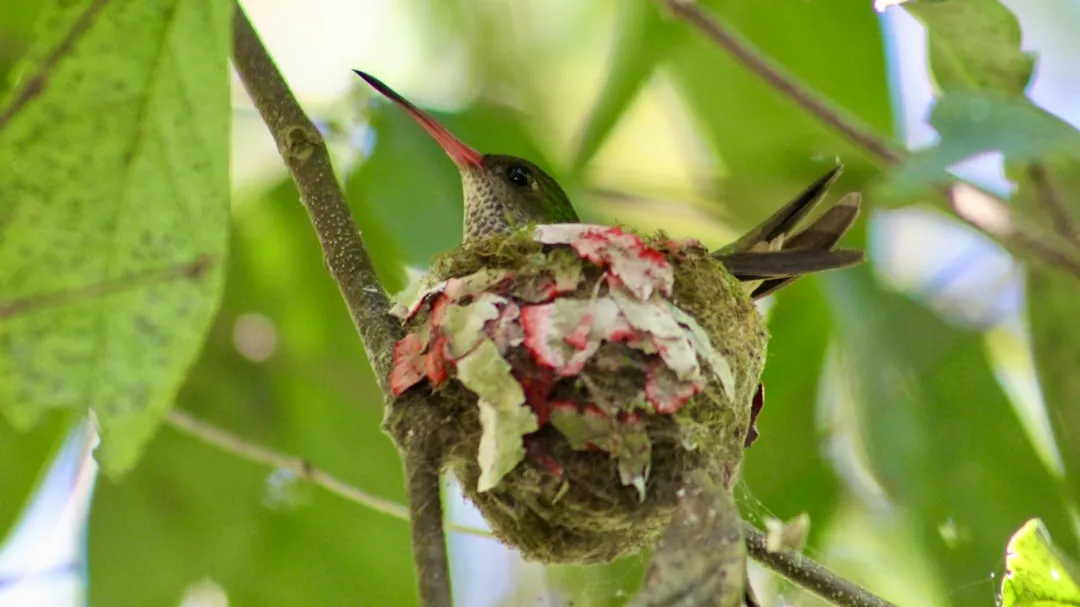
Female hummingbirds don’t relocate randomly each spring. They tend to return to the same tree, the same fork in the branches, sometimes the exact same square foot of yard, to build a fresh nest.
Females return to the same tree for nesting and sometimes reuse last year’s nest outright – one documented case found a female reusing her nest for five years straight. Most people assume old nests get abandoned entirely, but the truth is the new one often gets built directly on top of, or immediately beside, the old structure. Nests deteriorate from weather and repeated use, which is why they’re rebuilt rather than reoccupied indefinitely. A three-year study on ruby-throated hummingbirds found 75-80% of females returned to the exact same nest area – that’s loyalty over convenience, season after season. Number 13 shows just how far that loyalty extends.
Worth Knowing
- One documented female reused the same nest site for five consecutive years.
- A three-year study found 75-80% of females returned to the exact same nest area.
- New nests are often built directly on top of, or beside, the previous year’s structure.
- Nests wear down from weather and use, which is why they’re rebuilt rather than kept indefinitely.
#13 – The Same Bird Comes Back Even After a 2,000-Mile Migration
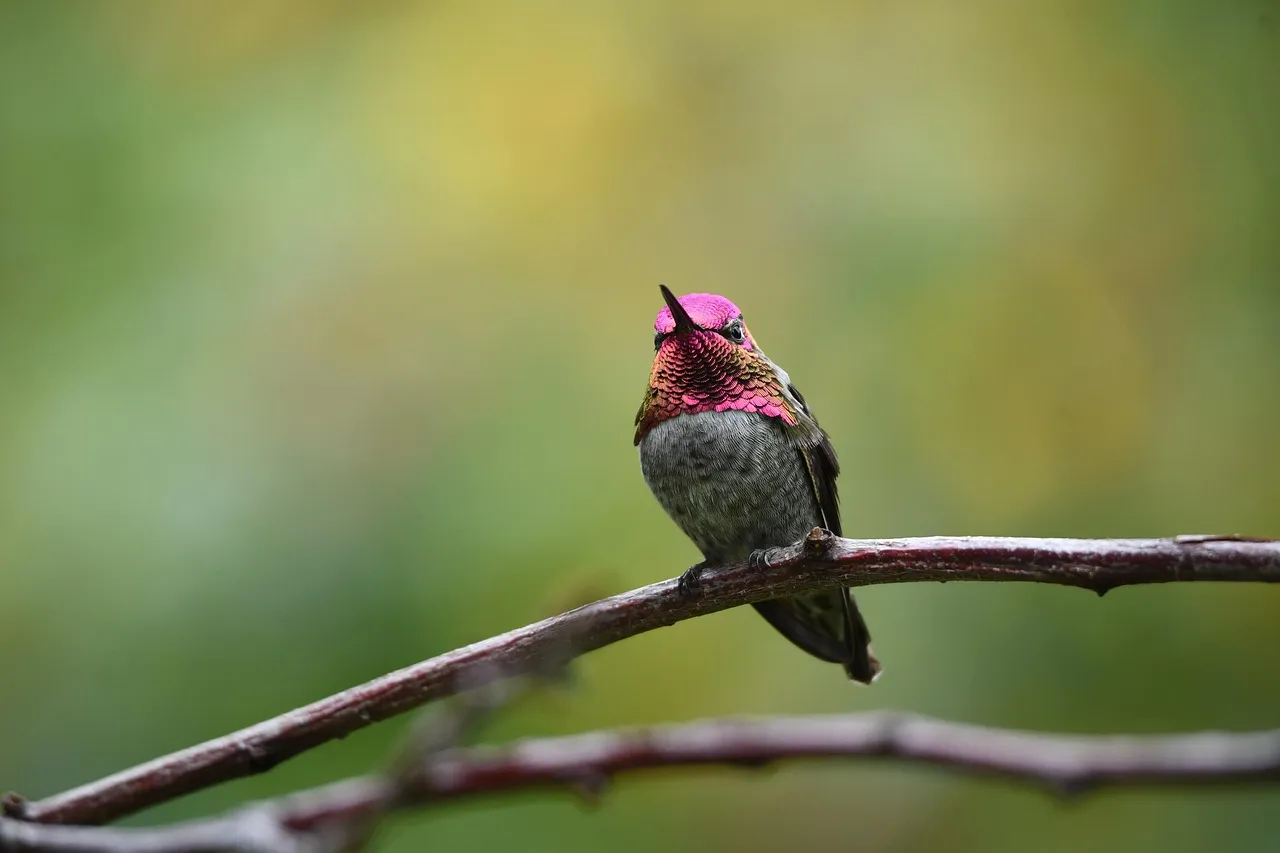
It sounds almost impossible: a bird weighing less than a nickel flies thousands of miles across open water and open desert, then lands back in the exact same three-acre patch of your neighborhood.
The ruby-throated hummingbird, weighing less than a penny, relies on precise spatial memory to navigate a 500-mile non-stop flight across the Gulf of Mexico. Tracking data has revealed that these birds often return to the exact same gardens and feeders year after year – banding studies confirm it at scale, not just anecdotally. This is arguably the single most jaw-dropping fact in hummingbird biology: a brain smaller than a BB pellet retaining a functional map spanning an entire continent. If your bird vanished in September and reappeared the following April or May, it didn’t get lucky. It navigated home. And that brings us to the sign that matters most.
At a Glance: The Gulf Crossing
- Distance: roughly 500 miles over open water, completed non-stop.
- Duration: approximately 18 to 22 hours in continuous flight.
- Weight change: birds nearly double their body weight, from about 3.25 grams to over 6 grams, before departing.
- Fuel source: entirely stored fat reserves – there are no rest stops over the Gulf.
#14 – It Remembers You Even When the Feeder Is Empty
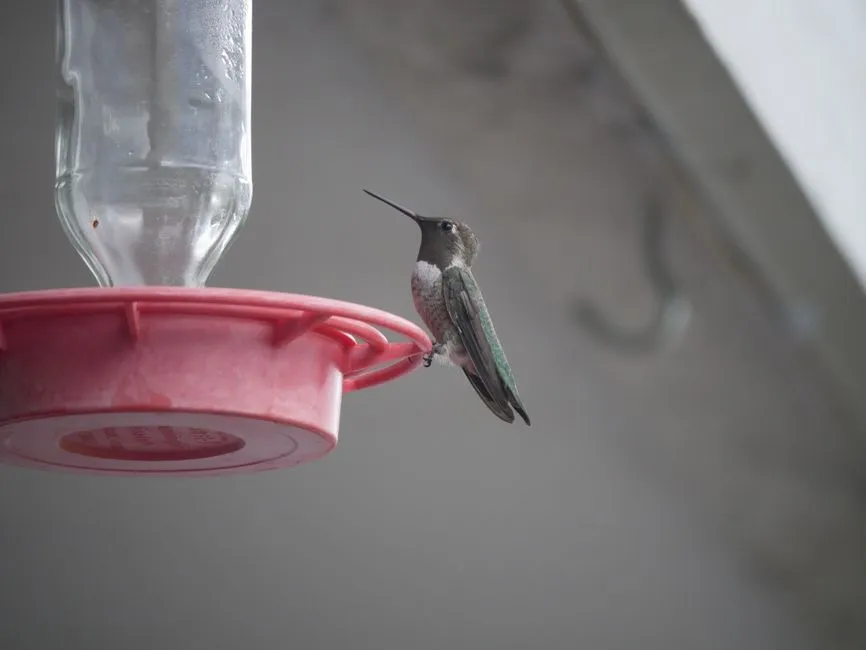
This is the ultimate test of memory over habit: a hummingbird that still shows up, checks the empty feeder, and lingers nearby – instead of writing your yard off entirely.
A bird motivated purely by instinct would abandon an unreliable food source fast. One running on memory behaves differently. Food sources shift constantly over a summer – flowers stop blooming, seeds run out – so birds are generally used to searching for the next option, but a feeder offers something rarer: a reliable supplement they can count on. An empty feeder doesn’t erase months of stored memory. It just triggers a temporary reassessment, not total abandonment. A bird that keeps circling back, even after finding nothing, is demonstrating something closer to trust than instinct – a bet placed on a history of reliability it built with you specifically, across an entire season or more.
The Bottom Line
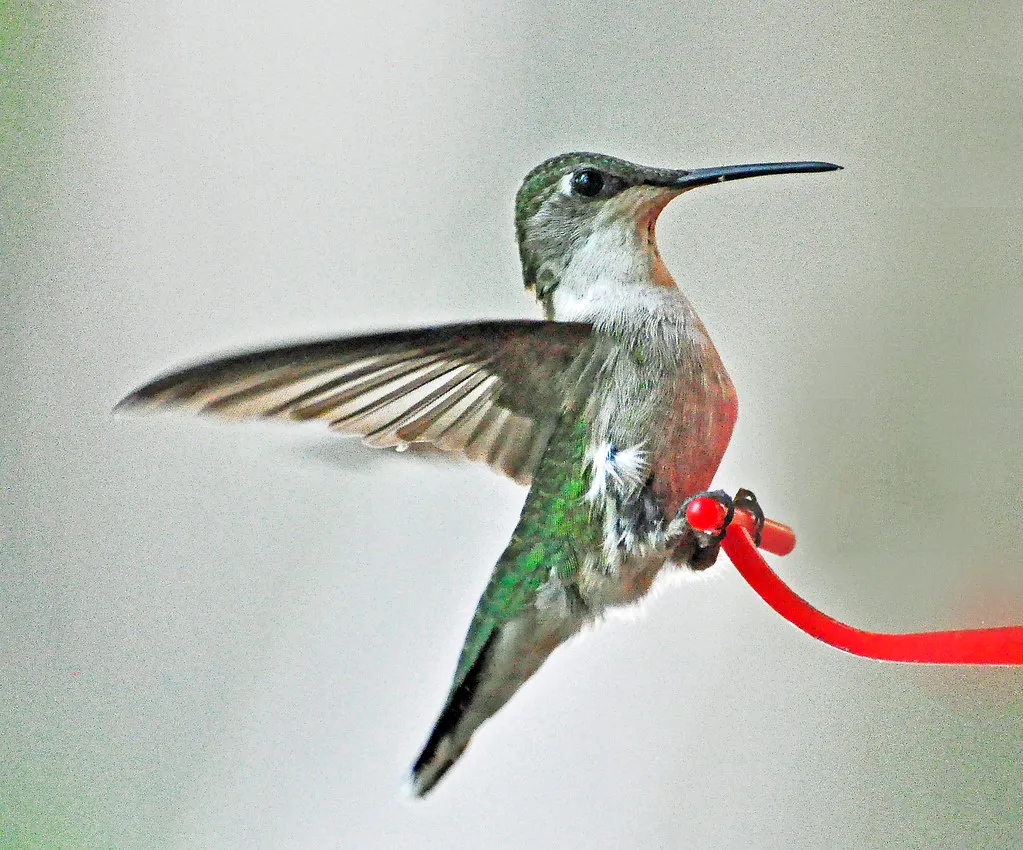
The science is clear on the big picture and honest about its limits. Hummingbirds absolutely remember locations, feeders, refill schedules, and territories with startling precision, and they very likely track the humans tied to those resources, even if no lab has proven they recognize individual faces the way a crow does.
The behaviors – direct flight paths, selective tolerance, calendar-tight returns, lingering at empty feeders – are too consistent to dismiss as coincidence. My honest take? The “just resources, not affection” framing researchers use is technically correct, but it sells these birds short. Recognition built on trust and repeated safety isn’t nothing, even in a brain the size of a pea.
Which of these signs have you noticed in your own backyard? Tell us in the comments – we’re curious how many of you have a “regular.”
