
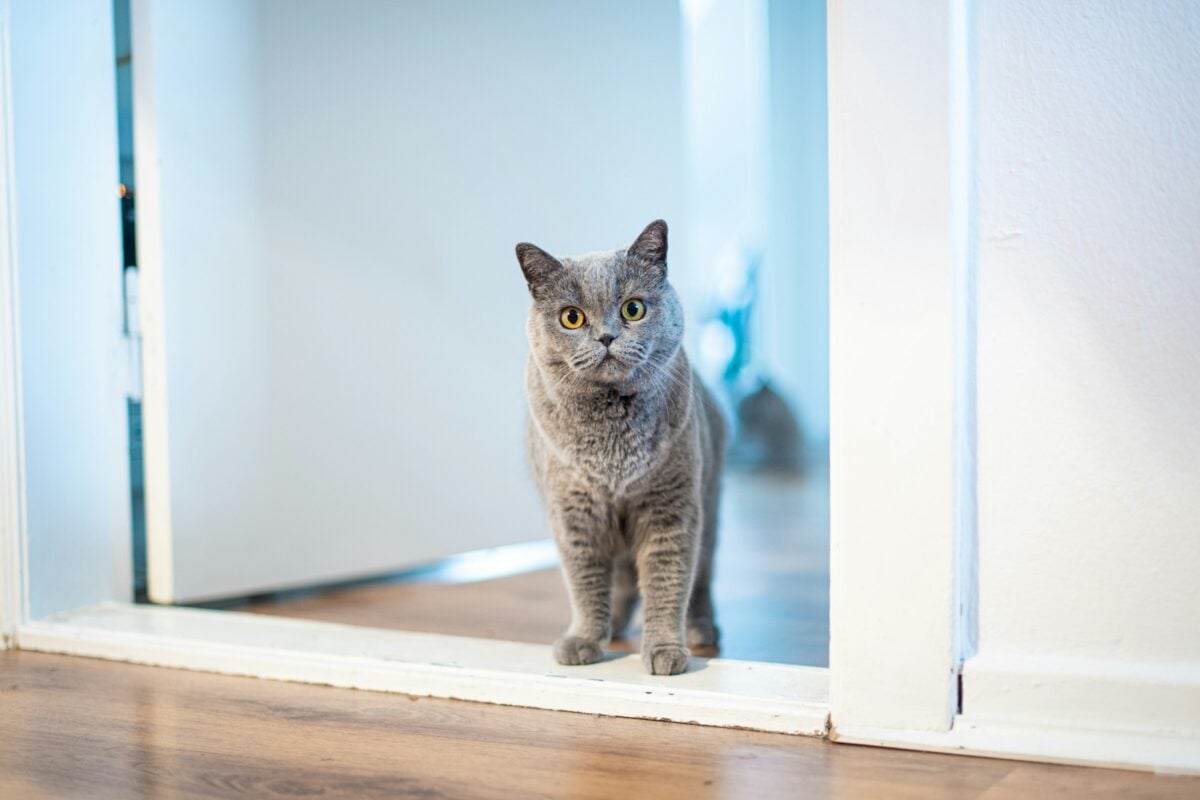
Most people are convinced their cat barely tolerates them – a moody little roommate who only shows up when the can opener whines. But animal behaviorists say the opposite is often true: many cats bond just as hard as dogs do. We just never learned to read the signals, because cats don’t wag, bark, or leap on you at the door. They trust you in whispers, not shouts.
Here’s the part that changes everything: the behaviors you’ve been writing off as “aloof” or “rude” are, in cat language, some of the boldest trust signals an animal can give. Once you know what you’re looking at, you’ll never see your cat’s back turned toward you the same way again – especially by the time you get to #1.
#13 – It “Ignores” You… Right Next To You
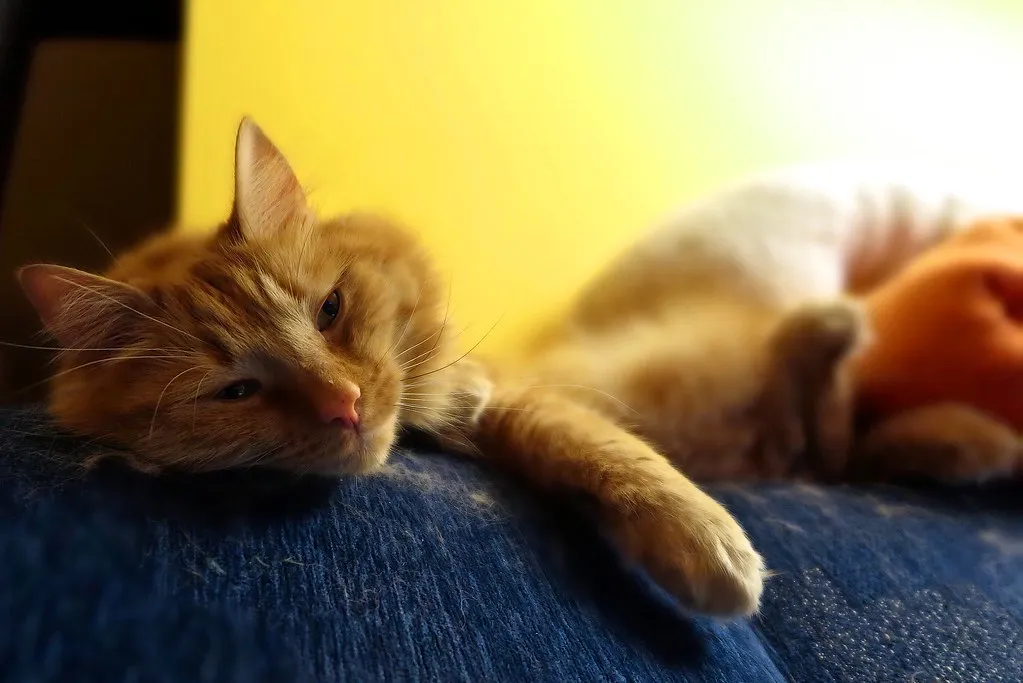
If your cat flops down a few inches from your leg and seems totally checked out, that’s not disrespect. In the wild, cats only relax around things they don’t view as a threat. When your cat turns its back to you or dozes without watching your every move, it’s quietly saying, “I feel safe enough not to watch you.”
Watch where it actually chooses to nap: the back of the couch right behind your head, the bed with its tail just barely touching your leg. Those contact points aren’t random. Your cat is resting and staying connected at the same time, and it doesn’t need to keep an eye on you because it already knows you won’t do anything unpredictable.
#12 – It Slow-Blinks At You Like You’re In On A Secret
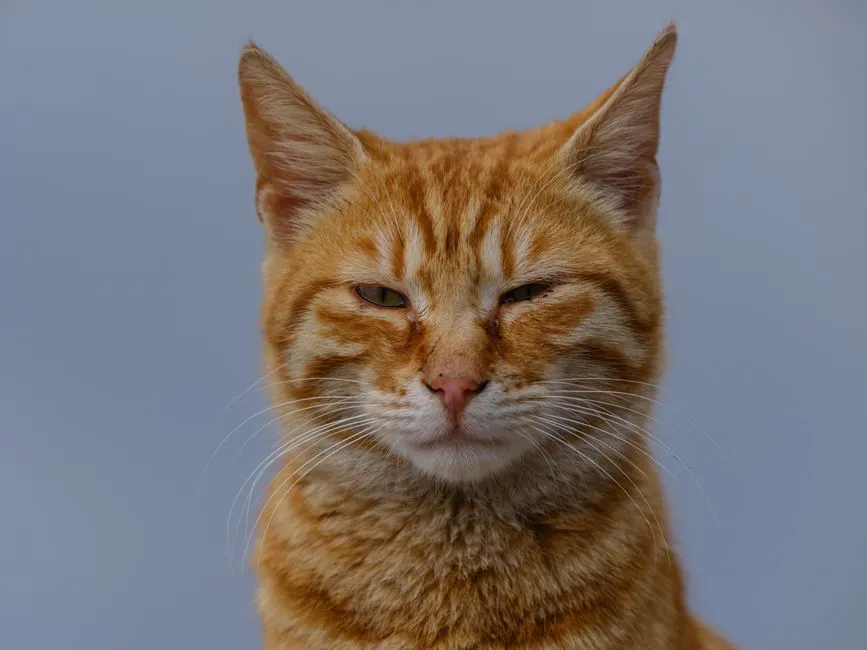
That lazy, half-asleep squint your cat gives you from across the room isn’t boredom. Behaviorists call it the “slow blink,” and it’s basically the closest thing cats have to saying “I love you.” When a cat softens its eyes and deliberately closes and opens them near you, it’s doing one of the riskiest moves in feline body language: voluntarily blocking its own vision around another creature.
Between cats, the slow blink works as a peace treaty – a way of saying, “I’m not a threat, and I trust you’re not either.” When your cat gives you that look, it has dropped its guard on purpose. Try blinking back slowly; a lot of cats will mirror it right back or melt a little deeper into the couch, and that’s not a coincidence.
Research by animal behaviorist Karen McComb and colleagues, published in Scientific Reports in 2020, found that cats responded to human slow blinks with slow blinks of their own at significantly higher rates than in control conditions, and the effect held up even with total strangers giving the first blink.
“It’s amazing to be able to scientifically demonstrate that cats and humans can communicate in this way.”
Dr. Karen McComb, University of Sussex
#11 – It Shows You Its Belly… Then Sometimes Won’t Let You Touch It
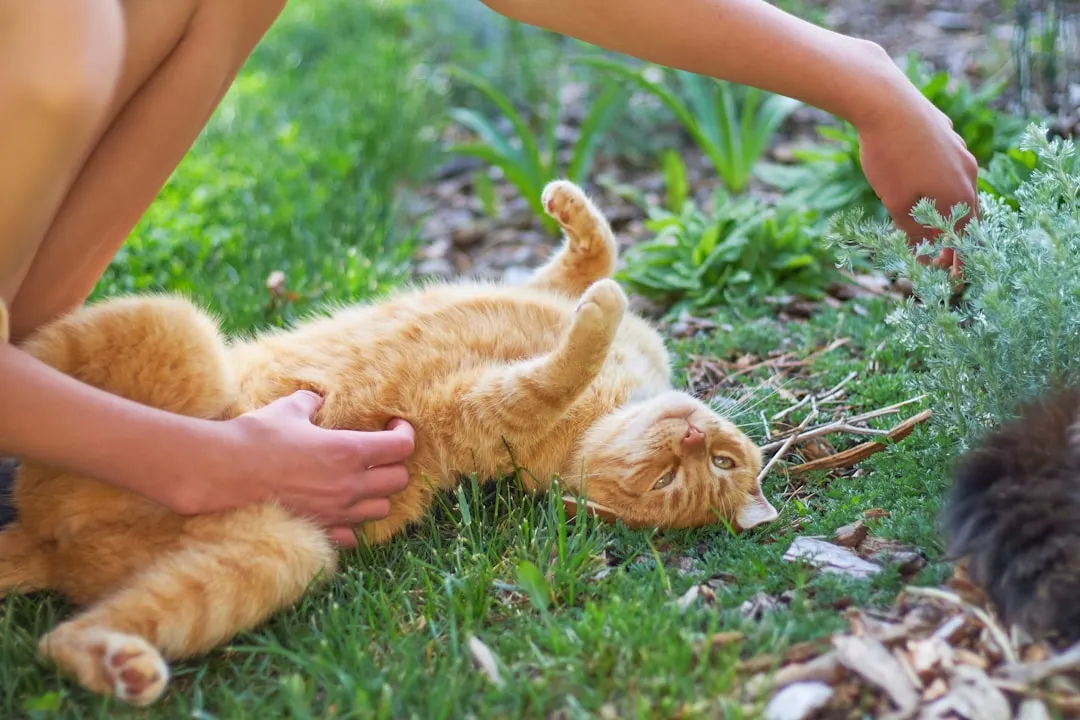
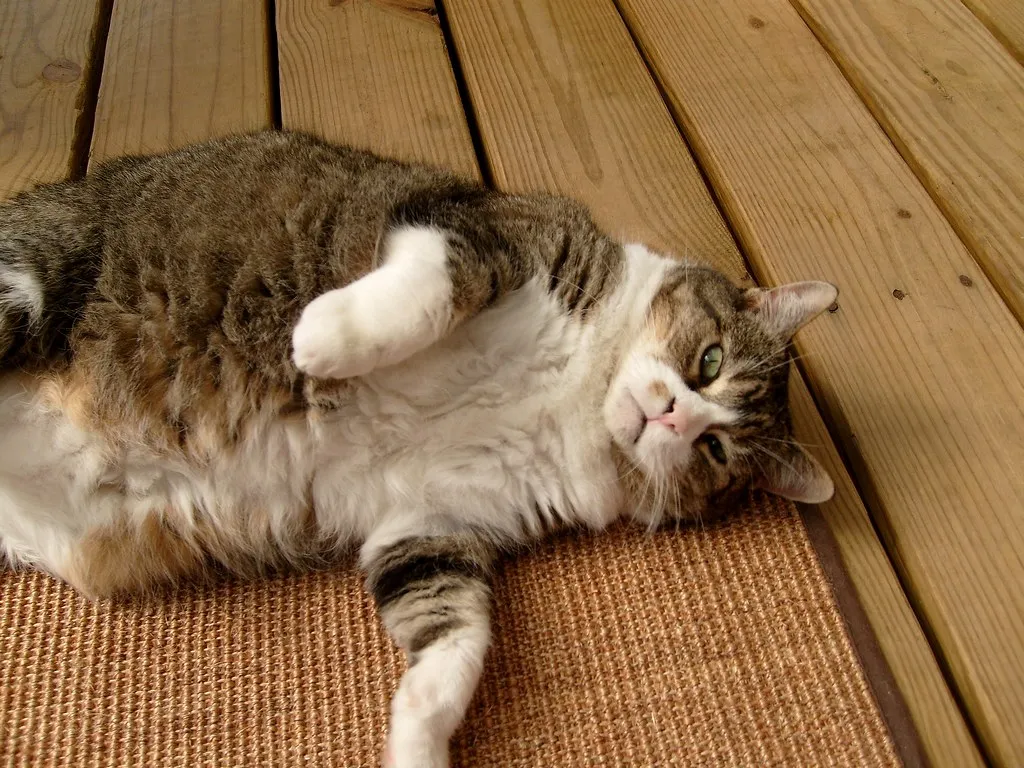
Most people assume a belly flop is an open invitation, then get rabbit-kicked for taking the bait. Here’s the real story: rolling onto its back exposes the most vulnerable part of a cat’s entire body. Predators do not show their vital organs to something they don’t trust, full stop.
That pose is less an invitation and more a flex – “I feel so safe I can afford to be defenseless.” For some cats, a quick side rub is fine; for others, the belly stays strictly off-limits even when the trust is deep. That’s not moodiness, that’s still a predator’s instincts talking. The real signal isn’t whether you get to touch it – it’s that they chose to roll over right at your feet in the first place.
#10 – It Head-Butts You Like A Tiny, Affectionate Goat
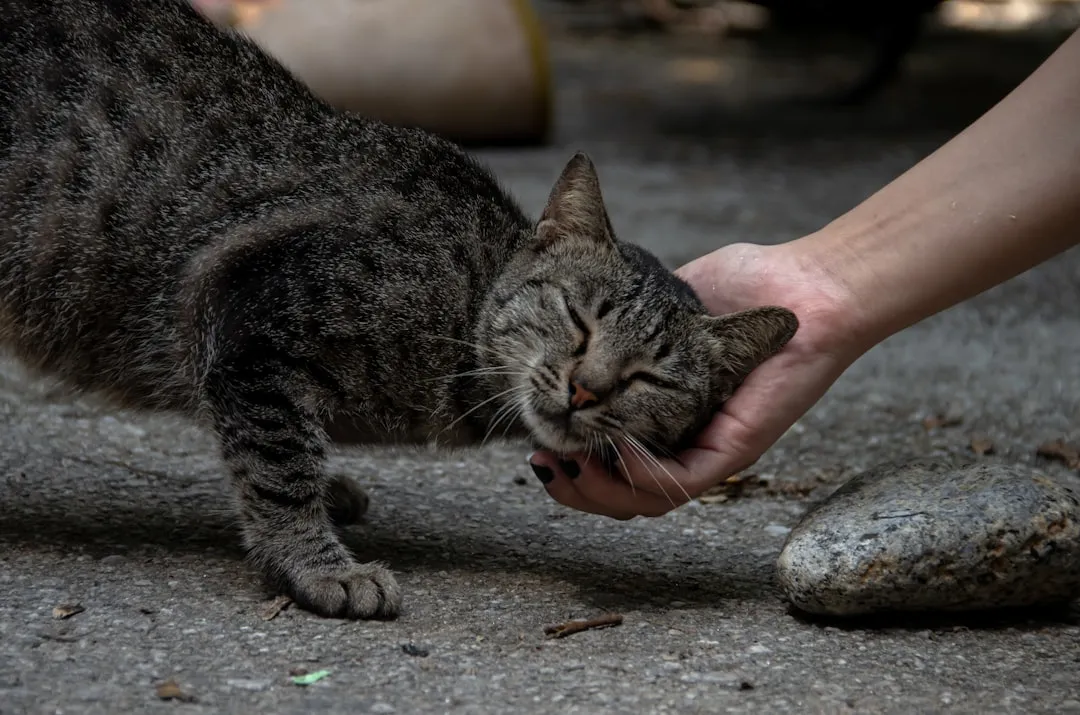
When your cat rams its head into your face, your hand, or your phone mid-scroll, that’s not clumsiness. It’s a full-on love move called “bunting.” Cats carry scent glands along their cheeks and forehead, and pressing that spot into you literally marks you as part of their “safe, familiar, mine” list.
Notice who gets this treatment. Most cats won’t bunt strangers – they save it for the inner circle, the people whose smell they actually want lingering on them. Some will climb onto your chest just to shove their head into your chin and purr through the whole thing. Annoying when you’re mid-text? Absolutely. But in cat logic, they’re just reclaiming you from the glowing rectangle stealing your attention.
#9 – It Follows You From Room To Room Like A Silent Shadow
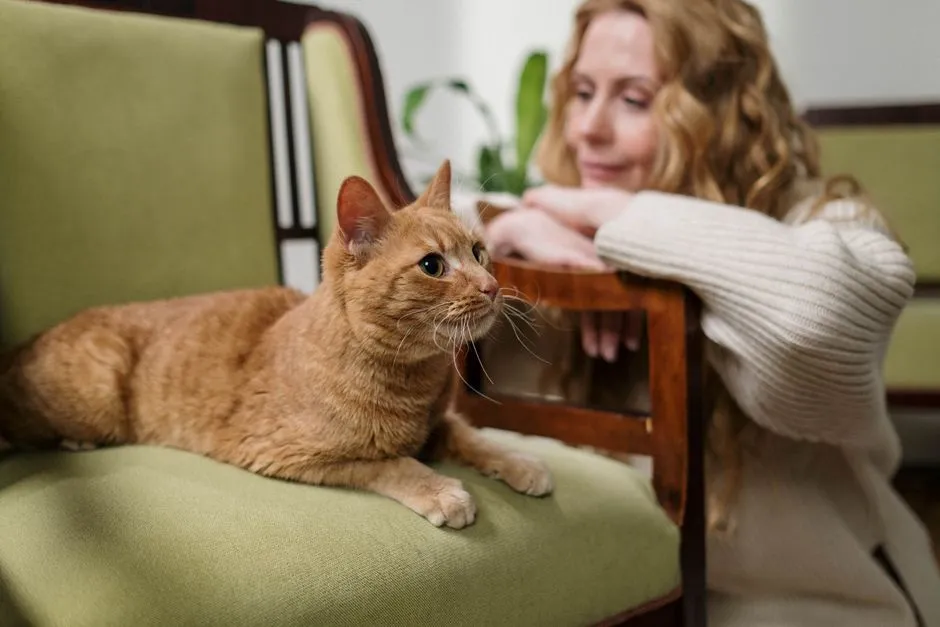
A cat that genuinely doesn’t care about you will not bother getting off the couch when you leave the room. So if yours trails you from the bedroom to the bathroom to the kitchen, it’s doing a quiet security check: “My person is changing locations, I’ll update my position too.”
Some cats are subtle about it – they’ll “just happen” to be in the next room, back turned but ears swiveled toward you the whole time. Others are shameless, weaving between your feet every time you take a step. Either way, tracking you through the house means you’ve been mapped onto its territory as something worth protecting, not background furniture. The bathroom bodyguard routine especially? That’s elite-level trust.
#8 – It Sleeps Deeply Near You (Or On Top Of You)
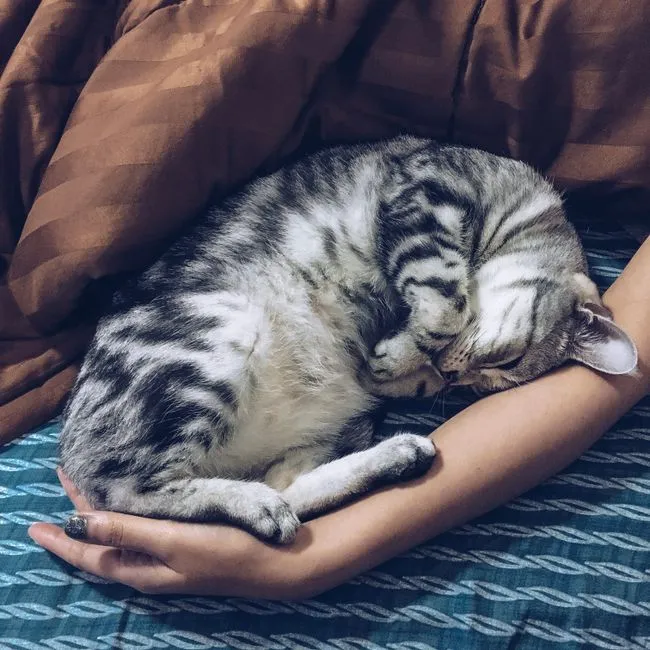
Sleep is the most vulnerable state a cat can be in. In the wild, choosing where to nap is a constant trade-off between comfort and safety. When your cat picks your lap, your pillow, or the spot pressed against your side, it’s betting everything that you’re the safer choice.
Light dozing is one thing. But that full-body, limp, drooly, dream-twitching sleep is reserved only for places a cat considers truly safe. A cat sprawled with paws hanging off you, or curled into a tight loaf on your legs while purring, has voluntarily given up its quick escape routes. So the next time you’re pinned under a furry heater and can’t move, understand that’s not an inconvenience – it’s one of the biggest compliments your cat knows how to give.
#7 – It Brings You “Gifts” You Never Asked For
Yes, it’s gross. No, you didn’t need that half-dead bug or a random sock dragged from across the house. But for a lot of cats, carrying objects to you is a form of sharing. In multi-cat groups, they’ll sometimes show off hunting spots or split resources – and with humans, that instinct turns into dropping prey, toys, or odd little treasures at your feet.
Some behaviorists think it might even be an attempt to teach you how to hunt, which is somehow both sweet and slightly insulting. Either way, cats don’t perform this ritual for someone they consider unsafe. They save it for whoever they’ve mentally filed under “chosen family,” even if your actual response is a horrified shriek at 6 a.m.
Worth Knowing
- Gift-dropping mirrors how cats behave in feral colonies, where trusted group members sometimes share prey.
- It isn’t always dead bugs – toys, hair ties, and socks count as “gifts” too.
- Cats rarely bother performing this ritual for people or animals they actively avoid.
- The behavior tends to intensify with cats who already show other high-trust habits, like sleeping on you.
#6 – It Exposes Its Back To You And Walks Away Casually
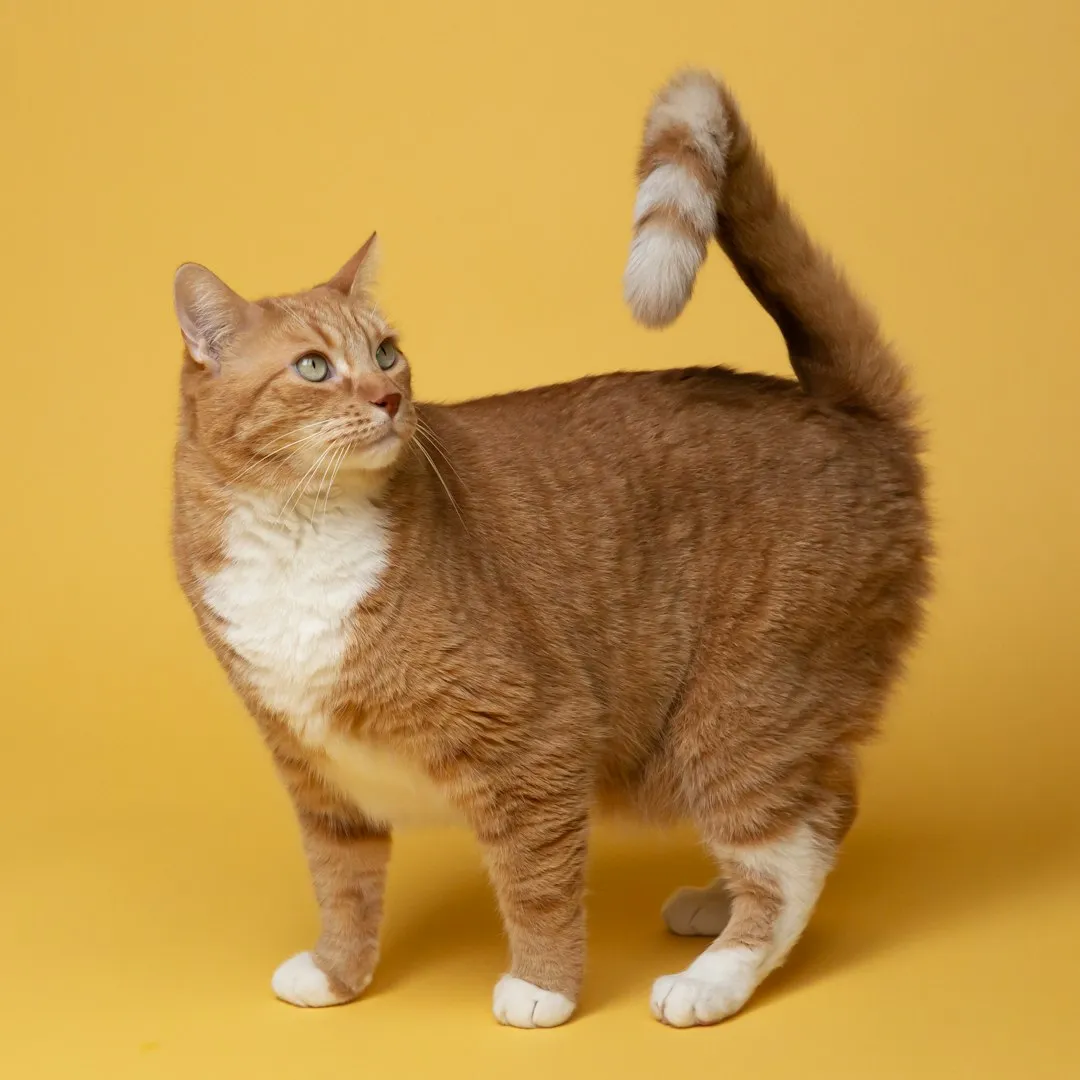
Most people don’t realize how much trust is packed into that classic tail-up, back-turned strut away from you. It’s not rude – it’s actually one of the clearest feline signals of confidence and safety there is. A high, gently curved tail usually means “I’m relaxed, and I’m especially relaxed around you.”
Even the infamous butt-in-your-face move is less about being crude and more about offering you a part of their body that’s usually reserved for trusted companions – cats sniff each other’s back ends to trade identity information. Your cat doesn’t expect you to reciprocate, but the instinct still runs deep. When it saunters ahead of you like you’re part of its patrol unit, that’s quiet trust, not arrogance.
#5 – It Lets You Handle Its Paws, Ears, And Other “No-Go” Zones
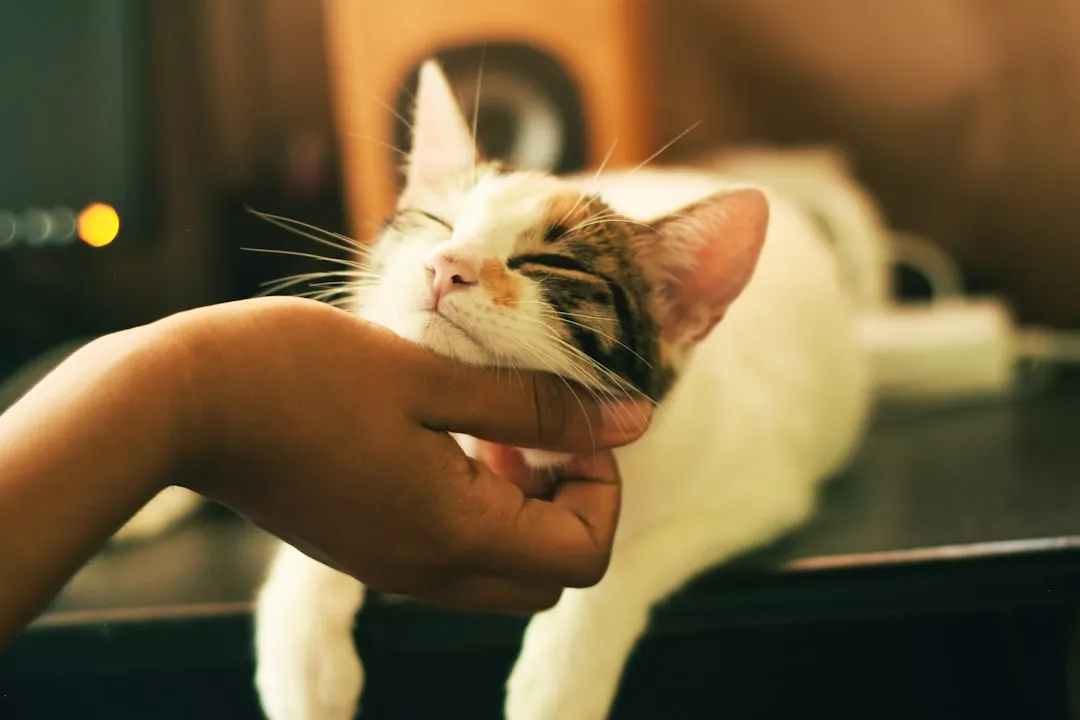
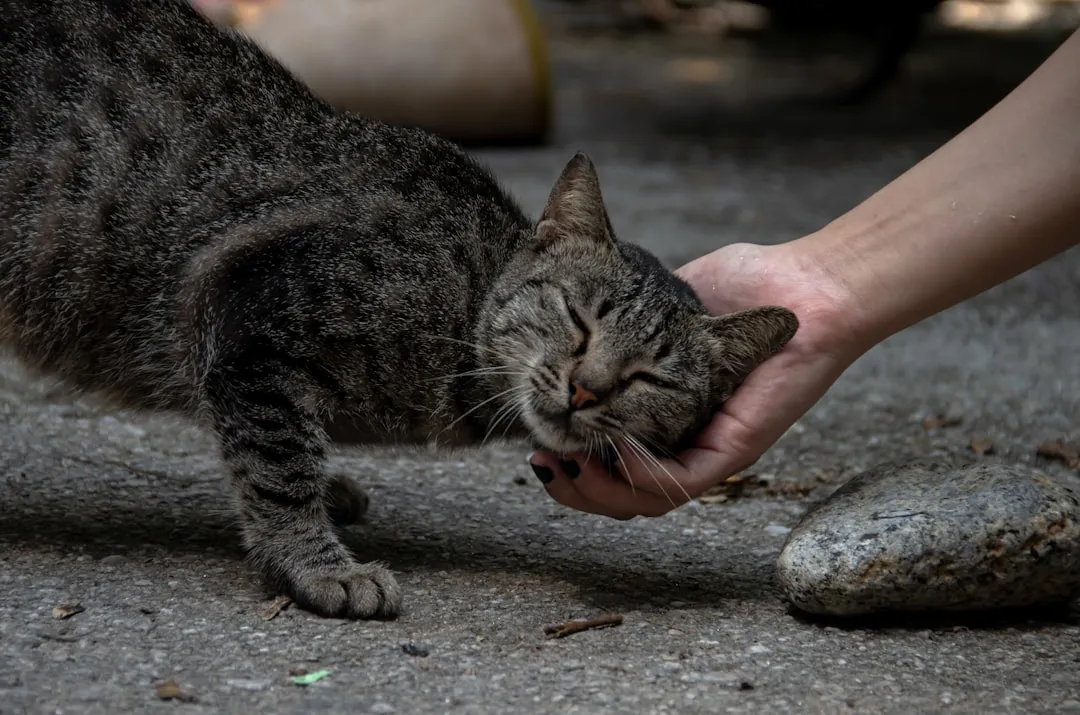
Plenty of cats despise having their paws touched or their ears messed with – those spots are sensitive, and in a real fight, they’re easy targets. A cat that lets you trim its nails, even while grumbling, or check its ears without drawing blood, is tolerating real discomfort because it trusts your intentions completely.
Watch how your cat reacts the next time you inspect a paw or lift its tail to check something. A genuinely fearful or distrustful cat will fight like its life is on the line. A trusting cat might squirm, complain loudly, or try to wriggle away – but it generally won’t go straight to claws and teeth with you. That gap matters far more than whether it enjoys the touch itself.
Quick Compare
- Distrustful cat: freezes, hisses, or lashes out with teeth and claws at the first touch.
- Trusting cat: squirms, grumbles, or pulls a paw back, but rarely escalates to biting.
- Distrustful cat: bolts the second the handling starts, even mid-task.
- Trusting cat: stays put long enough for you to finish, even if it’s clearly not thrilled.
#4 – It Greets You At The Door (Even If It Pretends It Didn’t)
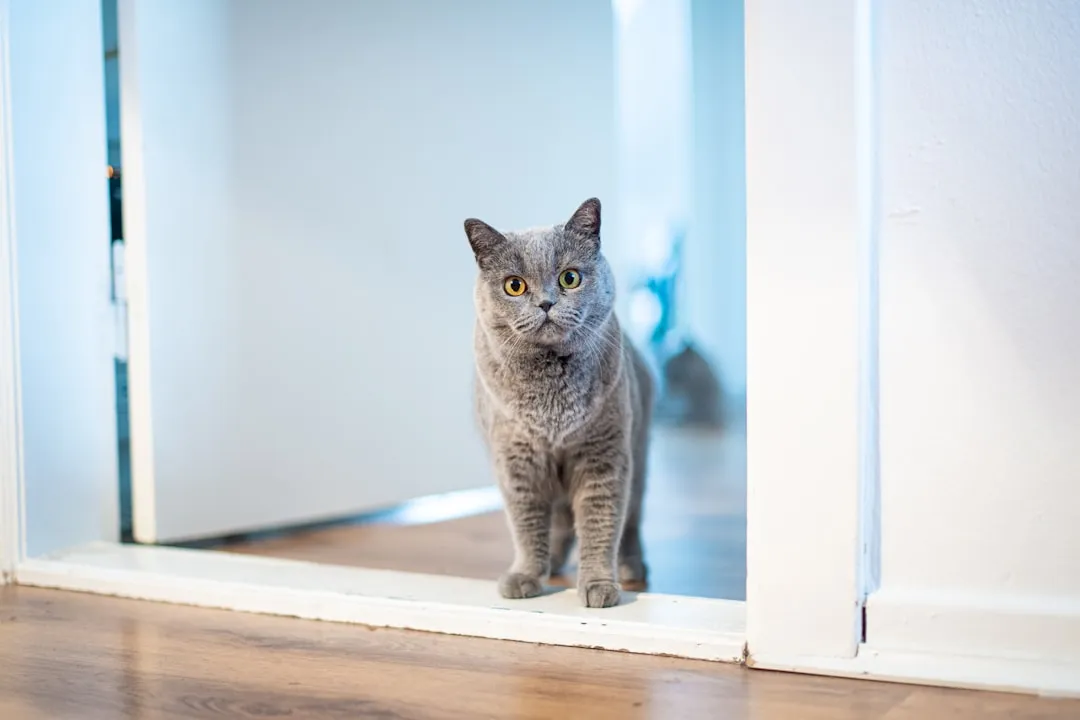
People assume the dramatic front-door welcome is a dog-only move. Yet countless cat owners report the exact same thing – they come home and their cat is already in the hallway, waiting by the door, or somehow materializing within thirty seconds. That’s not luck. Cats track routines closely, and if you come home around the same time daily, many will position themselves nearby well before you turn the key.
Some play it cool: a “coincidental” seat in the entryway, a big stretch and a lazy meow that says, “Oh, you’re back, I guess.” Others go full theatrics – loud yowling, tail-up weaving, immediate flopping at your feet. Either style says the same thing underneath: they noticed you were gone, and they noticed you came back. Try coming home at a weird hour sometime – the furry security guard is often still waiting.
#3 – It Uses You As A Safe Base Around Other People Or Pets
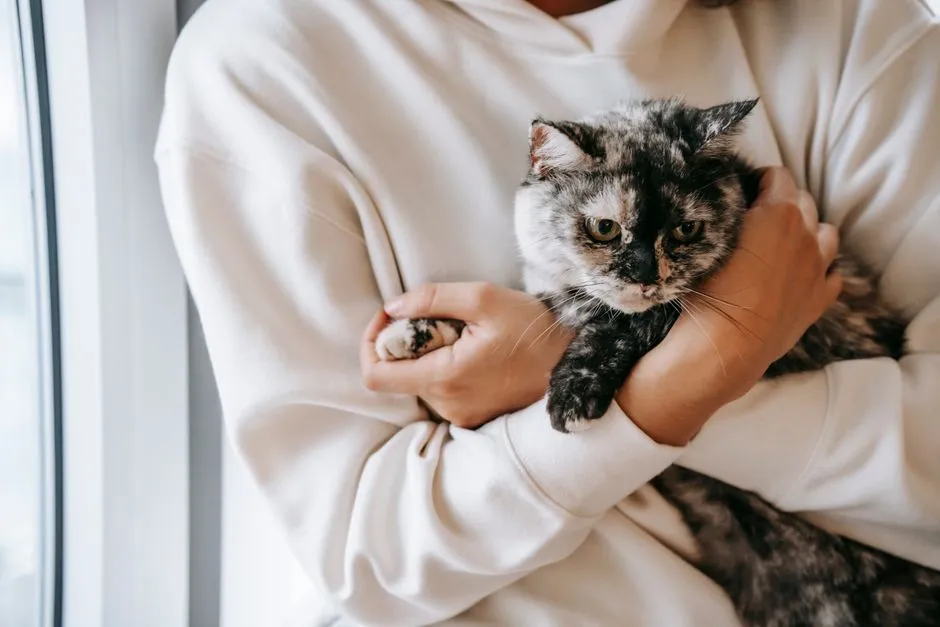
If your cat vanishes when guests arrive but peeks out the second it hears your voice, that’s not anti-social – that’s selective trust in action. When it chooses to sit on you or press against you while visitors are over, it’s not being clingy. You’ve become its secure base in a stressful moment, and in animal behavior research, that’s a major marker of real attachment, the same pattern seen in bonded dogs and even human toddlers.
Watch what happens at gatherings: your cat might only stay in the room if it can keep its leg pressed to yours, or dart behind you the instant a stranger reaches for it. People sometimes label these cats “scaredy-cats,” but really they’re just cautious – and they’ve consistently picked you as the shelter. That’s the quiet message underneath it all: “The world is loud right now, but next to you, I’m okay.”
At a Glance
- A secure base test places the cat and owner in an unfamiliar room together for two minutes, then the owner steps out for two minutes before returning – the same setup used to study infants and dogs.
- Researchers classified about 65 percent of both cats and kittens as securely bonded to their people.
- In humans, 65 percent of infants are securely attached to their caregiver – a near-exact match.
- That cat rate was even slightly higher than the 58 percent secure attachment previously found in dogs.
#2 – It Mirrors Your Routines And Knows Your Schedule
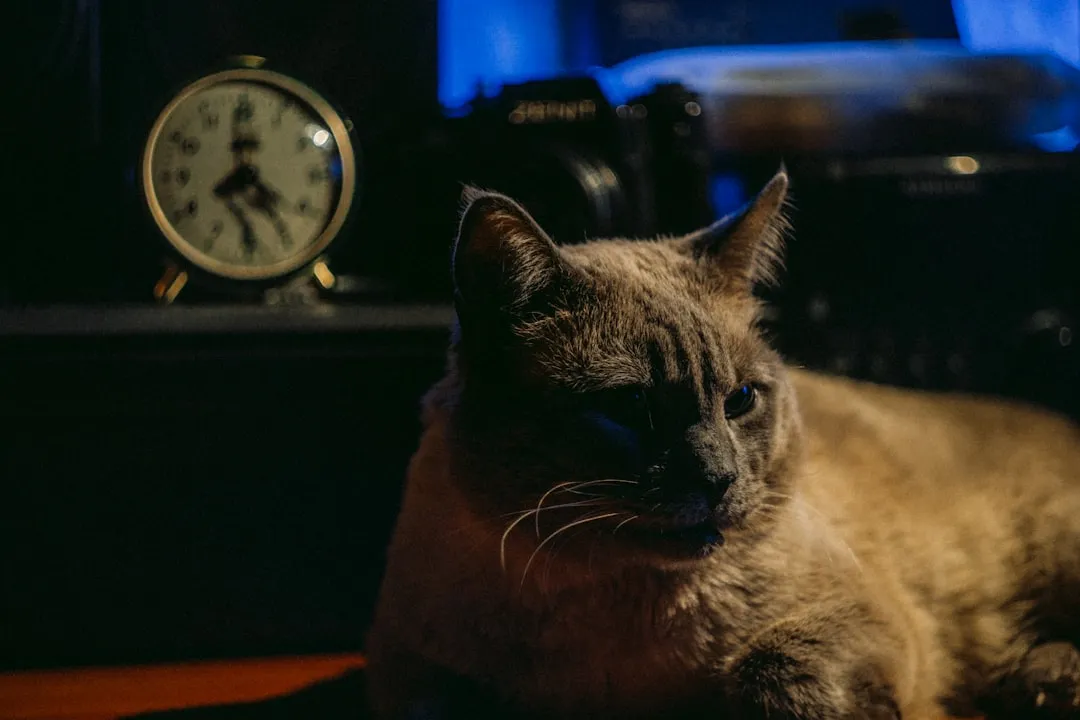
A cat that tracks your habits down to the minute is paying very close attention. If it mysteriously appears on the bed five minutes before your alarm, or beats you to the kitchen the moment you reach for your coffee mug, that’s not telepathy – it’s pure observation, repeated hundreds of times until the pattern locks in.
This goes well beyond knowing dinnertime. Some cats wait outside the bathroom at the exact point in your morning routine, or claim the couch cushion every night right before your favorite show starts. That syncing is part dependence, part devotion – they’re organizing their entire day around you because you’re predictable, safe, and reliably rewarding. So the next time someone insists cats are too independent to bond, remind them a cat that times its whole life to your footsteps is living proof otherwise.
#1 – It Chooses You Over Food, Sunny Spots, And Sometimes Other Cats
Here’s the sign that starts the most arguments: when your cat consistently chooses you over its favorite resources, the bond is real, no debate needed. If it abandons a sunny windowsill to sit on your lap, or walks away from a full food bowl to follow you into another room, it’s ranking your presence above comfort and even hunger.
Watch for the big trade-offs – does it leave its favorite sleeping spot to curl up wherever you happen to be? Does it pause mid-meal the second you leave the room, then pick right back up when you return? No, this doesn’t mean your cat will never choose food first; of course it sometimes will. But the pattern is what matters. A cat that repeatedly interrupts its own pleasure just to stay near you is telling you, as plainly as it knows how, exactly how central you are in its tiny universe.
The Bottom Line
Cats have been signaling deep trust the entire time – we’ve just been too busy expecting dog-style enthusiasm to notice it. A cat that “ignores” you from three feet away, flashes its belly, slow-blinks from across the room, or shadows you from door to door isn’t indifferent. It’s quietly doing one of the riskiest things any animal can do: relaxing completely in the presence of another creature.
That’s a massive compliment, even when it arrives wrapped in claws and attitude. Honestly, the myth of the cold, unaffectionate cat says more about us than it ever did about them. Once you learn the language, you realize they’ve been telling you “you’re my person” all along – just in a whisper instead of a bark.
Which of these does your cat do to you, and did we miss the one that proves it the most? Drop it below – this is the debate every cat owner secretly wants to have.
