
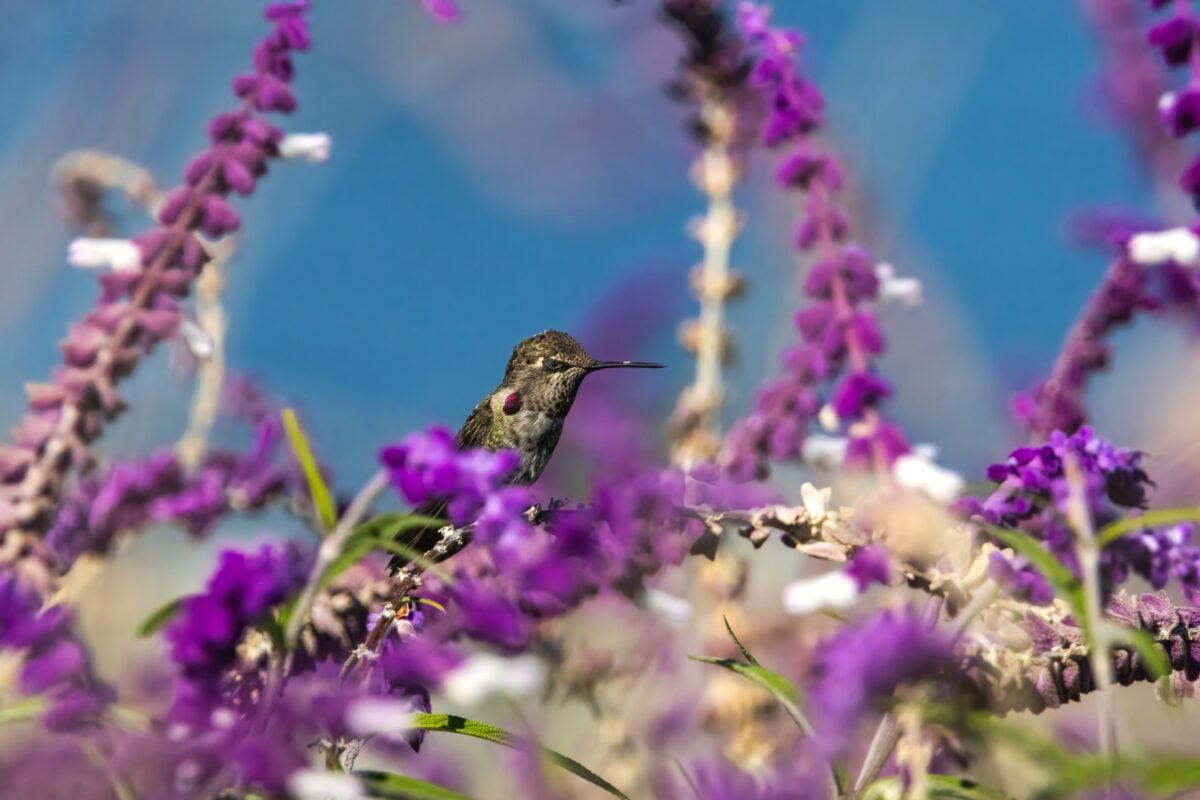
You’ve watched one zip past your porch a hundred times and thought the same thing every time: tiny, cute, harmless. But researchers who’ve spent decades slowing down high-speed footage of hummingbirds say that impression is almost embarrassingly wrong.
Some of what these birds do isn’t just unusual for a bird – it barely makes sense for any warm-blooded animal. A few of the behaviors below have made scientists rewrite their own assumptions about what a body the size of a thumb should be capable of. Here’s what the field data, the lab tests, and the cameras actually caught.
#1 – Hovering Like a Living Helicopter
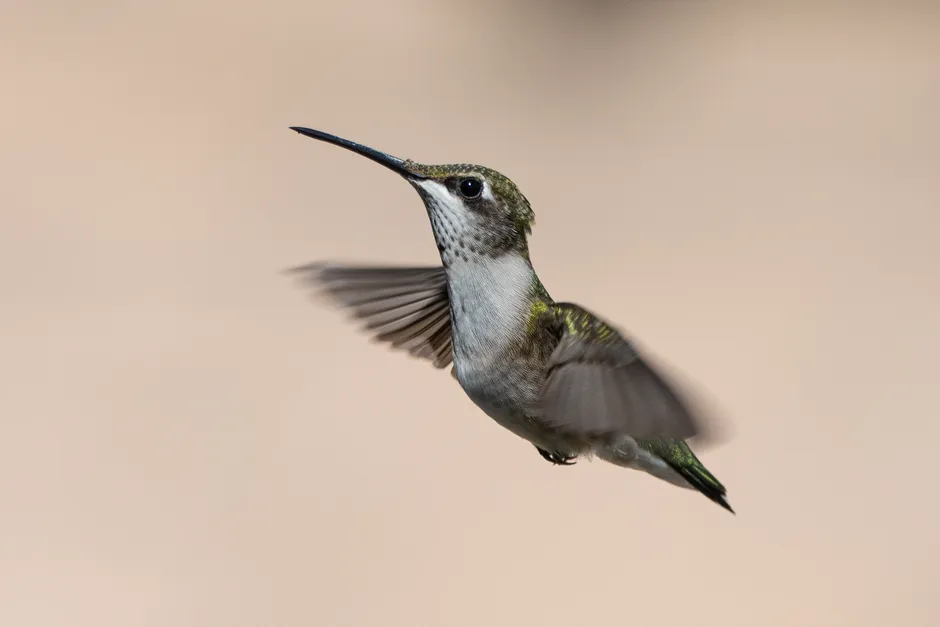
Most birds flap forward or glide. Hummingbirds basically ignore that rulebook and hover in place, and the trick is in the wing motion. They don’t flap up and down – they trace a tight figure-eight pattern that lets them hang motionless in midair, something almost no other bird can genuinely pull off.
X-ray footage shows the entire shoulder joint rotating, more like an insect’s wing socket than a typical bird’s. That’s why researchers keep comparing them to oversized bees instead of robins or crows. Some biologists joke that if an engineer built a flying robot that moved like this, nobody would believe it was real.
#2 – Flying Backwards on Purpose
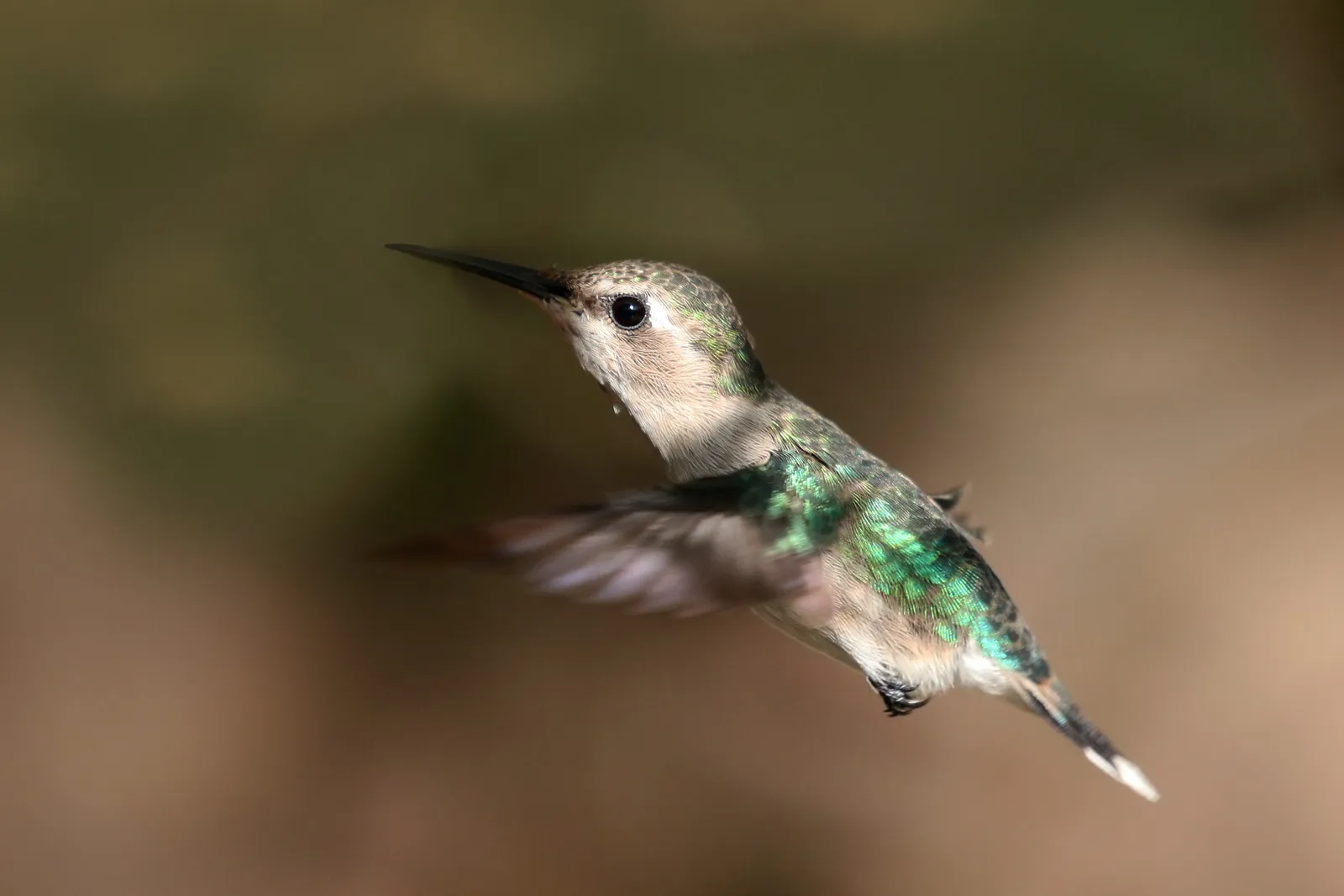
Plenty of birds drift backward when the wind shoves them there. Hummingbirds are the only birds known to deliberately fly backward for long stretches, and they do it as casually as you’d walk in reverse. High-speed footage shows males backing out of flowers, dodging attacks, and even reversing mid-courtship.
Physiologists measured the muscle effort involved and found flying backward costs about the same energy as hovering – barely a blip for a bird already living at the edge of its metabolic limits. It’s the equivalent of your car cruising 70 mph in reverse as easily as forward. No other bird has the shoulder rotation to even attempt it.
#3 – Wingbeats So Fast They Break the Record Books
Saying hummingbirds “flap really fast” doesn’t come close to the real numbers. Some small species hit over 70 wingbeats per second, and even the larger species run in the 40-to-50 range. At that speed, the wings blur into invisibility, and scientists needed ultra-high-speed cameras just to confirm the figure-eight motion was happening at all.
That kind of speed comes at a brutal cost. Their hearts can spike past 1,200 beats per minute during intense flight – among the highest rates ever recorded in any vertebrate. Their breathing and oxygen delivery look less like a “sweet little bird” and more like a race engine redlining. Most songbirds would drop dead trying to run this hot.
Fast Facts
- Smallest species: over 70 wingbeats per second
- Larger species: roughly 40 to 50 wingbeats per second
- Flight heart rate: can spike past 1,200 beats per minute
- Wingbeats move too fast for the naked eye – slow-motion cameras were needed to confirm the pattern
#4 – Drinking Nectar With a Shape-Shifting Tongue
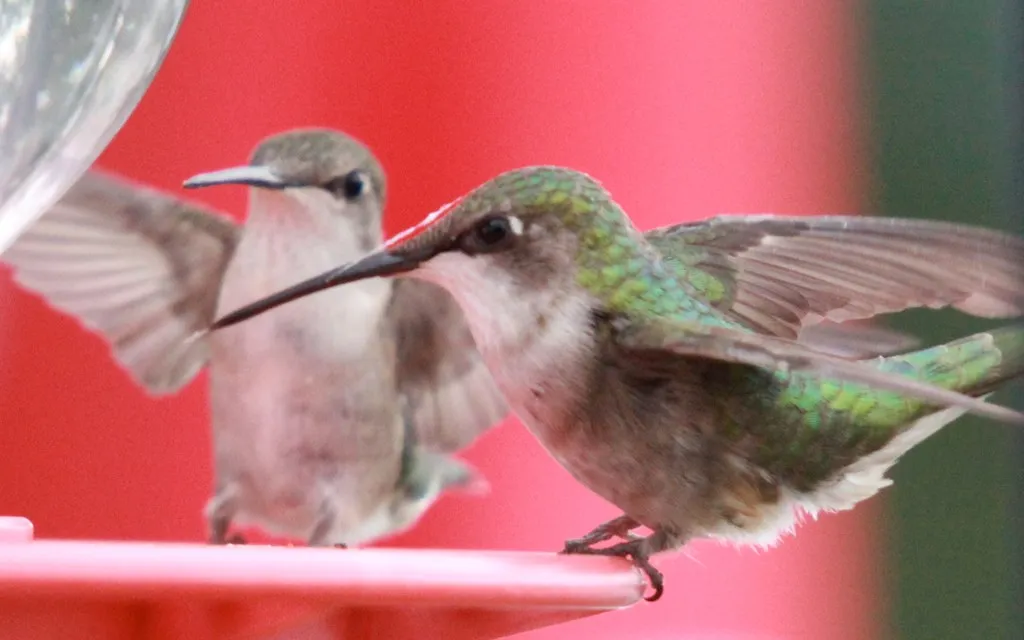
Most of us grew up assuming hummingbirds sip nectar through their beak like a straw. Slow-motion footage proved that idea completely wrong. Inside that beak is a split tongue that unrolls, forks, and snaps up nectar using tiny fringed tubes, functioning like two living paintbrushes working in tandem.
The tongue isn’t passive, either – it actively traps and pumps nectar through elastic recoil, like a spring-loaded sponge firing over and over. Hummingbirds can hit a flower up to 20 times per second, refilling the tongue with each strike. Ducks strain, woodpeckers spear, parrots crush; hummingbirds are running a self-resetting micro-pump in their mouth.
#5 – Going Into Death-Like Torpor Every Night
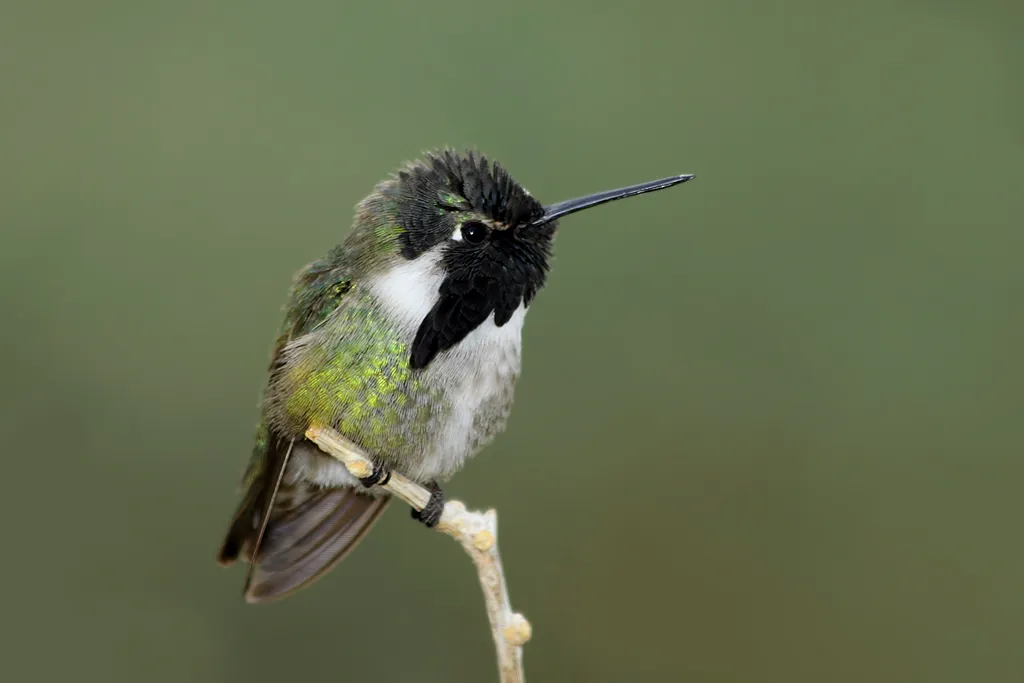
Most birds sleep. Hummingbirds shut down. When food gets scarce or the night turns cold, they drop into torpor, where body temperature can fall to near ambient – sometimes under 50°F – and heart rate plummets from over 1,000 beats per minute to fewer than 50. Researchers who’ve handled a torpid bird describe it as limp and unresponsive, as if it had died in your hand.
By morning, they slowly reboot – shivering and twitching themselves warm again until they suddenly snap back into hyperactive life. It’s essentially a built-in emergency power-saving mode, because their daytime lifestyle burns fuel faster than almost any animal on Earth can sustain without a nightly off-switch.
#6 – A Heart and Metabolism Stuck in Permanent Overdrive
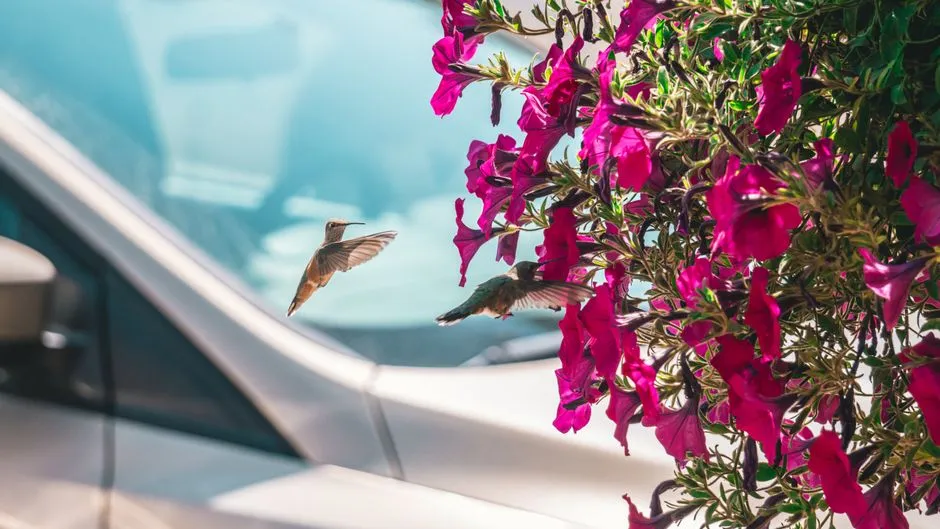
Biologists sometimes joke that hummingbirds are “living on credit” all day, every day. Per gram of body weight, their daily energy use ranks among the highest of any warm-blooded animal on the planet. They burn through their entire body weight in nectar and bugs every 24 hours, and missing even a few hours of feeding can put them in real danger.
Their bodies are built for this pace: enlarged hearts, dense capillary networks, blood loaded with oxygen-carrying capacity, and mitochondria tuned for absurd throughput. Raptors sprint into that intensity for a hunt. Hummingbirds just live there, permanently, as a baseline.
#7 – Non-Stop Migration in a Body the Size of a Thumb
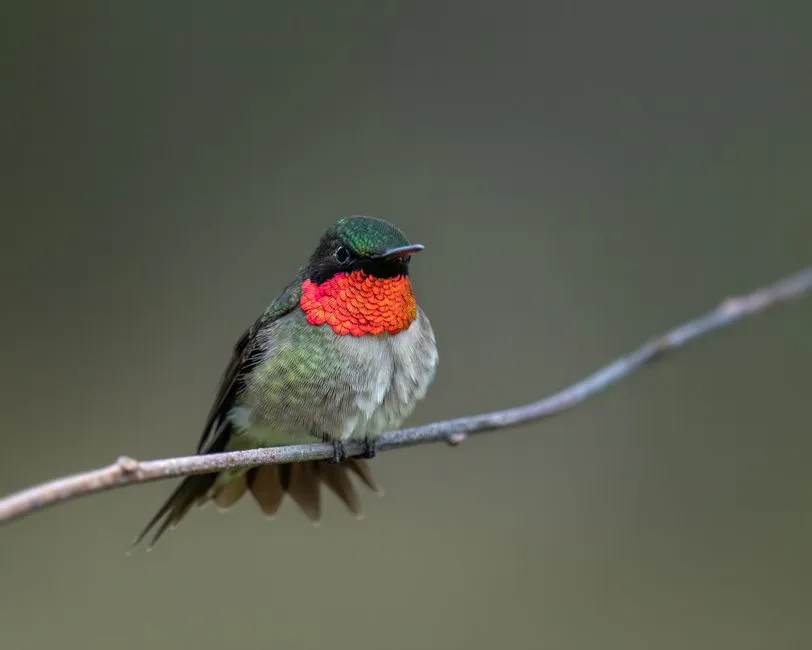
If a 3-gram creature told you it planned to cross the Gulf of Mexico in one all-night flight, you’d call it reckless. Yet that’s exactly what many hummingbird species do every single year, with some individuals flying over 500 miles non-stop, fueled entirely by fat reserves they packed on in advance.
Before the trip, they enter an almost frenzied feeding mode, sometimes doubling their body weight in a matter of days. Geese migrate farther, sure, but they do it in big, efficient bodies built for the job. For a hummingbird, every single mile is wildly expensive – and they still show up at the same feeder, on schedule, year after year.
Quick Compare
- Ruby-throated hummingbird: up to 500+ miles nonstop across the Gulf of Mexico
- Typical body weight: around 3 grams – lighter than a nickel
- Fuel source: fat reserves built up beforehand, sometimes nearly doubling body weight
- Larger migratory birds like geese cover more ground, but at a fraction of the relative energy cost
#8 – Auditioning With High-Speed Dive Bombs
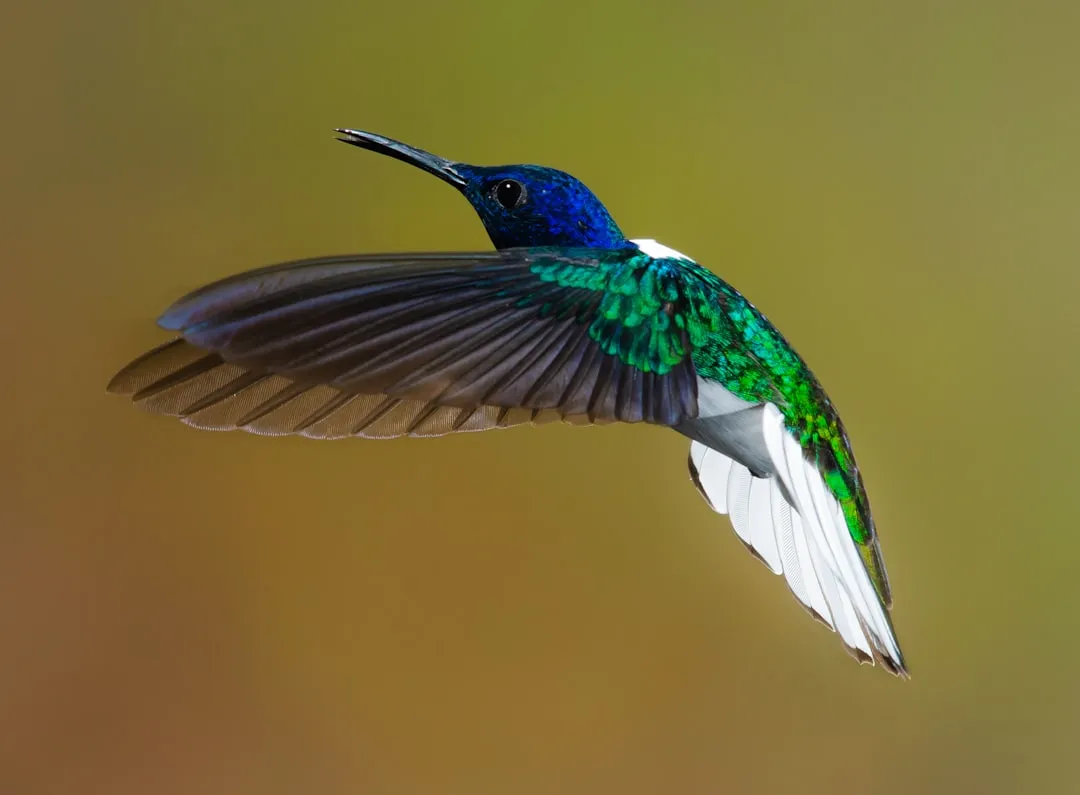
Hummingbird courtship doesn’t look like romance so much as a stunt show. Males of several species climb steeply, then plummet past females at speeds approaching 50-60 mph, screaming an odd chirp while pulling out of the dive. Researchers have measured the acceleration during that pull-out at several times the force of gravity.
Here’s the twist: a big chunk of that sound doesn’t come from the throat at all. It’s generated by air rushing over specially shaped tail feathers that vibrate like tiny reeds. When scientists altered those feathers and let them grow back, the sound changed or disappeared entirely – proof it’s engineered, not accidental.
#9 – Turning Their Own Feathers Into Instruments
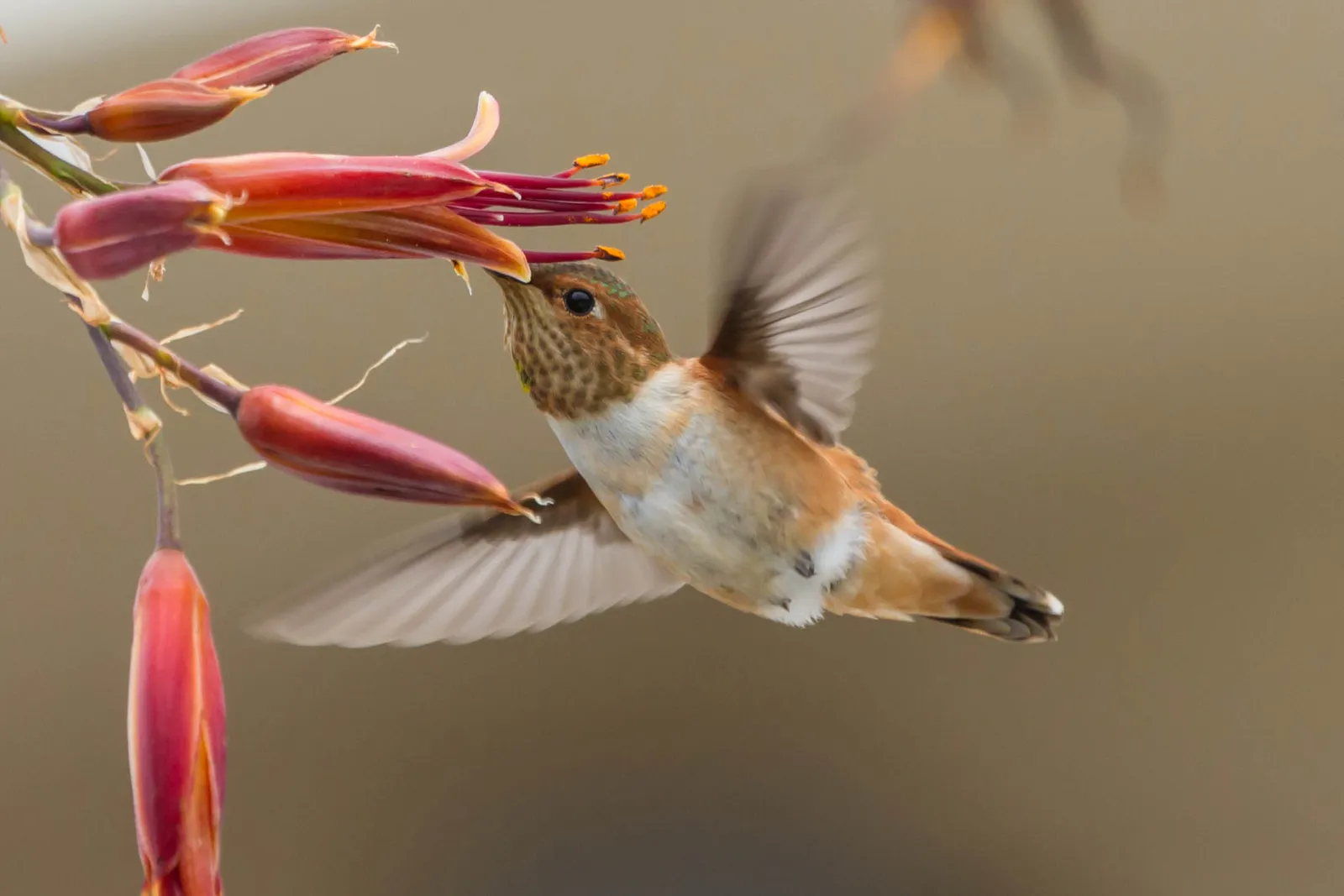
Songbirds sing with vocal cords. Hummingbirds often let their feathers do the talking instead. Several species have evolved tail or wing feathers that whistle, buzz, or chirp in flight, creating a constant soundtrack that follows their every movement.
Wind tunnel tests on detached feathers confirmed these sounds aren’t accidents – tiny changes in shape, spacing, or stiffness produce completely different tones, and females appear to notice the differences. Some scientists now suspect we’ve been undercounting “hummingbird songs” for years simply because we assumed all the noise had to come from the throat.
#10 – Aerial Sword Fights Over a Single Flower
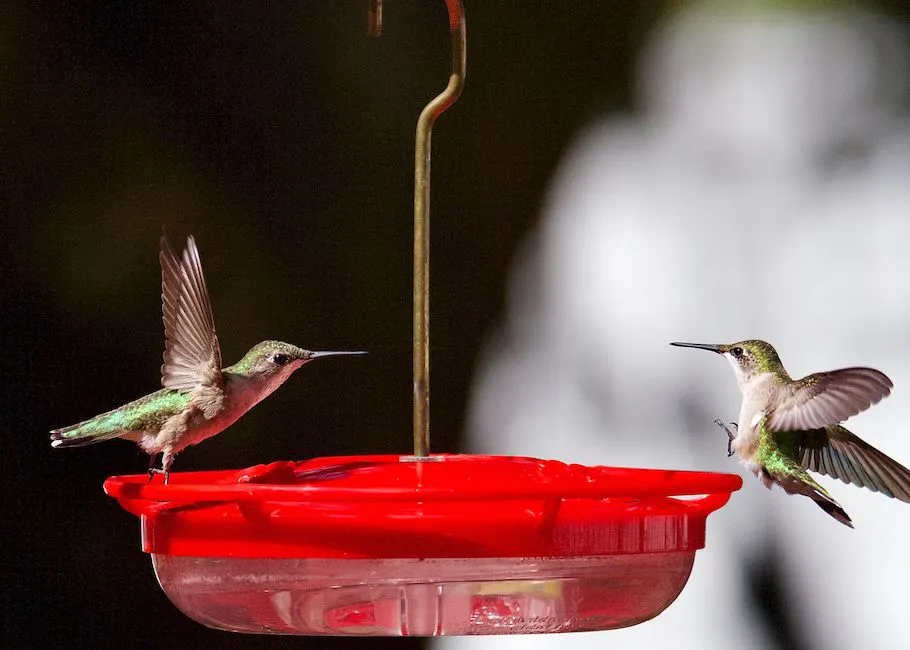
Most backyard bird drama is a bit of chasing and posturing. Hummingbird disputes are closer to knife fights in midair. Territorial birds – often males, but not always – will launch high-speed chases, body-slams, and even direct pecking attacks over a single good nectar spot.
Field observers have watched hummingbirds lock bills and tumble together, or hover face to face flaring their gorgets in a tense standoff. Considering how tight their energy budget already is, every second spent fighting is expensive. Plenty of people assume hummingbirds are gentle; plenty of experts quietly call them some of the most aggressive birds per gram on the planet.
#11 – Memory Skills That Put Bigger-Brained Birds to Shame
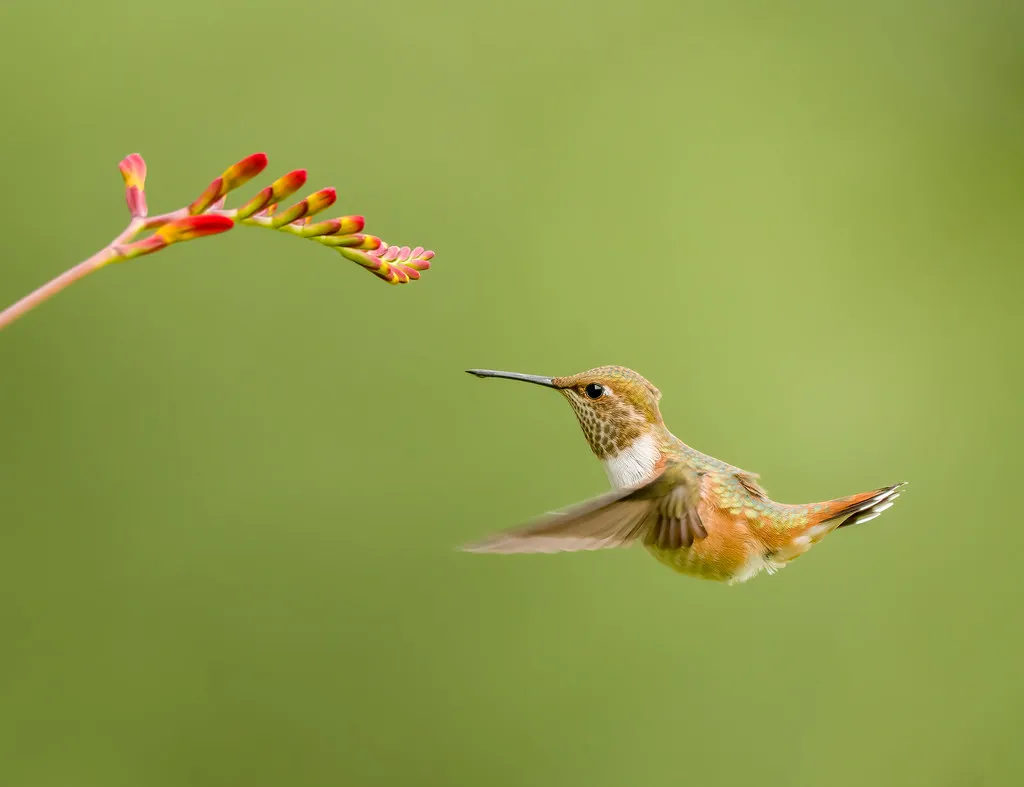
Crows and parrots get all the credit for bird intelligence, but hummingbirds are quietly running a different kind of genius. Studies with wild birds show they can remember the exact locations of hundreds of flowers – and when each one is due to refill with nectar. They’re not just tracking where; they’re tracking when.
In lab mazes, hummingbirds routinely outperform expectations for a brain their size, combining spatial and temporal memory in ways researchers still don’t fully understand. Their hippocampus is enlarged relative to body size, and they even seem to recognize individual feeders – and individual humans – that reliably feed them. For a creature lighter than a coin, that’s a serious cognitive investment.
#12 – Seeing Colors Other Birds Literally Cannot See
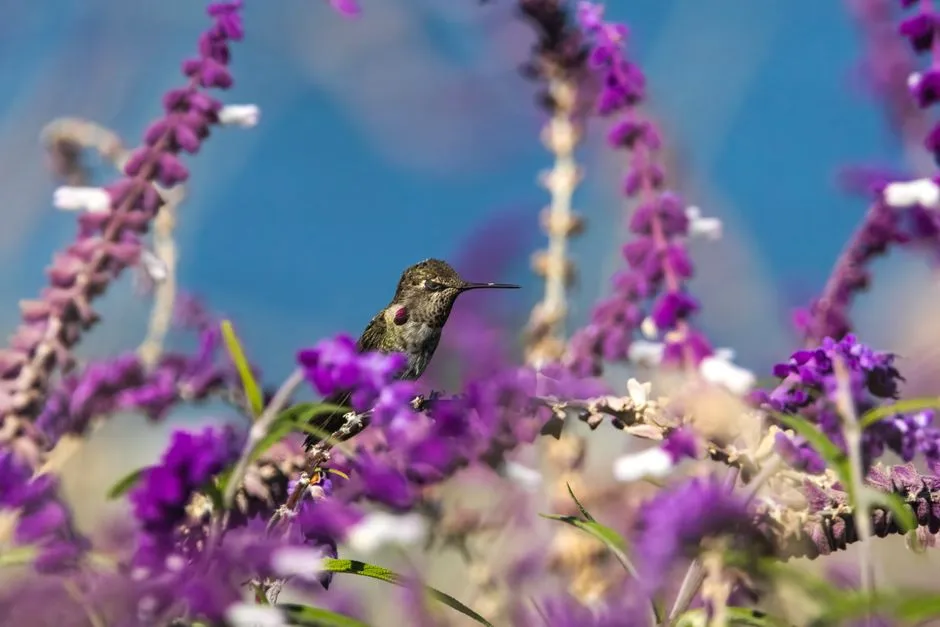
We already know birds see more color than humans do. Hummingbirds push that further into territory that’s hard to even imagine. Their eyes contain four types of color receptors, versus our three, including one tuned to ultraviolet – and their brains combine those into colors we don’t have names for, sometimes called “non-spectral” hues.
In field tests with artificial feeders, hummingbirds learned and preferred UV-shifted color combinations within minutes, suggesting this extra color space matters in real life, not just in a lab. So when we design a “bright red” feeder for hummingbirds, we’re probably only seeing a fraction of what they actually see.
Worth Knowing
- Human eyes: three types of color receptors (red, green, blue)
- Hummingbird eyes: four types, adding ultraviolet sensitivity
- The extra receptor lets them perceive “non-spectral” color combinations humans simply can’t see
- That “bright red” feeder in your yard may not look the same to the bird drinking from it
#13 – Gorgets That Flash Like Living LEDs
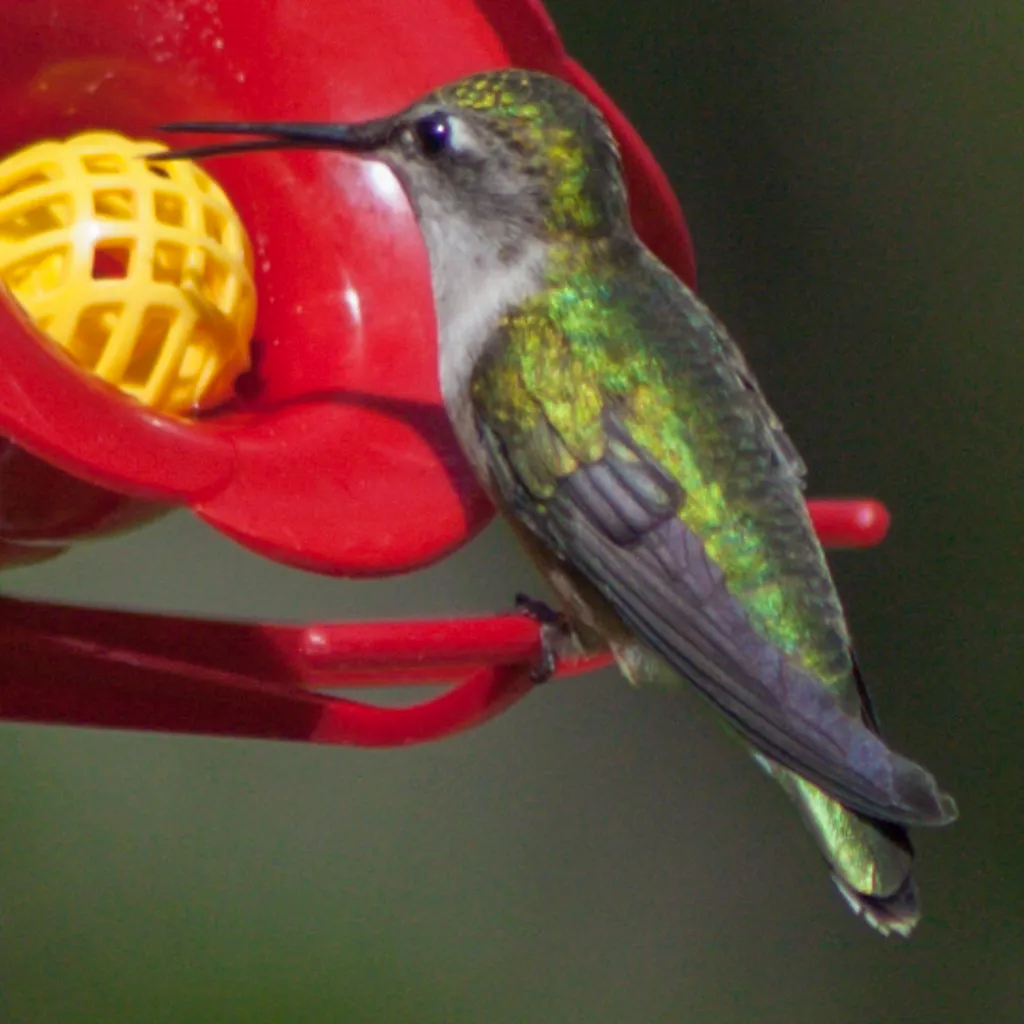
The flashy throat patch on many male hummingbirds – the gorget – doesn’t work like ordinary pigment. Under a microscope, those feathers contain layers of microscopic, plate-like structures that bend and reflect light, creating intense, angle-dependent iridescence. The same bird can look dull brown one second and explode into electric violet or magenta the next, depending purely on the tilt of its head.
Gorgets aren’t always “on.” Males snap from invisible to blinding with a tiny turn of the head, often timed to land exactly with a courtship move or a territorial threat. Peacocks are showy. Hummingbirds are running precision light machines built at a nanometer scale.
#14 – Bills Evolving in a Two-Way Arms Race With Flowers
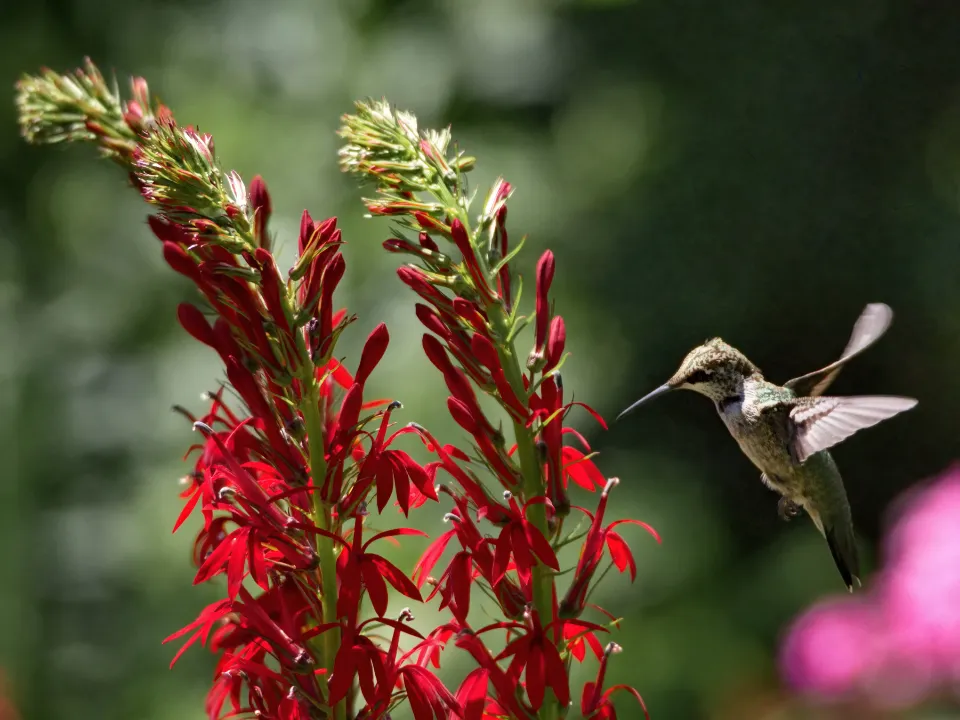
Most birds simply adapt to whatever food is available. Hummingbirds and certain flowers seem to be co-writing each other’s evolution in real time. In many regions, specific species have bill shapes that almost perfectly match the length and curve of particular flowers, while those flowers have nectar tubes shaped to fit those exact bills – a lock-and-key relationship.
Genetic and field studies suggest a two-way pressure: birds that reach nectar more efficiently survive better, and flowers pollinated by those birds spread faster. The result is hooked bills for curved flowers, extra-long bills for deep tubes, and a level of matched specialization rarely seen this precisely anywhere else in the bird world.
#15 – Sex Roles So Skewed They Surprise Even Bird Biologists
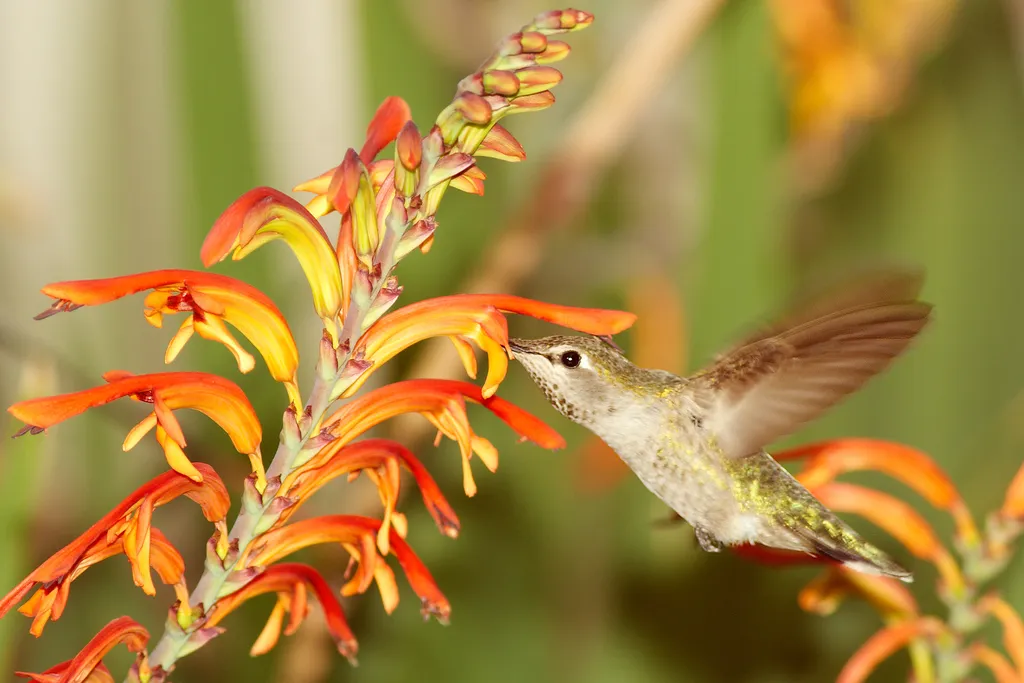
Plenty of birds have flashy males and plain females. Hummingbirds crank that contrast up, then flip the social script entirely. In many species, males contribute almost nothing beyond mating – no nest building, no feeding, no chick care at all. Females handle 100% of the incubation and feeding, often while dodging aggressive males just to reach a feeder.
Even stranger, some female hummingbirds have evolved male-like plumage in certain populations, apparently to reduce harassment and access better feeding territory. That means they’re faking male coloring just to be left alone long enough to raise their young – a level of social gaming that rarely comes up in “cute hummingbird” memes.
#16 – Building Expanding Nests Out of Stolen Spider Silk
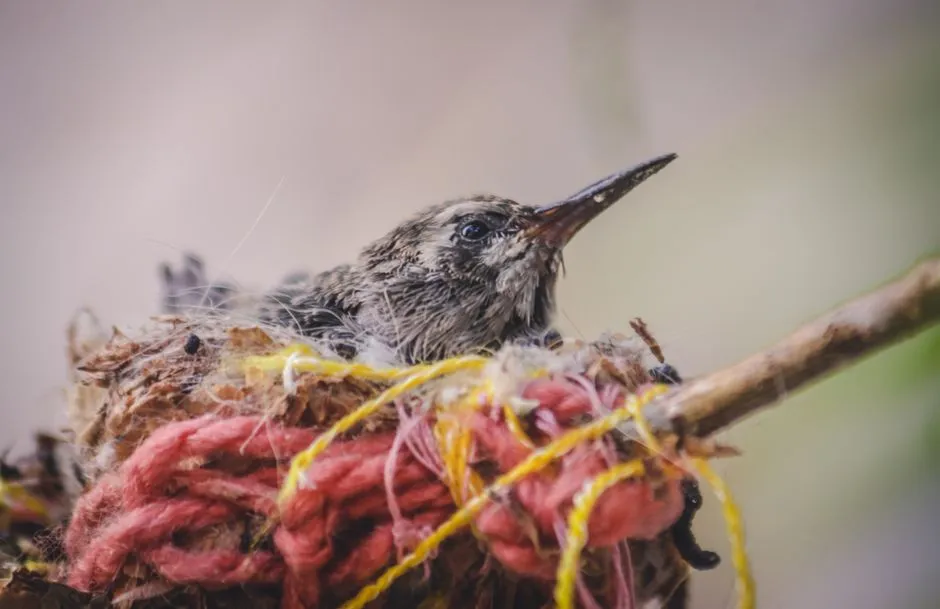
Instead of heavy twigs or mud, hummingbird nests are lightweight engineering projects. Females build cup-sized homes from plant fluff, lichens, and – crucially – spider silk, which acts as an elastic binder. That means a nest that snugly holds two pea-sized eggs can stretch enough to hold half-grown chicks weeks later.
From the outside, the nests are often camouflaged with lichen flakes glued on so they blend into the branch itself. Watching a female steal silk straight from a live spider web and weave it into her nest feels less like watching a bird and more like watching a tailor at work.
#17 – Breathing Thin Mountain Air Like It’s Sea Level
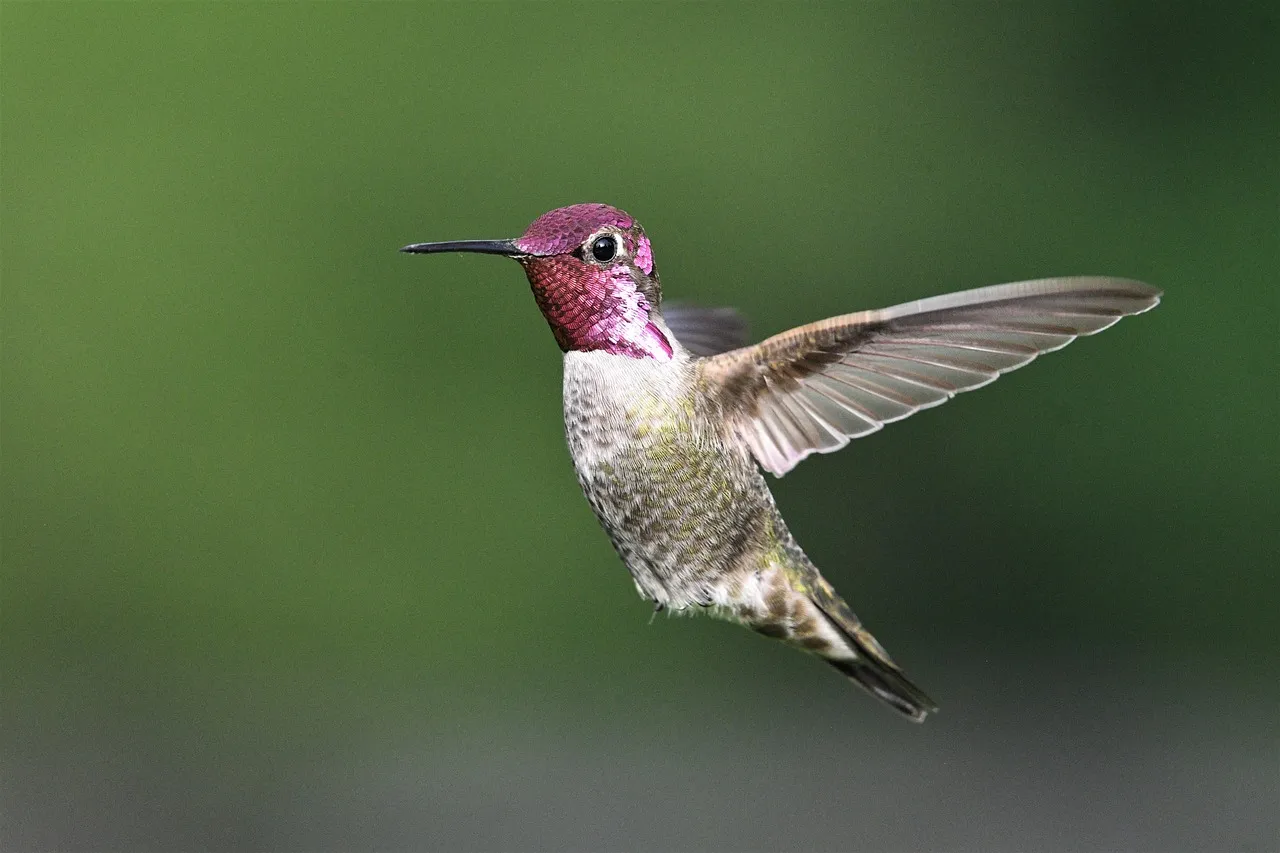
Some hummingbird species live and feed at brutal altitudes in the Andes, where oxygen levels drop dramatically. Most birds – and most humans – start wheezing. These tiny fliers just keep going, thanks to special adaptations in their hemoglobin that let it grab oxygen more efficiently in thin air.
Their wings and muscles still have to deliver the same hover power that’s already extreme at sea level, yet they manage full courtship displays and territorial fights at heights where other birds visibly struggle just to cross. Mountain eagles are impressive. A hummingbird holding a perfect hover at that altitude is a different category of tough.
At a Glance
- Some Andean species forage at extreme high altitudes where oxygen is scarce
- Specialized hemoglobin helps their blood grab oxygen more efficiently in thin air
- Full hovering flight and courtship displays still happen at these heights
- Most birds and mammals visibly struggle at similar elevations
#18 – Hunting Insects Like Tiny, Hyperactive Hawks
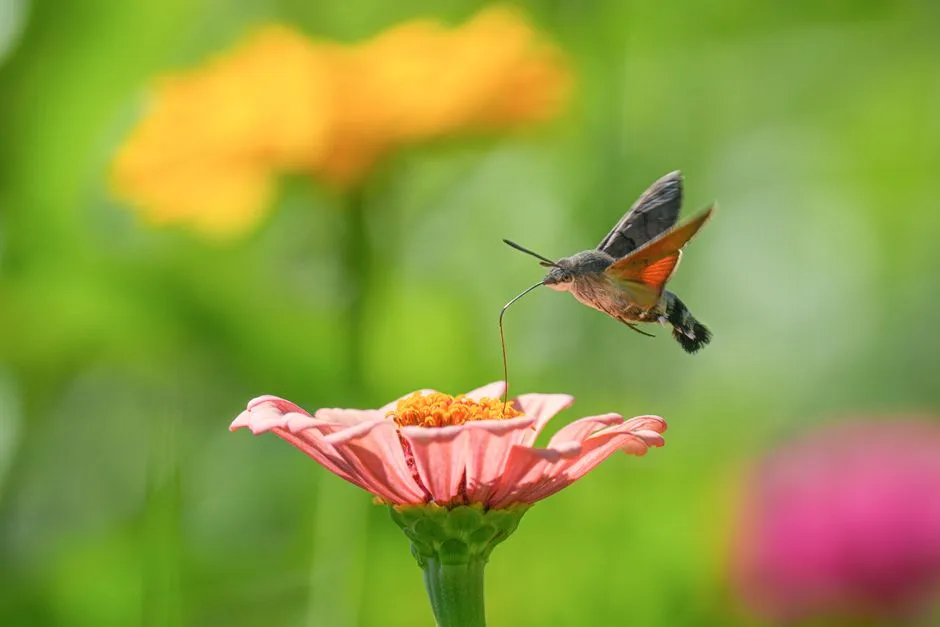
Everyone pictures hummingbirds as pure nectar addicts. In reality, they’re serious insect predators, snapping up gnats, fruit flies, and tiny spiders mid-air or straight off leaves. That protein is essential for muscle maintenance, and chicks can’t grow on sugar water alone.
Some species sally out from perches like miniature flycatchers, while others glean prey directly from spider webs. High-speed video reveals sharp bill snaps and quick tongue flicks, nothing like the gentle sipping we’re usually shown. Calling them “just nectar drinkers” hides half of what their bodies are actually built to do.
#19 – Singing in Ultrasonic, Oddly Complex Patterns
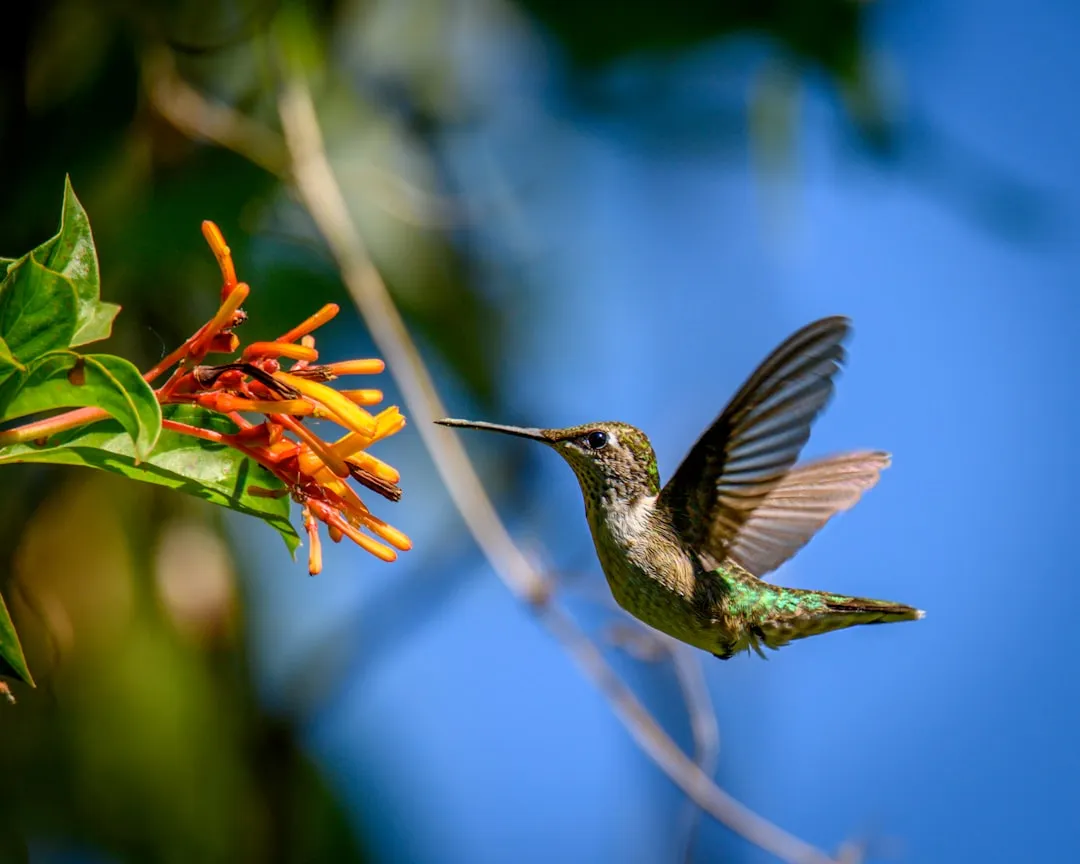
Not every hummingbird sings, but the ones that do produce sounds that make even songbird researchers pause. Males of certain species belt out fast, high-pitched vocalizations, some reaching frequencies near or beyond typical human hearing. Spectrograms show rapid trills and frequency sweeps that look more like electronic music than classic birdsong.
Their syrinx – the bird vocal organ – is tiny, yet capable of these intricate patterns, and evidence suggests females can detect extremely fine differences in a male’s performance. Casual listeners dismiss the sound as a simple squeak. The analysis says otherwise, and for a brain this small, the acoustic sophistication is wildly disproportionate.
#20 – One Missed Meal Away From the Edge
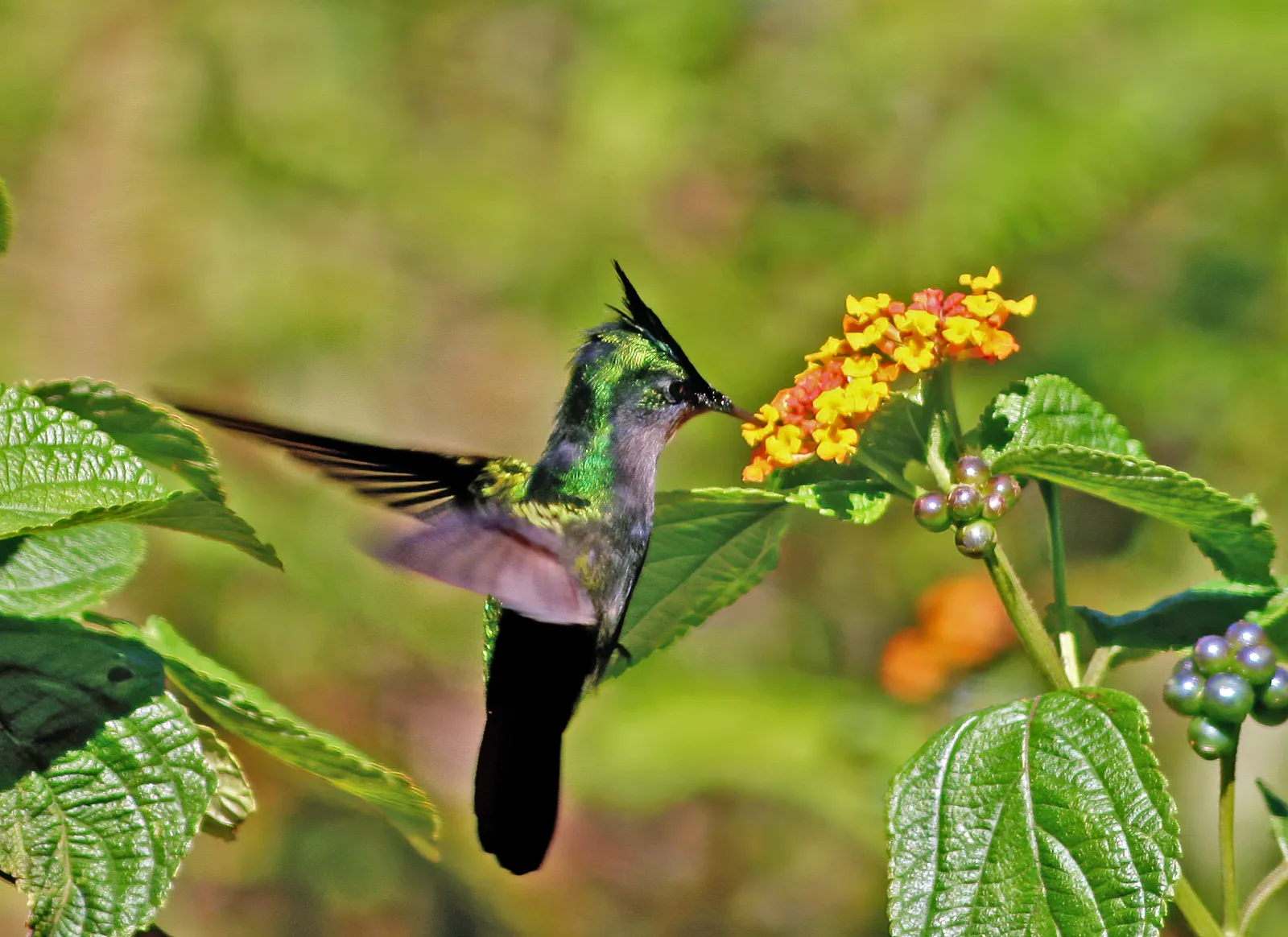
Zoom out and every strange behavior on this list points to one bigger, uncomfortable truth: hummingbirds live right at the edge of what a warm-blooded body can survive. Their metabolism runs so hot that a single cold night without dropping into torpor, or a few missed hours of feeding during the day, can genuinely kill them. There’s no slack built into the system.
Some researchers argue hummingbirds are less a “type of bird” and more a separate experiment in how far you can bend biological rules and still come out alive. Torpor, backward flight, feather-music, insect hunting on top of nectar-sipping – it’s a lifestyle that should fail constantly, yet it thrives from Alaska to the Andes. If you’re still calling them just “cute,” you’re not paying attention.
The Bottom Line
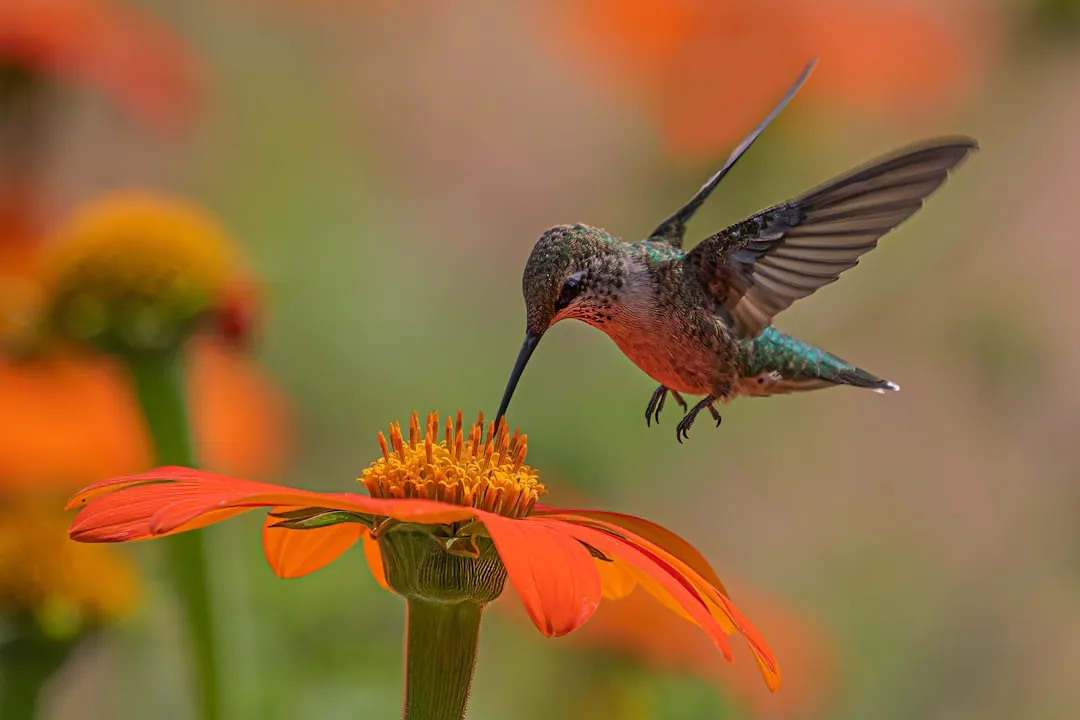
Hummingbirds aren’t just colorful visitors to a backyard feeder. They’re the most extreme outliers in the entire bird world, and we routinely ignore it. Their death-like torpor, race-car metabolism, backward flight, and weaponized feathers tear apart the quiet, pretty image we’ve built around them.
In energy use, aerial agility, sensory perception, and even social conflict, they’re running an experiment no other bird has attempted this hard, this small, or this constantly. Honestly, the bird world’s “genius” label is overdue for a reshuffle – while we obsess over parrots that talk and crows that use tools, hummingbirds are quietly rewriting physics and physiology in our own flowerbeds.
Did we miss a hummingbird behavior you’ve seen with your own eyes that deserves a spot on this list? Drop it in the comments and start an argument.
