
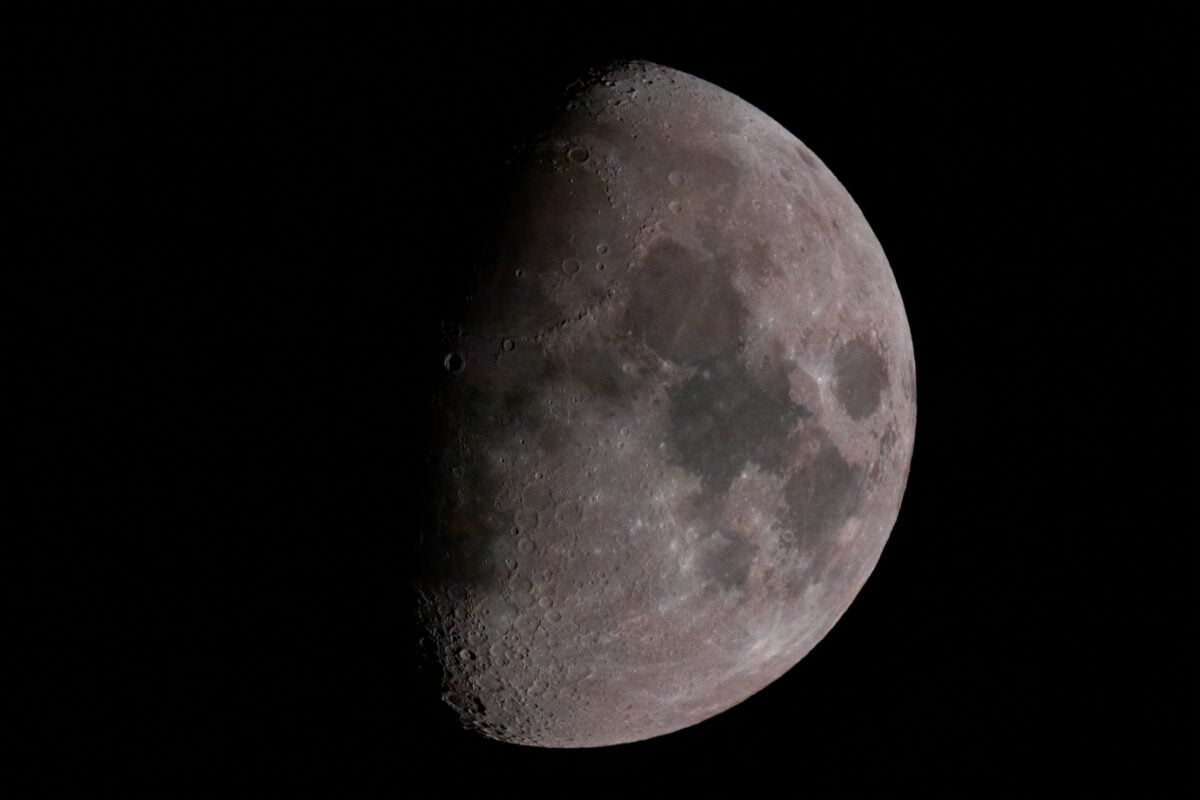
#1 A 1993 calculation that changed how scientists think about moons
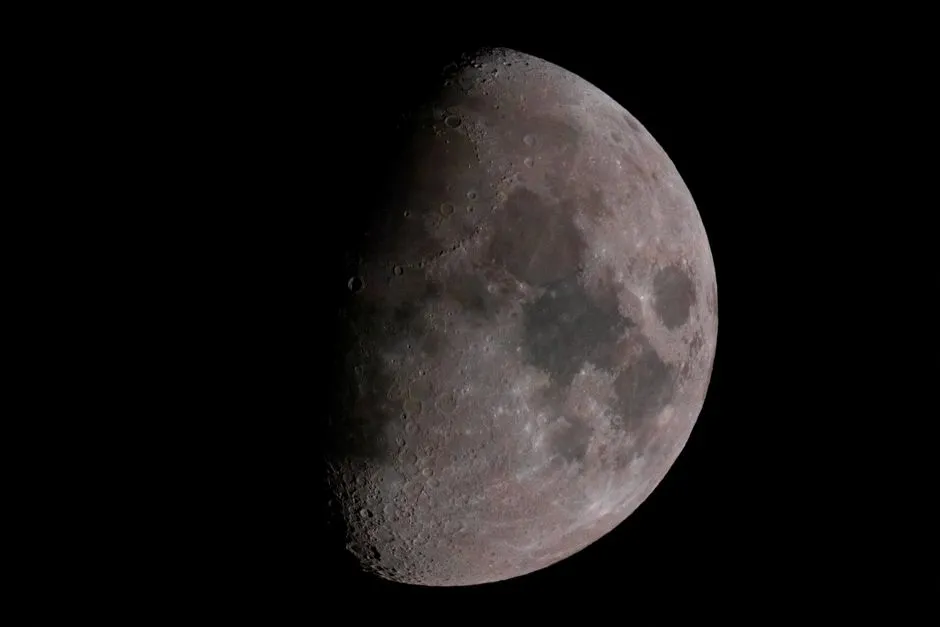
The modern version of this story traces back to a 1993 paper in Nature by French astronomers Jacques Laskar and Philippe Robutel, who set out to model how Earth’s axial tilt, or obliquity, behaves over long stretches of time. According to Milankovitch theory, ice ages are related to variations of insolation in northern latitudes resulting from changes in the Earth’s orbital and orientation parameters, including precession, eccentricity and obliquity. Laskar and Robutel wanted to know just how stable that tilt really was, and what would happen without any lunar influence at all.
What they found surprised even seasoned orbital dynamicists. They identified a large chaotic zone extending from 60 to 90 degrees in obliquity, and if the Moon were not present, the torque exerted on Earth would be smaller, meaning that chaotic zone would extend from nearly 0 degrees up to about 85 degrees. In plain terms, without our large satellite, Earth’s tilt could have swung wildly and unpredictably over geological time, rather than settling into the gentle wobble we experience today.
#2 Why axial tilt matters so much for a planet’s climate
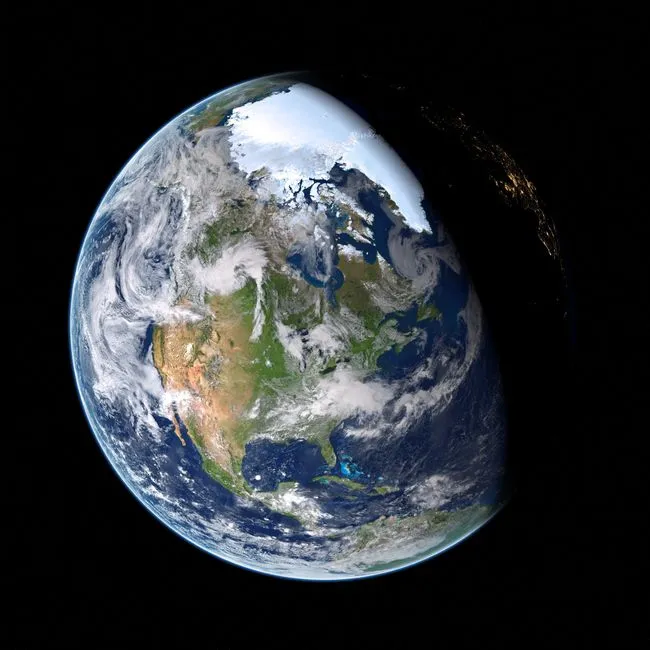
Obliquity might sound like an obscure orbital parameter, but it governs something every living thing on the planet depends on: the seasons. One major factor controlling a world’s climate is its obliquity, which has to do with the amount its axis of rotation is tilted in relation to the path it takes around its star, and Earth’s seasons depend on this tilt as the amount of light hitting the northern and southern hemispheres varies with how each hemisphere points toward or away from the Sun. A modest, steady tilt produces the familiar rhythm of summer and winter that ecosystems have adapted to for hundreds of millions of years.
Push that tilt to extremes, though, and the picture changes dramatically. A planet tipped on its side, or one whose tilt lurches unpredictably between values, would experience punishing swings between prolonged, brutal seasons in some regions and near constant daylight or darkness in others. That kind of instability does not just make weather worse, it can undermine the long, uninterrupted stretches of tolerable conditions that complex biology seems to require to take hold and diversify.
#3 The narrow band Earth actually occupies
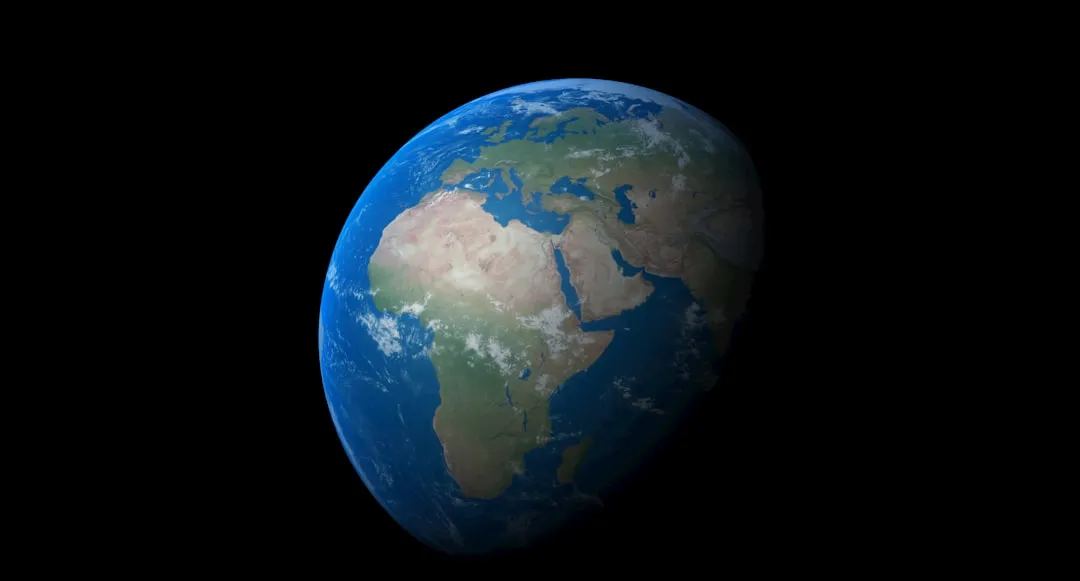
What makes Earth’s situation notable is not just that a moon exists, but how tightly our tilt is held in place because of it. In its present state, Earth avoids the chaotic zone and its obliquity is essentially stable, exhibiting only small variations of plus or minus 1.3 degrees around a mean value of 23.3 degrees. Later refinements of this work, incorporating more detailed orbital modeling, found that the Earth’s Moon stabilizes Earth’s obliquity such that it remains within a narrow range, between 22.1 degrees and 24.5 degrees.
That is a remarkably tight corridor when you consider the alternative. Earlier estimates suggested that a moonless Earth’s tilt could have wandered dramatically between 0 and 85 degrees over millions of years, though it’s worth noting that some more recent simulations have offered a somewhat gentler picture, suggesting the variations might be more modest, around 10 degrees, though still significant enough to disrupt climate patterns. Either way, the difference between Earth’s actual behavior and its hypothetical moonless behavior is stark enough that researchers keep coming back to it.
#4 Mars as the cautionary counterexample
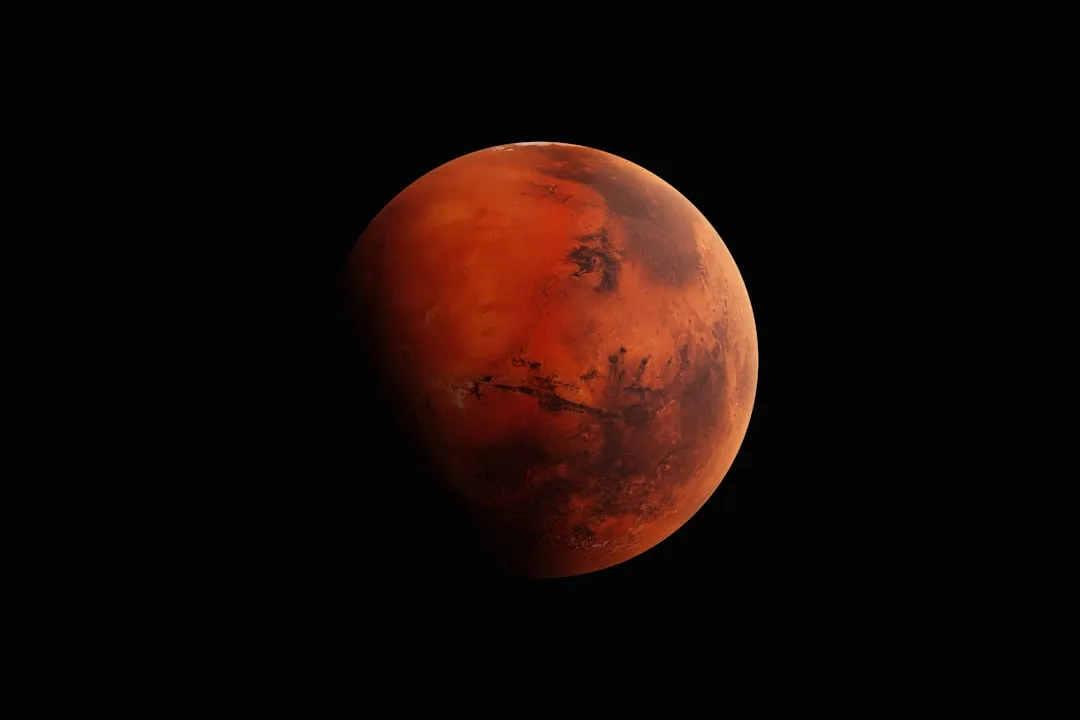
If you want a real world illustration of what an unstable tilt looks like, you do not have to imagine one. Mars sits right next door, and its history offers a natural experiment in what happens when a planet lacks a substantial moon. Mars, which has only two tiny moons, has had its axial tilt vary between 10 and 60 degrees in the past, causing huge climate variations that in turn could have contributed to the loss of most of the planet’s atmosphere, while its two satellites, Phobos and Deimos, are tiny captured asteroids with little known effect on the planet.
Some estimates push that range even further. Mars’ tilt wobbles chaotically over timescales of millions of years, with evidence for swings in its rotational axis at least as large as 45 degrees. Whatever surface water and thicker atmosphere Mars once had, that chaotic tilting is now considered one plausible contributor to the harsh, dry, and largely lifeless world we observe today, a sobering comparison for anyone thinking about what Earth might have become.
#5 How the Moon actually exerts this stabilizing pull
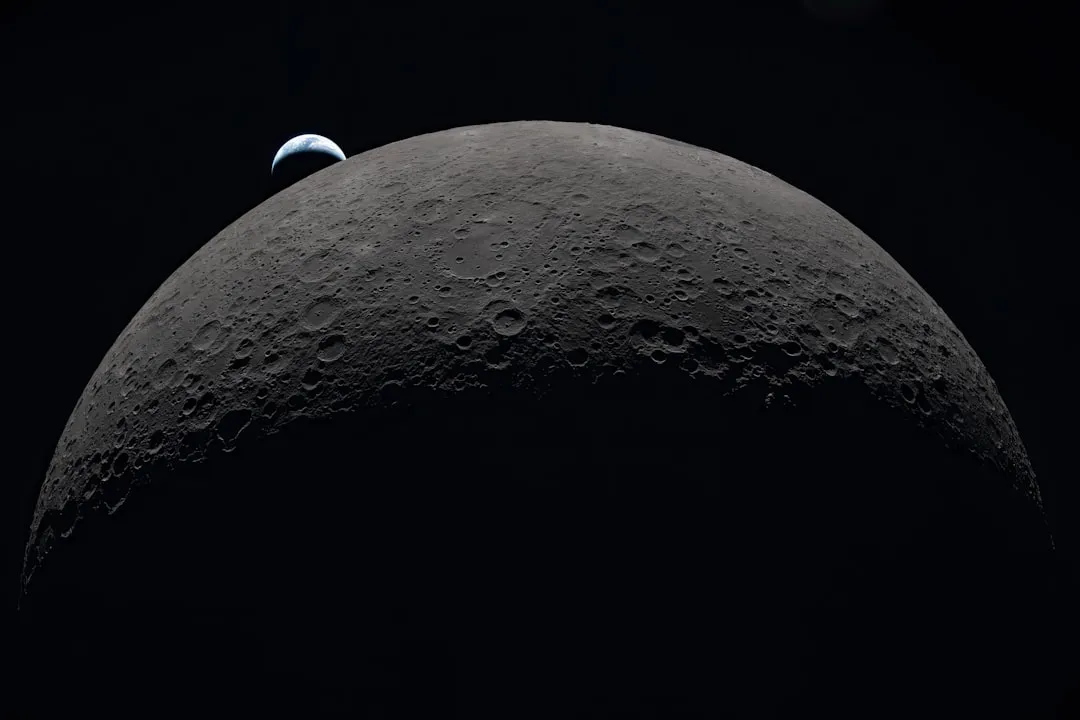
The mechanism behind all this comes down to gravity and geometry rather than anything exotic. Earth’s axial tilt was stabilized with the help of the gravitational pull of its large moon, which is roughly one quarter the diameter of Earth. That size ratio matters enormously, since a moon that large relative to its host planet is unusual in our solar system and gives it outsized gravitational leverage.
Technically, the Moon works by speeding up the precession of Earth’s spin axis, the slow circular wobble our planet’s axis traces over roughly twenty six thousand years. The Moon caused precession of Earth’s spin axis is rapid enough to prevent chaotic diffusion between relevant spin orbit resonances, since they become more widely separated in the phase space because of this precession. In everyday terms, the Moon nudges Earth’s axis through its wobble quickly enough that the planet essentially outruns the gravitational tugs from other bodies that would otherwise destabilize it over time.
#6 The competing pulls of Jupiter, Venus, and other planets
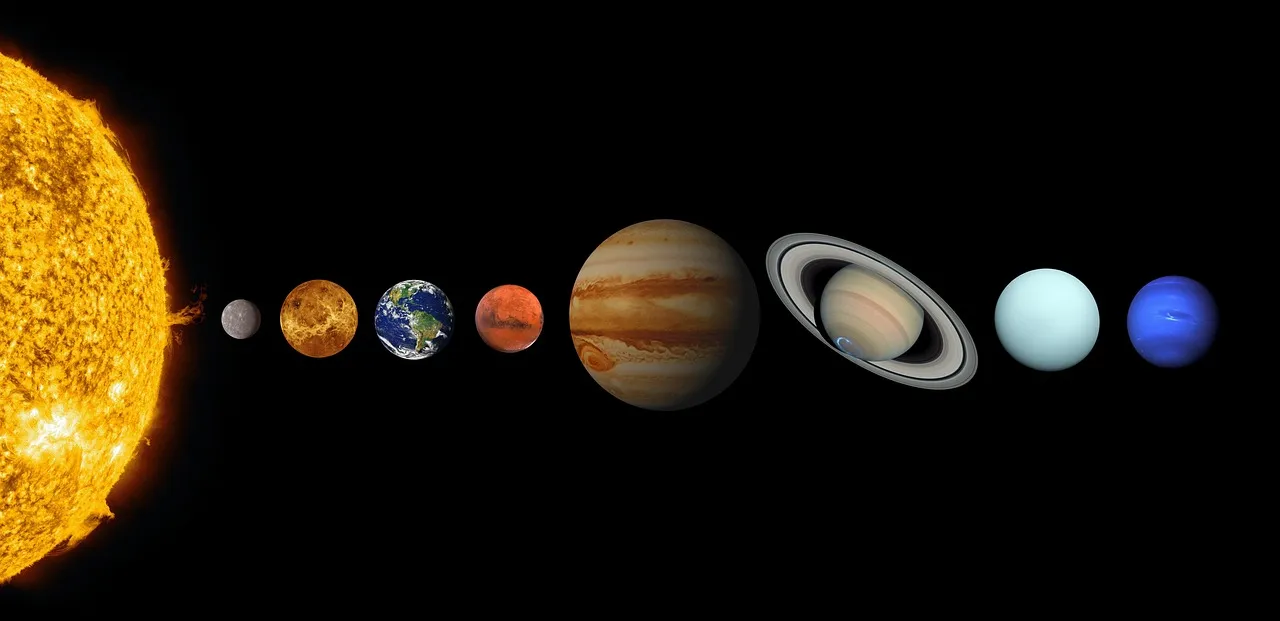
Earth’s tilt is not just a private matter between our planet and its moon. Other bodies in the solar system, particularly the giant planet Jupiter and our closer neighbor Venus, exert their own gravitational influence on how Earth’s axis behaves over long timescales. In 1993, Laskar and Robutel showed that Earth’s large moon has a stabilizing effect on our planet’s climate, and without it, gravitational perturbations from other planets, notably nearby Venus and massive Jupiter, would greatly disturb Earth’s axial tilt, with vast consequences for climate.
Think of it as a tug of war where the Moon’s rapid precession effectively pulls Earth’s axis out of reach of these destabilizing influences before they can build up momentum. Without that lunar assist, the slow, patient gravitational pulls of Jupiter and Venus would have had far more opportunity to shove Earth’s tilt into one of those chaotic zones identified in the original modeling. It is a reminder that planetary stability is often a matter of avoiding bad neighborhoods in orbital space rather than being immune to disruption altogether.
#7 Newer research on moons, exoplanets, and the search for life elsewhere
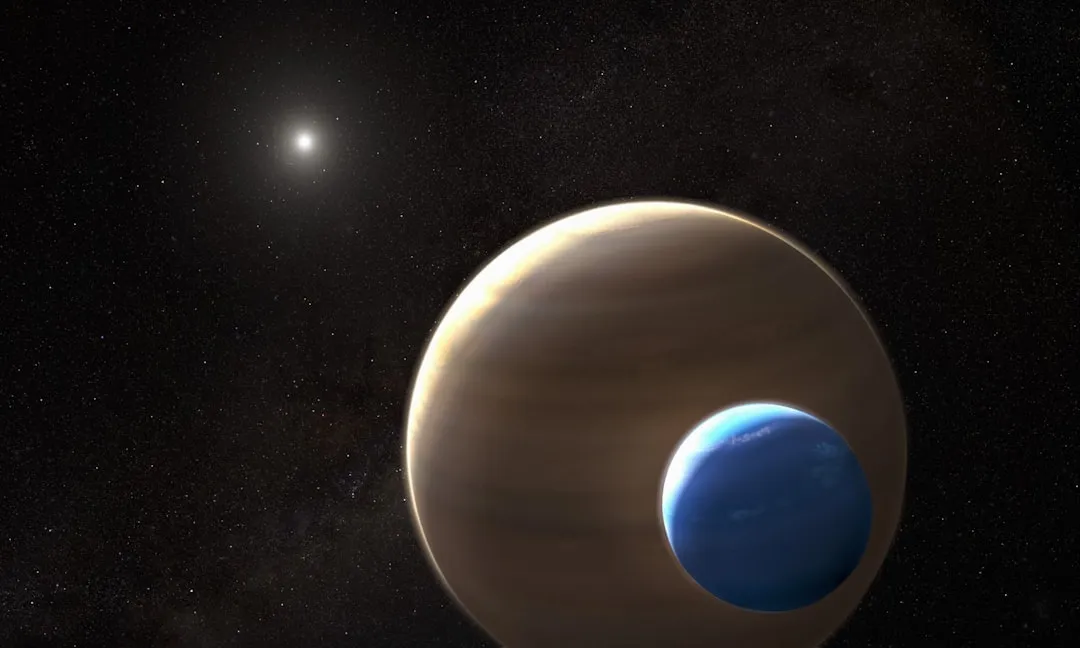
The Laskar and Robutel result did not stay confined to Earth. Researchers have since extended the question to exoplanets, asking how common large, stabilizing moons might be around other rocky worlds in other star systems. Planetary scientist Takashi Sasaki and his colleague Jason Barnes sought to understand how long moons might last around rocky planets in habitable zones, given varying masses and compositions of moons, planets and stars.
Their broader argument echoes and extends the original insight. Because Earth has had a long term stable climate, life on Earth has had time to evolve from single cells to complex life forms, and since the Moon is a key reason Earth has had a relatively stable climate for a long time, the Moon is one of the key factors in Earth’s evolution of complex life forms. That timeline is not trivial either, since it took about 3.8 billion years for life on the 4.6 billion year old Earth to evolve from single celled organisms to multicellular life such as plants, animals and fungi. Not every researcher agrees the case is fully closed, though. Some newer numerical work has argued that even a moonless Earth’s obliquity swings might have unfolded slowly enough to avoid catastrophe, and other studies have pointed out that a large moon could theoretically work against habitability in some planetary configurations, so the field treats this less as settled fact and more as a compelling, well supported hypothesis still being pressure tested.
Final Thoughts
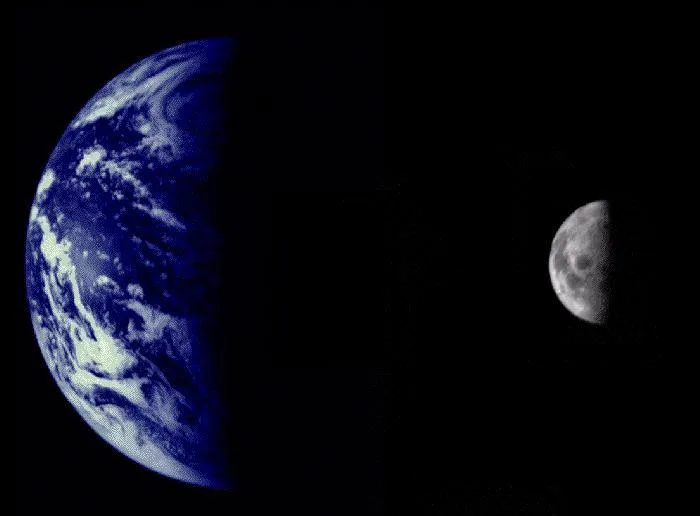
What strikes me most about this research is how much weight rests on something that seems, at first glance, entirely incidental. The Moon was not placed there to stabilize anything. It is widely thought to be the debris from a colossal collision early in Earth’s history, and yet that accident of formation may have quietly underwritten billions of years of climatic calm.
I find it hard not to read a certain humility into that. Complex life, on this accounting, was not an inevitability written into the laws of physics so much as a possibility that needed a fairly specific set of circumstances to play out, including a giant impact that just happened to leave behind a companion of the right size and distance. Mars sits nearby as a quiet reminder of how things might have gone otherwise. Whether or not other stars host planets lucky enough to have their own stabilizing moons remains one of the more genuinely open and fascinating questions in the search for life beyond our solar system, and it’s one worth watching as exoplanet science matures in the years ahead.

- Researchers Say the Moon May Have Helped Stabilize Earth's Climate Long Enough for Complex Life to Evolve - August 7, 2026
- 10 Facts About the Florida Panther's Fragile Recovery - August 7, 2026
- The Andean Condor: King of the High Altitudes - August 7, 2026