


In a wild turn of desert drama, a peaceful neighborhood in Mesa, Arizona, was turned into a no-go zone this week when a massive swarm of bees descended on an entire residential block. Locals called it the “bee-pocalypse,” and honestly, it’s not far off.
“It was like walking into a vibrating wall of death,” said 42-year-old Marcus Tillman, who was mowing his lawn when he suddenly found himself under attack. “I got stung five times in three seconds and just ran like my hair was on fire.”
Paramedics were called. Neighbors hid in their garages. One Amazon driver reportedly ditched his van and fled on foot, shouting “Not today!” as bees chased him down the sidewalk.
Emergency Crews Called In to Contain the Mayhem
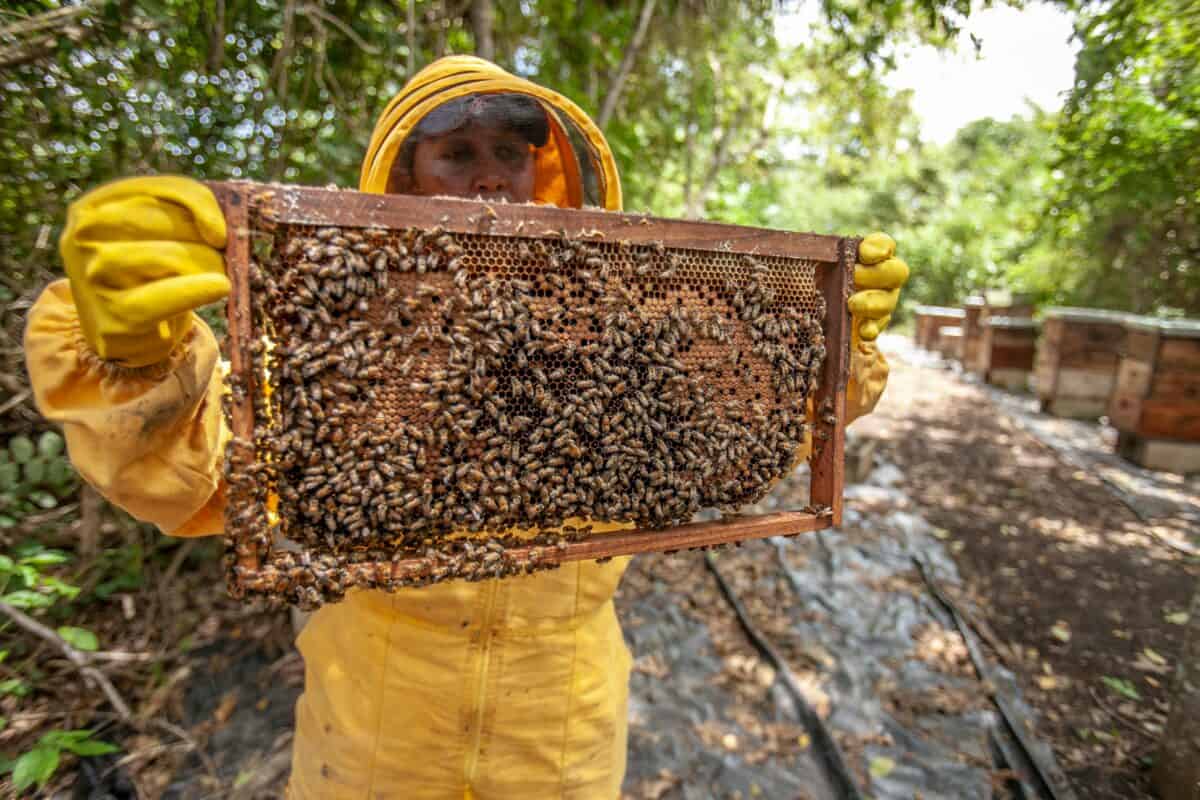
Mesa fire officials responded to multiple 911 calls about aggressive bees and immediately evacuated the block. At least four people were treated for stings, and one older woman was transported to a local hospital as a precaution.
The swarm appeared to be centered around a large mesquite tree in one homeowner’s front yard. A professional beekeeper was brought in wearing a full-body suit that looked like something out of a sci-fi movie. His diagnosis? Africanized honey bees, often nicknamed “killer bees.”
Don’t let the name confuse you—while they’re not literal killers, Africanized bees are way more aggressive than your average garden pollinator. “They’re easily provoked and will chase people for hundreds of meters [yards],” said Arizona entomologist Dr. Rachel Wu. “And once one stings you, it’s game on for the rest.”
What’s Causing These Bee Blowups?

According to local experts, bee activity in Arizona has been spiking this spring thanks to warmer weather and an unusually early bloom season. More flowers mean more bees—but it also means more swarms looking to relocate their hives.
If that hive ends up in a tree next to your front door, you’re in for a buzzing bad time.
Wild bee incidents like this aren’t unheard of in the Southwest, where Africanized bees have taken over much of the wild population. But shutting down a whole block? That’s next level.
Neighbors Staying Inside… and Stocking Up on Bug Spray
By the time the beekeeper removed the hive and cleared the area, dozens of dead bees littered the sidewalk. Fire crews used foam to suppress stragglers and warned residents to stay inside for the rest of the day.
“I’m not stepping foot outside without a hoodie and goggles now,” joked Tillman, still nursing a swollen cheek. “It’s like Jaws, but in the sky.”
Local officials are advising homeowners to check for bee activity around eaves, fences, and sheds—and to call professionals if they see signs of swarming. Whatever you do, do not spray or poke the hive yourself.
Trust us—no one wants a repeat of the Great Bee Siege of Mesa.

- Texas Ranchers Injured and Horses Killed in Aggressive Bee Attack - July 19, 2026
- Cougar Attack on Cyclists Shakes Washington Wilderness - July 19, 2026
- Snake Found in Arizona Toilet Shocks Homeowner - July 19, 2026