

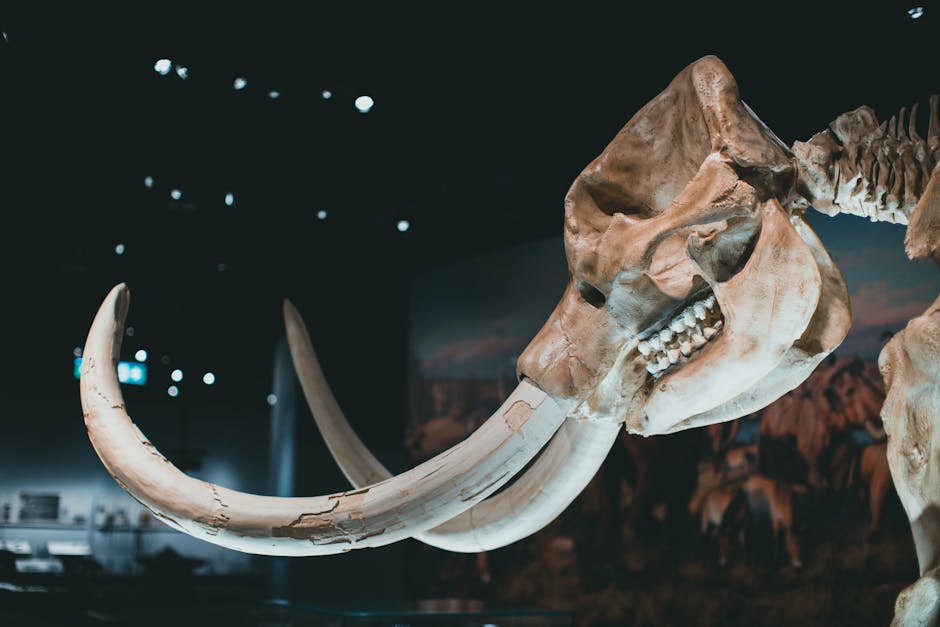
Decoding the De-Extinction Blueprint (Image Credits: Pexels)
Dallas, Texas – A biotech firm nestled in a modern lab complex on the city’s outskirts has captured global attention with its audacious plan to resurrect the woolly mammoth. Colossal Biosciences, co-founded by entrepreneur Ben Lamm and geneticist George Church, employs cutting-edge gene-editing tools to engineer mammoth traits into living elephants. The company’s efforts extend beyond spectacle, promising advancements in conservation for endangered species amid accelerating biodiversity loss.[1][2]
Decoding the De-Extinction Blueprint
Colossal’s approach hinges on precise genetic engineering. Scientists start by sequencing well-preserved mammoth DNA from Siberian permafrost and comparing it to Asian elephant genomes, which share 99.6 percent similarity. They pinpoint about 65 genes responsible for mammoth hallmarks like shaggy fur, curved tusks, fat layers, and cold-resistant blood.[3]
Using CRISPR technology pioneered by Church, teams edit elephant skin cells to incorporate these traits. The modified nuclei then fuse with donor elephant eggs via nuclear transfer, creating embryos for implantation in surrogate mothers. Gestation lasts 22 months in controlled facilities, yielding hybrid calves designed to thrive in Arctic conditions.[1]
- Sequence ancient mammoth and modern elephant genomes for reference.
- Identify and isolate key adaptation genes.
- Edit elephant cells with multiplex CRISPR insertions.
- Develop induced pluripotent stem cells for testing.
- Produce and implant gene-edited embryos.
- Rear calves in conservation settings for rewilding.
This multi-step pipeline builds on decades of progress in synthetic biology, transforming theoretical science into practical revival.[3]
Milestones Mark Steady Progress
Colossal launched in 2021 with $15 million and has since raised over $615 million, achieving a valuation exceeding $10 billion. The Dallas headquarters, a 55,000-square-foot facility opened in 2025, now buzzes with activity, including plans for expansion.[2][4]
Key achievements include full mammoth genome assembly, creation of “woolly mice” to validate fur genes, and gene-edited dire wolf pups born in 2025 – though these were modified gray wolves sparking debate. For mammoths, teams have produced edited cell lines and advanced toward embryos, with Lamm stating the project remains on track for calves by 2028. Recent media tours in March 2026 showcased the labs’ capabilities.[1][5]
| Project | Status | Timeline |
|---|---|---|
| Woolly Mammoth | Edited cells, embryo development | 2028 calves |
| Thylacine | 99.9% genome, stem cells | Ongoing |
| Dodo | Avian editing advances | In progress |
| Dire Wolf | Pups born (hybrids) | 2025 |
These steps demonstrate feasibility, though full births remain the ultimate test.[2]
Conservation Gains from Revival Tech
Beyond mammoths, Colossal develops tools combating threats to living species. Research yields vaccines against elephant endotheliotropic herpesvirus, a killer of calves, and aids red wolf cloning. Spin-offs target chytrid fungus in amphibians and toxins from invasive cane toads.[6][4]
A planned Dubai biovault will store genetic material from over 10,000 species by 2027, creating backups against extinction. Chief Science Officer Beth Shapiro emphasized, “De-extinction takes a lot of headlines, but beneath the surface, you realize that this has become like an economic engine for research and development for conservation technologies.”[4] Mammoth hybrids could restore tundra grasslands, trapping carbon and stabilizing permafrost.[3]
Navigating Ethical Hurdles
Not all view the pursuit favorably. Critics argue revived animals would suffer without natural habitats or mothers, risking cruelty or ecosystem disruption. Paleogeneticist Nic Rawlence called it a “pipedream,” insisting extinction remains permanent. Others fault the focus, urging funds for endangered species instead.[1]
Lamm countered passionately: “It’s unethical not to do this. It’s immoral not to do this.” Colossal addresses concerns by prioritizing ecological roles and welfare, partnering with indigenous groups and nonprofits. The dire wolf pups drew scrutiny as publicity stunts, prompting clarifications on their hybrid nature.[2]
Key Takeaways
- De-extinction tech accelerates conservation for elephants, wolves, and rhinos.
- Hybrid mammoths could combat climate change by restoring grasslands.
- Ethical debates highlight needs for rigorous welfare and ecological planning.
Colossal’s work challenges humanity to mend its environmental legacy, blending revival with resilience. As labs hum in Dallas, the prospect of thunderous mammoth herds stirs hope – and caution – for a rebalanced planet. What do you think about de-extinction’s promise? Tell us in the comments.

- Urban Coyotes Show Remarkable Adaptability, Learning to Thrive in City Environments - July 22, 2026
- Beavers Are Nature’s Engineers, Creating Vital Habitats for Other Wildlife Species - July 21, 2026
- The Recovery of the California Condor Offers Hope for Other Critically Endangered Birds - July 21, 2026