
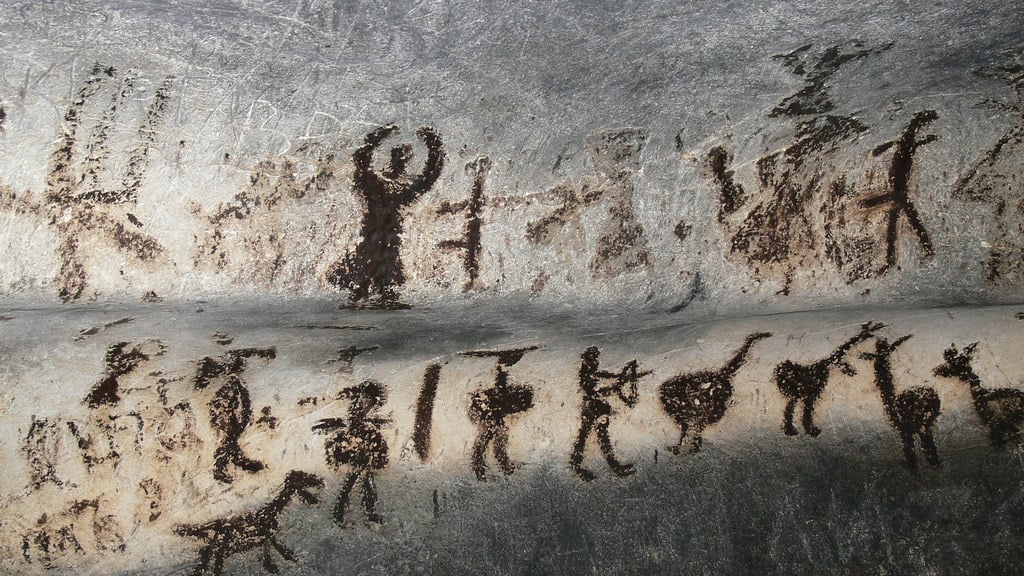
The World’s Oldest Story: The Sulawesi Discovery
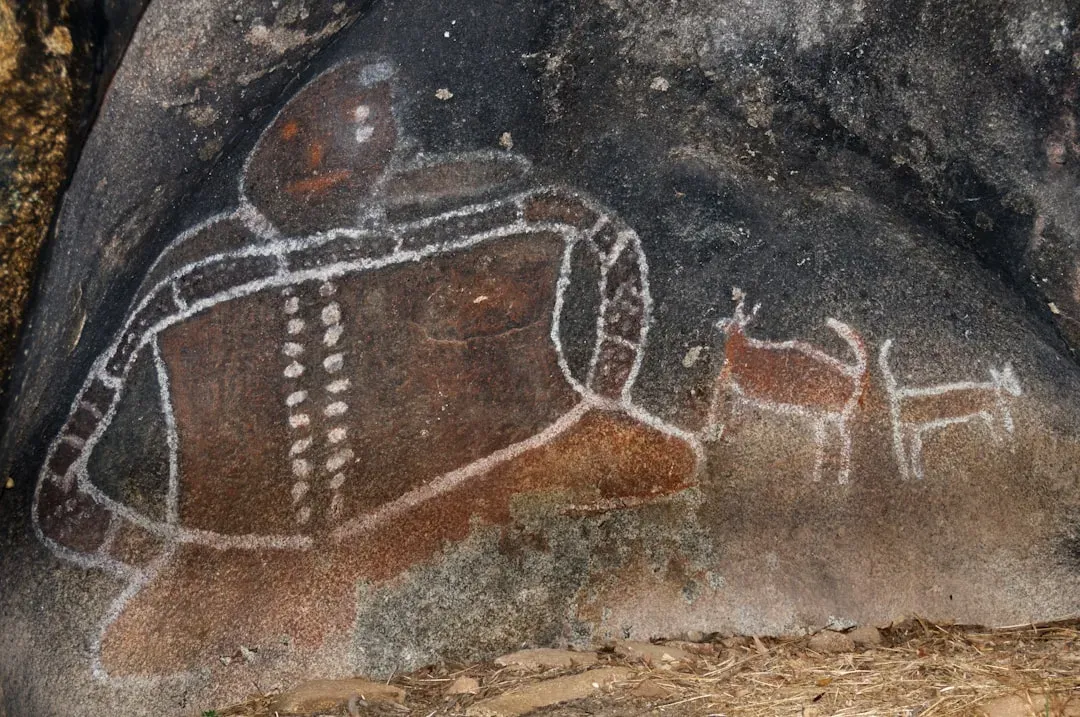
The 2024 publication in the journal Nature turned heads across the scientific world. Research published in Nature indicated that cave paintings depicting anthropomorphic figures interacting with a pig, measuring 36 by 15 inches in Leang Karampuang, are approximately 51,200 years old. The dating technique used was laser-ablation uranium-series imaging, a method precise enough to push the known age of narrative art back by thousands of years beyond previous estimates.
The narrative nature of the Sulawesi paintings challenges long-held assumptions that early figurative art consisted solely of single-figure panels without interaction or storytelling elements. For generations, researchers assumed that early humans painted individual animals without connecting them into scenes. This discovery forced that assumption into retirement. While its exact meaning remains unclear, the painting appears to have been intentionally composed as a story.
Symbolic Thinking and the Cognitive Leap
The creation of cave art marks a significant milestone in human evolution, reflecting the development of symbolic thinking. This isn’t a minor point. The ability to represent the world through symbols is the same cognitive engine that drives language, mathematics, and every story ever told around a fire or on a screen. Cave art is essentially the first documented proof that this engine was running.
A drawing of a bison on a wall is not a bison. It is a symbol for a bison. The ability to understand that a mark can stand for a real thing in the world is the foundational mental operation behind all written language. That step, from the object to its representation, is enormous. Understanding the nature of the expressions of symbolic thinking inherent in these artifacts helps researchers begin to understand the evolutionary process that led to a fully developed symbolic species, and findings about these artifacts parallel aspects of human language.
The Acoustic Architecture of Storytelling Spaces
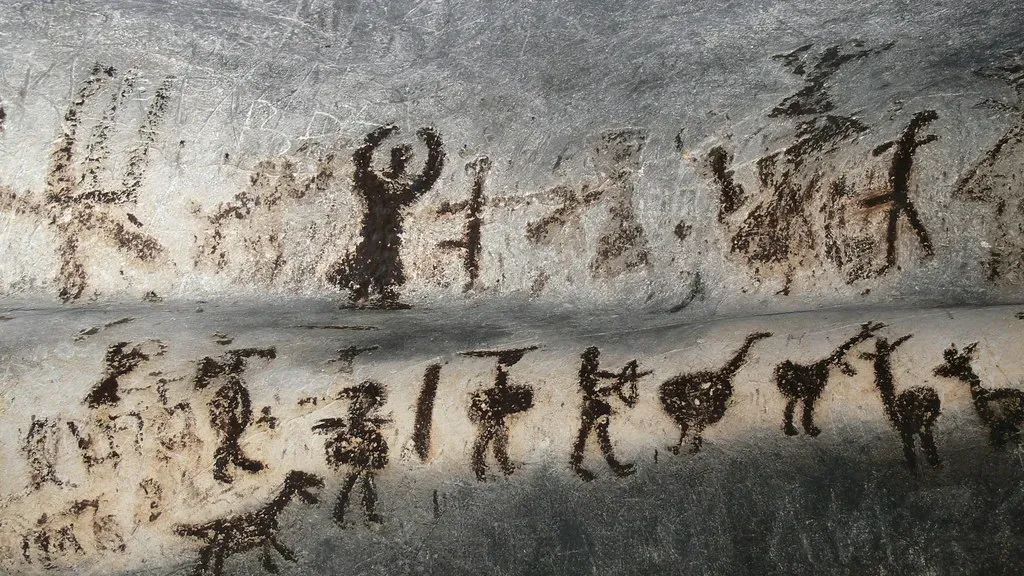
Many cave paintings are located in areas with unique acoustic properties. Researchers have found that the placement of art often coincides with spots where sound echoes or resonates strongly. This is not the kind of coincidence you dismiss lightly. The people who painted these walls knew exactly where they were placing their images, and the sounds those spaces produced were almost certainly part of the experience.
Cave sites such as Lascaux or El Castillo are frequently located in acoustically resonant chambers, implying multisensory ritual practices. These spaces likely functioned as arenas for performance, storytelling, and initiation rites, where visual symbols were activated through narrative and ceremonial acts. Research conducted at the Manot Cave in the Levant adds weight to this: evidence shows the use of fire to illuminate the dark, deep part of the cave during rituals, and acoustic tests conducted in various cave areas indicate that the ritual compound was well suited for communal gatherings, facilitating conversations, speeches, and hearing.
Hidden in Plain Sight: The Language of Abstract Signs
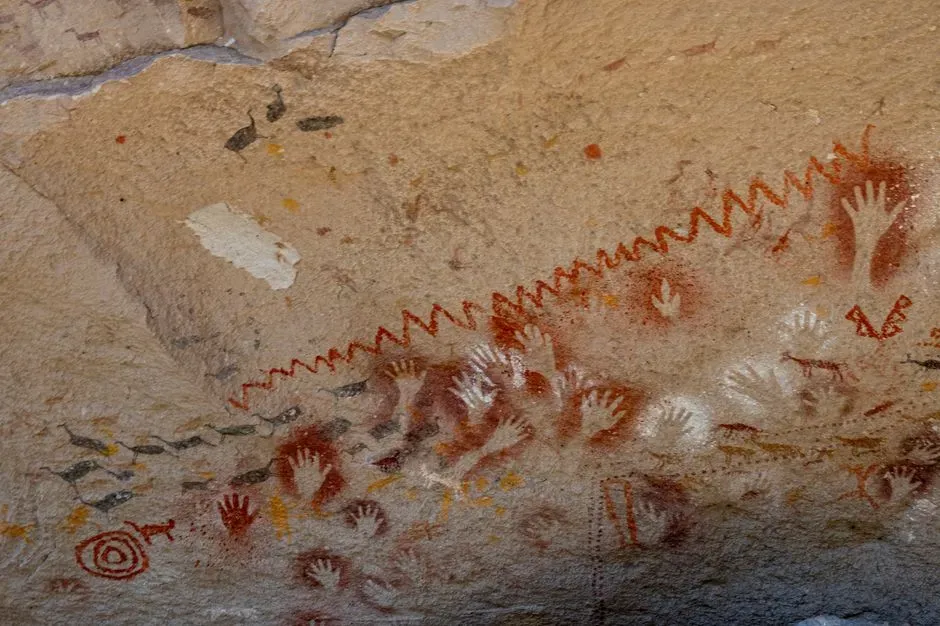
For decades, the spectacular animal paintings drew all the attention. The geometric signs sitting beside them were largely ignored. For decades, archaeologists pored over spectacular images of stampeding horses and charging bison left by Ice Age artists on European cave walls, but few researchers paid much attention to the simple geometric signs that often accompanied the art. Many archaeologists dismissed them as mere decorations. That turned out to be a serious oversight.
Anthropologist Genevieve von Petzinger, who spent over a decade studying prehistoric signs in European caves, found that over a 30,000-year period, cave dwellers used only about 30 different types of signs, a consistency that strongly suggests intentional, systematic use rather than random doodling. Von Petzinger and her photographer husband visited 52 caves across Europe recording every instance of these symbols they could find. They found new, undocumented examples at roughly three quarters of the caves they visited, and the symbols far outnumbered the human and animal images. The pattern, quite simply, is too consistent to be accidental.
Hand Stencils and the Signature of Belonging
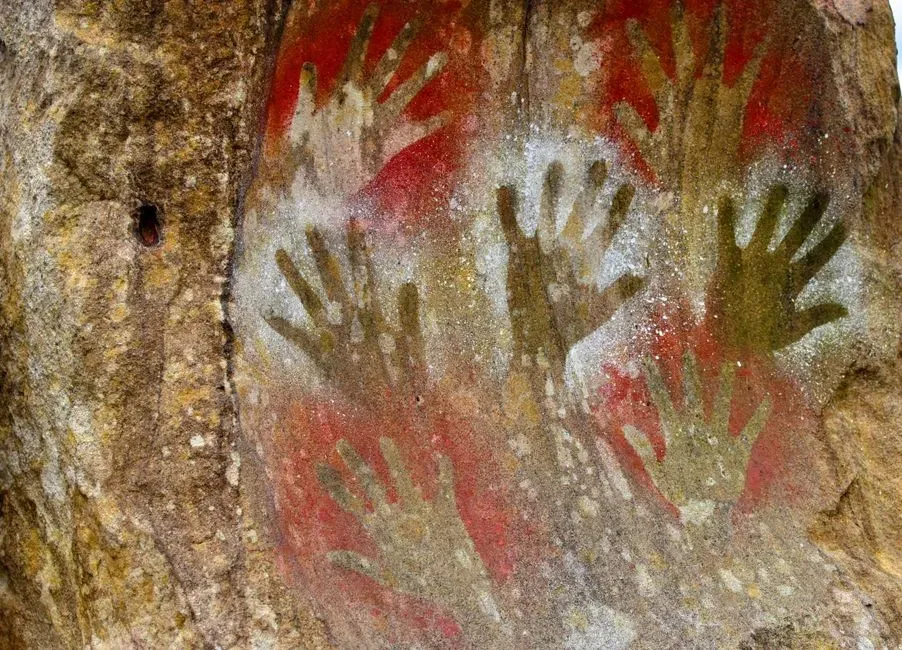
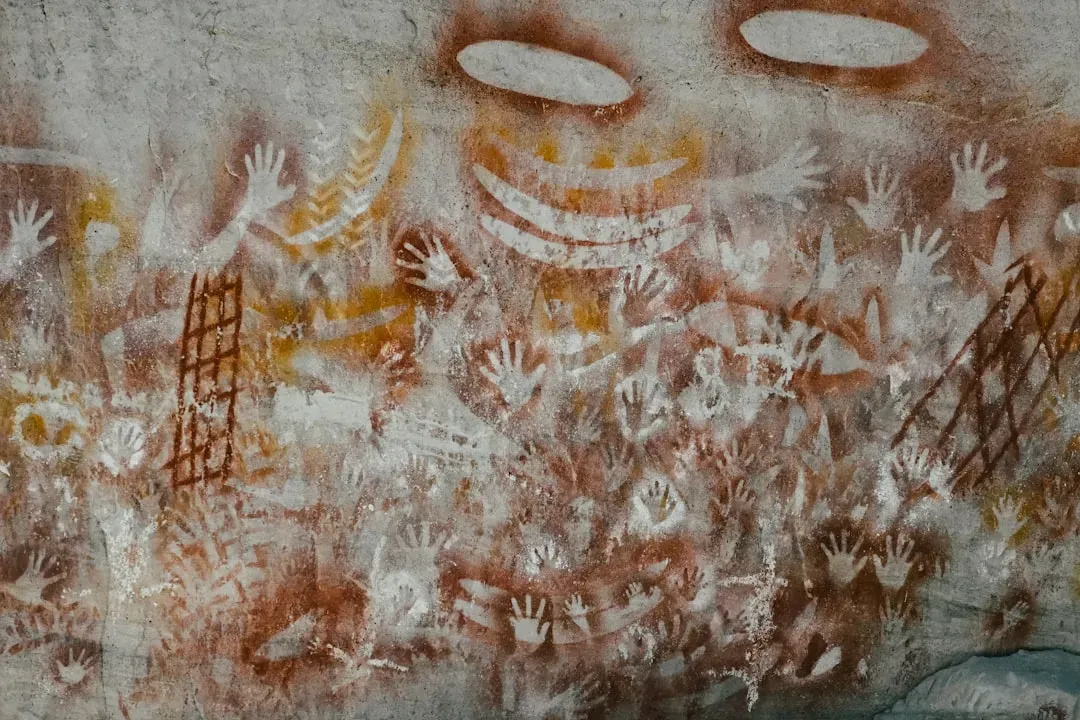
Among the most striking images in cave art are the stenciled handprints, often found in clusters. These handprints are believed to be the artists’ signatures or marks of participation, symbolizing individual presence within the collective narrative. There is something deeply moving about this. Across tens of thousands of years and thousands of miles of geographic separation, prehistoric people kept pressing their hands against cave walls, as if insisting: I was here. I was part of this.
Recent interpreters emphasize that making art in caves was a social and ritualistic practice, not merely functional or spiritual. Creating hand stencils, painting animals, and etching lines required coordination, planning, knowledge of materials and techniques, and repeated visits to caves. These activities reinforced group identity, transmitted knowledge, and created communal spaces of meaning. Hand stencils might be signatures, evidence of individual identity and participation in a shared ritual. Painting a bison might have been a rite of passage.
Daily Life, Mythology, and Scenes of the Hunt
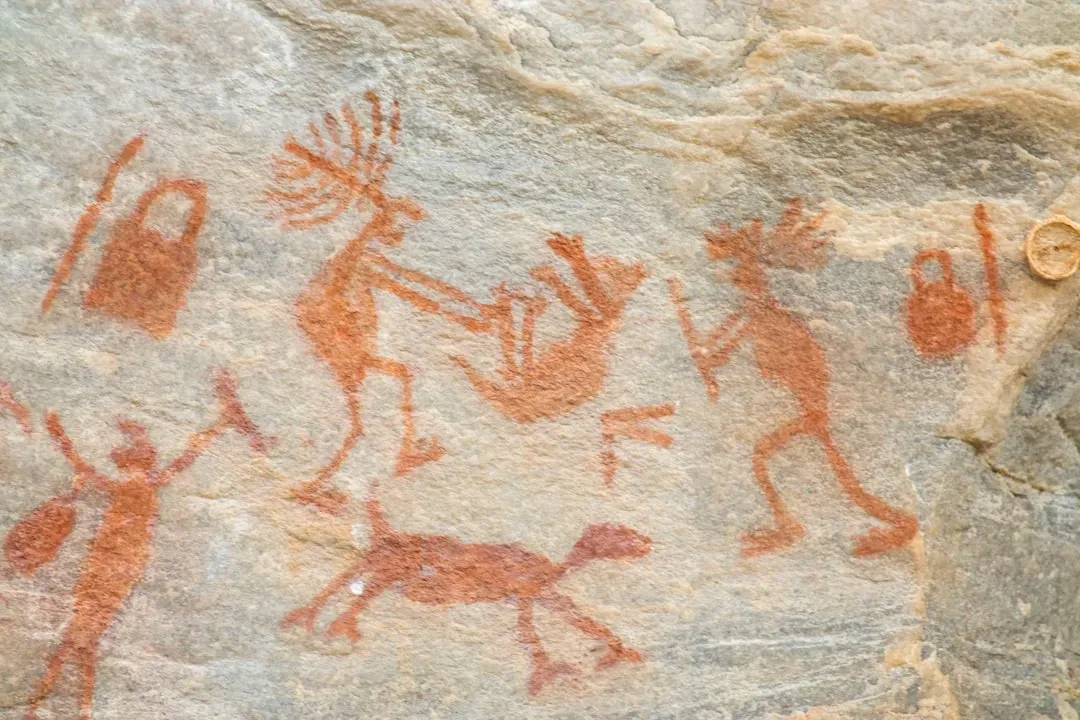
Cave paintings often depict scenes of hunting, dancing, and communal activities, providing glimpses into the daily lives and practices of prehistoric humans. These weren’t abstract representations of random moments. They appear to reflect a coherent world, organized around survival, community, and probably a set of shared beliefs that gave that survival meaning. Given the human propensity for communication and narrative, it is very likely that cave art functioned as a visual storytelling technique, representing prehistoric animals and the hunting scenes that accompanied survival in the Palaeolithic.
Patterns and symbols within parietal art may have functioned as ways to communicate complex concepts or as part of rituals. Repeated patterns could symbolize continuity, while certain symbols may have signified important events or elements in the environment. Additionally, symbols in cave paintings were possibly a precursor to early forms of written language, representing abstract thoughts and allowing for a new level of expression and communication. The line from painted cave wall to written text is longer than we might assume, but it is a continuous line nonetheless.
Art as Social Infrastructure
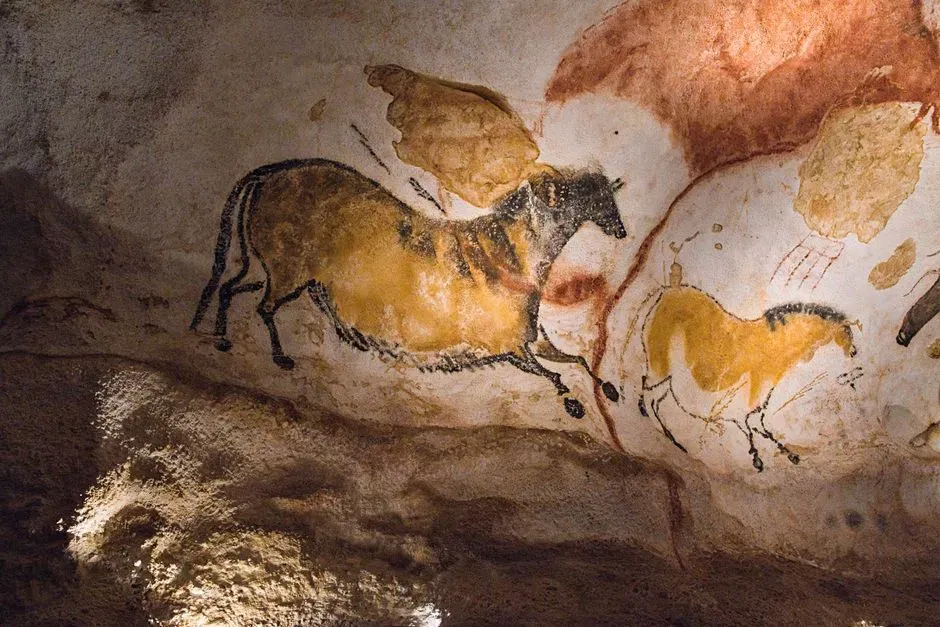
Archaeological evidence suggests that early artistic activity was often communal in nature, embedded within ritual contexts that reinforced group identity and cohesion. Think of it less as an art gallery and more as a community institution. The cave wasn’t just a place where someone painted. It was a place where a group returned, together, to reinforce who they were, what they believed, and what they collectively remembered. Identifying communal rituals in the Paleolithic is of scientific importance, as it reflects the expression of collective identity and the maintenance of group cohesion.
Group identity and cohesion could be reinforced through shared artistic traditions. When communities across a region used similar styles and motifs, those visual patterns may have functioned as markers of group affiliation or territorial boundaries. The collaborative effort required to create large-scale works like cave painting programs would itself have strengthened social bonds. The collective creation and interpretation of art reinforced cultural norms and deepened intra-group bonds. Moreover, portable art objects, such as beads, figurines, and engraved tools, played essential roles in establishing social hierarchies, trade relationships, and intergroup alliances.
What This Means for How We Understand Ourselves
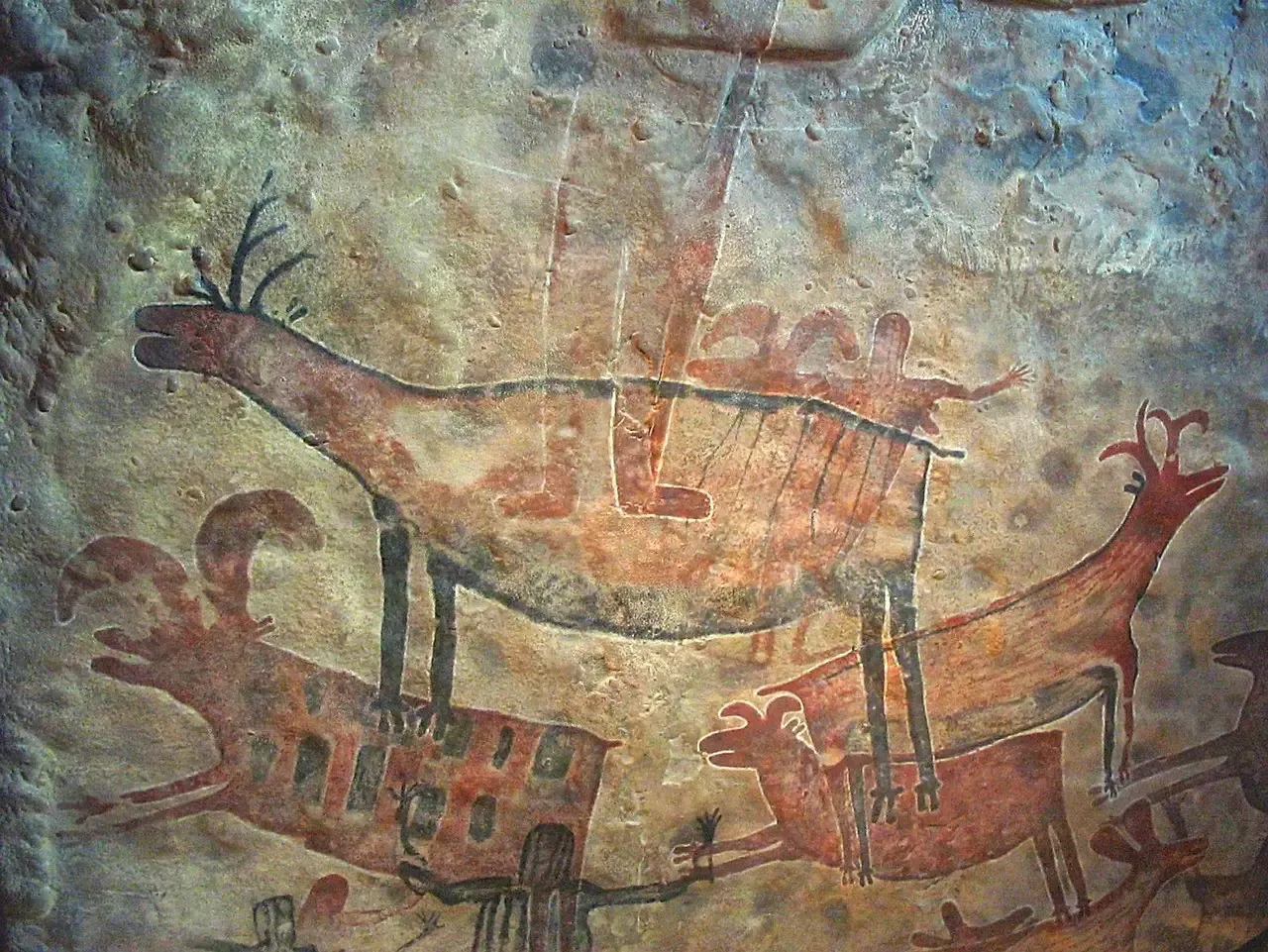
Images painted, drawn, or carved onto rocks and cave walls, which have been found across the globe, reflect one of humans’ earliest forms of communication, with possible connections to language development. This is the deeper implication that makes cave art research so compelling beyond archaeology. Every discipline that studies human communication, from linguistics to cognitive science to media theory, has something at stake in these findings. There was “an incredibly pivotal moment in human history when we went from spoken language to making these durable marks, which could then be communicated to people who were outside of the physical realm of speech distance.”
Every piece of journalism published today traces its lineage back to a moment tens of thousands of years ago when a prehistoric human pressed a handprint against a cave wall. That act was not decoration. It was communication. Long before alphabets, printing presses, or digital networks existed, our ancestors had already solved the most fundamental challenge of human society: how to share what you know with someone else. The cave was just the first medium. Every platform that followed, from papyrus to printing press to podcast, is a variation on the same ancient impulse.
Conclusion: A Story That Was Never Really Lost
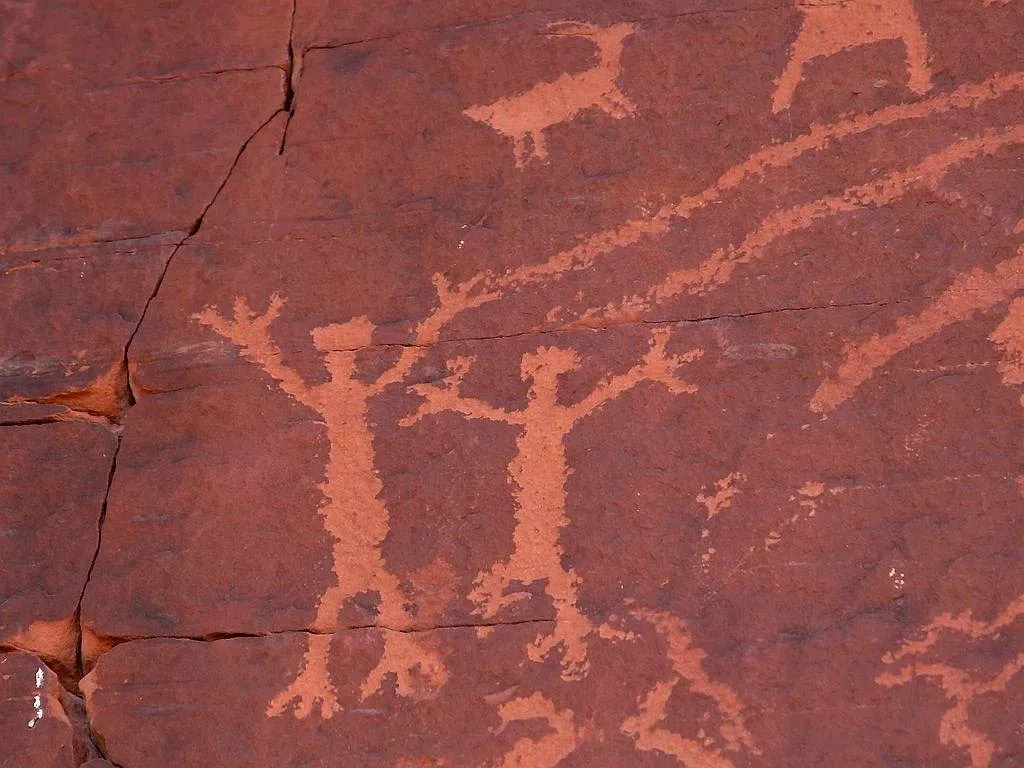
What cave art reveals, most fundamentally, is that storytelling is not a cultural luxury. It appears to be a biological need, as deeply embedded in human behavior as tool use or fire. The evidence from Sulawesi, from Lascaux, from the abstract signs scattered across European caves, all points in the same direction: our ancestors did not just survive together. They made meaning together. They painted their fears, their hunts, their rituals, and perhaps their myths onto walls that were specifically chosen for their ability to amplify sound and gather a crowd.
The fact that we’re still debating what these images mean is, in itself, something to sit with. These prehistoric storytellers created something durable enough to outlast every civilization that followed them. They couldn’t have known that. Yet in choosing deep, resonant chambers over open fields, in repeating the same symbols across millennia and across continents, they were doing something unmistakably intentional. The story they were telling may be lost to us, but the act of telling it together – that part survived. And perhaps that’s the most human thing about it.

- 19 Small American Towns So Beautiful That Visitors Regularly Change Their Plans to Stay Longer - August 14, 2026
- Leather vs. Life and the Role We Play - August 14, 2026
- The Silent Language of Elephants Reveals Deep Family Connections - August 14, 2026