

A Long-Standing Puzzle in Physics (Image Credits: Cdn.mos.cms.futurecdn.net)
Scientists have long pondered whether antimatter, the elusive mirror of ordinary matter, behaves differently under Earth’s gravitational pull.
A Long-Standing Puzzle in Physics
The question of how antimatter interacts with gravity dates back to theoretical speculations following the discovery of antimatter in the 1930s. Physicists wondered if this counterpart to matter might repel gravitational forces, potentially “falling up” in a manner that could upend established theories. Such a discovery would challenge Einstein’s general theory of relativity, which posits that all forms of mass respond identically to gravity.
Early experiments faced immense hurdles due to antimatter’s instability and scarcity. Produced in particle accelerators, antimatter annihilates upon contact with regular matter, making sustained observations difficult. Yet, persistent efforts at facilities like CERN have yielded crucial insights, confirming that antimatter indeed follows the same downward path as everyday objects.
Breakthrough Findings from CERN’s ALPHA Experiment
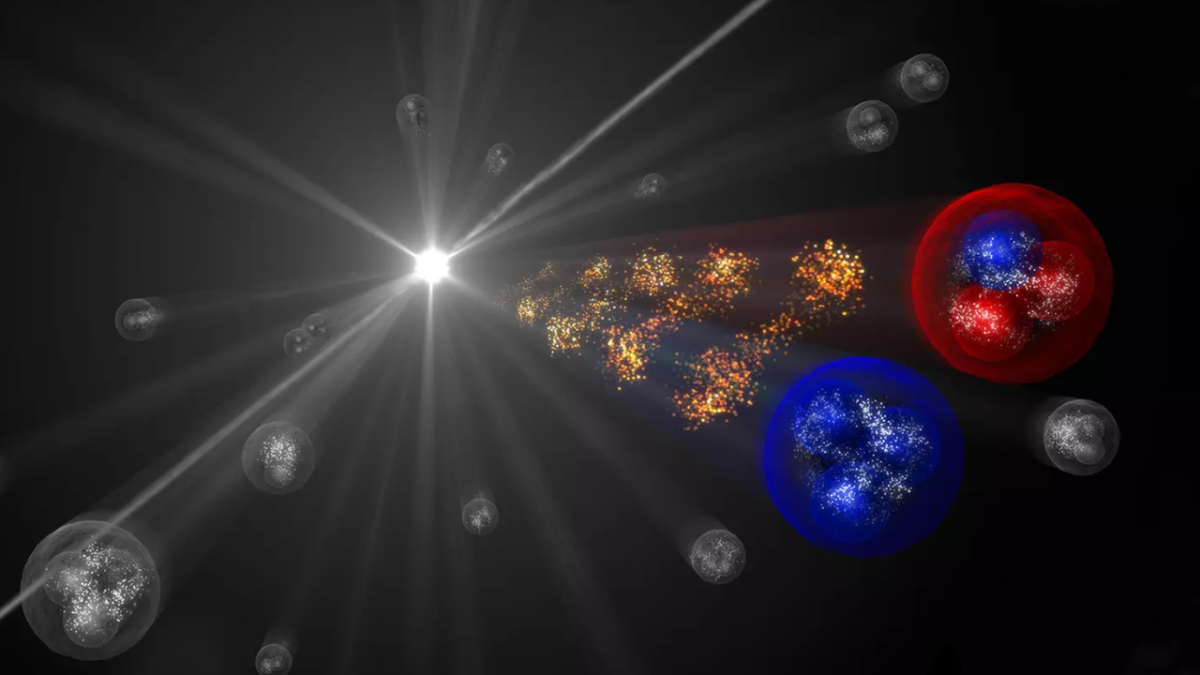
In a landmark 2023 study published in Nature, the ALPHA collaboration at CERN directly observed antimatter’s response to gravity for the first time. Researchers trapped antihydrogen atoms – comprising antiprotons and positrons – in a vertical magnetic field and released them to measure their trajectories. The results showed these atoms falling toward Earth at a rate consistent with ordinary hydrogen, within experimental margins of error.
This observation refuted earlier hypotheses of antigravity effects. The experiment’s precision, though limited by the small sample of antihydrogen atoms, marked a pivotal step in validating general relativity’s universality. Team members described the moment as thrilling, as predictions from quantum mechanics and gravity aligned with reality after years of preparation.
Implications for Our Understanding of the Universe
The confirmation that antimatter falls downward like matter strengthens the foundations of modern physics. It aligns with the theory that gravity treats matter and antimatter symmetrically, despite their opposite charges. This symmetry helps explain why the universe, dominated by matter, did not fully annihilate itself in the Big Bang’s aftermath.
However, questions linger about the exact equivalence of gravitational acceleration. Recent analyses, including a 2026 Space.com report, highlight that while antimatter clearly descends, finer measurements are needed to determine if its fall matches matter’s precisely. Ongoing refinements in experimental setups aim to narrow this uncertainty, potentially revealing subtle deviations that could hint at new physics.
- Antimatter production requires high-energy collisions in accelerators like CERN’s Large Hadron Collider.
- Antihydrogen atoms last mere minutes before annihilation, demanding rapid data collection.
- Magnetic traps suspend atoms in vacuum to isolate gravitational effects from other forces.
- Future upgrades include better simulations to predict atom behavior under gravity.
- Spectroscopy studies will probe antimatter’s electromagnetic interactions alongside gravity tests.
Challenges and Future Directions
Conducting these experiments demands cutting-edge technology to generate, cool, and contain antimatter. The AEgIS experiment at CERN, for instance, developed techniques to produce low-energy antihydrogen suitable for gravity studies. Despite successes, the weak nature of gravity compared to electromagnetic forces complicates precise measurements.
Looking ahead, collaborations plan to enhance trap designs and data analysis. A 2025 review in the International Journal of Theoretical Physics discussed potential gravitational differences suggested by early ALPHA-g data, though subsequent verifications upheld the attractive interaction. These efforts could illuminate dark matter’s role or even quantum gravity theories.
| Aspect | Matter | Antimatter |
|---|---|---|
| Gravitational Response | Falls downward | Falls downward |
| Experimental Confirmation | Centuries of observation | 2023 ALPHA study |
| Precision Level | High | Improving, within 75% confidence |
Key Takeaways
- Antimatter is attracted by Earth’s gravity, mirroring matter’s behavior.
- CERN’s experiments provide the first direct evidence, supporting general relativity.
- Refined tests may uncover minute differences, advancing cosmic mysteries.
As these discoveries unfold, they remind us how fundamental questions about the universe’s building blocks continue to drive scientific progress. The fall of antimatter not only affirms long-held theories but also opens doors to unexplored realms. What implications do you see for future space exploration or particle physics? Share your thoughts in the comments.

- Urban Coyotes Show Remarkable Adaptability, Learning to Thrive in City Environments - July 22, 2026
- Beavers Are Nature’s Engineers, Creating Vital Habitats for Other Wildlife Species - July 21, 2026
- The Recovery of the California Condor Offers Hope for Other Critically Endangered Birds - July 21, 2026